









Gjør som tusenvis av andre bokelskere
Abonner på vårt nyhetsbrev og få rabatter og inspirasjon til din neste leseopplevelse.
Ved å abonnere godtar du vår personvernerklæring.Du kan når som helst melde deg av våre nyhetsbrev.

This book reports on an empirically-based, theoretical model of coaching culture development over four stages. This is the first model of coaching culture development that goes beyond the listing of stages and strategies in the academic literature based on pracademic experience. It is a dynamic, process model which informs practitioners of how to develop a coaching culture in organisations. Each stage is explained in terms of how coaching is conceptualised by organisational leaders, the motivation for introducing coaching into the organisation, the organisational members who are the recipients of coaching, and those who are involved in delivering the coaching at each stage. The model contributes to the academic literature and the growing calls for coaching to become a discipline in its own right.
While much attention has been given to animal life in amber, the remains of a variety of plants, including angiosperm flowers, also exist in fossilized resin. Presented here is a pictorial synopsis of 94 flowers that occur in four major amber deposits around the world. These deposits are from Burma (Myanmar), the Baltic area, the Dominican Republic and Mexico, and range in age from the mid-Cretaceous to the mid-Tertiary. The basic features of these flowers are presented and their relationship with existing plant lineages discussed. This work will be of interest to amber enthusiasts, plant taxonomists, plant morphologists, plant ecologists, plant evolutionists and plant paleontologists.
This book constitutes the refereed proceedings of the 14th International Conference on Reversible Computation, RC 2022, which was held in Urbino, Italy, during July 5-6, 2021.The 10 full papers and 6 short papers included in this book were carefully reviewed and selected from 20 submissions. They were organized in topical sections named: Reversible and Quantum Circuits; Applications of quantum Computing; Foundations and Applications.
This book explores the topic of proximity and its relations in the design of contemporary urban fabrics and public spaces. The effects of the COVID-19 pandemic and reflections on the future of cities have lately shed light on the concept of proximity, which is intended as the relationship between communities and urban functions and as relations among people, built spaces, and open spaces. The proximity is a historic and fertile field of interest for American and Northern European urban studies; it is a spatial and social program seemingly surpassed by the styles and rhythms of contemporary city life, but today it is back in vogue with different purposes. Meanwhile, the action research developed by the Department of Architecture and Urban Studies at the Politecnico di Milano for the Municipality of Milan reached its conclusion (2018-2020). The research work focused on contextualizing the new M4 Metro line stations under construction, and jointed mobility flows and places, long-range networks and local ones, boosting the idea of metro stations as regenerative urban thresholds and urban platforms for enabling environmental, sustainable settlement, and active mobility systems. In other words, the action research for Milan shows how to achieve the concept of proximity in the urban design practice in a dense, stratified, and complex urban context.
This book constitutes the refereed proceedings of the 15th International Conference on Blended Learning, ICBL 2022, held in Hong Kong, China, in August 2022. The 31 papers presented in this volume were carefully reviewed and selected from 80 submissions. The conference theme of ICBL 2022 is Blended Learning: Engaging Students in the New Era. The papers are organized in topical sections named: Game-based Learning and Augmented Learning Environment; Computer Supported Collaborative Learning; Enriching Learning Experience with Blended and Online Learning; Content Development and Practice for Blended Learning and Beyond.
This book examines a topic which is an indispensable part of any production line in the wood industry: the extraction, separation, handling of dust and chips, ensuring clean air in the workrooms, and avoiding health, fire and explosion risks. All scientific backgrounds of these problems are not fully known today, and efforts should be made to fill this gap. The work contains significant new derivations and calculation methods and experimental results to support design and evaluation methods such as particle size distributions depending on wood species and machining, terminal velocity of small wood particles, aerodynamics of suction hoods, a detailed analysis of particle separation in cyclones, selection and evaluation of separation efficiency for appropriate filter selection, energy consumption and transportation efficiency of pneumatic conveying, a comprehensive theory of transport ventilators. Several new details of dust explosion are also included. The calculation methods, practical solutions and recommendations are supported by physically well-established explanations providing long-lasting knowledge.
This book guides the reader through a design process that was tested and optimized in companies and design bureaus. It not only smoothly integrates modern product development techniques, but also addresses, for each phase, issues related to the management of intangible assets. There are several books on the product design process, as well as on the development of innovative products in general. However, none of them addresses how to integrate the engineering techniques with the necessary aspects of Intellectual Property Management. With a focus on software intensive products in general, the book presents a meta-process that adapts to product design in any area where the software element is an important factor in product functionality and innovation.
Reinforcement learning is a powerful tool in artificial intelligence in which virtual or physical agents learn to optimize their decision making to achieve long-term goals. In some cases, this machine learning approach can save programmers time, outperform existing controllers, reach super-human performance, and continually adapt to changing conditions. This book argues that these successes show reinforcement learning can be adopted successfully in many different situations, including robot control, stock trading, supply chain optimization, and plant control. However, reinforcement learning has traditionally been limited to applications in virtual environments or simulations in which the setup is already provided. Furthermore, experimentation may be completed for an almost limitless number of attempts risk-free. In many real-life tasks, applying reinforcement learning is not as simple as (1) data is not in the correct form for reinforcement learning, (2) data is scarce, and (3) automation has limitations in the real-world. Therefore, this book is written to help academics, domain specialists, and data enthusiast alike to understand the basic principles of applying reinforcement learning to real-world problems. This is achieved by focusing on the process of taking practical examples and modeling standard data into the correct form required to then apply basic agents. To further assist with readers gaining a deep and grounded understanding of the approaches, the book shows hand-calculated examples in full and then how this can be achieved in a more automated manner with code. For decision makers who are interested in reinforcement learning as a solution but are not technically proficient we include simple, non-technical examples in the introduction and case studies section. These provide context of what reinforcement learning offer but also the challenges and risks associated with applying it in practice. Specifically, the book illustrates the differences between reinforcement learning and other machine learning approaches as well as how well-known companies have found success using the approach to their problems.
This book constitutes the refereed proceedings of the 18th International Conference on Web and Internet Economics, WINE 2022, which was held Troy, NY, USA in December 2022.The 19 full papers presented together with 19 abstracts in this volume were carefully reviewed and selected from 126 submissions. They were organized in topical sections as follows: theoretical computer science, artificial intelligence, economics, operations research, and applied mathematics.
This book constitutes the refereed proceedings of the 35th Australasian Joint Conference on Artificial Intelligence, AI 2022, which took place in Perth, WA, Australia, in December 5-8, 2022. The 56 full papers included in this book were carefully reviewed and selected from 90 submissions. They were organized in topical sections as follows: Computer Vision; Deep Learning; Ethical/Explainable AI; Genetic Algorithms; Knowledge Representation and NLP; Machine Learning; Medical AI; Optimization; and Reinforcement Learning.
This book constitutes the refereed proceedings of the 25th Brazilian Symposium on Formal Methods, SBMF 2022, which was held virtually in December 2022. The 8 regular papers presented in this book were carefully reviewed and selected from 15 submissions. The symposium focuses on the development, dissemination, and use of formal methods for the constructionof high-quality computational systems, aiming to promote opportunities for researchers and practitioners with an interest in formal methods to discuss the recent advances in this area.
This book brings the recent collection of smart technologies. Smart cities challenges and key requirements are discussed through the technological solutions, IoT, cloud computing, block chain and artificial intelligence. Firstly, the key technologies contributing to the smart cities research are identified. Then, the most popular ones are covered in context to their theoretical and practical applications.Smart cities technologies are one of the recent research areas. Every day new technological solutions are coming to make smart cities more sustainable. The book explores the integration of main key technologies for smart cities which are IoT & cloud computing, data science, AI and block chain & Industry 4.0. Moreover, some integrated solutions using AI, data science and IoT will attract the attention of end users.Primary market of the book is aimed toward the undergraduate and master students. IoT, cloud computing, artificial intelligence and block chain are elective courses at the bachelor level in the engineering domain, and its application areas in context to smart cities are covered in this book.The book is a good source of reference for their master dissertations. Ph.D. students or scholars who are working on these key technologies like IoT & cloud, AI, data science, block chain & Industry 4.0 will find this book as a constant source of reference for their ongoing research.Smart city planners, architects and municipal experts may also find this book useful.
This book constitutes the refereed proceedings of the 15th International Conference on Interactive Digital Storytelling, ICIDS 2022, held in Santa Cruz, CA, USA, in December 2022.The 30 full papers and 10 short papers, presented together with 17 posters and demos, were carefully reviewed and selected from 79 submissions.
This book focuses on the complex topic of "e;Energy Transition with Economic Justice"e; and highlights research presented during the American Solar Energy Society's National Solar Conference (ASES SOLAR 2022) held at the University of New Mexico. This conference brings together a broad base of solar and renewable energy professionals and thought leaders, including researchers, architects, engineers, entrepreneurs, installers, manufacturers, economists, finance professionals, and policy makers, and provides a platform for the exchange of ideas, information and business insights and unbiased perspectives on progress toward greater sustainability. The conference papers explore interests of shared values and identify contentious issues in the transition towards 100% renewable energy in the United States, especially on public lands, within tribal communities, and frontier areas.
This book presents a novel, automated, accurate and unified scheme to design and determine the performance characteristics of standalone planar, spiral inductors and multiple coupled planar spiral inductors (as in embedded transformers), for RF/microwave MMIC designers. The author demonstrates with a set of analysis/design examples a novel scheme that exploits judiciously the existing transmission theory and concepts, organizing and condensing available, scattered information/knowledge about planar spiral inductor, embedded planar transformer and planar antenna design and performance evaluation, into one coherent and unified electronic circuit model easily used by radio frequency electronic circuit engineers. A dedicated chapter contains an exhaustive (19) set of design examples.Presents a bottom-up scheme, starting with Maxwell's equations of classical electrodynamics and transmission line theory (Telegrapher's equation), specifically microstrips;Demonstrates design of standalone planar, spiral inductors and multiple coupled planar spiral inductors;Includes a set of ready-to-use, C executables (for both Linux and Windows) , that accept predefined input parameters for each of the sub-circuits discussed and generate SPICE netlists for the equivalent electrical circuit;Automates execution of multi-step design calculations to guarantee their accuracy and reliability.
This book constitutes the refereed proceedings of the 24th International Conference on Asia-Pacific Digital Libraries, ICADL 2022, which was held in November/December 2022. The 14 full, 18 short, and 12 poster papers presented in this volume were carefully reviewed and selected from 78 submissions. Based on significant contributions, the full and short papers have been classified into the following topics: intelligent document analysis; neural-based knowledge extraction; knowledge discovery for enhancing collaboration; smart search and annotation; cultural data collection and analysis; scholarly data processing; data archive and management; research activities and digital library; and trends in digital library.
This book concisely provides important Pathology concepts to aid pathology trainees, including medical students and resident physicians, in passing any advanced pathology examination. It provides a much needed revision aid and study guide. Through dedicated questions and answers over 23 chapters covering every major organ system, the book will develop skills needed to deal with different aspects of pathology in a systematic yet summarized manner. The book helps solve problems faced by trainees by providing the highest yield content. Throughout the book, an intuitive and systematic approach is used to reinforce fundamental concepts.
This book investigates the economic organization of ancient societies from a comparative perspective. By pursuing an interdisciplinary approach, including contributions by archaeologists, historians of antiquity, economic historians as well as historians of economic thought, it studies various aspects of ancient economies, such as the material living conditions including production technologies, etc.; economic institutions such as markets and coinage; as well as the economic thinking of the time. In the process, it also explores the comparability of economic thought, economic institutions and economic systems in ancient history. Focusing on the Ancient Near East as well as the Mediterranean, including Greece and Rome, this comparative perspective makes it possible to identify historical permanencies, but also diverse forms of social and political organization and cultural systems. These institutions are then evaluated in terms of their capacity to solve economic problems, such as the efficient use of resources or political stability. The first part of the book introduces readers to the methodological context of the comparative approach, including an evaluation of the related historiographical tradition. Subsequent parts discuss a range of development models, elements of economic thinking in ancient societies, the role of trade and globalization, and the use of monetary and financial instruments, as well as political aspects.
This book constitutes the refereed proceedings of the 18th International Conference on Frontiers in Handwriting Recognition, ICFHR 2022, which took place in Hyderabad, India, during December 4-7, 2022.The 36 full papers and 1 short paper presented in this volume were carefully reviewed and selected from 61 submissions. The contributions were organized in topical sections as follows: Historical Document Processing; Signature Verification and Writer Identification; Symbol and Graphics Recognition; Handwriting Recognition and Understanding; Handwriting Datasets and Synthetic Handwriting Generation; Document Analysis and Processing.
This book constitutes the proceedings of the 42nd SGAI International Conference on Innovative Techniques and Applications of Artificial Intelligence, AI 2022, which was held in Cambridge, UK, in December 2022.The 20 full papers and 11 short papers presented in this volume were carefully reviewed and selected from 40 submissions. The volume includes technical papers presenting new and innovative developments in the field as well as application papers presenting innovative applications of AI techniques in a number of subject domains. The papers are organized in the following topical sections: best technical paper; best application paper; AI for health and medicine; AI for scientific discovery and decision making; AI for industrial applications; feasibility studies of applied AI; and short papers.
This book introduces readers to advanced data science techniques for signal mining in connection with agriculture. It shows how to apply heuristic modeling to improve farm-level efficiency, and how to use sensors and data intelligence to provide closed-loop feedback, while also providing recommendation techniques that yield actionable insights.The book also proposes certain macroeconomic pricing models, which data-mine macroeconomic signals and the influence of global economic trends on small-farm sustainability to provide actionable insights to farmers, helping them avoid financial disasters due to recurrent economic crises.The book is intended to equip current and future software engineering teams and operations research experts with the skills and tools they need in order to fully utilize advanced data science, artificial intelligence, heuristics, and economic models to develop software capabilities that help to achieve sustained food security for future generations.
This book reports a set of novel research initiatives on ambient intelligence and ubiquitous computing that help researchers and practitioners identify recent advances, as well as the frontiers in these study domains. During the last two decades, both study areas have gained great interest in industry and academia due to the benefits of using smart solutions in various application domains, such as health care, ambient-assisted living, personal security and privacy, citizen participation, provision of urban services, and precision agriculture and farming. The articles included in this book report solutions and provide empirical results on their suitability to address problems and opportunities in these application domains. The articles also include discussions on how the proposals and their evaluation results inform the design of the next generation of ubiquitous and smart systems. Researchers, practitioners, and graduate students take advantage of this knowledge to address innovation and engineering aspects of smart and ubiquitous solutions for the next decade.
This book constitutes the proceedings of the 18th Conference on Computability in Europe, CiE 2022, in Swansea, UK, in July 2022. The 19 full papers together with 7 invited papers presented in this volume were carefully reviewed and selected from 41 submissions. The motto of CiE 2022 was "e;Revolutions and revelations in computability"e;. This alludes to the revolutionary developments we have seen in computability theory, starting with Turing's and Gdel's discoveries of the uncomputable and the unprovable and continuing to the present day with the advent of new computational paradigms such as quantum computing and bio-computing, which have dramatically changed our view of computability and revealed new insights into the multifarious nature of computation.
This book constitutes the proceedings of the 14th International Symposium on Search-Based Software Engineering, SSBSE 2022, which was held in Singapore, in November 2022.The 6 regular papers, the NIER and RENE tracks as well as the Challenge Track that were included in this volume were carefully reviewed and selected from 15 submissions. The papers deal with novel ideas and applications of search-based software engineering, focusing on engineering challenges and the application of automated approaches and optimization techniques from AI and machine learning research.
The book is devoted to the qualitative study of differential equations defined by piecewise linear (PWL) vector fields, mainly continuous, and presenting two or three regions of linearity. The study focuses on the more common bifurcations that PWL differential systems can undergo, with emphasis on those leading to limit cycles. Similarities and differences with respect to their smooth counterparts are considered and highlighted. Regarding the dimensionality of the addressed problems, some general results in arbitrary dimensions are included. The manuscript mainly addresses specific aspects in PWL differential systems of dimensions 2 and 3, which are sufficinet for the analysis of basic electronic oscillators.The work is divided into three parts. The first part motivates the study of PWL differential systems as the natural next step towards dynamic complexity when starting from linear differential systems. The nomenclature and some general results for PWL systems in arbitrary dimensions are introduced. In particular, a minimal representation of PWL systems, called canonical form, is presented, as well as the closing equations, which are fundamental tools for the subsequent study of periodic orbits.The second part contains some results on PWL systems in dimension 2, both continuous and discontinuous, and both with two or three regions of linearity. In particular, the focus-center-limit cycle bifurcation and the Hopf-like bifurcation are completely described. The results obtained are then applied to the study of different electronic devices.In the third part, several results on PWL differential systems in dimension 3 are presented. In particular, the focus-center-limit cycle bifurcation is studied in systems with two and three linear regions, in the latter case with symmetry. Finally, the piecewise linear version of the Hopf-pitchfork bifurcation is introduced. The analysis also includes the study of degenerate situations. Again, the above results are applied to the study of different electronic oscillators.
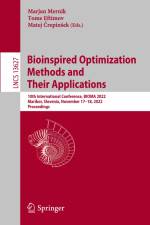
This book constitutes the refereed proceedings of the 10th International Conference on Bioinspired Optimization Methods and Their Applications, BIOMA 2022, held in Maribor, Slovenia, in November 2022.The 19 full papers presented in this book were carefully reviewed and selected from 23 submissions.The papers in this BIOMA proceedings specialized in bioinspired algorithms as a means for solving the optimization problems and came in two categories: theoretical studies and methodology advancements on the one hand, and algorithm adjustments and their applications on the other.
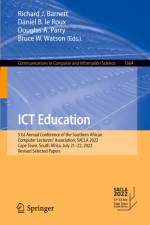
This book constitutes the refereed proceedings of the 51st Annual Conference of the Southern African Computer Lecturers' Association, SACLA 2022, held in Cape Town, South Africa, during July 21-22, 2022.The 10 full papers were included in this book were carefully reviewed and selected from 31 submissions. They were organized in topical sections as follows: curriculum; assessment; teaching in context; innovative teaching; and pandemic pedagogy.
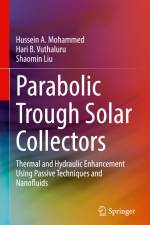
Parabolic Trough Solar Collectors: Thermal and Hydraulic Enhancement Using Passive Techniques and Nanofluids systematically and methodically examines all aspects of the essential and basic elements of parabolic trough solar collector (PTSC) design and performance enhancement techniques. The book provides thorough optical, thermal, and exergetic analyses along with a review of experimental and numerical studies performed on thermal augmentation methods, which includes the use of conventional fluids and advanced fluids such as nanofluids and hybrid nanofluids in PTSC. Moreover, the use of passive techniques, turbulators, and surface modifications with different shapes and configurations associated with PTSC is presented. The PTSC's thermal efficiency augmentation estimation with the utilization of different fluids (i.e. conventional or advanced fluids) is summarized and analyzed in each case study, and the ongoing patterns in hybrid nanofluid utilization are provided. Given the interdisciplinary nature of renewable energy systems design, this comprehensive reference will be an invaluable resource for engineering and industrial professionals involved in energy engineering design, power plant design, and solar energy systems design.Presents all state-of-the-art aspects of PTSC design and implementation;Hands-on reference for anyone involved in renewable energy systems design;Includes case studies.
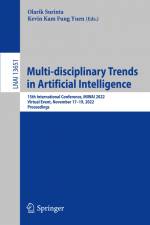
This book constitutes the refereed proceedings of the 15th International Conference on Multi-disciplinary Trends in Artificial Intelligence, MIWAI 2022, held online on November 17-19, 2022.The 14 full papers and 5 short papers presented were carefully reviewed and selected from 42 submissions.
The scientific literature has been showing that the teaching of controversial topics constitutes one of the most powerful tools for the promotion of active citizenship, the development and acquisition of critical-reflective thinking skills (Misco, 2013), and education for democratic citizenship (Pollak, Segal, Lefstein, and Meshulam, 2017; Misco and Lee, 2014). It has also highlighted, however, the complexities, risks and interference of emotional reactions in learning about sensitive, controversial or controversial historical, geographical or social issues (Jerome and Elwick, 2019; Reiss, 2019; Ho and Seow, 2015; Washington and Humphries, 2011; Swalwell and Schweber, 2016).Recent studies have advanced in the analysis of strategies employed by teacher educators in teaching controversial issues (Nganga, Roberts, Kambutu, and James, 2019; Pace, 2019), and in the curricular decisions of teachers about this teaching (Hung, 2019; King, 2009). These developments confirm the appropriateness of discussing or developing deliberative skills and conversational learning as the most appropriate strategy for the didactic treatment of controversial issues (Claire and Holden, 2007; Hand, 2008; Hess, 2002; Oulton, Day, Dillon and Grace, 2004; Oulton, Dillon and Grace, 2004; Myhill, 2007; Hand and Levinson, 2012; Ezzedeen, 2008). The promotion of discussion on specific social justice issues has also been approached from the use of controversial or documentary images in teacher education contexts, in order to question what is happening or has happened in present and past societies (Hawley, Crowe, and Mooney, 2016; Marcus and Stoddard, 2009).In this context, the aim of this contributed volume is, on one hand, to understand the discourses and decision-making of teachers on controversial issues in interdisciplinary educational contexts and their association with the development of deliberation skills. On the other hand, it seeks to offer studies focused on the analysis of the levels of coherence between their attitudes, positions and teaching practices for the teaching and learning of social problems and controversial issues from an integrated disciplinary perspective.
Abonner på vårt nyhetsbrev og få rabatter og inspirasjon til din neste leseopplevelse.
Ved å abonnere godtar du vår personvernerklæring.