
























Gjør som tusenvis av andre bokelskere
Abonner på vårt nyhetsbrev og få rabatter og inspirasjon til din neste leseopplevelse.
Ved å abonnere godtar du vår personvernerklæring.Du kan når som helst melde deg av våre nyhetsbrev.

New Discoveries in the Behavioral Neuroscience of Attention Deficit Hyperactivity Disorder reviews the latest developments in preclinical and clinical research of Attention Deficit Hyperactivity Disorder. As well as updating key chapters that were included in an earlier edition, this volume includes some new topics that are attracting a great deal of interest and point the way to new and promising directions for future research. The chapters follow five main themes: Current perspectives on the clinical profile of ADHD and its treatment, common co-occurring conditions, neurobiological studies examining brain function and genetics, animal and in vitro studies, and future directions. This combination of topics emphasises the translational relevance and validity of preclinical research so as to enable a better understanding of ADHD and to highlight the promising strategies for developing new treatments.
This volume explores how Latin American and Latinx creators have engaged science fiction to explore posthumanist thought. Contributors reflect on how Latin American and Latinx speculative art conceptualizes the operations of other, non-human forms of agency, and engages in environmentalist theory in ways that are estranging and open to new forms of species companionship. Essays cover literature, film, TV shows, and music, grouped in three sections: "e;Posthumanist Subjects"e; examines Latin(x) American iterations of some of the most common figurations of the posthuman, such as the cyborg and virtual environments and selves; "e;Slow Violence and Environmental Threats"e; understands that posthumanist meditations in the hemisphere take place in a material and cultural context shaped by the catastrophic destruction of the environment; the chapters in "e;Posthumanist Others"e; shows how the reimagination of the self and the world that posthumanism offers may be an opportunity to break the hold that oppressive systems have over the ways in which societies are constructed and governed.
This book analyses the gender roles and political contexts of spy fiction narratives published during the years of the Cold War. It offers an introduction to the development of spy fiction both in England and in the United States and explores the ways in which issues such as the atomic bomb, double agents, paranoia, propaganda and megalomania manifest themselves within the genre. The book examines the ongoing marginalization of women within spy fiction texts, exploring the idea that this unique period in global history is responsible for the active promotion and celebration of masculinity and male superiority. From James Bond to Jason Bourne, the book evaluates the ongoing enforcement of patriarchal ideas and oppressions that, in the name of national security and patriotic duty, have contributed to the development of a genre in which discrimination and bias continue to dominate.
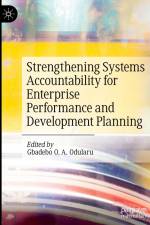
One of the driving forces in catalyzing sustainable development interventions is systems accountability. This book tackles the notion of systems accountability in the context of enterprise and broader development planning, providing diversely institutionalized and applied implications for Africa. This compilation of innovatively selected chapters is not only relevant to contemporary corporate and public sector management, but also a timely guide on the role of digitalization in delivering real-time traceability by bridging gaps in confidence, data silos, distrust, shared credentials, and accountability. Understanding how to eliminate unnecessary layers of middlemen policy brokers and their rent seeking behaviors would provide further insights into how small enterprises and non-profit operate, their challenges or pitfalls, and how they can be improved to better manage the relevant systems.
This voice-driven, narrative, non-fiction book relays the stories of seven courageous women whose lives have been greatly impacted by a loved one's stroke, resulting in loss of language ability to one degree or another. Aphasia leads to varying degrees of problems in speaking, understanding, reading, writing, gesturing, and using numbers. Aphasia can be extremely stressful for both the individual who had the stroke and for their family and friends. Speech is such a significant part of human interaction, and it's something that most people take for granted. It's hard to be able to communicate if you've been dependent upon verbal communication and yours is suddenly impaired. Fortunately, some recovery from aphasia is possible, and there are still ways to effectively communicate, even with aphasia.The stories contained in the book are intended to help others feel less alone as they navigate their loss and the confusing healthcare system. The stories are told from the advent of a stroke of their loved-ones and describe how these caretakers persevered to find quality medical services and to provide home care. Caring For a Loved One with Aphasia After Stroke is written for people who are going through a similar crisis, or for those in the medical and/or speech/language field who are interested to learn more about perseverance and hope that are critical to aphasia.
This book provides a collection of recent research works on learning from decentralized data, transferring information from one domain to another, and addressing theoretical issues on improving the privacy and incentive factors of federated learning as well as its connection with transfer learning and reinforcement learning. Over the last few years, the machine learning community has become fascinated by federated and transfer learning. Transfer and federated learning have achieved great success and popularity in many different fields of application. The intended audience of this book is students and academics aiming to apply federated and transfer learning to solve different kinds of real-world problems, as well as scientists, researchers, and practitioners in AI industries, autonomous vehicles, and cyber-physical systems who wish to pursue new scientific innovations and update their knowledge on federated and transfer learning and their applications.
This book critically reviews transnational banking regulations that specifically impact consumer lending in Africa's largest economy. It provides a comprehensive analysis on the politics and economics of financial sector consolidation in an emerging market in West Africa, also covering law, consumer credit, and consumer policy along with a discussion of banking sector reforms heavily influenced by the neoliberal economics paradigm. There have been several developments since the publication of the existing books especially in the area of regulatory theory and social protection that are captured in this book, which will be of interest to researchers, students, and scholars of banking regulation, development economics, and international finance.
This book is an argument for moving beyond culturally/historically/ethnically/biologically-grounded identity as the necessary foundation of an authentic self. It highlights examples of people who are attempting to inhabit identities they feel are more appropriate to themselves, by deploring the damage done via claims about authentic identity. The sole theme of this book is "e;becoming beyond identity"e;. We are not fixed human beings but rather perpetually-dynamic human becomings. As intelligence is enabled or recognized beyond the merely human, we should welcome our continuing evolution from homosapiens, sapiens, into many varieties of intelligences on Earth and the cosmos. This book builds from tiny ripples into a tsunami of examples from conventional identity studies, to Confucian human becomings, to apotemnophilia, to DIY biohacking, to cyborgs, to artilects, to hiveminds, to intelligence in animals, plants and fungi from the Holocene through the beginnings of the precarious, climate change-driven Anthropocene Epoch, with hints far beyond and throughout the cosmos. From a lifetime of work in future studies, anticipation science and space studies, the author balances frank tales of his own experiences and beliefs concerning his uncertain and fluid identities with those of others who tell their stories. In addition to material from academic and popular sources, a few poems further illuminate the scene.
This useful and extensive set of guidelines is designed to assist food control laboratories in gaining accreditation from an internationally recognized external body, providing all of the necessary information and practices in an easy-to-read, step-by-step fashion. Authored by an experienced consultant for laboratory accreditation in many different countries, with this text food control lab owners now have all of the up-to-date information they need to gain accreditation in a single source. Guidelines for Laboratory Quality Managers covers the essentials for quality management in the food control laboratory, from testing processes to current quality management systems. The ISO standards for accreditation are extensively explored, including managerial requirements, organizational aspects, complaint handling procedures, internal audits, and sampling. An entire section is dedicated to the implementation of managerial and technical requirements from quality control to program monitoring and evaluation. Analysis selection, preparation, and validation is covered extensively, and an entire section is dedicated to basic statistics from data presentation to distribution. Each section comes with helpful tips for lab managers plus definitions and terms. Comprehensive, easy-to-use and up-to-date, Guidelines for Laboratory Quality Managers is the guide for accreditation for food control laboratories.
This book focuses on linear time eigenvalue location algorithms for graphs. This subject relates to spectral graph theory, a field that combines tools and concepts of linear algebra and combinatorics, with applications ranging from image processing and data analysis to molecular descriptors and random walks. It has attracted a lot of attention and has since emerged as an area on its own.Studies in spectral graph theory seek to determine properties of a graph through matrices associated with it. It turns out that eigenvalues and eigenvectors have surprisingly many connections with the structure of a graph. This book approaches this subject under the perspective of eigenvalue location algorithms. These are algorithms that, given a symmetric graph matrix M and a real interval I, return the number of eigenvalues of M that lie in I. Since the algorithms described here are typically very fast, they allow one to quickly approximate the value of any eigenvalue, which is a basic step in most applications of spectral graph theory. Moreover, these algorithms are convenient theoretical tools for proving bounds on eigenvalues and their multiplicities, which was quite useful to solve longstanding open problems in the area. This book brings these algorithms together, revealing how similar they are in spirit, and presents some of their main applications.This work can be of special interest to graduate students and researchers in spectral graph theory, and to any mathematician who wishes to know more about eigenvalues associated with graphs. It can also serve as a compact textbook for short courses on the topic.
This edited volume contributes to a better understanding of parliamentary changes in times of political transition, and, specifically, the composition of the Greek Parliament before and after the debt crisis. It discusses the profiles of Greek MPs through the lens of continuity and renewal, starting with the first major political crisis after the Metapolitefsi in 1989 and ending with the last legislative elections of 2019. Greece attracted scholarly and international interest due to the transformations that the sovereign debt crisis provoked to its political and partisan system. It is one of the countries of the European periphery most severely hit during the great recession. However, no work so far has been devoted exclusively to the study of Greek parliamentary elites, their cultural and political characteristics, and the factors that shape their selection and election. The book is a multifaceted source of information for all those interested in understanding forms of political representation during normal times and times of crisis. Its distinctive advantage is that it offers an up to date and complete elite study in Greece comparable to similar European studies. Moreover, it is a useful tool for students, scholars and researchers interested in the study of political representation across Europe.
This book investigates the phenomenon of permanent campaigning in Greece over the last decade. It explores the political communication strategies of three recent successive Greek prime ministers from 2012 until the early months of 2022 to deal with economic, migration and pandemic crises, from a permanent campaigning perspective. Moreover, it evaluates and measures, for the first time, their permanent campaign strategies using the proposed framework of Lilleker and Joathan (2020) and the three following indicators: capacity building and strategy, paid and owned media and earned media. The need for presidents to communicate with public opinion and their dependence on public support is anything but new. I he difference in the case of the permanent campaign is that the campaign tools, methods, techniques and personnel follow the elected leader in office in order to back his constant efforts to retain or even increase public approval as well as advance their re-election prospects. This book aims to extend the research on the permanent campaigning in European parliamentary systems and will be of interest to political communication and campaigning students and researchers.
This book highlights the development of retail marketing in developing economies and presents this sector as a major area of growth and business opportunity. With a special focus on supermarket chains, the authors show that the advancement of technology and infrastructure means that there are now increased electronic capabilities for data collection, giving retailers more opportunities to pursue micro and macro-marketing strategies. The authors explain the evolution of this new era of marketing and the associated impact on all stakeholders, especially consumers. Taking the example of Ghana, which is considered a leader among African nations in the use of loyalty cards, the authors are able to set a benchmark for other emerging countries, especially those that are experiencing similar trends. The book is a valuable resource for students, researchers and foreign companies wishing to expand their knowledge of the marketing strategies employed by emerging economies in Sub-Saharan Africa.
This two-volume set LNAI 13355 and 13356 constitutes the refereed proceedings of the 23rd International Conference on Artificial Intelligence in Education, AIED 2022, held in Durham, UK, in July 2022.The 40 full papers and 40 short papers presented together with 2 keynotes, 6 industry papers, 12 DC papers, 6 Workshop papers, 10 Practitioner papers, 97 Posters and Late-Breaking Results were carefully reviewed and selected from 243 submissions. The conference presents topics such as intelligent systems and the cognitive sciences for the improvement and advancement of education, the science and engineering of intelligent interactive learning systems. The theme for the AIED 2022 conference was AI in Education: Bridging the gap between academia, business, and non-pro t in preparing future-proof generations towards ubiquitous AI."e;
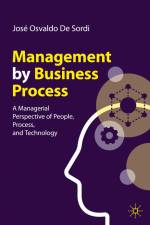
This textbook presents an integrated view of three themes relevant to the operationalization of Management by Business Process (M-B-BP): people, process, and technology. Whereas most Business Process Management (BPM) textbooks focus on software technology issues and ontological standards for the integration of various software layers, this book focuses on the managerial perspective, managerial decisions regarding the configurations of the company's structural variables that are most favorable to the best operationalization and evolution of the M-B-BP approach. Among the structural variables of the scope of managerial choices that support the discussion are: work specialization, work grouping, the chain of command, the extent of control, the decision process, and work formalization.To support businesses managed through an organizational structure oriented by business processes, it is essential that the manager has a set of knowledge, technical skills, and professional demeanor. This text focuses on these aspects, presenting: a) the theoretical foundation, describing the central concepts of the M-B-BP approach; b) the set of necessary techniques from different areas, describing and exemplifying those skills; and c) the required behaviors of managers and employees for structuring, operation, management, and continuous improvement of the organization's business processes.For students of M-B-BP, there are examples and cases that discuss business situations and themes to aid in grasping the material while at the end of the chapters there are reflection questions as well as lists of complementary material (articles, videos, web sites). They will gain an understanding of how to create a culture of improvement. The English translation of this book from its Portuguese original manuscript was done with the help of artificial intelligence (machine translation by the service provider DeepL.com). A subsequent human revision of the content was done by the author.
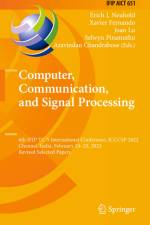
This book constitutes the refereed proceedings of the 6th International Conference on Computer, Communication, and Signal Processing, ICCSP 2022, held in Chennai, India, in February 2022.*The 21 full and 2 short papers presented in this volume were carefully reviewed and selected from 111 submissions. The papers are categorized into topical sub-headings: artificial intelligence and machine learning; Cyber security; and internet of things.*The conference was held as a virtual event due to the COVID-19 pandemic.
This book offers a concise, yet comprehensive introduction to the engineering and other principles behind passenger cruise ships. It covers all the important regulations concerning cruise ship design and operation, as well as safety, stability, and environmental aspects. It describes principles of cruise ship hydrodynamics, structures, power plant and propulsion, as well as relevant machinery and control system. Further, it deals with key cruise ship hotel systems, such as air conditioning, freshwater, firefighting, garbage, wastewater and communication systems, and many more. Written in a concise, straightforward style, and including many original drawings, this book offers a unique, informative and inspiring guide, to students and professionals in the field of naval architecture and marine engineering, cruise ship owners and managers, and curious cruise ship passengers alike.
With a focus on phenomenological methods, this new edition of Shaun Gallagher's highly regarded textbook provides a comprehensive introduction to phenomenology considered as a philosophical and interdisciplinary practice. Phenomenology 2e encompasses both the classic 20th century explications of phenomenology as well as recent developments in the practical and scientific uses of phenomenology.Key features: Explores debates about naturalizing phenomenology and reviews recent extensions of phenomenological methodology. Relates the phenomenological analysis of intentionality to discussions of enactive perception. Includes a discussion of the phenomenology of performance and a new chapter on critical phenomenology. Examines specialized topics in phenomenology, including Husserl's concept of hyletic data, embodiment, time-consciousness, action, intersubjectivity and self-consciousness. Each chapter concludes with suggestions for further reading. This book is essential reading for all undergraduate and graduate philosophy students taking courses in phenomenology. It is also ideal for use on cognitive science modules that incorporate a phenomenological perspective.
This book addresses the urgent issue of massive and inefficient energy consumption by data centers, which have become the largest co-located computing systems in the world and process trillions of megabytes of data every second. Dynamic provisioning algorithms have the potential to be the most viable and convenient of approaches to reducing data center energy consumption by turning off unnecessary servers, but they incur additional costs from being unable to properly predict future workload demands that have only recently been mitigated by advances in machine-learned predictions.This book explores whether it is possible to design effective online dynamic provisioning algorithms that require zero future workload information while still achieving close-to-optimal performance. It also examines whether characterizing the benefits of utilizing the future workload information can then improve the design of online algorithms with predictions in dynamic provisioning. The book specifically develops online dynamic provisioning algorithms with and without the available future workload information. Readers will discover the elegant structure of the online dynamic provisioning problem in a way that reveals the optimal solution through divide-and-conquer tactics. The book teaches readers to exploit this insight by showing the design of two online competitive algorithms with competitive ratios characterized by the normalized size of a look-ahead window in which exact workload prediction is available.
This book develops insights of digitalization and the future of financial services to originate an innovative approach to financial field, in order to underpin research and practice in the wide area of digital finance. The aim of this book is to extend our understandings on how digitalization and the future of financial services can be helpful in different business circumstances in many cross-functional financial areas, such as financial markets, financial risk management, financial technologies, investment finance, etc. Thus, the book aims at addressing the relevance of digital finance for different players, highlighting differences in tools and processes as well as identifying innovative practices in financial digitalization. This can result in some novel theoretical and practical insights that can foster financial players, in order to proactively explore and exploit opportunities in financial digitalization and offset financial risks and increase efficiency.
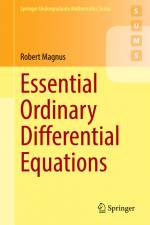
This textbook offers an engaging account of the theory of ordinary differential equations intended for advanced undergraduate students of mathematics. Informed by the author's extensive teaching experience, the book presents a series of carefully selected topics that, taken together, cover an essential body of knowledge in the field. Each topic is treated rigorously and in depth.The book begins with a thorough treatment of linear differential equations, including general boundary conditions and Green's functions. The next chapters cover separable equations and other problems solvable by quadratures, series solutions of linear equations and matrix exponentials, culminating in Sturm-Liouville theory, an indispensable tool for partial differential equations and mathematical physics. The theoretical underpinnings of the material, namely, the existence and uniqueness of solutions and dependence on initial values, are treated at length. A noteworthy feature of this book is the inclusion of project sections, which go beyond the main text by introducing important further topics, guiding the student by alternating exercises and explanations. Designed to serve as the basis for a course for upper undergraduate students, the prerequisites for this book are a rigorous grounding in analysis (real and complex), multivariate calculus and linear algebra. Some familiarity with metric spaces is also helpful. The numerous exercises of the text provide ample opportunities for practice, and the aforementioned projects can be used for guided study. Some exercises have hints to help make the book suitable for independent study.fsfsfsscs
This book constitutes the proceedings of the 11th Enterprise Engineering Working Conference, EEWC 2021, which was held online on November 12, 2021, and December 16-17, 2021.EEWC aims at addressing the challenges that modern and complex enterprises are facing in a rapidly changing world. The participants of the working conference share a belief that dealing with these challenges requires rigorous and scientific solutions, focusing on the design and engineering of enterprises. The goal of EEWC is to stimulate interaction between the different stakeholders, scientists as well as practitioners, interested in making Enterprise Engineering a reality.The 5 full papers and 3 short papers presented in this volume were carefully reviewed and selected from 16 submissions. The volume also contains 2 keynote papers.
This book reinterprets the relevance, quality and impact of academic literacies provision at university in light of recent higher education developments in a pandemic-transformed world. Drawing on the author's own experience of researching, implementing and assessing academic literacies provision, and on insights from broader scholarship and professional debates, the book helps set a new direction of travel for academic literacies professionals working in a variety of roles to enable and resource students' academic and professional growth.It makes recommendations for policy, strategy and scholarship-informed practice that place value on communicating with confidence, clarity and care at university and beyond.
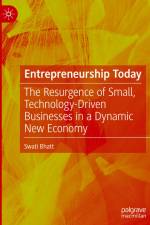
This book explores how the U.S. has been in the throes of a startup revolution, fueled by a risk-taking culture. There has been a growth of young startup from 1994, accelerating after 2010 through the present day. Most entrepreneurial activity is in the professional and business services sector, which comprises technical services as well as research and development.However, new establishments face a low survival rate, suggesting that starting businesses is not the problem, sustaining their development and growth is the principal challenge. A paradox is presented by the simultaneous presence of declining labor force participation rate among prime working age adults, a decrease in productivity growth rates in the past decade and a startup revolution.There are five native skills that are acquired by experience rather than formal education: resourcefulness, practical intelligence, over-optimism and personal initiative. These are built on a foundation of attributes that form the culture of risk-taking and decision-making. Underlying values and beliefs include collaboration, openness to new ideas, an awareness of the environment and the needs of people in your radius of interaction. A strongly embedded community forms the essence of entrepreneurial culture, and its values cannot be taught, they must be learned through experience.
This book introduces readers to the main types of corporate sustainability practices. The first section examines both the ratings provided by international agencies and the various ESG (Environmental, Social and Government) indexes existing at 2021. In turn, the second part empirically investigates the relationship between the level of corporate sustainability and corporate financial performance among the large companies listed on the Milan Exchange FTSE-MIB 40 index for 2015-2019.The book offers a comprehensive overview of current sustainability concepts and practices and illustrates how various companies are seeking to integrate them in their competitive strategy. Further, it fills a gap in the extant literature by analysing the origins, historical evolution and structure of the main rating agencies and ESG indexes. In addition, the empirical analysis of corporate sustainability's impact on companies' financial performance reveals the importance of collegial leadership - a commonly found feature of Italian family businesses that has not been considered in previous studies - as a moderating factor for reconciling sustainability initiatives and performance at family-run firms.
This book constitutes the refereed post-conference proceedings of the 17th International Conference on Advances in Computer Games, ACG 2021, which was held as a virtual event during November 23-25, 2021. The 22 full papers included in this book were carefully reviewed and selected from 34 submissions. They were organized in topical sections as follows: learning in games; search in games; solving games; chess patterns; player modelling; and game systems.
This book addresses issues related to school inclusion from the perspective of systemic inclusion. It focuses on the need to face the challenges of inclusion in education from a broad perspective, including the classroom, the school as an institution, families, and the community. It also pays attention to the full interactions between them. The book demonstrates how inclusion can be carried out in very real, concrete and everyday ways. It also shows how researchers can work hand in hand with the professionals and other stakeholders who are developing their practices day by day.The book draws on a range of research projects of the Spanish and international research groups to provide both rich theoretical frameworks and rigorous research outcomes related to the four dimensions of the systemic inclusion perspective and its necessary networking: classroom, school, families and the community. Most of the chapters take Spain as the case study but, far from being a local book, it uses Spanish analysis to dialogue universally with current main debates and challenges in inclusion, almost 30 years after the Salamanca Statement.
This book examines how Jewish intellectuals during and after the Second World War reinterpreted Homer's epics, the Iliad and the Odyssey, in light of their own wartime experiences, drawing a parallel between the ancient Greek genocide of the Trojans and the Nazi genocide of the Jews. The wartime writings of Theodore Adorno, Hannah Arendt, Erich Auerbach, Rachel Bespaloff, Hermann Broch, Max Horkheimer, Primo Levi, and others were attempts both to understand the collapse of European civilization and the Enlightenment through critiques of their foundational texts and to imagine the place of the Homeric epics in a new post-War humanism. The book thus also explores the reception of these writers, analyzing how Jewish child-survivors like Geoffrey Hartman and Helene Cixous and writers of the post-Holocaust generation like Daniel Mendelsohn continued to read the epics as narratives of grief, trauma, and woundedness into the twenty-first century..
This book documents, verifies and brings to life the issues and debates that are created around the aging society. It carefully offers a series of opinions that attempt to illuminate the fact that the aging society goes beyond aging and includes a series of changes in terms of family, social ties, relationships, and the way human beings perceive society. The book contributes substantially to the discussion of this new type of aging, the new types of families, and the new types of relationships, as well as in the application of cutting-edge analytical strategies to understand the trends and patterns of these new modes of social structures.The book includes detailed perspectives on how decisions need to be made, mindsets need to be changed, and precautions need to be taken to positively deal with these new realities. The evidence presented in this book suggests that if this does not happen, the danger of thanato-politics appears, which, denying reality, will lead humanity into difficult labyrinths, perhaps without any "e;Ariadne's thread"e; that will allow a glimpse of the way out.The translation from Spanish to English was done with the help of artificial intelligence (machine translation by the service DeepL.com). A subsequent human revision was done primarily in terms of content.
This book presents the proceedings of the 2nd International Congress on Innovation and Research-A Driving Force for Socio-Econo-Technological Development (CI3 2021). CI3 was held on September 1-3, 2021. It was organized by the Instituto Tecnologico Superior Ruminahui and GDEON, in co-organization with Higher Institutes: Bolivariano de Tecnologia, Central Tecnico, Espiritu Santo, Jose Chiriboga Grijalva, ISMAC, Policia Nacional del Ecuador Vida Nueva; and sponsored by the Universidad Nacional Mayor de San Marcos (Peru), Universidade Federal de Goias (Brazil) and City University of New York (United States). CI3 aims to disseminate the research project results that are being carried out in different Higher Education Institutions, research centers, and the business sector.
Abonner på vårt nyhetsbrev og få rabatter og inspirasjon til din neste leseopplevelse.
Ved å abonnere godtar du vår personvernerklæring.