












Gjør som tusenvis av andre bokelskere
Abonner på vårt nyhetsbrev og få rabatter og inspirasjon til din neste leseopplevelse.
Ved å abonnere godtar du vår personvernerklæring.Du kan når som helst melde deg av våre nyhetsbrev.

This book provides a significant contribution to the literature on land reform in various African contexts. While the economic evidence is clear that secure property rights are a necessary condition for catalysing broad-based economic development, the governance process by which those rights are secured is less clear. This book details the historical complexity of land rights and the importance of understanding this history in the process of trying to improve tenure security. Through a combination of single country case studies, comparative case studies and regional comparisons, the book is unequivocal that good governance is paramount for improving the performance of land reform programmes. All attempts at moving towards more formal secure tenure require congruence with informal norms, beliefs and values, and a set of clear systems and processes to avoid corruption and unintended negative consequences.
This handbook is a reference source for identifying, characterizing, instructing on use, and describing outcomes of neurotoxin treatments ¿ to understand mechanisms associated with toxin use; to project outcomes of neurotoxin treatments; to gauge neurotoxins as predictors of events leading to neurodegenerative disorders and as aids to rational use of neurotoxins to model disease entities. Neuroprotection is approached in different manners including those 1) afforded by therapeutic agents ¿ clinical and preclinical; or 2) by non-drug means, such as exercise. The amorphous term ¿neurotoxin¿ is discussed in terms of the possible eventuality of a neuroprotectant producing an outcome of excess neuronal survival and a behavioral spectrum that might produce a dysfunction ¿ akin to a neurotoxin¿s effect. This new edition significantly expands on the information provided in the first edition, providing the latest research in neurotoxicity and highlighting the relationship between specificneurotoxins and the neurodegenerative disorders they can cause. It also includes new sections on the neurotoxicity of heavy metals, fungi, and snake venom. The Handbook of Neurotoxicity is thus an instructive and valuable guide towards understanding the role of neurotoxins/neurotoxicity in the expansive field of Neuroscience, and is an indispensable tool for laboratory investigators, neuroscientists, and clinical researchers.
This book is about the design and development of tools for software testing. It intends to get the reader involved in software testing rather than simply memorizing the concepts. The source codes are downloadable from the book website. The book has three parts: software testability, fault localization, and test data generation.Part I describes unit and acceptance tests and proposes a new method called testability-driven development (TsDD) in support of TDD and BDD. TsDD uses a machine learning model to measure testability before and after refactoring. The reader will learn how to develop the testability prediction model and write software tools for automatic refactoring.Part II focuses on developing tools for automatic fault localization. This part shows the reader how to use a compiler generator to instrument source code, create control flow graphs, identify prime paths, and slice the source code. On top of these tools, a software tool, Diagnoser, is offered to facilitate experimenting with and developing new fault localization algorithms. Diagnoser takes a source code and its test suite as input and reports the coverage provided by the test cases and the suspiciousness score for each statement.Part III proposes using software testing as a prominent part of the cyber-physical system software to uncover and model unknown physical behaviors and the underlying physical rules. The reader will get insights into developing software tools to generate white box test data.
This book presents the latest research on software engineering application in informatics. The fields of software engineering, informatics, computer science, and artificial intelligence are critical for study in the intelligent systems issue space.This is the first part of the refereed proceedings of the 6th Computational Methods in Systems and Software 2022 (CoMeSySo 2022). The CoMeSySo 2022 conference, which is being hosted online, is breaking down barriers. CoMeSySo 2021 aims to provide a worldwide venue for debate of the most recent high-quality research findings.
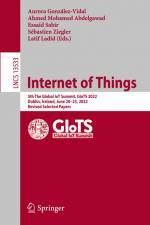
This book constitutes revised selected papers from the refereed proceedings of the 5th The Global IoT Summit, GIoTS 2022, which took place in Dublin, Ireland, in June 20¿23, 2022. The 33 full papers included in this book were carefully reviewed andselected from 75 submissions. They were organized in topical sections as follows: ioT enabling technologies; ioT applications, services and real implementations; ioT security, privacy and data protection; and ioT pilots, testbeds and experimentation results.
This book constitutes the refereed proceedings of the 17th Annual Conference on Theory and Applications of Models of Computation, TAMC 2022, held as a virtual event, in September 2022.The 33 full papers were carefully reviewed and selected from 75 submissions. The main themes of the selected papers are computability, complexity, algorithms, information theory and their extensions to machine learning theory, and foundations of artificial intelligence.
This book surveys the current research on CO2 conversion processes and shows that these can close the carbon cycle as part of a circular economy. The technical and economic feasibility of these processes are examined together and current scientific challenges are signposted, which will guide future R&D. Technology sustainability is key for meeting and keeping decarbonization goals in the long term. However, considering economic and environmental sustainability individually is not enough. An integral view of sustainability that incorporates an energy term in the equation is needed. This book brings this concept to the fore.
The book Function-oriented bioengineered skin equivalents - continuous development towards complete skin replication aims to provide potential readers with a comprehensive summary of the available information on various in vitro skin models, from historical background to different modeling approaches and their applications. Particular emphasis is placed on presenting the current technological components available for the development of engineered skin equivalents by summarizing advances in cell cultivation, materials science, and bioengineering. Using examples of the current-state-of-art, we describe the advantages, limitations, and challenges of developing in vitro skin models for successful use in clinical applications and skin-related research.
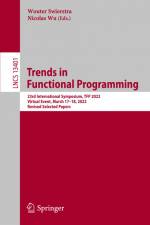
This book constitutes revised selected papers from the 23rd International Symposium on Trends in Functional Programming, TFP 2022, which was held virtually in March 2022.The 9 full papers presented in this volume were carefully reviewed and selected from 17 submissions. They deal with all aspects of functional programming, taking a broad view of current and future trends in the area.
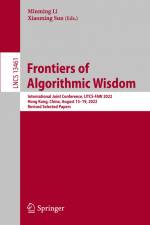
This book constitutes the proceedings of the International Joint Conference on Theoretical Computer Science-Frontier of Algorithmic Wisdom (IJTCS-FAW 2022), for the 16th International Conference on Frontier of Algorithmic Wisdom (FAW) and the third International Joint Conference on Theoretical Computer Science (IJTCS), held in Hong Kong, China, in August 15-19 2022.FAW started as the Frontiers of Algorithmic Workshop in 2007 at Lanzhou, China, and was held annually from 2007 to 2021 and published archival proceedings. IJTCS, the International joint theoretical Computer Science Conference, started in 2020, aimed to bring in presentations covering active topics in selected tracks in theoretical computer science.To accommodate the diversified new research directions in theoretical computer science, FAW and IJTCS joined their forces together to organize an event for information exchange of new findings and work of enduring value in the field. In addition to four keynote speakers, 26 invited speakers and 19 contributed speakers, IJTCS-FAW2022 organized Forums for undergraduate research, young PhD graduates, young TCS faculty members, female researchers, as well as a forum in Conscious AI and a CSIAM Forum in blockchain.The 19 full papers presented in this book were carefully reviewed and selected from 25 submissions. They were organized in topical sections as follows: Algorithmic Game Theory; Game Theory in Block Chain; Frontiers of Algorithmic Wisdom; Computational and Network Economics.
This concise, easy-to-read pocket guide offers medical trainees, researchers, and clinicians at every level the perfect resource on Evidence Based Medicine (EBM). Based on the author¿s many years of experience teaching EBM to medical students and medical residents at Columbia University, this handy title addresses not only all the basic concepts and issues in EBM, but also takes an example-based approach and is replete with numerous illustrations. This brief book provides readers with all the tools needed to tell the good from the bad in healthcare research. It discusses every type of study design, from the assessment of diagnostic tests to clinical trials and meta-analysis. The work also introduces readers to novel methods, such as the Bayesian analysis of clinical trials. In addition, to help readers better retain the information, the guide includes thought-provoking review questions and answers in an appendix. In all, Pocket Evidence-Based Medicine: A Survival Guide for Clinicians and Students is an ideal resource for anyone who encounters statistics in their studies or career, including clinicians, researchers, trainees in medicine and graduate students in a wide range of other disciplines
This book provides a modern perspective on the analytic structure of scattering amplitudes in quantum field theory, with the goal of understanding and exploiting consequences of unitarity, causality, and locality. It focuses on the question: Can the S-matrix be complexified in a way consistent with causality? The affirmative answer has been well understood since the 1960s, in the case of 2¿2 scattering of the lightest particle in theories with a mass gap at low momentum transfer, where the S-matrix is analytic everywhere except at normal-threshold branch cuts. We ask whether an analogous picture extends to realistic theories, such as the Standard Model, that include massless fields, UV/IR divergences, and unstable particles. Especially in the presence of light states running in the loops, the traditional i¿ prescription for approaching physical regions might break down, because causality requirements for the individual Feynman diagrams can be mutually incompatible. We demonstrate that such analyticity problems are not in contradiction with unitarity. Instead, they should be thought of as finite-width effects that disappear in the idealized 2¿2 scattering amplitudes with no unstable particles, but might persist at higher multiplicity. To fix these issues, we propose an i¿-like prescription for deforming branch cuts in the space of Mandelstam invariants without modifying the analytic properties of the physical amplitude. This procedure results in a complex strip around the real part of the kinematic space, where the S-matrix remains causal. We illustrate all the points on explicit examples, both symbolically and numerically, in addition to giving a pedagogical introduction to the analytic properties of the perturbative S-matrix from a modern point of view. To help with the investigation of related questions, we introduce a number of tools, including holomorphic cutting rules, new approaches to dispersion relations, as well as formulae for local behavior of Feynmanintegrals near branch points. This book is well suited for anyone with knowledge of quantum field theory at a graduate level who wants to become familiar with the complex-analytic structure of Feynman integrals.
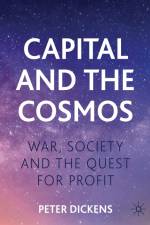
This book offers a new understanding of society¿s relations with the cosmos. Entrepreneurs such as Jeff Bezos and Elon Musk receive a great deal of publicity, but offer unlikely and implausible visions of space tourism for the general public. Meanwhile, asteroids are seen as ¿rare materials¿ which will be extracted and used to produce untold riches for earthbound citizens.The reality is rather different. First, there is no evidence that owners of capital are attempting to extract ¿rare¿ materials in the cosmos. The costs would be ¿out of this world¿. But capital, not governments, is determining how outer space should be used. Capital¿s investments in aerospace companies are actively determining forms of military interventions and the equipment used. And satellite television pumps out forms of culture aimed at a global audience. But these are being ignored and subverted by, for example, indigenous peoples.In short, this book setsout a new understanding of our relations with the cosmos. The forces of capital are certainly powerful but at the same time they are being challenged, subverted and even overturned.
We humans make judgments about a staggering variety of topics. These include which medical condition is the correct diagnosis for your symptoms, whether a particular defendant is guilty of some crime or whether a particular political candidate will win an election¿to name a few of countless examples. But how accurate are the judgments we all make, and how can they get better? This book synthesizes interdisciplinary research about these questions into one volume. In doing so, it uniquely draws on insights from fields as diverse as medicine, political judgment, cross-cultural psychology, evolutionary history and the heuristics and biases research program. Consequently, the book also enables readers concerned with judgmental accuracy in one field to benefit from the insights in others. Moreover, the author introduces an emerging field of research: empirical epistemology or normative cognitive science. The book lastly articulates a set of recommendations¿recommendations aiming to improve our judgment, our decision-making and ultimately our lives.
Failure to Thrive (FTT) is a multifactorial illness requiring the systematic application of evidence in conjunction with a multidisciplinary team-based approach. Evidence suggests most cases of FTT can be diagnosed using key elements of the patient history and physical examination including appropriate growth assessment, and that laboratory testing is usually unhelpful in determining an etiology. Despite this, there is wide variation in the definition, evaluation, treatment, costs, and outcomes of FTT patients, with subsequent burdens on the healthcare system. A suggested approach to the differential diagnosis and management of FTT is to review calories ¿ inadequate caloric intake, excessive calorie losses, and/or increased caloric intake (i.e. increased metabolic demand) ¿ while acknowledging the available resources along the continuum of patient care. Implementing evidence-based practice for FTT provides improvement opportunities for providers and potentially has significant impact on the healthcare system. This book is designed to present a practical and concise handbook on the diagnosis and management of failure to thrive (FTT)/ malnutrition for quick reference by trainees and practitioners by using case examples and available evidence in the current literature. This book is divided into 7 chapters in a logical progression of defining, diagnosing, and managing FTT with cases in each chapter to further illustrate evidence-based care.
This book presents a model-driven approach for creating a national application profile of the international legislative document standard Akoma Ntoso (AKN). AKN is an XML-based document standard that serves as the basis for modern machine-readable and fully digital legislative and judicial processes. The described model-driven development approach ensures consistent and error-proof application of AKN concepts and types, even when using different software tools. It allows for easy maintenance, is self-documenting, and facilitates stakeholder validation with nontechnical legal experts. The resulting application profile remains fully compliant to and compatible with AKN.For the sake of illustration, the approach is paradigmatically applied to the German federal legislative process, as a corresponding approach was used in the creation of the German AKN application profile, LegalDocML.de. We discuss how the methodology yields a model, schema definition and specificationthat correspond to the artefacts created by LegalDocML.de, using examples from Germany. The book is of interest to both legal and technical project teams on the cusp of introducing AKN in a legislative domain and intended as a practical guideline for teams preparing to create a custom application profile for their own domain. Furthermore, it can serve as both a resource and an inspiration for similar and yet to be developed methodologies in the public sector, the health sector or in defense, where international standardization and interoperability efforts are to be applied to a local level.
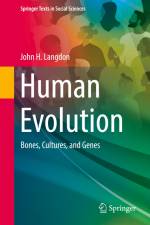
This is an introductory textbook for the study of human evolution, and covers all major topics of human origins taught under paleoanthropology, anthropology, archaeology, and evolutionary biology courses. This book differs from the existing selection of textbooks in the following ways:¿ It incorporates the most recent fossil discoveries and interpretations.¿ It balances the discussion between descriptions of fossils and interpretations of behavior of hominins in different time periods. ¿ It includes current findings of genomics into understanding the more recent stages of human evolution. This important subdiscipline is badly underserved by current texts.¿ It consistently addresses the relationship of evidence to our current hypotheses and interpretations.The book has an engaging and lucid style suitable for those entering the field. Students will find ample case studies, illustrations and examples helpful in understanding difficult concepts. Tables, timelines, and maps in every chapter include data summaries and key points. The book highlights peripheral points and background concepts in side boxes for easy reference and lists key ideas at the end of each chapter. This up-to-date and easy to read text is suitable for both classroom study and self-learning.
This Open Access Brief presents the KAPSARC Global Energy Macroeconometric Model (KGEMM). KGEMM is a policy analysis tool for examining the impacts of domestic policy measures and global economic and energy shocks on the Kingdom of Saudi Arabia. The model has eight blocks (real sector, fiscal, monetary, external sector, price, labor and wages, energy, population, and age cohorts) that interact with each other to represent the Kingdom¿s macroeconomy and energy linkages. It captures New Keynesian demand-side features anchored to medium-run equilibrium and long-run aggregate supply. It applies a cointegration and equilibrium correction modeling (ECM) methodology to time series data to estimate the model¿s behavioral equations in the framework of Autometrics, a general-to-specific econometric modeling strategy. Hence, the model combines ¿theory-driven¿ approach with ¿data-driven¿ approach.The Brief begins with an introduction to the theoretical framework of the model and the KGEMM methodology and then walks the reader through the structure of the model and its behavioral equations. The book closes with simulations showing the application of the model. Providing a detailed introduction to a cutting-edge, robust predictive model, this Brief will be of great use to researchers and policymakers interested in macroeconomics, energy economics, econometrics, and more specifically, the economy of Saudi Arabia.
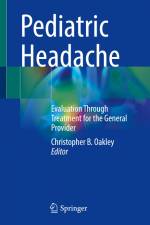
Pediatric headache is the most common neurological complaint that presents to the general pediatrician, urgent care and emergency rooms, and to pediatric neurology. Despite how common headaches are in the pediatric population and how many children continue to suffer from their headaches on a daily basis, there remains a tremendous disconnect for those tasked with being the first-line providers (general pediatric providers). This stems from the fact that headache patients can be so variable and challenging, with numerous comorbid concerns, all the while requiring an individualized treatment approach without a cure.The purpose of this proposed book is to help foster a better understanding of how to approach, assess, and ultimately treat pediatric headache for the general pediatric provider in an attempt to make what once was a daunting, overwhelming complaint from patients and their families into something each general pediatric provider can conquer with confidence. With the aid of experts in the field of pediatric headache, this book will begin by providing the foundation as to what types of headaches, primary and secondary as well as their precursors, are commonly seen in the pediatric population. From there, the focus will turn to when should the provider worry about a patient who presents with headaches. The clinic visit -- from the history to the ¿red flags¿ to the pertinent exam -- will be reviewed in depth to help distinguish between primary and secondary headaches as well as who warrants an evaluation. Additionally, comorbid concerns will be covered as these may have direct impact on the evaluation and subsequent treatments offered. The next section will delve into the treatment of pediatric headache with a comprehensive approach covering everything from lifestyle to complementary and alternative therapies/treatments, to medications, both acute and prophylactic. Other morespecialized treatment options such as procedures and devices will also be discussed albeit these options are more likely to be offered by a specialist rather than a general provider. A subsequent section will highlight the unique challenges for the older adolescent patients as they transition into young adulthood. The closing section will highlight the future of pediatric headache.
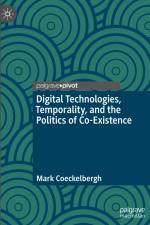
Our digital existence is hurried and fast. We are tied to the present, or perhaps we are not present enough: immersed in digital social media and processes by artificial intelligence, we are hardly present to ourselves and to others, and feel alienated from nature. We are also made to fear climate change and the end of humanity. How can we live a good life and give meaning to our lives under these conditions? How can and should we co-exist today?Using process philosophy, narrative theory, and the concept of technoperformances, this book analyzes how digital technologies shape our relation to time and our existence, and discusses what this means in the light of climate change and new technologies such as AI. In dialogue with contemporary philosophy of technology and media theory and asking original questions about finding common times in what it calls the ¿Anthropochrone¿, it proposes a conceptual framework that helps us to understand how we (should) exist and relate to time today.
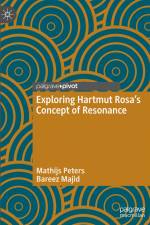
This book makes a compelling case for utilising experiences of resonance in various academic and societal fields. The concept of resonance was first introduced by Hartmut Rosa to foreground the importance of affective, emotional, transformative and uncontrollable experiences in socio-political contexts that he characterizes as alienating. Based on a critical reading of Rosäs theory and further developed through engagement with Theodor W. Adorno, Gilles Deleuze, Hannah Arendt, Judith Butler and others, this book introduces the notion of a ¿spectrum of resonance¿ which encompasses both critical resonance and affirmationist resonance. This spectrum of resonance is used to analyse various forms of aesthetic experience illustrated with reference to Edgar Reitz¿s film Heimat and the music of Nick Cave and Kayhan Kalhor.The spectrum is also deployed in the fields of museum, memory and trauma studies to show how experiences of resonance contribute to the constitution of political and social identities. The focus here is on memory practices in the Kurdistan Region of Iraq and the book seeks to decolonize resonance theory.
Abonner på vårt nyhetsbrev og få rabatter og inspirasjon til din neste leseopplevelse.
Ved å abonnere godtar du vår personvernerklæring.