





















Gjør som tusenvis av andre bokelskere
Abonner på vårt nyhetsbrev og få rabatter og inspirasjon til din neste leseopplevelse.
Ved å abonnere godtar du vår personvernerklæring.Du kan når som helst melde deg av våre nyhetsbrev.

This book is a guide for educators on how to develop and evaluate evidence-based strategies for teaching biological experimentation to thereby improve existing and develop new curricula. It unveils the flawed assumptions made at the classroom, department, and institutional level about what students are learning and what help they might need to develop competence in biological experimentation.Specific case studies illustrate a comprehensive list of key scientific competencies that unpack what it means to be a competent experimental life scientist. It includes explicit evidence-based guidelines for educators regarding the teaching, learning, and assessment of biological research competencies. The book also provides practical teacher guides and exemplars of assignments and assessments. It contains a complete analysis of the variety of tools developed thus far to assess learning in this domain.This book contributes to the growth of public understanding of biological issues including scientific literacy and the crucial importance of evidence-based decision-making around public policy. It will be beneficial to life science instructors, biology education researchers and science administrators who aim to improve teaching in life science departments.Chapters 6, 12, 14 and 22 are available open access under a Creative Commons Attribution 4.0 International License via link.springer.com.
Digital healthcare is heterogeneous along the entire treatment pathway, ranging from monitoring applications and artificial-intelligence-based diagnostics, to support for virtual reality surgery. Since the introduction of the Digital Health Act in Germany in early 2020, there has been a push toward digital innovative solutions, especially in the outpatient sector.This book analyzes current digital health law from an economic perspective, combining theory with real-world applications. It examines both the incentives and market access pathways for digital solutions and the price effects brought about by the new regulatory framework in Germany. Further, it discusses the difficulties in pricing due to the monopolistic BfArM register and negotiations with the association of all German health insurance companies. The book addresses a wide range of topics, including incentives for innovation, specifics of digital health applications, reimbursement and financing options for digital health solutions. Lastly, it presents an outlook for the future and a comparison between Germany and other countries, namely the USA and Japan. Given its scope, this book will appeal to scholars of health economics, healthcare management and public health, as well as practitioners and professionals in the public health sector.
The world is not an equal place. There are high- and low-income countries and high- and low-income households. For each group, there are differential educational opportunities, leading to differential educational outcomes and differential labor market opportunities. This pattern often reproduces the privileges and inequalities of groups in a society. This book explores this differentiation in education from a social justice lens. Comparing the United States and South Africa, this book analyzes each country¿s developmental thinking on education, from human capital and human rights approaches, in both primary and higher education. The enclosed contributions draw from different disciplines including legal studies, sociology, psychology, computer science and public policy.
This book presents the state of art of the several advanced approaches to beneficiation of coal. The influence of recent technology attains the advantages of processing coal, purification studies, rheological behavior, and the mineral beneficiation. The experts collected in this volume have contributed significantly to the enrichment in the in depth knowledge not only in context of working knowledge, but also future prospects of clean coal technology.
Taking a novel approach that adapts Freud's theory of the Primal Crime, this book examines a wealth of ethnographic data on the Gimi of the Eastern Highlands of Papua New Guinea, focusing on women's lives, myths, and rituals. Women's and men's separate myths and rites may be 'read' as a cycle of blame about which sex caused the ills of human existence and is still at fault. However, the author demonstrates that in public rites of exchange in which both sexes participate, men appropriate and subvert women's usages as a ritual strategy to 'undo' motherhood and confiscate children at puberty. In doing so, she reveals how Gimi women both rebel against the male-dominated social order and express understanding of why they also acquiesce. The result of decades of fieldwork, writing and reflection, this book offers an analysis of Gimi women's complex understanding of their situation and presents a nuanced picture of women in a society dominated by men. It represents an important contribution to New Guinea ethnography that will appeal to students and scholars of psychoanalysis, gender studies, and cultural, social and psychoanalytic anthropology.
This book is the second volume of an edited work aiming to help novice geologists to explore terrains independently. Geoscience fieldwork with focus on structural geology and tectonics has become more important in the last few years from both academic and industrial perspectives. This book also works as a resource material for batches of students or geological survey professionals undergoing training as parts of their course curriculum/training. Industry persons, on the other hand, can get a first-hand idea about what to expect in the field, in case no academic persons are available with the team. This book focuses on structural geology and tectonics and compiles terrains from several regions of the globe. This book also includes field guide chapters for primary sedimentary structures.
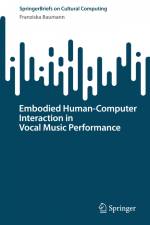
This SpringerBrief provides a unique insight into the practice and research of the connections between voice, HCI and embodiment. Specifically, it explores how the voice can be embodied and mediated by means of gestural communication through sensor interfaces and aims to situate and contextualise various aspects that generate meaningful connections in such interactive interface performance. The author offers an approach for understanding creative practices between humans and computers in gestural live music performance, from the perspective of the embodied relationships created within such systems. Underlying practices, principles and sensor technologies that support creativity in embodied human-computer interaction in vocal music performance are examined and a dynamic framework and tools for anyone wishing to engage with this subject in depth are presented.The book is essential reading not only for musicians, composers, researchers, application developers,musicologists and educators but also for students and tertiary institutions as well as actors and dramaturgs in a music context.
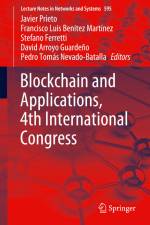
This book constitutes the refereed proceedings of the 4th International Congress on Blockchain and Applications 2022, BLOCKCHAIN¿22, held in L¿Aquila, Italy, in July 2022. Among the scientific community, blockchain and artificial intelligence are a promising combination that will transform the production and manufacturing industry, media, finance, insurance, e-government, etc. Nevertheless, there is no consensus with schemes or best practices that would specify how blockchain and artificial intelligence should be used together.The 37 full papers presented in the main track were carefully reviewed and selected from more than 75 submissions. They contain the latest advances on blockchain and artificial intelligence and on their application domains, exploring innovative ideas, guidelines, theories, models, technologies, and tools and identifying critical issues and challenges that researchers and practitioners must deal with in the future research. The bookalso includes 3 papers from the WEB3-TRUST workshop and 2 papers from the Doctoral Consortium.
What is the next chapter in Judaism¿s story, the next step in its journey? The dramatic changes of recent decades invite us to explore what role Judaism is to play in this new era. As the digital future becomes the present, Danny Schiff makes the case that the period known as ¿modernity¿ has come to an end. Noting the declining strength of Conservative and Reform Judaism, the largest US Jewish movements of modernity, he argues for new iterations of Judaism to arise in response to the myriad of weighty questions that now confront us about what it means to be human. Here is an account of the digital age through a Jewish lens, in which Schiff examines Jewish teachings and traditions, exploring what moral insight they might have to offer in this period of great flux. He marshals the thought of well-known futurists such as Ray Kurzweil and Yuval Noah Harari to forecast the exponentially larger shifts in the human condition that lie ahead, and proposes that a countercultural Judaism couldhave renewed relevance in addressing some of the pressing issues that confront humanity in the twenty-first century.
Many primary care clinicians are busy to the point of being overwhelmed and there is not time to do thorough evaluations on every patient. The outpatient clinician must be able to quickly identify and manage the overtly ill but also those with potential or even hidden issues that require a referral to the emergency department.This book provides a concise yet comprehensive summary of the various conditions the primary care practitioner could encounter in his/her office that require emergency department referral. Organized system by system, this manual provides short, readable yet detailed descriptions of situations where the clinician must make the quick decision to escalate the level of care.The book is comprised of thirteen main sections, each detailing a medical specialty and is further broken down into specific conditions within these specialties. The specialties that are featured are cardiology, dermatology, endocrinology, gastroenterology, HEENT, hematology and oncology, infectious disease, nephrology, neurology, gynecology, ophthalmology, psychiatry, pulmonology and urology. The chapters are broken down into five key aspects. First, a brief synopsis of the problem is identified covering the incidence, the risk factors and general information to give the clinician the insight to manage the situation. Next, there is a review of key elements of the history that can elucidate whether the patient has or does not have the emergent condition. Physical exam findings that the clinician can look for during the evaluation are then discussed followed by diagnostics that the clinician can get quickly the same day to help evaluate the situation. Lastly, treatments that can be provided while waiting for the urgent or emergent condition to be evaluated are identified. Written by experts in the field, Managing Emergencies in the Outpatient Setting is a valuable resource for primary care physicians, physician assistants and nurse practitioners alike.
Abonner på vårt nyhetsbrev og få rabatter og inspirasjon til din neste leseopplevelse.
Ved å abonnere godtar du vår personvernerklæring.