













Gjør som tusenvis av andre bokelskere
Abonner på vårt nyhetsbrev og få rabatter og inspirasjon til din neste leseopplevelse.
Ved å abonnere godtar du vår personvernerklæring.Du kan når som helst melde deg av våre nyhetsbrev.

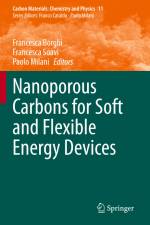
This book provides an interesting snapshot of new research within the fields of flexible and soft devices which use porous carbon-based materials. The increase in demand for soft and flexible electronics, electrochemical energy storage/conversion systems, piezoresistive pressure sensors has promoted the development of new strategies for the synthesis and integration of nanoporous carbon (NPC) into flexible and soft polymers and inorganic textures. The structural properties of such NPC materials combined with their mechanical, conductive and catalytic properties, show promising results for the technology they are designed for, which can be useful solutions in many other disciplines. An in-depth discussion of the use of NPC materials in different energy devices is provided in every chapter, while at the same time the knowledge of the reader on the various applications where these materials can be used will be broadened. This book sheds new light on nanoporous carbon-based materials and will be of great interest to graduate students and professionals working in this field.
The design of treatments for the conservation of stone in historical buildings and works of art is a challenging task, as a deep understanding of the working properties and performance of the available products and methods is required to tackle complex decay patterns.The chapters in this book illustrate the state of the art on traditional and innovative materials and methods for stone conservation, examining current trends and future perspectives. Each of them is focused on describing the consequent phases that complement the spectrum of the conservation intervention: preliminary investigations, condition assessment, and mapping of the deterioration patterns; surface cleaning, with a specific focus on laser technology; consolidation; protection; repair mortars and grouts; and onsite assessment and monitoring of conservation treatments. The performance of the applied conservation interventions is criticized and discussed with an aim of providing the specialists with specific tools for stone conservation. This book intends to bridge the gap between laboratory studies and conservation interventions, by linking together the diverse scientific areas involved in the preservation of stone heritage. Different case studies are included, highlighting specific conservation challenges and their solutions in order to understand and overcome them. The aim is to guide conservators, conservation scientists and heritage stakeholders in the selection of compatible and sustainable materials and techniques for Conserving Stone Heritage.
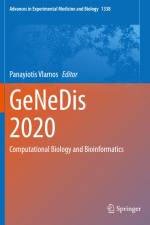
The 4th World Congress on Genetics, Geriatrics and Neurodegenerative Diseases Research (GeNeDis 2020) focuses on the latest major challenges in scientific research, new drug targets, the development of novel biomarkers, new imaging techniques, novel protocols for early diagnosis of neurodegenerative diseases, and several other scientific advances, with the aim of better, safer, and healthier aging. The increase in the average length of life leads to the development of various diseases in the elderly population. This volume focuses on the sessions from the conference on Geriatrics.
Based on over a decade of research, this book connects dream studies to cognitive anthropology, to perspectives in the humanities on mimesis, ambiguity, and metaphor, to current dream research in psychology, and to recent work in economic and political relations. Traveling the dreamscapes of a variety of young people, Mimesis and the Dream explores their encounters with American cultures and the identities that derive from these encounters. While ethnographies typically concern shared social habits and practices, this book concerns shared aspects of subjectivity and how people represent and think about them in dreams. Each chapter grounds theory in actual cases. It will be compelling to scholars in multiple disciplines and illustrates how dreaming offers insights into twenty-first century debates and problems within these disciplines, bringing a vital theoretically eclectic approach to dream studies.
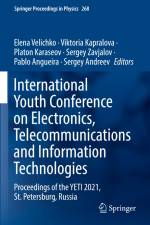
This book presents peer-reviewed and selected papers of the International Youth Conference on Electronics, Telecommunications, and Information Technologies (YETI-2021), held in Peter the Great St. Petersburg Polytechnic University, St. Petersburg, on April 22-23, 2021. For the third time around, the conference brings together students and early career scientists, serving to disseminate the current trends and advances in electronics, telecommunications, optical, and information technologies. A series of workshops and poster sessions focusing, in particular, on the theoretical and practical challenges in nanotechnologies, photonics, signal processing, and telecommunications allow to establish contacts between potential partners, share new ideas, and start new collaborations. The conference is held in an online format, thus considerably expanding its geographical reach and offering an even wider scope of discussion.
This book is a compilation of more than 70 qualitative research concepts that are used by researchers and practitioners in the social sciences and humanities. The concepts include methods and methodologies applied in qualitative research in various contexts. Each concept is a standalone chapter that is authored by a researcher or practitioner who has had some scholarly experience with it. The chapters are alphabetized using the titles of the concepts to provide easy access for readers. They follow a prescribed outline which ensures homogeneity in the layout of the book. Each chapter starts with a brief historical background of the concept, followed by a concise description of the concept, and the process used in its application. Readers are then provided with the possible ways in which the concept can be used, and its benefits. Each chapter concludes by providing readers with some strengths and limitations of the concept and a list of references that authors have used inthe chapter.
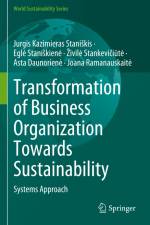
We have entered a new era where business, technologies, communities, and even pandemic deceases cross borders with unprecedented speed and intensity. 2030 Agenda and 17 SDGs reflect the global community's high expectations of finally reversing the destruction of our natural and social habits, and achieving a more balanced and equitable pathways toward well-being of all. However, despite the initial efforts, the world is not on track to achieving the most of the 169 targets that comprise the goals. It is evident that we have a system problem, so we need a system solution. Authors presented a hierarchical system consisting of two-level management systems: first level¿unsustainability reduction systems and second level¿control system for transformations toward sustainability. The book clearly shows that implementation of systems for unsustainability reduction and for transformations toward sustainability is possible, and that sufficient knowledge is available to get started. It is designed for researchers, practitioners, and politicians.
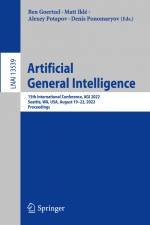
This book constitutes the refereed proceedings of the 14th International Conference on Artificial General Intelligence, AGI 2021, held as a hybrid event in San Francisco, CA, USA, in October 2021.The 36 full papers presented in this book were carefully reviewed and selected from 50 submissions. The papers cover topics from foundations of AGI, to AGI approaches and AGI ethics, to the roles of systems biology, goal generation, and learning systems, and so much more.
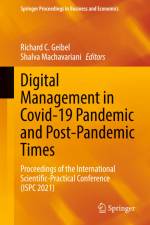
This book presents select contributions of the International Scientific-Practical Conference 2021 (ISCP 2021) organized by East European University (Georgia) and Fresenius University of Applied Sciences (Germany). It discusses the challenges of digital transformation during and after the pandemic and introduces advanced research and solutions from both academic and professional¿s aspects. The topics covered include digitalization in social and corporate responsibility, e-commerce and digital entrepreneurship, and digitalization in education.The book is an interesting read for researchers and professionals interested in digital management.
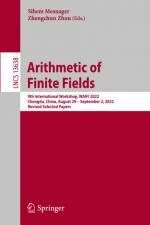
This book constitutes the thoroughly refereed post-workshop proceedings of the 8th International Workshop on the Arithmetic of Finite Field, WAIFI 2022, held in Chengdu, China, in August ¿ September 2022.The 19 revised full papers and 3 invited talks presented were carefully reviewed and selected from 25 submissions. The papers are organized in topical sections: structures in finite fields; efficient finite field arithmetic; coding theory; cryptography; sequences.
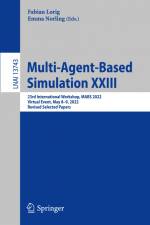
This book constitutes the thoroughly refereed and revised selected papers from the 22nd International Workshop on Multi-Agent-Based Simulation, MABS 2022, which took place virtually during May 8¿9, 2022. The conference was originally planned to take place in Auckland, New Zealand, but had to change to an online format due to the COVID-19 pandemic.The 11 papers included in these proceedings were carefully reviewed and selected from 17 submissions. They focus on finding efficient solutions to model complex social systems, in areas such as economics, management, organisational and social sciences in general.
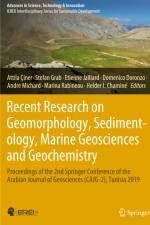
This edited book is based on the papers accepted for presentation during the 2nd Springer Conference of the Arabian Journal of Geosciences (CAJG-2), Tunisia, in 2019. Major subjects treated in the book include geomorphology, sedimentology, and geochemistry. The book presents an updated unique view in conjugating field studies and modeling to better quantify the process-product binomial unusual in geosciences. In the geomorphology section, 24 papers deal with topics related to fault slip and incision rates, soil science, landslides and debris flows, coastal processes, and geoarcheology, and geoheritage. Under the sedimentology section, 34 papers including stratigraphy, and environmental, tectonic, and diagenetic processes, together with evolutionary, biostratigraphic, and paleo-environmental significance of paleontology are presented. Additionally, this section also contains papers on marine geosciences, from molecular proxies related to climate to geophysical surveys. Last but not least, the third section on geochemistry is composed of 26 papers that are focused on sedimentary geochemistry and mineralogical characterization, magmatic and metamorphic processes and products, and the origin and exploration of mineral deposits. This book resumes the current situation related to the abovementioned topics mainly in the Mediterranean realm. The volume book is of interest to all researchers, practitioners, and students in the fields of geomorphology, sedimentology, and geochemistry, as well as those engaged in environmental geosciences, soil science, stratigraphy and paleontology, geoarcheology and geoheritage, marine geosciences, petrology, metallogenesis, and mineral deposits.
This book examines the interactions between trade policy and foreign and security policy in EU external action as a nexus of practices. Drawing on the rich empirical material of over 50 in-depth interviews with EU officials, members of the European Parliament and member state diplomats, the book reconstructs and analyses the distinctive institutional cultures of the Directorate-General for Trade and the European External Action Service, their policy practices and the effect on EU external action. It appeals to scholars of political science and international relations.
Abonner på vårt nyhetsbrev og få rabatter og inspirasjon til din neste leseopplevelse.
Ved å abonnere godtar du vår personvernerklæring.