
















Gjør som tusenvis av andre bokelskere
Abonner på vårt nyhetsbrev og få rabatter og inspirasjon til din neste leseopplevelse.
Ved å abonnere godtar du vår personvernerklæring.Du kan når som helst melde deg av våre nyhetsbrev.

This book, now in an extensively revised and updated second edition, provides a comprehensive overview of both machine learning and deep learning and their role in oncology, medical physics, and radiology. Readers will find thorough coverage of basic theory, methods, and demonstrative applications in these fields. An introductory section explains machine and deep learning, reviews learning methods, discusses performance evaluation, and examines software tools and data protection. Detailed individual sections are then devoted to the use of machine and deep learning for medical image analysis, treatment planning and delivery, and outcomes modeling and decision support. Resources for varying applications are provided in each chapter, and software code is embedded as appropriate for illustrative purposes. The book will be invaluable for students and residents in medical physics, radiology, and oncology and will also appeal to more experienced practitioners and researchers and members of applied machine learning communities.
This handbook discusses the latest findings from different fields of positive psychology from a global perspective by providing a coherent framework to get a better understanding of the development and practice of positive psychology. It starts with the parameters of positive psychology and a summary of the historical rise of positive psychology (both first wave and second wave of positive psychology) in the US, and its slow but steady growth on a global scale. This handbook highlights the major contributions of positive psychologists across 17 major regions of the world on theory, research, assessment and Practice. It discusses how positive psychology can progress human living in different countries and it shows the reasons why positive psychology has become an important source in research and education around the world.
Even before the outbreak of the COVID-19 pandemic, the Central Region faced numerous obstacles to building a stable and prosperous future. The region, which encompasses the Middle East, the Horn of Africa, Central Asia, and South Asia, has been plagued by economic and political uncertainty amidst dramatic shifts in the global power structure. With the pandemic now exacerbating the volatility in this already fragile region, the U.S.'s strategic objectives are rife for re-examination.A complicated stew of factors such as weakening of established governance systems, the emboldening of extremist individuals and groups through advances in digital technology, the humanitarian crises in Afghanistan and Syria, and the intensification of the great power competition with China and Russia are creating a fertile environment for the growth of violent extremist organizations (VEOs). Such organizations take advantage of vulnerable, aggrieved, and traumatized populations to fuel radicalization, recruitment, and unrest, which further undermine stability and the potential for peace and prosperity.While it is still early to fully understand how the ongoing response to the COVID-19 pandemic will impact U.S. policy, this book provides a timely analysis of relevant dynamics such as popular radicalization, digital information ecosystems, networks of influence, and new capabilities to recognize and prepare for other such black swan events in the region.
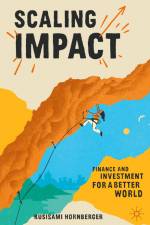
The global challenges confronting us ¿ climate change, poverty, inequality, and many others ¿ can feel overwhelming. Those of us who believe in market-based solutions to these challenges get even more disheartened when we regularly see our existing capitalist system failing us, often causing more harm than good. Many examples show how the capitalist tools of finance and investment can and make real, positive impact. Approaches like blended finance and impact investing can help accelerate progress against the world¿s biggest remaining collective challenges. Yet use of these improved capitalist approaches remains far too subscale. Blended finance and impact investing remain 15 to 200 times smaller than traditional approaches to finance and investment. How can we continue to make capitalism work better by scaling these approaches and others? This book looks at how we can start making these necessary changes using strategies, structures, and practices that take advantage ofcapitalism's strengths. Its goal is to demonstrate how a reimagined financial system can be more inclusive and accountable to all. By shifting away from extractive, short-term practices in the name of shareholder primacy, we can move toward a system that values the role of all stakeholders.
This book constitutes the revised selected proceedings of Second International Symposium on Biomedical and Computational Biology, BECB 2022, held as a virtual event in August 2022.The 58 full papers included in this book were carefully reviewed and selected from 135 submissions. The papers are organized in topical sections as follows: The Charge Transfer Network Model for Arbitrary Proteins Complexes; A Self-Supervised 3D/2D Registration Method for Incomplete DSA Vessels; The Potential Role of RNA "Writer" TRMT61B in the Immune Regulation of Breast Cancer; Extraction, Composition Analysis and Blood Lipid Lowering Activity of Rana chensinensis Ovum Oil.
This textbook describes the theory and the pragmatics of using and engineering high-level software languages ¿ also known as modeling or domain-specific languages (DSLs) ¿ for creating quality software. This includes methods, design patterns, guidelines, and testing practices for defining the syntax and the semantics of languages. While remaining close to technology, the book covers multiple paradigms and solutions, avoiding a particular technological silo. It unifies the modeling, the object-oriented, and the functional-programming perspectives on DSLs. The book has 13 chapters. Chapters 1 and 2 introduce and motivate DSLs. Chapter 3 kicks off the DSL engineering lifecycle, describing how to systematically develop abstract syntax by analyzing a domain. Chapter 4 addresses the concrete syntax, including the systematic engineering of context-free grammars. Chapters 5 and 6 cover the static semantics ¿ with basic constraints as a starting point and type systems for advanced DSLs. Chapters 7 (Transformation), 8 (Interpretation), and 9 (Generation) describe different paradigms for designing and implementing the dynamic semantics, while covering testing and other kinds of quality assurance. Chapter 10 is devoted to internal DSLs. Chapters 11 to 13 show the application of DSLs and engage with simpler alternatives to DSLs in a highly distinguished domain: software variability. These chapters introduce the underlying notions of software product lines and feature modeling. The book has been developed based on courses on model-driven software engineering (MDSE) and DSLs held by the authors. It aims at senior undergraduate and junior graduate students in computer science or software engineering. Since it includes examples and lessons from industrial and open-source projects, as well as from industrial research, practitioners will also find it a useful reference. The numerous examples include code in Scala 3, ATL, Alloy, C#, F#, Groovy, Java, JavaScript, Kotlin, OCL, Python, QVT, Ruby, and Xtend. The book contains as many as 277 exercises. The associated code repository facilitates learning and using the examples in a course.
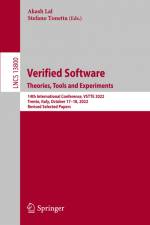
This book constitutes the refereed proceedings of the 14th International Conference on Verified Software. Theories, Tools and Experiments, VSTTE 2022 held in Trento, Italy, during October 17¿18, 2022.The 9 papers presented in this volume were carefully reviewed and selected from 20 submissions. The papers describe software verification efforts that involve collaboration, theory unification, tool integration, and formalized domain knowledge as well as novel experiments and case studies evaluating verification techniques and technologies.
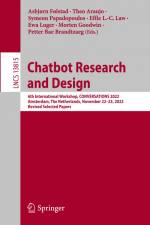
This book constitutes the proceedings of the 6th International Workshop on Chatbot Research and Design, CONVERSATIONS 2022, which was held during November 2022.The 12 papers included in this volume were carefully reviewed and selected from a total of 27 submissions. They were organized in topical sections named: chatbot users and user experience; chatbot design and applications.
This easy-to-use book equips clinicians and health care professionals with all the information that they will require in order to identify and manage orofacial complications of cancer therapy. Readers will find precise information on the presenting symptoms and signs associated with local or systemic complications associated with individual drugs or modes of therapy in cancer care. Guidance is provided whenever possible on the initial examinations to be performed in each circumstance and the investigations that can deliver a definitive diagnosis. The effective management of cancer complications are explained with the help of up to date clinical practice guidelines for the management of complications secondary to cancer therapy. In addition, an introductory section outlines contemporary principles of cancer management based on precision oral oncology principles. The text is supported by numerous highly informative clinical photographs, tables and a bibliography.
This book corresponds to the fifth volume of the series focused on Processes in GeoMedia and their research on the dynamic of natural systems, including theoretical and experimental studies of the processes occurring in the earth's bowels, the ocean, and the atmosphere. This volume pays particular attention to geomechanical aspects of the production of hydrocarbons.This fifth volume of Processes in GeoMedia corresponds to the English edition of the journal Processes in GeoMedia, published originally in Russian.
This edited volume deals with the understanding of the issues concerned with the pollution caused by toxic elements and heavy metals and their impacts on the different agro-ecosystems as well as the techniques involved in sustainable remediation and amelioration of polluted soils. Furthermore, the book is a detailed comprehensive account for the treatment technologies from unsustainable to sustainable which includes chapters prepared by professionals with expertise in environmental microbiology, biotechnology, bioremediation, and environmental engineering.It focuses on the characterization, reclamation, bioremediation, and phytoremediation of polluted soils. The research presented also highlights some of the significantly important plant and microbial species involved in remediation, the physiology, biochemistry, and the mechanisms of remediation by various plants and microbes, and suggestions for future improvement of bioremediation technology. It offers insights into the current focus and recent advances in bioremediation and green technology applications for sustainable soil management.
This book is a concise guide to the correct diagnosis and management of dental pain and anxiety. It covers psychology theories about pain, dentine sensitivity, hypersensitivity and cracked tooth syndrome. Chronic pain, temporomandibular disorders and local anesthesia are discussed, and optimal medical and perioperative pain management explained. The book is written by leading experts in the field and provides an up to date, pragmatic perspective on optimizing pain and anxiety management in the dental patient. It includes an overview of differential diagnoses of non-odontogenic orofacial pain. As well as meeting the needs of dentists, the book will be a "e;must read"e; for whole dental team.
This book constitutes the refereed proceedings of the 4th Symposium of the Norwegian AI Society, NAIS 2022, held in Oslo, Norway, during May 31¿June 1, 2022. The 11 full papers included in this book were carefully reviewed and selected from 17 submissions. They were organized in topical sections as follows: robotics and intelligent systems; ai in cyber and digital sphere; ai in biological applications and medicine; and towards new ai methods.This is an open access book.
Abonner på vårt nyhetsbrev og få rabatter og inspirasjon til din neste leseopplevelse.
Ved å abonnere godtar du vår personvernerklæring.