












Gjør som tusenvis av andre bokelskere
Abonner på vårt nyhetsbrev og få rabatter og inspirasjon til din neste leseopplevelse.
Ved å abonnere godtar du vår personvernerklæring.Du kan når som helst melde deg av våre nyhetsbrev.

This book focuses on the current situation of two technologies for electricity production from renewable energy sources, wind and solar photovoltaic energy, analysing and describing both technologies in detail.Four regions of the world, with distinct energy markets and conditions, are explored. Together, the USA, Europe, China and Japan represent one third of the world¿s population and occupy 25% of the planet, therefore offering a representation of a global picture. In each of these regions, the development of the solar and wind energy is examined, and the economic implications are described.
The book reviews past and present mine waste management processes. It estimates global water consumption by major mining resources per annum. This consumption will lead land use resources (agriculture and water) to collide with mining interests expected in the near future. With the application of novel metal extraction processes and the adoption of ecological engineering as an approach to waste and water management, a reduction in water and land consumption can be achieved. Using these methodologies would make mining more sustainable. Together with ore and metal recycling, mining methods can be brought into the 21st century.The book describes natural weathering processes and the microbiology of extreme environments, also known as mine sites. The role of microbes in weathering and remediation is emphasized, along with case studies of the enhancement of various ecological processes which curtail weathering and transform pollutants, creating ore bodies of the future.This book has been written as an extension to a contribution to the Oxford Research Encyclopedia. It adds depth and many examples from 40 years of multidisciplinary work with experts from geology, hydrogeology, geomicrobiology and algal physiology and chemistry, items too extensive for the Encyclopedia.
This book constitutes the proceedings of the 9th International Conference on Algorithms and Discrete Applied Mathematics, CALDAM 2023, which was held in Gandhinagar, India, during February 9-11, 2023.The 32 papers presented in this volume were carefully reviewed and selected from 67 submissions. The papers were organized in topical sections named: algorithms and optimization; computational geometry; game theory; graph coloring; graph connectivity; graph domination; graph matching; graph partition and graph covering.
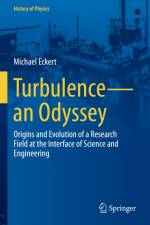
Turbulence is a research field where high expectations have met with recurrent frustration. It is a common perception among physicists, mathematicians and engineers that there is a "big mystery" behind the phenomenon of turbulence. Its history has also remained anything but well researched. Unlike topics such as quantum theory, which began to attract physics historians as long as fifty years ago, turbulence has - until now - received only little professional historical investigation.In this book, which complements his earlier SpringerBrief "The Turbulence Problem", the author sketches the history of turbulence from the vantage point of its roots (Part I), the basic concepts (Part II) and the formation of a scientific community that regarded turbulence as a research field in its own right (Part III). From this perspective turbulence research appears to undertake an odyssey through uncharted territories. The book follows this development up until a conference in Marseille in theyear 1961, which marked the inauguration of turbulence in the words of its organizer as ¿a new science¿. The epilogue contains some observations about turbulence research since 1961. This book provides a rich source of information for all those interested in the history of this major field of basic and applied science.
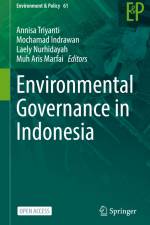
This open access book presents the state-of-the-art environmental governance research and practices in Indonesia. It offers a wide scope, covering different sectors (e.g., forestry, mining) and geographical landscapes (e.g., inland and coastal areas). This book engages with existing theories and frameworks, including Earth System Governance, Adaptive and Interactive Governance, among others to trigger a debate regarding the operationalization of such concepts, which are mostly developed for the Global North context. It is also our ambition to incorporate more empirical knowledge from local contexts to indicate research gaps and future directions for environmental governance research agenda to be more diverse, inclusive, and facilitate the incorporation of inter-and transdisciplinary knowledge. This book will be useful for researchers, students, practitioners, and policymakers who are interested in the field of environmental governance, especially in Indonesia. Indonesia is one of the countries with the fastest-growing economies in Asia. Indonesia is rich in natural resources but also suffers from overexploitation and environmental threats exacerbated by climate and human pressures. Along with the growing global ambitions for achieving sustainable development and capacity to adapt to current and future threats, including climate change impacts and disaster risk, Indonesia's commitments to balance development while safeguarding a good environmental status are also increasing. The challenge is on how to govern complex and systemic natural, social and governance systems while adhering to the principle of equity and justice? As it will require more than traditional hierarchical modes of governance and current regulatory instruments (i.e., law and regulations).This is an open access book.
This book is a compilation of scientific knowledge regarding the clinical entity known as "e;Renal Tubular Acidosis in Children"e; (RTA). It contains the information needed to comprehend the intricate mechanisms of acid-base metabolism, electrolyte imbalance, and complications related to renal tubular acidosis in the pediatric age group, since the acid-base physiology and the clinical disorders associated with it in children are quite different from the adult counterpart.The chapters, written by authors, experts in the field, describe systemic and renal physiology, electrolyte alterations, as well as the pathogenesis and chromosomal mutations leading to the development of RTA. The reader will find the latest information on diagnostic tools and learn how to approach diagnosis, avoiding improper treatment, rickets, nephrocalcinosis, and renal failure. In addition, new insights on classification, the clinical presentation of each type of RTA, molecular biology, and transmembrane protein transporters are covered.This work is primarily directed at pediatric nephrologists and pediatricians. Nevertheless, general practitioners, medical students, residents and fellows at different medical training programs, and other health care professionals of nutrition, growth and development, gastroenterology and endocrinology may surely benefit from it.
This book covers fundamentals and recent advancements on conversion coatings for magnesium and its alloys. The contents are presented in two sections, respectively dealing with chemical and electrochemical conversion coatings. The chemical conversion coating section is further subdivided into inorganic conversion coatings, organic conversion coatings and advanced approaches/coatings. The section on electrochemical conversion coatings spans from fundamentals to state-of-the-art progress on electrochemical anodization and plasma electrolytic oxidation of magnesium and its alloys.
Artificial intelligence - and social responsibility. Two topics that are at the top of the business agenda. This book discusses in theory and practice how both topics influence each other. In addition to impulses from the current often controversial scientific discussion, it presents case studies from companies dealing with the specific challenges of artificial intelligence.Particular emphasis is placed on the opportunities that artificial intelligence (AI) offers for companies from different industries. The book shows how dealing with the tension between AI and challenges caused by new corporate social responsibility creates strategic opportunities and also innovation opportunities. It highlights the active involvement of stakeholders in the design process, which is meant to build trust among customers and the public and thus contributes to the innovation and acceptance of artificial intelligence.The book is aimed at researchers and practitioners in the fields of corporate social responsibility as well as artificial intelligence and digitalization. The chapter "Exploring AI with purpose" is available open access under a Creative Commons Attribution 4.0 International License via link.springer.com.
Abonner på vårt nyhetsbrev og få rabatter og inspirasjon til din neste leseopplevelse.
Ved å abonnere godtar du vår personvernerklæring.