












Gjør som tusenvis av andre bokelskere
Abonner på vårt nyhetsbrev og få rabatter og inspirasjon til din neste leseopplevelse.
Ved å abonnere godtar du vår personvernerklæring.Du kan når som helst melde deg av våre nyhetsbrev.

This book provides an overview of key issues with regards to implementing telemedicine services as well as an in depth overview of telemedicine in pulmonary, critical care, and sleep medicine. Topics range from specific practices to program development. Telemedicine has experienced explosive growth in recent years and yet, implementing telemedicine solutions is complex with substantial regulatory, legal, financial, logistical, and intra-organization/intra-personal barriers that must be overcome. This book provides the necessary information and guidance to address those complex issues. This book is broadly divided into two parts 1) a primer on requisite steps before embarking on telemedicine service development and 2) specific applications and examples where telemedicine is successfully utilized to improve quality of care in pulmonary, critical care, and sleep medicine. The first part includes coverage of telemedicine and finance, regulatory and legal issues, and program development. The second part delves into specifics with information on ambulatory telemedicine programs, inpatient consultations, and tele-ICU programs. All chapters are written by interprofessional authors that are leaders in the field of telemedicine with extensive knowledge of diverse telemedicine programs and robust real-world experience on the topic. This is an ideal guide for telehealth program managers, and pulmonary, critical care, and sleep medicine professionals interested in improving their telehealth practice.
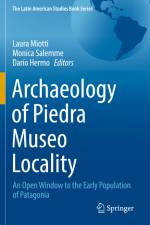
This book highlights the knowledge about landscapes and characteristics of the earliest hunter-gatherer lifeway in Southern Patagonia. It presents an analysis of the archaeological investigations carried out during three decades by an interdisciplinary team that involved archaeologists, anthropologists, paleontologists, geologists and specialists in pollen and diatoms. The database yielded was recovered from systematic survey and excavations from the Pleistocene and Holocene stratigraphic layers of the rockshelter known as AEP-1, Piedra Museo Locality, situated in the central plateau of Santa Cruz Province, Argentina. Piedra Museo is a unique place in the world of high academic interest with some of the earliest archaeological remains in the Americas. Researchers defined two strata and several Stratigraphic units in the site based on the sedimentological and pedological characteristics. The depositional zones contain archaeological remains that are interpreted as hunting events corresponding to two main different occasions in the human colonization of the region, and a third human occupation during the Middle Holocene. Last one occurred then of the massive rockshelter roof colapse. The faunal remains led to a new approach to the palaeoenvironmental evolution of this enclosed basin. This volume describes the management of lithic raw materials and social networks from first human occupation of the Patagonian region to territorial consolidation of hunter-gatherer societies.
This book provides the most up-to-date and comprehensive information on the state-of-the-art techniques and aspects involved in environment-friendly pulping technologies. Traditional chemical and semi-chemical pulping processes are not environmentally friendly. Therefore, it has become important to look for alternative approaches to mitigate wastewater emissions in the paper industry, by making more stringent regulations to improve environmental conservation. In response to this problem, new raw materials need to be explored to replace traditional choices and also new pulping processes need to be developed based on less polluting, more easily recovered reagents. This book presents new and emerging deep eutectic solvents for lignocellulosic biomass pretreatment, and discusses the effects of deep eutectic solvents on biomass pretreatment and the production of value-added products. It also introduces biotechnological methods of pulping. Biotechnological processes help to make manufacturing processes cleaner and more efficient by reducing toxic chemical pollution and greenhouse gas emissions. Given its scope, this book is of interest to applied chemists, foresters, chemical engineers, wood scientists, along with engineers and researchers involved in the pulp and paper industry as a valuable reference.
This book explores the British Labour Party and the trade unions and how their relationship with the Jews of Palestine and Israel has evolved over the past one hundred years. It also reflects the changing attitudes of the Labour Party and the unions towards the persecution of the Jews, a Jewish homeland in Palestine, Israel and antisemitism. An in-depth examination of critical events in European and Middle East history reveals the links between British unions and their Israeli union counterpart, the Histadrut (General Federation of Labour), and sets out the circumstances in which the unions went from backing the Labour Party¿s 1917 war aims declaration, which called for the establishment of a Jewish homeland in Palestine, through to the present day, which sees the unions promoting campaigns for boycotts and sanctions against the State of Israel.
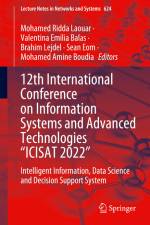
The ICISAT¿2022 conference provided a forum for research and developments in the field of information systems and advanced technologies and new trends in developing information systems organizational aspects of their development and intelligent aspects of the final product. The aim of the ICIS1T¿2022 is to report progress and development of methodologies, technologies, planning and implementation, tools, and standards in information systems, technologies, and sciences.ICISAT¿2022 aims at addressing issues related to the intelligent information, data science, and decision support system, from multidisciplinary perspectives and to discuss the research, teaching, and professional practice in the field. The book of ICISAT¿2022 includes selected papers from the 12th International Conference on Information Systems and Advanced Technologies ¿ICISAT¿2022¿, organized online during August 26¿27, 2022.In this book, researchers, professional software, and systems engineers from around the world addressed intelligent information, data science, and decision support system for the conference. The ideas and practical solutions described in the book are the outcome of dedicated research by academics and practitioners aiming to advance theory and practice in this research domain. The list of topics is in all the areas of modern intelligent information systems and technologies such as neural networks, evolutionary computing, adaptive systems, pervasive system, ubiquitous system, E-learning and teaching, knowledge-based paradigms, learning paradigms, intelligent data analysis, intelligent decision making and support system, intelligent network security, web intelligence, deep learning, natural language processing, image processing, general machine learning, and unsupervised learning.
Through an approach strongly oriented to socio-health contexts and healthcare facilities, with multidisciplinary contributions on the methodological and technical aspects, or legislative issues, the book provides tools and design strategies to plan and realize therapeutic places and healing gardens for care, rehabilitation, interaction, and social inclusion. It addresses all the technical and medical professionals - like Architects, Urban Planners, Agronomist, Sociologists, Epidemiologists, Public Health experts, Policy Makers, etc. - wishing to explore the link between built environment, well-being, and health, referring in particular to the direct relationship between places and therapy.
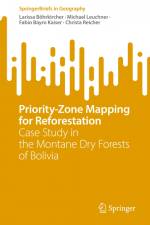
Andean dry forest ecosystems are threatened by deforestation and unsustainable land use methods. The negative effects for the livelihood of the local population, biodiversity, and the regional climate could be countered by reforestation measures; however, dry land forests have not attracted the same level of interest and investment like other ecosystems. This book describes the development of a priority-zone map for reforestation measures, showing where reforestation might have the greatest social and ecological benefits. To achieve this, a problem analysis of a case study region is conducted and thematic reforestation benefits are determined. Using remote sensing and GIS, the areas where benefits can be obtained are mapped in individual layers and compiled into a summarizing priority-zone map. It is thus possible to identify areas where reforestation would achieve multiple benefits. The concept of priority maps could be used to facilitate reforestation strategies by local communitiesand municipal governments and could thus contribute to initiate an integrated forest and landscape restoration of the Bolivian montane dry forests.
This book provides extensive data on the more common and many of the more rare congenital and hereditary syndromes that manifest in the nervous system and skin. Though often complex and multi-systemic, these disorders can frequently be diagnosed using a combination of simple visual inspection and sound clinical expertise. Drawing on fully referenced information from thousands of articles, the international editorial team has prepared a comprehensive overview that includes historical perspectives, clinical features, the pathogenesis, and diagnostic and therapeutic strategies. In addition, it addresses the biochemical, molecular, and genetic basis of the disorders.The book is divided into four main sections. Starting with general aspects of aetiology, diagnostics and therapy, the first part then covers the genetics, neuro-imaging, neuropathology, ocular manifestations and surgical management. The second part discusses developmental malformations, such as Sturge-Weber syndrome, Ataxia-Telangiectasia, Hypomelanosis of Ito and other rare syndromes, including haemangiomas. The focus of the third part is on tumour suppressor/DNA repair disorders, the most common of which is Neurofibromatosis 1. It also describes Neurofibromatosis 2, Schwannomatosis, Tuberous sclerosis, von Hippel-Lindau disease, Naevoid basal cell carcinoma and others. The book's fourth and final section covers defects in enzymes and structural proteins, which manifest as Cerebrotendinous xanthromatosis, Ehlers-Danlos syndrome, Menkes syndrome, Refsum disease.
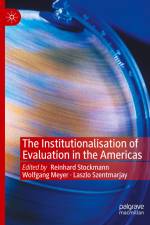
This book examines the progress of institutionalisation of evaluation in American countries from various perspectives. It presents prior developments and current states of evaluation in 11 American countries and three transnational organisations, focusing on three dimensions, namely the political, social and professional systems. These detailed country reports, which have been written by selected researchers and authors of the respective countries, lead to a concluding comparison and synthesis. This is the second of four volumes of the compendium The Institutionalisation of Evaluation. The first volume on Europe was published in 2020. It will be followed by two more volumes on Asia Pacific, and Africa. The overall aim is to provide an interdisciplinary audience with cross-country learning to enable them to better understand the institutionalisation of evaluation in different nations, world regions and sectors.
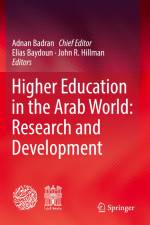
Countries aspiring to participate fully in the global knowledge economy require high-quality education and research that leads to innovation, entrepreneurship and development. In spite of the large number of institutions higher education institutions, the Arab World failed to capitalise in research and development. This book will examine the current position of university research and development in the Arab region, note the main themes, their international impact, and propose new directions. Crucially, it will examine the underlying reasons for the underperformance, including specific government research policies, university-appointment and governance processes to stimulate research, funding assessment and allocation processes, resource limitations, and public attitudes. By substantially upgrading the research component of Arab universities along with the quality of education generally, the Arab world will have the vehicle to transition into peaceful, stable, and members of leading global economies. There are opportunities for inter-university cooperation and the establishment of regional university-linked research institutes with specialist facilities.
Abonner på vårt nyhetsbrev og få rabatter og inspirasjon til din neste leseopplevelse.
Ved å abonnere godtar du vår personvernerklæring.