






Gjør som tusenvis av andre bokelskere
Abonner på vårt nyhetsbrev og få rabatter og inspirasjon til din neste leseopplevelse.
Ved å abonnere godtar du vår personvernerklæring.Du kan når som helst melde deg av våre nyhetsbrev.

This book focuses on recent advances in dental gold alloys and gold nanoparticles (GNPs) for biomedical applications. Dental gold alloys combine several highly desirable mechanical properties, such as high strength, ductility, and elasticity, with an extremely robust chemical stability in the mouth. Moreover, astonishing progress has been made in the use of GNPs as novel gold biomaterials that provide a multifunctional platform for cellular imaging, biosensing, and targeted drug delivery in tumour immunotherapy and photothermal therapy.Beginning with a comprehensive overview of the development and use of dental gold alloys, the book addresses the materials properties that are crucial for dental applications, focusing on aspects such as microstructure, chemical and mechanical stability, ageing, biocompatibility, and colour retention. The book then shifts focus to the use of GNPs in dental applications, delving into different techniques of GNP synthesis for specifically tailoring the size, shape, and stability of GNPs in biological media. In addition to these factors, it addresses how their exposure route, surface chemistry, as well as how the steric effects of their coating impact biodistribution and determine the level of GNP toxicity in the human body. Featuring topical literature reviews alongside up-to-date published experimental results, this book offers an attractive resource for practicing scientists and engineers working in the field of gold-based biomaterials.
This book constitutes the refereed proceedings of the 13th International ICT Innovations Conference, ICT Innovations 2021, held as virtual event in September 2021.The 15 full papers presented were carefully reviewed and selected from 58 submissions. The papers are organized in topical sections on deep learning and AI; NLP and social network analysis; theoretical foundations and information security; e-services; sensor systems, IoT.
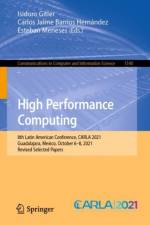
This book constitutes revised selected papers of the 8th Latin American High Performance Computing Conference, CARLA 2021, held in Guadalajara, Mexico, in October 2021. Due to the COVID-19 pandemic the conference was held in a virtual mode. The 16 revised full papers and 2 short papers presented were carefully reviewed and selected out of 45 submissions. The papers included in this book are organized according to the topics on ¿high performance computing; high performance computing and artificial intelligence; high performance computing applications.
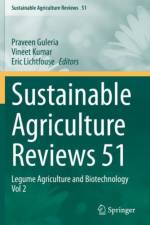
In the context of climate change, pollution and food safety, the current challenge is to enhance legumes production to sustain the growing population needs by 2050. This is a daunting task because abiotic and biotic stresses are threatening the growth, survival and productivity of legumes. For instance, the productivity of legumes is documented to be reduced by 14-88% by abiotic stresses. The co-occurrence of abiotic and biotic stresses under field conditions leads to interactive stress types, thus yielding positive or negative outcomes. Legumes react using antioxidant defense, osmoregulatory adjustments, hormonal regulations and molecular mechanisms to tolerate stress. Hence, improving legume productivity requires knowledge on the sensitivity, mechanisms and approaches of stress tolerance in legumes, in order to design new crops and alternative management systems. This book presents advances on bioactive compounds, applications, effect of various stresses and biotechnology-based stress tolerance mechanisms of legumes. This is our second volume on Legume Agriculture and Biotechnology, published in the series Sustainable Agriculture Reviews.
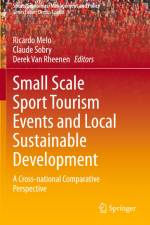
This book outlines the impacts of small scale sport tourism events on local sustainable development in different countries. Using half marathons organized in small and medium sized cities as an example, the chapters are robust case studies, applying a unified methodology in order to provide a clear overview of the sport tourism system in each country. The book begins with a description of the methodologies used and an overview of the countries studied. The country chapters focus on several dimensions of sport tourism in each city, including but not limited to the history of past sport tourism events in the municipality, the characteristics of the city hosting the event, the demographic profile of participants in the event, and the quantifiable economic, environmental, and sociocultural impacts of the event. Each chapter concludes with analysis and policy recommendations for holding future events that contribute to local sustainable development. The book concludes by summarizing and comparing the main results across different countries, and presenting main conclusions and overarching recommendations.Written by international experts in sports tourism, this book is geared towards academic researchers and students, interested in sport tourism, sports economics, management, and sustainable development, as well as policy makers and professionals tasked with bringing such events to their cities.
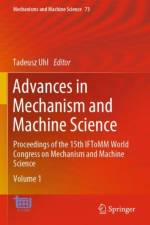
This book gathers the proceedings of the 15th IFToMM World Congress, which was held in Krakow, Poland, from June 30 to July 4, 2019. Having been organized every four years since 1965, the Congress represents the world¿s largest scientific event on mechanism and machine science (MMS). The contributions cover an extremely diverse range of topics, including biomechanical engineering, computational kinematics, design methodologies, dynamics of machinery, multibody dynamics, gearing and transmissions, history of MMS, linkage and mechanical controls, robotics and mechatronics, micro-mechanisms, reliability of machines and mechanisms, rotor dynamics, standardization of terminology, sustainable energy systems, transportation machinery, tribology and vibration. Selected by means of a rigorous international peer-review process, they highlight numerous exciting advances and ideas that will spur novel research directions and foster new multidisciplinary collaborations.
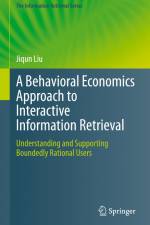
This book brings together the insights from three different areas, Information Seeking and Retrieval, Cognitive Psychology, and Behavioral Economics, and shows how this new interdisciplinary approach can advance our knowledge about users interacting with diverse search systems, especially their seemingly irrational decisions and anomalies that could not be predicted by most normative models.The first part ¿Foundation¿ of this book introduces the general notions and fundamentals of this new approach, as well as the main concepts, terminology and theories. The second part ¿Beyond Rational Agents¿ describes the systematic biases and cognitive limits confirmed by behavioral experiments of varying types and explains in detail how they contradict the assumptions and predictions of formal models in information retrieval (IR). The third part ¿Toward A Behavioral Economics Approach¿ first synthesizes the findings from existing preliminaryresearch on bounded rationality and behavioral economics modeling in information seeking, retrieval, and recommender system communities. Then, it discusses the implications, open questions and methodological challenges of applying the behavioral economics framework to different sub-areas of IR research and practices, such as modeling users and search sessions, developing unbiased learning to rank and adaptive recommendations algorithms, implementing bias-aware intelligent task support, as well as extending the conceptualization and evaluation on IR fairness, accountability, transparency and ethics (FATE) with the knowledge regarding both human biases and algorithmic biases.This book introduces a behavioral economics framework to IR scientists seeking a new perspective on both fundamental and new emerging problems of IR as well as the development and evaluation of bias-aware intelligent information systems. It is especially intended for researchers working on IR and human-information interaction who want to learn about the potential offered by behavioral economics in their own research areas.
Economic constraints and lack of knowledge often prevent companies - especially small and medium enterprises - from harmonizing their facilities with the landscape. As a result, factories significantly impact the quality of our living environment, in terms of physical effects on the ecosystem, perceptual interferences with the surroundings, and disturbances on local communities. At both the design and maintenance stages, a set of appropriate tools can assist businesses in becoming more aware of their impacts and identifying possible mitigation strategies. The book presents an assessment tool and a library of inspiring design tactics for factories, with examples of the benefits and synergies for the environment, the scenery, the community, and the company itself. The purpose is to elicit more than a simple reflection about what a sustainable factory entails. It is rather to encourage and assist both businesses and designers in mitigating the impact of industrial facilities on the landscape as holistically as possible.
This text provides a concise introduction, suitable for a one-semester special topicscourse, to the remarkable properties of Gaussian measures on both finite and infinitedimensional spaces. It begins with a brief resumé of probabilistic results in which Fourieranalysis plays an essential role, and those results are then applied to derive a few basicfacts about Gaussian measures on finite dimensional spaces. In anticipation of the analysisof Gaussian measures on infinite dimensional spaces, particular attention is given to thoseproperties of Gaussian measures that are dimension independent, and Gaussian processesare constructed. The rest of the book is devoted to the study of Gaussian measures onBanach spaces. The perspective adopted is the one introduced by I. Segal and developedby L. Gross in which the Hilbert structure underlying the measure is emphasized.The contents of this bookshould be accessible to either undergraduate or graduatestudents who are interested in probability theory and have a solid background in Lebesgueintegration theory and a familiarity with basic functional analysis. Although the focus ison Gaussian measures, the book introduces its readers to techniques and ideas that haveapplications in other contexts.
This book examines how philosophy was taught in the early modern period in Europe. It breaks new ground in a number of ways. Firstly, it seeks to bring text-based scholars in the history of philosophy together with social and cultural historians to examine the interaction between tradition and innovation in the early modern classroom, the site where traditional views of the world were transmitted to the generation that was to give birth to modern philosophy and science. Secondly, it draws together scholars who are centered on ideas and words with other scholars who focus on the role of images in the classroom and the intellectual world in this central period of history. The volume advances our understanding of how philosophy was understood and transmitted in this rich and crucial era. The principal audience for Teaching Philosophy are historians of science, philosophy, art, visual culture, and print culture. The chapters are written in a tone accessible to upper-level undergraduates and graduate students. It also reaches non-specialist readers interested in subjects including the "e;scientific revolution,"e; the organization of information, and Renaissance and Baroque visual art.
This book constitutes the refereed proceedings of seven International Workshops which were held in conjunction with the 27th European Symposium on Research in Computer Security, ESORICS 2022, held in hybrid mode, in Copenhagen, Denmark, during September 26-30, 2022.The 39 papers included in these proceedings stem from the following workshops: 8th Workshop on the Security of Industrial Control Systems and of Cyber-Physical Systems, CyberICPS 2022, which accepted 8 papers from 15 submissions; 6th International Workshop on Security and Privacy Requirements Engineering, SECPRE 2022, which accepted 2 papers from 5 submissions; Second Workshop on Security, Privacy, Organizations, and Systems Engineering, SPOSE 2022, which accepted 4 full papers out of 13 submissions; Third Cyber-Physical Security for Critical Infrastructures Protection, CPS4CIP 2022, which accepted 9 full and 1 short paper out of 19 submissions; Second International Workshop on Cyber Defence Technologies and Secure Communications at the Network Edge, CDT & SECOMANE 2022, which accepted 5 papers out of 8 submissions; First International Workshop on Election Infrastructure Security, EIS 2022, which accepted 5 papers out of 10 submissions; and First International Workshop on System Security Assurance, SecAssure 2022, which accepted 5 papers out of 10 submissions. Chapter(s) 5, 10, 11, and 14 are available open access under a Creative Commons Attribution 4.0 International License via link.springer.com.
This book examines how the developments in veterinary science, philosophy, economics and law converged during the nineteenth and early twentieth centuries to entrench farm animals along a commodification pathway. It covers two neglected areas of study; the importance of international veterinary conferences to domestic regimes and the influence of early global treaties that dealt with animal health on domestic quarantine measures. The author concludes by arguing that society needs to reconsider its understanding and the place of the welfare paradigm in animal production systems. As it presently stands, this paradigm can be used to justify almost any self-serving reason to abrogate ethical principles.The topic of this book will appeal to a wide readership; not only scholars, students and educators but also people involved in animal production, interested parties and experts in the animal welfare and animal rights sector, as well as policy-makers and regulators, who will find this work informative and thought-provoking.
This book addresses current topics on pathogenic Vibrio spp. from a comprehensive and holistic perspective. Here, experts in the field provide timely chapters, ranging from genomics, pathogen emergence, and epidemiology to pathogenesis, virulence regulation and host colonization. Questions addressed include: How does climate change affect the spread of these bacteria? What is the status of current vaccines? Are there novel therapeutic options to treat Vibrio infections? Is there likelihood of emergence of new pathogenic strains or species? Can insights from mathematical models and epidemiology lead to prediction of pathogen outbreaks?Recent decades have seen a steady increase in Vibrio spp. infections originating in aquatic and marine habitats, driven by higher human population densities, warming of polluted oceans, natural and human-made disasters, and mass seafood production. These conditions increase the likelihood of pathogenic Vibrio spp. coming into contact with humans, making their study even more timely and relevant as these problems escalate over time. This book is a valuable resource for health management professionals, experienced microbiologists/ microbial ecologists, and early career scientists alike who want to learn more about these important environmental human pathogens. The ideas and technologies presented in this book for preventing, controlling, and monitoring Vibrio spp. infections contribute to the UN Sustainable Development Goal 3: Good Health and Well-Being.
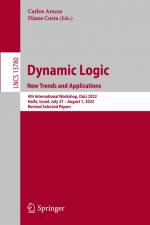
This book constitutes revised selected papers from the refereed proceedings of the 4th International Workshop on Dynamic Logic, DaLí 2022, held in Haifa, Israel, in July/August 2022.The 8 full papers presented in this volume were carefully reviewed and selected from 22 submissions. They deal with new trends and applications in the area of Dynamic Logic.
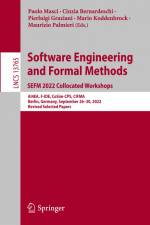
This volume constitutes the revised selected papers from the four workshops collocated with the 20th International Conference on Software Engineering and Formal Methods, SEFM 2022, held in Berlin, Germany, in September 2022. The 19 full papers presented together with 9 short papers in this volume were carefully reviewed and selected from a total of 39 submissions. The contributions that are collected in this volume have been selected from the presentations at the following workshops: AI4EA 2022: First Berlin Workshop on Artificial Intelligence for Engineering Applications; F-IDE 2022: 7th Workshop on Formal Integrated Development Environment; CoSim-CPS 2022: 6th Workshop on Formal Co-Simulation of Cyber-Physical Systems; CIFMA 2022: 4th International Workshop on Cognition: Interdisciplinary Foundations, Models and Applications.
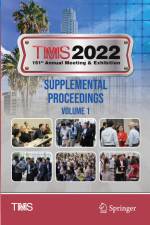
This collection presents papers from the 151st Annual Meeting & Exhibition of The Minerals, Metals & Materials Society.
This book constitutes the refereed proceedings of the 13th International Conference on Decision and Game Theory for Security, GameSec 2022, held in October 2022 in Pittsburgh, PA, USA. The 15 full papers presented were carefully reviewed and selected from 39 submissions. The papers are grouped thematically on: deception in security; planning and learning in dynamic environments; security games; adversarial learning and optimization; novel applications and new game models.
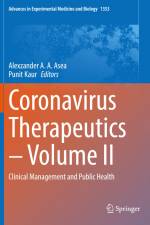
The book Coronavirus Therapeutics Volume I provides the most comprehensive review on contemporary knowledge on the origin and structural biology and molecular aspects of Coronaviruses. This also describes the etiology and pathogeny and therapeutic targets including vaccine drug candidates against Coronaviruses in the light of current scientific knowledge. Using an integrative approach to the understanding of Coronaviruses structure, function and immunobiology, the contributors provide a synopsis of novel mechanisms by which Coronaviruses can be treated.Key basic and clinical research laboratories from major universities, academic medical hospitals, biotechnology and pharmaceutical laboratories around the world have contributed articles that review present research activity on the role of heat shock proteins in human diseases and importantly project the field into the future. The book is a must read for graduate students. medical students, basic science researchers and postdoctoral scholars in the fields of Cancer Biology, Oncology, Cardiovascular Diseases, Microbiology, Inflammation, Translational Medicine, Clinical Research, Biotechnology, Cell & Molecular Medicine, Pharmaceutical Scientists and Researchers involved in Drug Discovery.
Abonner på vårt nyhetsbrev og få rabatter og inspirasjon til din neste leseopplevelse.
Ved å abonnere godtar du vår personvernerklæring.