


















Gjør som tusenvis av andre bokelskere
Abonner på vårt nyhetsbrev og få rabatter og inspirasjon til din neste leseopplevelse.
Ved å abonnere godtar du vår personvernerklæring.Du kan når som helst melde deg av våre nyhetsbrev.

This book focuses on the tension between the protection of human rights recognised as jus cogens (peremptory) norms, on the one hand, and the bestowal of immunity on the state and its representatives, on the other, to ascertain how these immunities can be eroded, if not fully abolished, to maintain full protection of jus cogens human rights under international law. The book argues that immunity should not equate to impunity when violations of jus cogens human rights are committed by States, Heads of State, or diplomatic agents. To make the case, the organic structures of the concepts of sovereignty and fundamental human rights are examined. Then, the human rights-based challenge to immunity is presented with respect to State, Head of State and diplomatic immunity, and the transition from a state-centric system to a human-centric system is explored. Jus cogens norms are at the centre of the impunity versus immunity debate.
This fully revised and expanded second edition provides a comprehensive and up-to-date overview of nasal physiology and pathophysiology. With the help of numerous tables, schematic drawings, and color photographs, it helps readers gain a better understanding of the impact of structural changes and the process of disease development, and to make treatment decisions. Each chapter has been written by a leading expert in the field and addresses one important aspect in an accessible way. Covering all four functions of the nose: respiration, defense, olfaction and cosmesis, the book discusses the various techniques for the clinical evaluation of nasal function as well as current trends and future directions in nasal physiologic research. This second edition also includes additional chapters on rhinomanometry, local nasal inflammation, T cells and B cells, and artificial intelligence for the nose. Given its scope, the book is a valuable resource for both experienced otorhinolaryngologists and novices in the field.
This Handbook discusses the recent advances in biodegradation technologies and highlights emerging sustainable materials, including environmentally friendly nano-based materials for replacing plastics. It is useful to scientists, engineers, biologists, medical doctors and provides alternative eco-friendly materials to replace the currently used ones with harmful impact on the environment and life. The chapters present different types of alternative materials in diverse areas, such as food packaging materials, materials for construction and agricultural materials. The principles and types of biodegration technologies are described in depth.
This book examines the inter-firm networks created by interlock coordination through shared directors (inter-board) and managers (inter-department) at various levels: whole aggregate, core vs. peripheral companies, and distribution by country and sector. Presenting an empirical case study on all the limited liability or stock companies of the aerospace industry in the European Union and its interlock partners worldwide, the authors shed new light on these forms of coordination. Moreover, they reveal the relevance of shared managers¿ coordination and hybrid manager-director interlocks.The book applies advanced statistical and social network analysis alike by combining firms¿ attributes (e.g. standard economic-financial parameters) and topological indices for firms (e.g. centrality and cluster measures). By conducting the analysis at both the aggregate network level and the cluster or corporate group level, the authors show how extensive and intensive the interlock forms of coordination are, especially when dealing with shared managers. By testing seven hypotheses concerning the research stream on board interlocks and (more broadly) inter-firm networks, the study offers new insights into the role of the financial sector, on the relations between interlock coordination and firms¿ performance, on the role of geographical, technological and organizational proximity, and on the relations between interlock coordination and firms¿ size. As such, this book will appeal to scholars of organization studies, business and management studies, industrial and evolutionary economics, and economic sociology, as well as officers and policymakers at anti-trust regulation institutions.
This book focuses on the enforcement aspect of tobacco control policy, and argues that the intense regulation of the tobacco market will never be successful as long as it can be circumvented by the availability of illicit tobacco products. Yet, current efforts to combat illicit tobacco trade are insufficient, suffering from several flaws and gaps at the regulatory and operational levels. The aim of this book is to provide an analysis of the legal framework and practice of enforcement with regard to illicit tobacco products. Combining criminological and legal perspectives, it presents and critically analyses the phenomenon of illicit tobacco trade, as well as the policies, legal frameworks and practices in six EU countries with regard to combatting this phenomenon, assessing the strengths and weaknesses of their approaches. Furthermore, it studies the relationship between the EU and third countries (e.g. Ukraine) in terms of how the EU can influence policy and enforcement in these countries in order to counter illicit tobacco trafficking. Not exclusively focusing on the EU, the book also includes an analysis of enforcement against illicit tobacco products in the US. The EU Member States analysed in the book (Belgium, Germany, Italy, Latvia, the Netherlands and Poland) reflect the range of currently available approaches. Some of them have ratified the WHO Protocol against tobacco smuggling; others have not. They belong to different legal traditions and face different challenges due to their respective border situations. While Belgium and the Netherlands are key entry ports to the EU, Poland and Latvia represent the Eastern land border of the EU, with various regional challenges. Italy has a long maritime border, where trafficking is possible from Northern Africa and from the Middle East. It also has significant experience in fighting organised crime. Lastly, Germany is the largest market in Europeand situated in the middle of these trafficking routes.
This book examines life in the homes inhabited by the working class over the long nineteenth century. These working-class homes are often imagined as distinctly unhomely spaces, which the inhabitants struggled to fill with even the most basic of furniture, let alone acquire the comforts associated with middle-class domestic space. The concerned reformers of industrialising towns and cities painted a picture of severe deprivation, of rooms that were both cramped yet bare at the same time, and disease-ridden spaces from which their subjects required rescue. It is an image which is not only inadequate, but which also robs working-class people of their agency in creating domestic spaces which allowed for the expression of personal and familial feeling. Bringing together emerging scholars who challenge these ideas and using a range of innovative sources and approaches, this edited collection presents a new understanding of working-class homes.
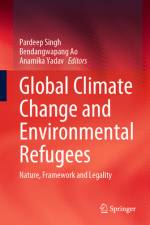
This book explores the possibilities of understanding the concept of climate refugees in order to ascribe to a consensual agreement that climate refugees are evident and this situation is a reality.A framework to study both empirically and theoretically is presented in a detailed manner so that it may become a resource for understanding the challenges of climate refugees.Through discussion and analysis the book presents potential answers to such questions as:¿ Why has the international system been so short-sighted and has not given importance to the problems of climate migrants and refugees?¿ How to identify a climate refugee?¿ How do you justify a climate refugee or a migrant?¿ What are internally displaced people? Should we call them just refugees?The book covers the interdisciplinary nature of climate refugees and the perspectives of social science. The empirical findings provides an edge to holistically understanding climate refugees.This book discusses the concept of, what really is a climate refugee, and the necessary factors to make it an important part of the climate discourse. The legality of the term is missing in international parlance, and the academic discourse should provide the necessary critique required for the evolution of the subject under study. Therefore, the major objective of the book is to make the subject of climate migration known to all.
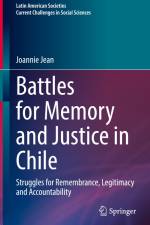
This book analyzes how the past and its representation in the public space have been a source of conflict in Chile since the end of the Pinochet regime. From a multi-disciplinary perspective (sociology, anthropology and history), it studies the work of seven organizations of memory and human rights in Santiago, Chile, the struggles in which they are engaged, and the main debates that have arisen in the country around the themes of impunity, truth and memory.Covering the period from 1998 to 2018, this book begins its analysis with the detention of Augusto Pinochet in London and concludes with the end of the second term of Michelle Bachelet. The seven organizations studied range from family groups and survivors to sites of memory and consciousness. Through analyses of the discourses produced by these organizations, it examines particular historical periods(1998-2000, 2001-2008, 2009-2010, 2011-2013 and 2014-2018) by focusing on strong debates and events of these conjunctures in order to highlight the struggles of meaning and the conflicts of legitimacy relating to these times. In concrete terms, particular attention is paid to the analysis of the main themes of litigation, the way in which the actors are mobilized, their objectives and how the past is evoked in the public space.Battles for Memory and Justice in Chile: Struggles for Remembrance, Legitimacy and Accountability will be of interest to researchers from different disciplines and fields of study within the human and social sciences, such as sociologists, historians and anthropologists working in fields such as Latin American studies, sociology of memory, sociology of social movements and human rights studies.
This book aims to clarify the priorities of the Sendai Framework for the DRR 2015 - 2030, through gathering recent contributions addressing the different ways researchers define, measure, reduce, and manage risk in the challenge of the DRR. Beyond a discussion of the different definitions of disaster risk; this book provides contributions focused on optimization approaches that support the decision-making process in the challenge of managing DRR problems considering emerging disaster risks in the medium and long term, as well as national and local applications. Some of the topics covered include network flow problems, stochastic optimization, discrete optimization, multi-objective programming, approximation techniques, and heuristic approaches.The target audience of the book includes professionals who work in Linear Programming, Logistics, Optimization (Mathematical, Robust, Stochastic), Management Science, Mathematical Programming, Networks, Scheduling, Simulation, Supply Chain Management, Sustainability, and similar areas. It can be useful for researchers, academics, graduate students, and anyone else doing research in the field
This book offers a new perspective on international law, which was, for centuries, male-dominant and gender-blind. However, this gender blindness has led to many injustices, the failure to recognize certain rights, and to impunity for serious crimes. The book examines the development of gender perspectives in various branches of international law, while also discussing and explaining certain universal standards. However, particular attention is paid to the European human rights system. Accordingly, the book provides detailed explanations of the EU¿s external policies in relation to sex, sexual orientation, and gender identity. Also, there is a special focus on the relevant jurisprudence of the European Court of Human Rights in relation to gender and sexual orientation, female reproduction, and sexuality. The authors explain not only the importance of an adequate legal framework for combating gender inequality but also the detrimental effects of deeply rooted gender stereotypes and prejudices. Subsequently, the development of particular branches is presented, such as a gender-sensitive approach to the prevention of war crimes, gender perspectives in refugee law, and the evolution of gender-sensitive environmental law. In addition, the problematic situation of discrimination in the workplace is addressed from various perspectives. Many discussions, especially among EU member states, are reserved for the issue of women¿s participation in managerial boards, while the growing awareness of gender equality in international trade agreements represents another interesting topic. Lastly, the book offers a historical perspective on the development of international law in the interwar period, with a particular focus on the situation in Yugoslavia.The book critically reconsiders the dominant molds of legal knowledge and presents innovative gender-sensitive and gender-competent insights on a variety of issues in international law, in order to introduce readers to new research topics relevant to gender equality and to stimulate the development of an international legal and institutional framework for achieving greater gender equality in practice. The collection of essays presented here will be of interest to all those working in the field of international law, as well as students and academics looking to broaden and deepen their research on a range of issues in international law from gender perspectives.
This book presents recent advances of Bayesian inference in structured tensor decompositions. It explains how Bayesian modeling and inference lead to tuning-free tensor decomposition algorithms, which achieve state-of-the-art performances in many applications, includingblind source separation;social network mining;image and video processing;array signal processing; and,wireless communications.The book begins with an introduction to the general topics of tensors and Bayesian theories. It then discusses probabilistic models of various structured tensor decompositions and their inference algorithms, with applications tailored for each tensor decomposition presented in the corresponding chapters. The book concludes by looking to the future, and areas where this research can be further developed.Bayesian Tensor Decomposition for Signal Processing and Machine Learning is suitable for postgraduates and researchers with interests in tensor data analytics and Bayesian methods.
Emerging contaminants (ECs) are predominantly unregulated anthropogenic chemicals that occur in air, soil, water, food, and plant/animal tissues in trace concentrations. ECs are persistent in the environment, capable of perturbing the physiology of target receptors and, therefore, are increasingly regarded as a subject of concern. This volume aims to enhance understanding of emerging contaminants¿ effects on plants and the environment and to highlight and address the need of sustainable and eco-friendly approaches in mitigating and remediating the effects of ECs. The book comprises chapters from diverse areas dealing with biotechnology, microbial technology, nanotechnology, molecular biology, remediation, and more. This volume will be useful to remediation practitioners, researchers, regulators and graduate students.
This book provides a practical approach to cardiac perioperative care. The step-by-step format guides readers from basic concepts, such as cardiac physiology and pharmacology, to anesthetic management of specific cardiac surgical procedures, including cardiac percutaneous interventions, management of specific cardiac disease, circulatory support, and organ protection strategies. Written by experienced cardiac anesthesiologists in Europe, USA, Canada and Australia, this book provides an international perspective on the topic with each chapter referring the reader to the relevant key reading.Cardiac Anesthesia and Postoperative Care in the 21st Century is aimed at new consultants in cardiac anesthesia and intensive care, residents, and fellows. It may also be of interest to perfusionists and is a refreshing update for the experienced cardiac anesthesiologist.
Abonner på vårt nyhetsbrev og få rabatter og inspirasjon til din neste leseopplevelse.
Ved å abonnere godtar du vår personvernerklæring.