











Gjør som tusenvis av andre bokelskere
Abonner på vårt nyhetsbrev og få rabatter og inspirasjon til din neste leseopplevelse.
Ved å abonnere godtar du vår personvernerklæring.Du kan når som helst melde deg av våre nyhetsbrev.

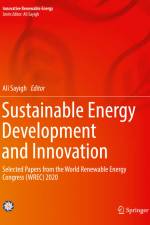
This book contains selected papers presented during the World Renewable Energy Congress (WREC) 2020 at the Instituto Superior Técnico in Lisbon. The WREC is dedicated to promoting renewable energy global development, and features top international experts, policy makers, scientists, engineers, technology developers, and business practitioners addressing the most current research and technological breakthroughs in sustainable energy development and innovation. The contributions address policy and renewable energy technologies and applications in all sectors¿for heating and cooling, agricultural applications, water, desalination, industrial applications, and for the transport sectors.Presents cutting-edge research in green building and renewable energy from all over the world;Covers the most up-to-date research developments, government policies, business models, best practices, and innovations;Contains case studies and examples to enhance practical application of the technologies.
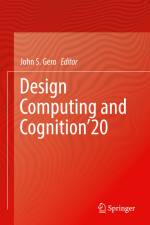
The papers in this volume are from the Ninth International Conference on Design Computing and Cognition (DCC¿20) held virtually at the Georgia Institute of Technology, Atlanta, USA. They represent the state-of-the-art of research and development in design computing and design cognition including the increasingly active area of design cognitive neuroscience. They are of particular interest to design researchers, developers and users of advanced computation in designing as well as to design educators. This volume contains knowledge about the cognitive behavior of designers, which is valuable for those who need to gain a better understanding of designing.
This book examines the lives and tenures of the consorts of the Hanoverian, Saxe-Coburg and Gotha, and Windsor monarchs from 1727 to the present. Some of the consorts examined in this volume¿such as Queen Elizabeth, the Queen Mother, consort to George VI¿are well known while others, including Adelaide of Saxe-Meiningen, consort to William IV, are more obscure. These innovative and authoritative biographies bring a fresh approach to the consorts of this period, revealing their lasting influence on the monarchy. In addition to covering a period that has seen the development of constitutional monarchy and increased media scrutiny of the whole royal family, this volume also looks to the future of the British monarchy, suggesting ways that future consorts can learn from the example of their predecessors. This volume and its companions reveal the changing nature of British consortship from the Norman Conquest to today.
This book provides caregivers and administrators with high-quality support for strategic decision making in the selection and use of medical devices so as to ensure value optimization. Medical treatment is increasingly complex, with wide application of medical devices and corresponding involvement of physics and engineering. A multidisciplinary methodology that brings together expertise from key disciplines in a holistic, system-oriented approach is essential in controlling this complexity and further improving health care. This book will help readers to understand the design, validation, and application of medical devices and the standards and regulations that apply to them across the world. In addition, it provides technical, operational, and economic perspectives on their use. The relevance of concepts such as expenditure optimization and sustainability to medical device technology is explained and healthcare reimbursement systems are discussed from different points of view. Readers will gain a clear appreciation of the managerial and economic implications of the use of medical devices and how to get the most out of them. Academic research, industrial experiences, and case studies are presented as appropriate.
Repetitive transcranial magnetic stimulation (rTMS) treatment is increasingly a standard part of the management of patients with depression supported by a rapidly expanding research base. This new expanded and amended concise clinical guide will serve as a reference and practical tool for clinicians working with or learning about this treatment technique. The opening chapters provide basic information on the history and development of rTMS treatment and its mechanism of action. Use of the treatment in depression is then addressed in detail, with explanation of the evidence base and discussion of a variety of clinical issues. Side-effects of treatment are explored, and careful consideration is given to the establishment of rTMS treatment programs. There is an updated review of the use of a rTMS applications in other psychiatric conditions such as obsessive-compulsive disorder. New chapters in this edition address the use of deep TMS, theta burst stimulation, accelerated forms of rTMS and what to do in patients not responding to initial therapy. In addition, the various approaches to treatment targeting are addressed in detail. This book will provide the rTMS practitioner or interested generalist an up-to-date and comprehensive understanding of the field as well as provide considerable practical clinical advice.
This volume develops a theoretical framework for the modelling of meaning-making and cultural processes as crucial to the scientific study of contemporary complex societies. It focuses on the methodological and empirical aspects of the analysis of culture and its dynamics that could be applied to policymaking and to the understanding of social phenomena. It covers culture-based segmentation, ad hoc survey instruments like the VOC and PROSERV questionnaires, discourse flow analysis, the Homogenization of Classification Functions Measurement, and others. It also presents a detailed discussion of the methodology of cultural analysis in contexts of health and education. The volume showcases a top-down approach by including quantitative methods and/or automatized or semi-automatized procedures, and at the same time supports a hermeneutic, bottom-up, abductive approach, focused on the situated dynamics of meaning-making. It provides insights from cultural studies, socialstatistics, social policy, and research methodology in the social sciences. This is a useful resource for academics involved in studying cultural dynamics and for policy-oriented researchers and decision-makers who are interested in cultural dimensions of the design, implementation and reception of public policies.
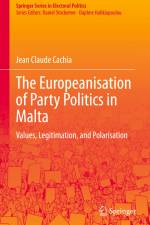
This book examines the Europeanisation of party politics in Malta. It evaluates the influence of Europeanisation on the political system, which is based on two party-system, polarisation, and clientelism. Malta is the smallest European Union (EU) member state, which joined the EU in 2004. The road toward membership was fraught with contentious and emotionally charged debates. This book explores the relationship between Maltese political parties and the EU, the politicisation and framing of the European Union by political parties, and the impact of the European Union on Maltäs political system. The book further discusses more contentious recent events which made headlines at the EU level, including the Panama Papers scandals, the Individual Investment Programme, and the assassination of journalist Daphne Caruana Galizia. The book will appeal to students, scholars, and researchers of political science and international relations interested in a better understanding ofelectoral studies, Europeanisation, European integration, as well as the Maltese political system, and party politics.
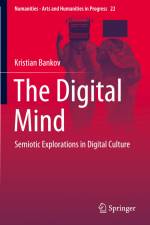
This book reveals the core features of digital culture, examined by means of semiotic models and theories. It positions commercial and market principles in the center of the digital semiosphere, avoiding the need to force the new cultural reality into the established textualist or pragmatist paradigms. The theoretic insights and case studies presented here argue for new semiotic models of inquiry that include working with big data, user experience and nethnography, along with conventional approaches.The book develops a new concept of identity in the digital age, analyzing the digital flows of recognition and value, which led to the tremendous success of Social Media and the Web 2.0 era. Self-expression, entertainment and consumerism are seen as the major drivers of identity formation in the post-truth era, where the self can no longer be considered independently of a given person¿s communication devices, where a substantial part of it is stored and actualized. It will be of interest to semioticians and researchers working on digital culture.
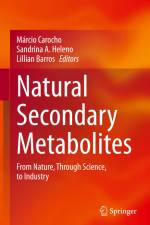
This book focuses on the different compounds (polyphenols, sterols, alkaloids terpenes) that arise from the secondary metabolism of plants and fungi and their importance for research and industry. These compounds have been the backbone and inspiration of various industries like the food, pharmaceutical and others to produce synthetic counterparts. Furthermore, many of these compounds are still widely used to carry out specific functions in all these industries. This book offers a compilation of different texts from world leading scientists in the areas of chemistry, biochemistry, plant science, biotechnology which compile information on each group of secondary metabolism compounds, and their most important applications in the food, pharmaceutical, cosmetic and textile industry. By showcasing the best uses of these compounds, the chemistry behind their production in plants and fungi, this book is a valuable resource and a "go to" artifact for various audiences. The new approach this book offers, by linking research and the application of these compounds, makes it interesting as an inspiration for new research or as a hallmark of what has been done in the secondary metabolism of plants and fungi in recent years. Although this book may be technical, it is also enjoyable as an integral reading experience due to a structured and integrated flow, from the origins of secondary metabolism in organisms, to the discovery of their effects, their high intensity research in recent years and translation into various industries. Beyond learning more on their chemistry, synthesis, metabolic pathway, readers will understand their importance to different research and industry.
This volume discusses the concept of The Spatial University as part of the broad growth of spatial science and the need for spatial infrastructure in colleges and universities. The book centers on the development of U-Spatial, the spatial science infrastructure at the University of Minnesota that offers a range of spatial activities and services, including data access, training, and community building. Against a backdrop of the changing nature of research, teaching, and service in higher education, the story of U-Spatial anchors a broader discussion of what it means to be a spatial university. This narrative framing demonstrates-with specific examples-the importance of institutions offering dedicated spatial research infrastructure. In six chapters, the text explores the importance of spatial thinking, learning, and research for student and researcher success. The volume offers lessons that are applicable far beyond the University of Minnesota to apply to a broad array of domains and institutional specializations. The book will be useful to students, researchers, and policymakers concerned with how institutions can encourage spatial research, teaching, and service. It will also appeal to researchers and practitioners interested in broader uses of spatial science.This book shows how GIS can transform a university, speaking to the need for leadership in higher education around the power of bringing everything together using spatial and geographic concepts. Jack Dangermond Co-Founder and President, Esri
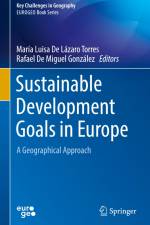
The aim of this book is to provide a synthesis of the newest research in Geography concerning the Sustainable Development Goals (SDG¿s). Although the world is strongly interconnected, the majority of the chapters in this volume focus on Europe or the work of European researchers. Each chapter of this book focusses on one of the 17 SDG¿s providing in-depth knowledge from a geographical perspective, fostering comprehensive research on these global targets to end poverty, fight inequality and injustice, and tackle climate change.The Sustainable Development Goals are part of the 2030 Agenda for Sustainable Development. To achieve them, it will be necessary for all stakeholders, including citizens (civil society, doctors, teachers), governments, private sector to collaborate.
The Mathematics of Errors presents an original, rigorous and systematic approach to the calculus of errors, targeted at both the engineer and the mathematician.Starting from Gauss's original point of view, the book begins as an introduction suitable for graduate students, leading to recent developments in stochastic analysis and Malliavin calculus, including contributions by the author. Later chapters, aimed at a more mature audience, require some familiarity with stochastic calculus and Dirichlet forms. Sensitivity analysis, in particular, plays an important role in the book. Detailed applications in a range of fields, such as engineering, robotics, statistics, financial mathematics, climate science, or quantum mechanics are discussed through concrete examples. Throughout the book, error analysis is presented in a progressive manner, motivated by examples and appealing to the reader¿s intuition.By formalizing the intuitive concept of error and richly illustrating its scope for application, this book provides readers with a blueprint to apply advanced mathematics in practical settings. As such, it will be of immediate interest to engineers and scientists, whilst providing mathematicians with an original presentation.Nicolas Bouleau has directed the mathematics center of the Ecole des Ponts ParisTech for more than ten years. He is known for his theory of error propagation in complex models. After a degree in engineering and architecture, he decided to pursue a career in mathematics under the influence of Laurent Schwartz. He has also written on the production of knowledge, sustainable economics and mathematical models in finance. Nicolas Bouleau is a recipient of the Prix Montyon from the French Academy of Sciences.
Abonner på vårt nyhetsbrev og få rabatter og inspirasjon til din neste leseopplevelse.
Ved å abonnere godtar du vår personvernerklæring.