
















Gjør som tusenvis av andre bokelskere
Abonner på vårt nyhetsbrev og få rabatter og inspirasjon til din neste leseopplevelse.
Ved å abonnere godtar du vår personvernerklæring.Du kan når som helst melde deg av våre nyhetsbrev.

This book states that burden-sharing is one of the most persisting sources for tension and disagreement within NATO (North Atlantic Treaty Organisation). It also belongs to one of the most studied issues within NATO with distinguishable traditions and schools of thought. However, this pertinent question has been rarely discussed extensively by academics. The key idea of the book is to make burden-sharing more understandable as a historical, contemporary and future phenomenon. The authors take a comprehensive look at what is actually meant with burden-sharing and how it has evolved as a concept and a real-life phenomenon through the 70 years of NATO¿s existence.
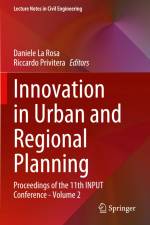
This book is the second Volume of the INPUT2020 Conference Proceedings on 'Innovation in Urban and Regional Planning'. The 11th International Conference INPUT was held at the University of Catania (Italy) on September 8-10th 2021 and allowed gathering international scholars in the fields of planning, civil engineering and architecture, ecology and social science, to strengthen the knowledge on nature-based solutions and to enhance the implementation and replication of these solutions in different contexts. INPUT2020 Conference stressed the basic idea that using components that mimic natural processes in the built environment can generate a wide number of benefits in cities, and produced more equal, safe and livable urban environment. The book provides additional reflections and proposals on empirical frameworks for nature-based solutions. Computational tools, technologies, data and hybrid models are explored for providing innovative spatial planning modeling methodologies. Furthermore, prospective roles of nature-based solutions in planning science and practice are investigated in the light of peripheralisation risks, rural landscapes and innovation in cultural heritage.
This book publishes some papers presented at The International Conference on Water Energy Food and Sustainability (ICoWEFS 2023), a major forum to foster innovation and exchange knowledge in the water-energy-food nexus. The topics covered embrace the Sustainable Development Goals (SDGs) of the United Nations, including Future trends in Water Security, Smart Technologies in Sustainable Energy Production Systems, Circular systems for rural and urban food and Integrated Ecosystems Management.
Why is it so difficult for a great power or a hegemon to retrench its overseas military power? Specifically, why are U.S. military bases and troops still largely where they were five years ago, twenty years ago, or even seventy years ago? Through developing a theory of great-power persistence, this book offers an explanation. Closely aligned with neoclassical realism, the theory argues that the murkiness of the anarchic international system combines with specific psychological inclinations of individuals to produce ¿better-safe-than-sorry¿ policies. In the United States, decisions on troop deployments are powerfully influenced by the broader foreign-policy community. Its members tend to be risk-averse and highly sensitive to the possibility that even minor troop withdrawals might set off harmful geopolitical chain reactions. Preferring the status quo over any uncertain alternative, they want their country to continue to maximize its influence and project its military power abroad inorder to steady wobbling geopolitical ¿dominoes.¿ The theory is put to the empirical test through a systematic analysis of U.S. overseas troop deployments, withdrawal attempts, and retrenchment resistance during the presidency of Donald Trump, which represents an ideal test case for these mechanisms. Even if U.S. voters elected a retrenchment advocate as president, and despite that the United States is a gradually declining power, the period saw very little change in U.S. overseas troop deployments. The book concludes that, barring any dramatic, unforeseeable international event, the vast network of overseas U.S. military bases and troops is likely to persist for a long time to come.
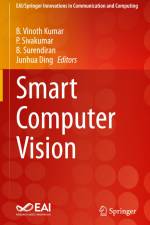
This book addresses and disseminates research and development in the applications of intelligent techniques for computer vision, the field that works on enabling computers to see, identify, and process images in the same way that human vision does, and then providing appropriate output. The book provides contributions which include theory, case studies, and intelligent techniques pertaining to computer vision applications. The book helps readers grasp the essence of the recent advances in this complex field. The audience includes researchers, professionals, practitioners, and students from academia and industry who work in this interdisciplinary field. The authors aim to inspire future research both from theoretical and practical viewpoints to spur further advances in the field.
This book provides a comprehensive technical and scientific overview of the surface modification of titanium dental implants. Coverage ranges from basic concepts of surface modification to advanced micro- and nanoengineering strategies employed to achieve augmented bioactivity to meet the needs of compromised patient conditions. A special focus of the book is advanced state-of-the-art electrochemically anodized nanostructures fabricated on implants towards enhanced bioactivity and local therapy. Surface Modification of Titanium Dental Implants will keep you current in the domain of titanium dental implants and will provide an improved understanding of their performance and application. The book will benefit engineers, clinicians, and researchers in biomaterials, biomedical engineering, dental and bone implants, nanoengineering, and technology.
¿Background: Psychosocial care remains an extremely important part of the holistic approach to care, but one which has been underestimated in clinical practice and only superficially addressed in the ophthalmic literature to date. This aspect of care most often gets less attention by healthcare professionals due to the dominance of a technology-enhanced approach to caring practice. Clearly, the skills afforded by science and technology are important for healthcare professionals in practice, but it is also important for them to be aware of the impact of the transfer of such skills on patients from a humanistic perspective. The delivery of technology-enhanced care can often trigger innermost feelings and needs such as fear, anxiety, stress, loss of control, and a sense of alienation. This book seeks to address the imbalance often observed between nursing both as an art and science, and to emphasise the importance of raising the healthcare knowledge and understanding of the value of social psychology and its application to ophthalmic practice in addressing this imbalance. Main aims: (1) To discuss the psychosocial needs and care of patients with ocular disease and sight loss. (2) To discuss the importance and relevance of the psychosocial aspects of ophthalmic care with reference to psychosocial theory and its application. (3) To discuss the psychosocial role of the healthcare professional in facilitating emotional recovery and promoting quality of life in the care and management of patients with ocular disease and sight loss.
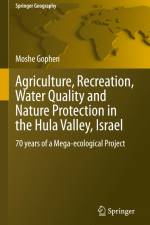
The anxious search for agricultural income resources, and assurance of the national water supply in the northern newly created state of Israel initiated the national project of the Hula Drainage. The implementation of this project was accompanied as of today by research and monitoring of the ecological trait aimed at crop harvest improvement in the Hula valley and prevention of water quality deterioration in Lake Kinneret. Forty years later a reclamation project to improve the peat soil property and renovate the hydrological system was carried out. This book documents the scientific research carried out during this mega-ecological project. Several issues of the ecological renovation and its impact on the Hula valley management and water quality in lake Kinneret are presented in this book. The advantage and contribution of a newly created shallow lake Agmon-Hula to nutrient dynamics, and hydrological control, accompanied by avian presence, (among others,Cranes, Storks, Pelicans, Flamingoes) and plants renewal which enhanced, tourism; potential impact of nitrogen and sulfate migration from the Hula valley on the Kinneret water quality; the role of climate change on the ecology of the Hula Valley and the Kinneret nutrient availabilities and phytoplankton community; the subterranean migration of water and nutrients and water loss. Further proposals for future development are under consideration. This book presents a comprehensive practical management implementation of a long-term ecological project. Results of scientific and monitoring research which followed the project implementation benefit the international and national communities.
Antimicrobial resistance is recognised among the world¿s most challenging problems. Despite its global spread, Africa, specifically sub-Saharan Africa, is the most affected by this malaise. Poor living conditions and inadequate access to sanitation and potable water supplies are among contributing factors that have influenced a high disease burden on the continent, requiring extensive antimicrobials. Weak health systems and the absence of firm policies further aggravate the problem, as the use of antimicrobials is mostly unregulated. The increasing demand for animal protein to meet the starving populations¿ demands has also influenced the use of these antimicrobials, including those banned on other continents, for food animal production. The ripple effect of indiscriminate use in humans and animals is the massive discharge of antimicrobials, their residues, antimicrobial-resistant microorganisms and their associated genes into the environment. This 14-chapter unique masterpiece presents the AMR problem in African, addressing the various compartments of the One Health ¿ humans, animals, and the environment, to illustrate the need for concerted efforts in the fight against AMR, especially in Africa. Authors from the four cardinal points present diverse aspects of AMR in Africa, starting with behavioural and social drivers of AMR in Africa. Antimicrobial stewardship in an African context is also discussed. AMR in humans is presented through studies on antibiotic-resistant neonates and nontyphoidal Salmonella infections and the clinical relevance of the genetics of viral resistance. Topics on AMR in mastitis, biosecurity in animal farming and the linkage between disinfectants and AMR are discussed. The environmental dimension of AMR is discussed, notably in the aquatic environment, and its implication for aquaculture and irrigation and using nanomaterials to treat polluted waters from such environments are highlighted. Finally, Africäs rich floral diversity is portrayed as an eco-friendly and cost-effective approach to combat AMR. Hopefully, the work presented will spur greater collaboration between scientists, environmental, animal and human health practitioners, the general population, and policymakers to assimilate and implement the One Health approach to combating AMR, rather than working in silos on their various sectors
This book presents recent research work on Biosaline Agriculture presented during First International Forum on Biosaline Agriculture in Laayoune, Morocco from May 3rd to May 4th 2019. The aim of this book is to showcase the global potential of Biosaline agriculture, provide an update on the development of recent innovations in the field of Biosaline agriculture, the best management practices to safely use brackish and saline water, highlight the use of non-conventional water in marginal environment production and the current advanced technologies of desalination of brackish and seawater. The different chapters will also discuss solutions that are adapted to local conditions as part of a sustainable development perspective. The book provides up-to-date technical and scientific data on growing crops under marginal environment so as to encourage the dissemination of this knowledge in the best practices to increase the productivity in Biosaline agriculture, in view of the potential to contribute to food security. The book is expected to stimulate interest in the non-conventional water resources and crops among junior and senior researchers and among those who are increasingly focused on exploiting marginal environments. It will also be of interest to decision-makers and the public and private sectors to jointly address the issues of food security especially of the poor and vulnerable people living in marginal environments worldwide by providing innovative technology transfer.
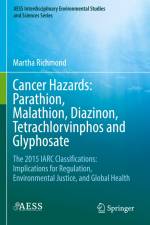
This book focuses on a monograph published in 2017 by the International Agency for Research on Cancer (IARC), an agency of the World Health Organization (WHO), discussing its carcinogen hazard classification of four pesticides: parathion, malathion, diazinon, and tetrachlorvinphos as well as the herbicide glyphosate. The monograph provided a detailed discussion of considerations and conclusions made by a group of experts who met in 2015 to evaluate these compounds. Although not universally true, many of these substances, from the time of their commercial introduction to their present-day use, have spread significantly in the environment, affecting animals and plants in the larger ecosystem, the overall health of the environment, and human health. This book develops each of these issues before turning to the IARC review process, both the general process and its evolution over time, and compound selection criteria and deliberations regarding the substances discussed in the 2017 monograph. Final book sections detail scientific and private sector reactions to and implications of the IARC classifications. Hazard identification is contrasted with various models of quantitative risk assessment. The last chapters highlight the importance of hazard identification for members of domestic and global underserved communities involved in farming and landscape work, where exposures may vary widely, are not well-regulated, and where health outcomes are often not carefully documented.
This book introduces the multilevel perspective to analyze how local, national, and international actors and institutions in the heritage field interact. More specifically, a comparative study is made of controversies regarding six UNESCO World Heritage sites in Germany and the United Kingdom. The six cases involve traditional monuments (the cathedral of Aachen and the castle and cathedral of Durham), industrial heritage (the Zollverein Coal Mine in Essen and the former tin and copper mines in Cornwall), and cities (Dresden and Liverpool). Studying how long-term landscape developments interact with local actors and nationally organized regimes reveals important differences between the decentralized German and the centralized British approach to heritage preservation. These differences not only have consequences for the governance of heritage preservation in the two countries, but also for their relations with international organizations such as UNESCO.
This book gathers a selection of peer-reviewed chapters reflecting on the Australia-European Union Free Trade Agreement (AEUFTA). Since 18 June 2018, ten rounds of negotiations for a AEUFTA have been held in a constructive atmosphere, showing a shared commitment to move forward with this ambitious and comprehensive agreement. After a lengthy and arduous process interrupted by the United Kingdom¿s withdrawal from the European Union (EU), the United States¿ hesitations regarding the EU¿s global strategy and the outbreak of the COVID-19 pandemic, the negotiations between Australia and the European Union finally appear to be nearing completion. In challenging times, both parties share a commitment to a positive trade agenda, and to the idea that good trade agreements benefit both sides by boosting jobs, growth and investment. This book explores the challenges, achievements and missed opportunities in the AEUFTA negotiation process, and examines current legal and political relations between the EU, its Member States and Australia. Furthermore, it examines in detail a wide and diverse range of negotiated areas, including digital trade, services, intellectual property rules, trade remedies and investment screening, as well as dispute settlement mechanisms. Lastly, it sheds light on the likely nature of future commercial relations between Australia and the EU. Written by a team of respected authors from leading institutions in both Australia and Europe, the book provides a valuable, interdisciplinary analysis of the AEUFTA.
The Arctic has become a global arena. This development can only be comprehensively understood from a transdisciplinary perspective encompassing ecological, cultural, societal, economic, industrial, geopolitical, and security considerations. This book offers thorough explanations of Arctic developments and challenges. Global warming is in large part the driving force behind the transformation of the Arctic by making access possible to the areas previously out of reach for mining and shipping. An all-year ice-free Arctic Ocean, a reality possible as soon as perhaps 2030, creates a new dynamic in the North. The retreating ice edge enables the exploitation of previously inaccessible resources such as hydrocarbon deposits and rare metals, as well as the shortest sea route from Asia to Europe. Consequently, the Northern Sea Route (NSR) promises faster and cheaper shipping. Russia, along side foreign investment, especially from China, is financing the needed infrastructure. A warming Arctic, however, also has negative impacts. The Arctic is home to fragile ecosystems that are already showing signs of deteriorating. The Arctic has seen unprecedented wildfires, which, together with the release of trapped methane from the disappearing permafrost, will, in turn, accelerate global warming. A warmer Arctic Ocean will also negatively impact fisheries. Couple this with other global changes, such as ocean acidification and modified ocean currents, and the global outlook is bleak. Additionally, the security situation in the Arctic is worsening. After the 2014 Ukraine crisis, the West imposed sanctions on the Russian Federation, which have revived the divisions of the Cold War. The reemergence of these postures is threatening the highly successful Barents Cooperation and other initiatives for peace in the circumpolar North. This book offers new insights and presents arguments for how to mitigate the challenges the Arctic is facing today.
This book presents a high-yield, simple and efficient source of preparation for Membership of Royal College of Obstetricians and Gynaecologists (MRCOG) part 2 examination.It is made to be very simple, extremely organized, easy to use, and focused. It will help candidates to perfectly prepare for the exam. This book is a perfect source for doctors who prepare for the exam while they are busy in their practice. In addition, it is an illustrated simple reference to obstetricians and gynaecologists to they can refer to UK-based guidelines in their practice.
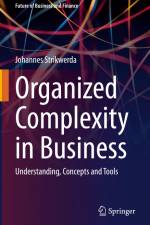
This book explores a most central phenomenon in our contemporary businesses and organization, the growing complexity in business. Economic growth and growth of complexity always have been inseparable, but the last decennia the growth of complexity appears to outrun our growth of knowledge and understanding. For success and continuity, the modern firm in the developing complexity of its markets and societal contexts must have the capacity to master and exploit a commensurate level of complexity in its internal organization. This book is the first of its kind to help the reader to understand the different types of complexity and the different concepts and tools to deal with each of them in business administration, strategy, and organization. This book offers the reader a fresh perspective on conventional concepts and tools in the field of business administration and bridges these to new concepts as are being used to exploit new complexities. In the process, the reader becomes familiarwith the rich cybernetic concept of information, as a basis for the information-based organization and to master big data. With that complex decision-making is clarified and a fresh understanding of the core function of the organization, coordination, is offered for those who want to solve the issue of self-coordination. The book provides working examples but even more the strongest tool to master and to reduce complexity: a deeper and broader understanding of what is going on beneath the surface of what we experience daily. This book builds on Herbert Simon¿s hypothesis of simplicity: ¿to use the simplicity of process to deal with the complexity of state.¿
This book offers a new ecosystemic approach to the understanding of mangrove and salt marsh ecosystems. Brazil has one of the largest areas of mangroves in the world, where salt marshes might or might not be associated. Different landscapes comprise the extensive coastline, where mangrove and salt marsh species¿ composition is discussed through the analysis of physiography, zonation, and succession processes. Both salt marsh and mangrove plants and the associated macroalgae will be characterized in their ecophysiological and phenological aspects, as well as genetic and epigenetic diversity. The chapters on microbial diversity and litterfall expose the well-known importance of these ecosystems as highly productive carbon sinks and pumps. The associated fauna of invertebrates (benthic meio and macrofaunas, especially brachyuran crabs) and vertebrates (fishes, birds, and mammals) are presented in a special section. The conservational approach encompasses issues, such as historical ecology, economic valuation, protected areas, environmental education, climate changes, and adaptive management.
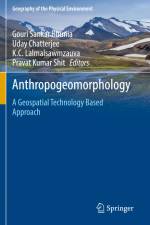
This book explores state-of-art techniques based on open-source software and statistical programming and modelling in modern geospatial applications, specifically focusing on recent trends in data mining techniques and robust modelling in Geomorphological, Hydrological, Bio-physical and Social activities. The book is organized into physical, mountainous, coastal, riverine, forest, urban and biological activities, with each chapter providing a review of the current knowledge in the focus area, and evaluating where future efforts should be directed. The text compiles a collection of recent developments and rigorous applications of Geospatial computational intelligence (e.g., artificial neural network, spatial interpolation, physical and environmental modelling and machine learning algorithms etc) in geomorphic processes from a team of expert contributors. The authors address the wide range of challenges and uncertainties in the study of earth system dynamics due to climate change, and complex anthropogenic interferences where spatial modelling may be applied in the risk assessment of vulnerable geomorphological landscapes. The book will act as a guide to find recent advancements in geospatial artificial intelligence techniques and its application to natural and social hazards. This information will be helpful for students, researchers, policy makers, environmentalists, planners involved in natural hazard and disaster management, NGOs, and government organizations.
In the third and final book of his iconic piano etudes György Ligeti charts a new path relative to the rest of his musical output, representing a significant arrival in a composer¿s oeuvre known for its stylistic transformations. This monograph is the first dedicated study of these capstone works, investigating them through a novel lens of statistical-graphical analysis that illuminates their compositional uniqueness as well as broader questions regarding the perception of stability in musical texture.With nearly 200 graphical illustrations and a detailed commentary, this examination reveals the unique manner in which Ligeti treads between tonality and atonality¿a key idea in his late style¿and the centrality of processes related to broader scale areas (or ¿macroharmony¿) in articulating structures and narratives. The analytical techniques developed here are a powerful tool for investigating macroharmonic stability that can be applied to a wide range of repertoire beyond these works.This book is intended for graduate-level and professional music theorists, musicologists, performers and mathematicians.
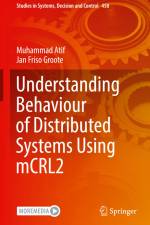
This book helps readers easily learn basic model checking by presenting examples, exercises and case studies. The toolset mCRL2 provides a language to specify the behaviour of distributed systems, in particular where there is concurrency with inter-process communication. This language allows us to analyse a distributed system with respect to its functional requirements. For example, biological cells, supply chain management systems, patient support platforms, and communication protocols.The underlying technique is based on verifying requirements through model checking. The book explains the syntax of mCRL2 and offers modelling tips and tricks.
As the current capitalist system has been increasingly struggling to respond to the problems and uncertainties in the global economy, this book aims to identify the main economic, social, and ecological problems and discusses solutions for a more inclusive and sustainable economic system. Written by an international selection of contributors, it takes a wider perspective beyond classical orthodox economics.By doing so, this book covers a wide range of topics, such as global warming and climate change, food and energy scarcity, rising inequality and debt issues, health, ecological, economic, and political crises, degrowth, green new deals, solidarity, economy, artificial intelligence, technological change, smart solutions, and smart cities. Discussing these topics, the book presents answers to the question of whether the current capitalist system is viable and provides suggestions for a fair, inclusive, and modern economic system.Taking a comprehensive approach, thebook will appeal to students, scholars, and researchers of heterodox and alternative economics.
Abonner på vårt nyhetsbrev og få rabatter og inspirasjon til din neste leseopplevelse.
Ved å abonnere godtar du vår personvernerklæring.