















Gjør som tusenvis av andre bokelskere
Abonner på vårt nyhetsbrev og få rabatter og inspirasjon til din neste leseopplevelse.
Ved å abonnere godtar du vår personvernerklæring.Du kan når som helst melde deg av våre nyhetsbrev.

This book explains the basic elements that readers need to know about amorphous silicon material and a-Si:H TFTs. It includes the main principles of the transistors operation, modeling and applications. Fundamentals about transport mechanisms in a-Si:H TFTs and the associated electronic properties are introduced and extended to design examples and strategies to build reliable, large-area, performance optimized circuits. The book also reviews the effect of the amorphous silicon nature and how it impacts the transistors properties and their relevant applications. Fundamentals are made as simple as possible to be easily grasped as they cover everything expected to be important for an easy understanding of the introduced concepts. The author¿s approach is geared toward undergraduate and graduate students, but the content is also appropriate for circuit simulator developers, integrated circuit designers and manufacturers, as well as everyone engaged in work on large area integrated circuit technologies and photovoltaics.
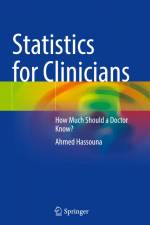
How much statistics does a clinician, surgeon or nurse need to know?This book provides an essential handbook to help appraise evidence in a scientific paper, to design and interpret the results of research correctly, to guide our students and to review the work of our colleagues. This title is written by a clinician exclusively for fellow clinicians, in their own language and not in statistical or epidemiological terms.When clinicians discuss probability, it is focussed on how it applies to the management of patients in the flesh and how they are managed in a clinical setting. Statistics for Clinicians does not overlook the basis of statistics, but reviews techniques specific to medicine with an emphasis on their application. It ensures that readers have the correct tools to hand, including worked examples, guides and links to online calculators and free software, enabling readers to execute most statistical calculations. This book will therefore be enormously helpful for many working across all fields of medicine at any stage of their career.
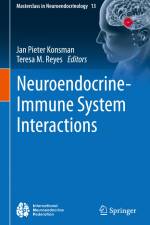
The concepts of the neuroendocrine system and the immune system emerged more or less simultaneously in the second half of the 20th century. Although these systems have a high degree of autonomy, it has also become clear that they interact in many ways and at different levels. This book focuses on the neuroendocrine and immune interactions that are fundamental to normal development and maintenance of health.The first introductory chapters are devoted to the historical and philosophical concepts within the field, as well as evolutionary considerations, offering critical interdisciplinary perspectives on the development of this field of research. Without attempting an exhaustive overview, the book then introduces some of the regulatory pathways that mediate interactions between the neuroendocrine and immune systems and examines modulating factors such as age and sex. In addition, several chapters address the importance of neuroendocrine-immune interactions in some disease states. Readers can expect to gain a broad perspective of neuroendocrine-immune interactions in development, health, and disease, along with a critical evaluation of current methods used in the field. Given its scope, the book is essential reading for undergraduate and graduate students with an interest in neuroendocrinology, neuroimmunology, and neuroscience, as well as postdoctoral fellows and established researchers seeking a comprehensive overview and historical perspective of the field of neuroendocrine-immune interactions.
This is one of the first books to combine the current megatrend of digitalization and pricing as the most effective lever for increasing and sustaining profits. The book presents the basics of digital pricing as well as modeling methods and implementation examples. This structure helps in tackling the latest developments and challenges due to digitalization. Readers will gain a detailed insight into using innovative revenue and price models to generate a sustainable competitive advantage for their companies. The author uses his cross-industry experience to draw on several examples of innovative digital pricing approaches which can be applied in industrial sectors such as automotive, industrial goods and machinery, as well as service sectors like telecommunications, transportation and tourism.
This book is about the energy loss and the coherent radiation emitted by a relativistic charge in matter. These phenomena ¿ locally deposited energy, Cherenkov radiation and transition radiation ¿ are the basis of any charged particle detector able to discriminate charges by their velocity. This book describes these phenomena and how they are related. The fundamental field equations and first principles are used to derive the spectrum of energy-loss signals and thence the velocity resolution that can be achieved. Two specific applications are then followed: the first shows that this resolution has been achieved in practice with a multi-particle detector in the course of an experiment at CERN, and the second shows how, by including scattering, the technique of ionisation cooling of accelerator beams may be reliably simulated. The book is based on a series of lectures given at the University of Oxford to graduate students in experimental particle physics. Some knowledge of mathematical physics at an undergraduate level is assumed, specifically Maxwell¿s equations and classical optics.
This book focuses on the management strategies of complex conditions of frail pediatric patients.The clinical condition of frailty is usually seen as the physiological and multidimensional decline of organ systems related to age: paradoxically, a frailty condition can also occur in children as a disability resulting from various congenital or acquired diseases. The fragile patients are more vulnerable to developing severe clinical events and often need surgical interventions. Moreover, those patients have significant morbidity and lower quality of life. The improvement in managing fragile patients has improved their life expectancy, but in most health care systems, the passage from childhood to adulthood is a critical point for the lack of medical figures able to provide the continuity of care. The book aims to provide guidance for dealing with medical and surgical emergencies and to develop short and long-term treatment strategies, and will provide an analysis of the different and the most innovative techniques. This book will be an unvaluable tool for Pediatric surgeons, Anesthesiologists, Critical Care Physicians, Hospital and family Pediatricians, nurses, Physiotherapists and Psychologists.
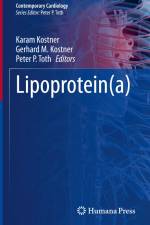
Lipoprotein(a) [Lp(a)] is a unique lipoprotein that has emerged as an independent risk factor for cardiovascular vascular disease. Data from case control, epigenetic and mendelian randomization studies indicate that people with elevated Lp(a) have a two-fold to four-fold increased risk of cardiovascular events compared to people with low Lp(a) levels. Despite this risk, awareness of Lp(a) is still very low among health care providers. Even cardiologists often overlook Lp(a), in part because Lp(a) is not as well-understood as other risk factors and treatment options are still very limited. This book offers an authoritative and comprehensive overview of Lipoprotein(a). It provides an in-depth review of all aspects of Lp(a), from pathophysiology to metabolism. Chapters offer the reader a contemporary view of the important roles of Lp(a) as a risk factor for cardiovascular disease. In addition, this volume discusses the clinical implications of elevated Lp(a) and current and future therapies. Lipoprotein(a) is an essential resource for physicians, medical students, residents, fellows, and allied health professionals in lipidology, cardiology, endocrinology, pharmacotherapy, and health promotion and disease prevention.
This book presents recent developments, research results, and industrial experience to increase the knowledge base of academics and industry. In a small world where trade is the new global driving force conquering countries and continents alike, international competitiveness is becoming the ultimate challenge. It requires high-quality products manufactured with state-of-the-art technologies at low cost under the assumption of highly efficient operations management as well as clear corporate goals and strategy. This in turn is based on improved engineering training and education, relevant applied research, and an active interaction between academia and industry.
This book covers the most suitable techniques for the rehabilitation of patients experiencing tooth loss, trauma or other situations resulting in bone atrophy. The book discusses current technologies, from diagnosis to treatment and surgery, applied to atrophic jaws using innovative tools and new PSI (patient specific implant) approaches. Oral Rehabilitation of the Atrophic Maxilla and the selection of the best treatment options for patients is one of the most difficult tasks facing the profession today. Readers will be able to solve complex problems and evaluate all available applications for patient management. Zygomatic implants, reconstructive surgery with bone grafts, post-oncologicasl and post traumatic reconstructions as well as dynamic navigation and robot assisted dental surgery are covered. The book is written by recognized experts and leaders in the field, and includes simpler techniques within the reach of many implantologists and more complex techniques that require specific surgical skills. It is relevant for, implanologist, periodontists, oral and maxillofacial surgeon, prosthodontists and every clinician treating maxillary atrophy.
Many ocular tumours are life-threatening or associated with lethal syndromes but can be difficult to diagnose because of their rarity and diversity.Unlike conventional atlases, this book contains a format that orders lesions according to their colour and ocular location to help readers quickly find the information they need even when they do not already know the diagnosis.Multimodal imaging results are presented to help provide a definitive diagnosis when slit-lamp and ophthalmoscopic findings are inconclusive. The seemingly random organisation of cases enables self-assessment by trainees.Written for optometrists and ophthalmologists, Clinical Atlas of Ocular Oncology is an essential resource for practitioners at any stage in their career.
Climate change is one of the most severe dangers for mankind worldwide. Beside the temperature increase, the sea level will rise and flood wide coastal areas, which is already remarkable today. The effects will be dramatic, in particular, at coasts with low elevation gradients such as at the German coasts of the North and Baltic Sea. The impact will be not only severe for coastal people, but still more for the unique coastal ecosystems, which harbors many plant and animal species that are already endangered today.This book focuses on the coastal terrestrial ecosystems of the German North and Baltic Sea. It describes the reactions of plants and animals (i.e. spiders, carabid beetles, bees and nematodes) on the future temperature and sea level increase. The combination of field and experimental studies is unique for Europe and for many parts of the world. It not only studies the actual elevation gradients and the climatic and saline gradients fromWest to East, but also the historical changes to document processes at coastal ecosystems that were already passed. In contrast to many books that studied the marine processes with similar backgrounds, this book concerns the terrestrial coastal ecosystems that were overall rarely studied and, in particular, never studied under this specific viewpoint.
This book uniquely discusses an approach to illnesses for which the causes are unknown. It fills the gaps in the literature by relaying research on functional illness, identifying and assessing various options, and indicating some decision-making suggestions that should help clinicians and patients think about therapy. Special considerations for functional illness include ¿probability¿ explanations based on the experience of others, serious consideration of the severity of symptoms before treatments are applied, and balancing the risks, costs, and consequences of treatment; including the patient¿s thoughts and attitudes is critical for success in treating functional illness. Unique and comprehensive, Functional Illness is an invaluable reference for medical physicians of all specialties who wish to understand better and identify functional illness symptoms.
The novelist and philosopher Iris Murdoch and the painter Harry Weinberger engaged in over twenty years of close friendship and intellectual discourse, centred on sustained discussion of the practice, teaching and morality of art. This book presents a reappraisal of Murdoch¿s novels ¿ chiefly, three mature novels, The Sea, The Sea (1978), Nuns and Soldiers (1980) and The Good Apprentice (1985), and two enigmatic late novels, The Green Knight (1993) and Jackson¿s Dilemma (1995) ¿ which are perceived through the prism of her discourse with Weinberger. It draws on a run of almost 400 letters from Murdoch to Weinberger, and on Murdoch¿s philosophical writings, Weinberger¿s private writings, the remarks of both artists in interviews, and other material relating to their views on art and art history, much of which is unpublished and has received no previous critical attention. Scrutiny of their shared values, methods and the imagistic dialogue that takesplace in their art provides original perspectives on Murdoch¿s creativity, and new ways of understanding her experimentation with the visual arts. This book offers a new line of enquiry into Murdoch's novels, and into the relationship between literature and the visual arts.
This monograph is part of a larger program, materializing in five volumes, whose principal aim is to develop tools in Real and Harmonic Analysis, of geometric measure theoretic flavor, capable of treating a broad spectrum of boundary value problems formulated in rather general geometric and analytic settings.Volume II is concerned with function spaces measuring size and/or smoothness, such as Hardy spaces, Besov spaces, Triebel-Lizorkin spaces, Sobolev spaces, Morrey spaces, Morrey-Campanato spaces, spaces of functions of Bounded Mean Oscillations, etc., in general geometric settings. Work here also highlights the close interplay between differentiability properties of functions and singular integral operators. The text is intended for researchers, graduate students, and industry professionals interested in harmonic analysis, functional analysis, geometric measure theory, and function space theory.
This book presents a both detailed and comprehensive look at metal¿organic frameworks (MOFs), a relatively new class of materials with a broad application potential. The beginning chapters focus on introducing the requisite fundamental knowledge of MOFs with respect to their classification, synthesis, functionalization approaches, and various other physiochemical facets such as structural morphology and coordination chemistry. The remaining chapters cover an array of diverse applications, from areas such as energy storage and environmental remediation, to drug delivery, biosensing, and tissue engineering.Featuring chapters dedicated to the design of novel MOF structures, as well as theoretical calculations via density functional theory and machine learning techniques, this book targets a wide readership of both academic and industrial researchers interested in an in-depth understanding of the latest MOF structure¿function relationships, as well as their deployment in a wide variety of coordinated engineering applications.
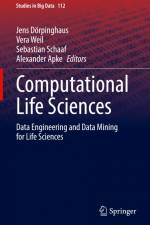
This book broadly covers the given spectrum of disciplines in Computational Life Sciences, transforming it into a strong helping hand for teachers, students, practitioners and researchers. In Life Sciences, problem-solving and data analysis often depend on biological expertise combined with technical skills in order to generate, manage and efficiently analyse big data. These technical skills can easily be enhanced by good theoretical foundations, developed from well-chosen practical examples and inspiring new strategies. This is the innovative approach of Computational Life Sciences-Data Engineering and Data Mining for Life Sciences: We present basic concepts, advanced topics and emerging technologies, introduce algorithm design and programming principles, address data mining and knowledge discovery as well as applications arising from real projects. Chapters are largely independent and often flanked by illustrative examples and practical advise.
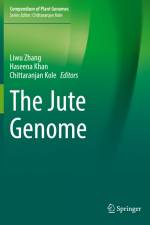
This book is the first comprehensive compilation of deliberations on jute botanical descriptions, germplasm resources, genetic diversity and population structure, DUS test and DNA fingerprinting, interspecific hybridization, classical genetics, cytology and cytogenetics, genetic transformation; and detailed enumeration on molecular mapping, genome sequencing initiatives of three major jute fiber producing countries, interspecific and intergeneric comparative genomics, organellar genomes, elucidation on functional genomics and genomics resources and database. Genetics and genomics of bast fiber development, biotic stress resistance, abiotic stress tolerance, and flowering pathways have also been discussed. It also presents a narrative on the power of molecular markers and genomics technology on jute breeding. Altogether, the book contains about 400 pages over 21 chapters authored by internationally reputed experts on the relevant field in this crop. This book will be useful to the students, teachers and scientists in the academia and relevant private companies interested in agronomy, genetics, pathology, entomology, physiology, molecular genetics and breeding, genetic engineering, and structural and functional genomics.
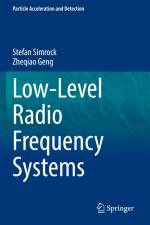
This book begins with an overview of the RF control concepts and strategies. It then introduces RF system models for optimizing the system parameters to satisfy beam requirements and for controller design. In addition to systematically discussing the RF field control algorithms, it presents typical architecture and algorithms for RF signal detection and actuation. Further, the book addresses the analysis of the noise and nonlinearity in LLRF systems to provide a better understanding of the performance of the RF control system and to specify the performance requirements for different parts of the RF system. Today, accelerators require increased RF stability and more complex operation scenarios, such as providing beam for different beam lines with various parameters, and as a result LLRF systems are becoming more critical and complex. This means that LLRF system developers need have extensive knowledge of the entire accelerator complex and a wide range of other areas, including RF and digital signal processing, noise analysis, accelerator physics and systems engineering.Providing a comprehensive introduction to the basic theories, algorithms and technologies, this book enables LLRF system developers to systematically gain the knowledge required to specify, design and implement LLRF systems and integrate them with beam acceleration. It is intended for graduate students, professional engineers and researchers in accelerator physics.
Developed by a renowned group of international authors, this engaging, case-based title once again offers readers a wide range of thought-provoking case studies that reflect contemporary, challenging, hands-on clinical care. Expanded and fully updated, Endocrinology and Diabetes: A Problem Oriented Approach, 2nd Edition addresses the complete range of endocrinologic problems found in patient care, offering the reader a convenient and pointed way to solve clinical problems in a timely manner. Due to its comprehensive coverage and practical focus, this title has developed a special place in the field of endocrinology and will again be of great interest to endocrinologists, diabetologists, internal medicine physicians, family physicians, fellows, and residents.The enthusiastic reception and warm welcome of the first edition of this book was overwhelming and gratifying. Despite many standard texts that cover physiology and clinical aspects of endocrinology, this book found a special place because it focused on patient care and practical aspects of endocrine practice.In the current volume we were fortunate to again have the honor of collaboration by international authors who pride themselves foremost as clinical endocrinologists. We hope our readers will find this updated, improved edition worthwhile, and use it for the benefit of their patients.
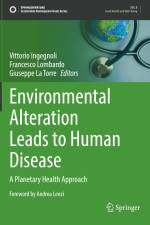
This book aims to explore the impact of human alterations of Earth's ecological systems on human health. Human activities are producing fundamental biophysical changes faster than ever before in the history of our species, which are accompanied by dangerous health effects. Drawing on advanced ecological principles, the book demonstrates the importance of using systemic medicine to study the effects of ecological alterations on human health. Planetary Health is an interdisciplinary field, but first of all it must be systemic and it needs a preferential relationship between Ecology and Medicine. This relation is to be upgrading, because today both ecology and medicine pursue few systemic characters and few correct interrelations. We need to refer to new principles and methods sustained by the most advanced fields, as Landscape Bionomics and Systemic Medicine. Thus, we will be able to better discover environmental syndromes and their consequences on human health. Environmental transformations proposed by PHA (from biodiversity shifts to climate change) do not consider bionomic dysfunctions which can menace human health. On the contrary, finding advanced diagnostic criteria in landscape syndromes can strongly help to find the effects on human well-being. The passage from sick care to health care can't avoid the mentioned upgrading.
This is the first book to focus on the problem of ensuring the correctness of floating-point hardware designs through mathematical methods. Formal Verification of Floating-Point Hardware Design, Second Edition advances a verification methodology based on a unified theory of register-transfer logic and floating-point arithmetic that has been developed and applied to the formal verification of commercial floating-point units over the course of more than two decades, during which the author was employed by several major microprocessor design companies. The theory is extended to the analysis of several algorithms and optimization techniques that are commonly used in commercial implementations of elementary arithmetic operations. As a basis for the formal verification of such implementations, high-level specifications of the basic arithmetic instructions of several major industry-standard floating-point architectures are presented, including all details pertaining to the handling of exceptional conditions. The methodology is illustrated in the comprehensive verification of a variety of state-of-the-art commercial floating-point designs developed by Arm Holdings.This revised edition reflects the evolving microarchitectures and increasing sophistication of Arm processors, and the variation in the design goals of execution speed, hardware area requirements, and power consumption. Many new results have been added to Parts I-III (Register-Transfer Logic, Floating-Point Arithmetic, and Implementation of Elementary Operations), extending the theory and describing new techniques. These were derived as required in the verification of the new RTL designs described in Part V.
Abonner på vårt nyhetsbrev og få rabatter og inspirasjon til din neste leseopplevelse.
Ved å abonnere godtar du vår personvernerklæring.