





















Gjør som tusenvis av andre bokelskere
Abonner på vårt nyhetsbrev og få rabatter og inspirasjon til din neste leseopplevelse.
Ved å abonnere godtar du vår personvernerklæring.Du kan når som helst melde deg av våre nyhetsbrev.

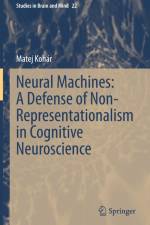
In this book, Matej Kohar demonstrates how the new mechanistic account of explanation can be used to support a non-representationalist view of explanations in cognitive neuroscience, and therefore can bring new conceptual tools to the non-representationalist arsenal. Kohar focuses on the explanatory relevance of representational content in constitutive mechanistic explanations typical in cognitive neuroscience. The work significantly contributes to two areas of literature: 1) the debate between representationalism and non-representationalism, and 2) the literature on mechanistic explanation.Kohar begins with an introduction to the mechanistic theory of explanation, focusing on the analysis of mechanistic constitution as the basis of explanatory relevance in constitutive mechanistic explanation. He argues that any viable analysis of representational contents implies that content is not constitutively relevant to cognitive phenomena. The author also addresses objections against his argument and concludes with an examination of the consequences of his account for both traditional cognitive neuroscience and non-representationalist alternatives. This book is of interest to readers in philosophy of mind, cognitive science and neuroscience.
This book is reflecting upon core theories in evolutionary biology ¿ in a historical as well as contemporary context. It exposes the main areas of interest for discussion, but more importantly draws together hypotheses and future research directions.The Modern Synthesis (MS), sometimes referred to as Standard Evolutionary Theory (SET), in evolutionary biology has been well documented and discussed, but was also critically scrutinized over the last decade. Researchers from diverse disciplinary backgrounds have claimed that there is a need for an extension to that theory, and have called for an Extended Evolutionary Synthesis (EES).The book starts with an introductory chapter that summarizes the main points of the EES claim and indicates where those points receive treatment later in the book. This introduction to the subjects can either serve as an initiation for readers new to the debate, or as a guide for those looking to pursue particular lines of enquiry. The following chapters are organized around historical perspectives, theoretical and philosophical approaches and the use of specific biological models to inspect core ideas. Both empirical and theoretical contributions have been included. The majority of chapters are addressing various aspects of the EES position, and reflecting upon the MS. Some of the chapters take historical perspectives, analyzing various details of the MS and EES claims. Others offer theoretical and philosophical analyses of the debate, or take contemporary findings in biology and discuss those findings and their possible theoretical interpretations. All of the chapters draw upon actual biology to make their points. This book is written by practicing biologists and behavioral biologists, historians and philosophers - many of them working in interdisciplinary fields. It is a valuable resource for historians and philosophers of biology as well as for biologists. Chapters 8, 20, 22 and 33 are available open access under a Creative Commons Attribution 4.0 International License via link.springer.com.
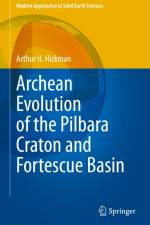
One of today¿s major geoscientific controversies centres on the origin of the Archean granite¿greenstone terranes. Is the geology of these scattered remnants of our planet¿s early crust consistent with the theory that modern-style plate-tectonic processes operated from the early Archean, or does it indicate that tectonic and magmatic processes were different in the Archean? Earth has clearly evolved since its initial formation, so at what stage did its processes of crustal growth first resemble those of today? The logical place to seek answers to these intriguing and important questions is within the best-preserved early Archean crust. The Pilbara region of northwest Australia is internationally famous for its abundant and exceptionally well-preserved fossil evidence of early life. However, until recently the area has received much less recognition for the key evidence it provides on early Archean crustal evolution. This book presents and interprets this evidence through a new stage-by-stage account of the development of the Pilbaräs geological record between 3.53 and 2.63 Ga. The Archean Pilbara crust represents one fragment of Earth¿s oldest known supercontinent Vaalbara, which also included the Kaapvaal Craton of southern Africa. Recognition of Vaalbara expands the background database for both these areas, allowing us to more fully understand each of them.
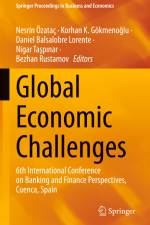
This volume presents current developments in the fields of banking and finance from an international perspective. Featuring contributions from the 6th International Conference on Banking and Finance Perspectives (ICBFP), this volume serves as a valuable forum for discussing current issues and trends in the banking and financial sectors, especially in light of the global economic challenges triggered by financial institutions. Using the latest theoretical models, new perspectives are brought to topics such as international monetary policy, Islamic finance, microfinance, fintech, and capital flight. Offering an opportunity to explore the challenges of a rapidly changing industry, this volume will be of interest to academics, policy makers, and scholars in the fields of banking, insurance, and finance.
< div="">This book introduces undergraduate students of engineering and science to applied mathematics essential to the study of many problems. Topics are differential equations, power series, Laplace transforms, matrices and determinants, vector analysis, partial differential equations, complex variables, and numerical methods. Approximately, 160 examples and 1000 homework problems aid students in their study. This book presents mathematical topics using derivations rather than theorems and proofs. This textbook is uniquely qualified to apply mathematics to physical applications (spring-mass systems, electrical circuits, conduction, diffusion, etc.), in a manner that is efficient and understandable. This book is written to support a mathematics course after differential equations, to permit several topics to be covered in one semester, and to make the material comprehensible to undergraduates. An Instructor Solutions Manual, and also a Student Solutions Manual that provides solutions to select problems, is available.^
This book presents current trends in Mechanics of Time Dependent Materials. It covers a number of cutting-edge themes, such as characterization of linear and nonlinear mechanical behavior of viscoelastic materials and their composites, taking into consideration large deformations, low, moderate and large strain rates, as well as failure and fracture phenomena. The contributions are inspired by advanced applications in modern technologies, such as injection molding and extrusion.
This book gives a self-contained, intuitive overview of some of the most important topics of finance, such as investment risk, market pricing and market efficiency, arbitrage, hedging, and the pricing and application of financial derivatives. It provides a first-principles introduction to the relevant material and concepts, emphasising intuition. Financial terminology, and the understanding implicit therein, is carefully introduced. The books starts with finance in the most general terms, and gradually specialises to investment theory and then derivatives. This book is tailor-made for readers new to finance, such as graduate students entering or interested in finance, or financial practitioners moving to a more quantitative role.
This book provides an overview of a wide range of relevant applications and reveals how to solve them. Many of the latest applications in finance, technology, education, medicine and other important and relevant fields are data-driven. The volumes of data are enormous. Specific methods need to be developed or adapted to solve a particular problem. It illustrates data science in applications. These applications have in common the discovery of knowledge in data and the use of this knowledge to make real decisions. The set of examples presented serves as a recipe book for their direct application to similar problems or as a guide for the development of new, more sophisticated approaches. The intended readership is data scientists looking for appropriate solutions to their problems. In addition, the examples provided serves as material for lectures at universities.
This atlas describes an array of tumors and diseases that affect the orbit and associated cranial nerves. Often lacking in radiology residency and fellowship training is teaching of the anatomy of the orbit and cranial nerves, as well as the imaging appearance of orbital tumors and diseases that affect these regions. This atlas fills this gap of knowledge with tumors and diseases encountered and treated at MD Anderson Cancer Center, providing a review of the imaging anatomy and the appearance of the tumors and diseases that should aid in formatting a differential diagnosis. The text consists of ten chapters divided into separate anatomic sections followed by an eleventh chapter describing the treated orbit and tumor recurrence. Each of the first ten chapters begins with a description of the relevant anatomy, labeled CT and MRI images and drawings to highlight important anatomic considerations. This is an ideal guide for practicing general radiologists, neuroradiologists and trainees, as well as ophthalmologists, head and neck surgeons, neurosurgeons, medical and radiation oncologists, and pathologists who interpret or review orbital images as part of their daily practice.
The commercial operation of atmospheric water harvesting systems is still limited to few countries; this is mainly due to the low energy efficiency of the system and the inability to effectively operate throughout the various seasons of the year. Researchers have attempted to develop strategies to render the operation of atmospheric water harvesters easier and cost effective. This book covers work progress toward such direction, including among others the co-operation of these systems with renewable energy source and the adaptation of the systems to local conditions; the response of the communities around the world to such technology and how its implementation is affected by cultural believe, cost, and technological friendliness. The book is of interest to academic researchers, students, water authorities, professional in relevant industries, government regulatory bodies officers, and environmentalists.
The international New Math developments between about 1950 through 1980, are regarded by many mathematics educators and education historians as the most historically important development in curricula of the twentieth century. It attracted the attention of local and international politicians, of teachers, and of parents, and influenced the teaching and learning of mathematics at all levels¿kindergarten to college graduate¿in many nations. After garnering much initial support it began to attract criticism. But, as Bill Jacob and the late Jerry Becker show in Chapter 17, some of the effects became entrenched.This volume, edited by Professor Dirk De Bock, of Belgium, provides an outstanding overview of the New Math/modern mathematics movement. Chapter authors provide exceptionally high-quality analyses of the rise of the movement, and of subsequent developments, within a range of nations.The first few chapters show how the initial leadership came from mathematicians in European nations and in the United States of America. The background leaders in Europe were Caleb Gattegno and members of a mysterious group of mainly French pure mathematicians, who since the 1930s had published under the name of (a fictitious) ¿Nicolas Bourbaki.¿ In the United States, there emerged, during the 1950s various attempts to improve U.S. mathematics curricula and teaching, especially in secondary schools and colleges. This side of the story climaxed in 1957 when the Soviet Union succeeded in launching ¿Sputnik,¿ the first satellite. Undoubtedly, this is a landmark publication in education. The foreword was written by Professor Bob Moon, one of a few other scholars to have written on the New Math from an international perspective. The final ¿epilogue¿ chapter, by Professor Geert Vanpaemel, a historian, draws together the overall thrust of the volume, and makes links with the general history of curriculum development, especially in science education, including recent globalization trends.
This book presents an easy-to-use tool for time series analysis and allows the user to concentrate upon studying time series properties rather than upon how to calculate the necessary estimates. The two attached programs provide, in one run of the program, a time and frequency domain description of scalar or multivariate time series approximated with a sequence of autoregressive models of increasing orders. The optimal orders are chosen by five order selection criteria. The results for scalar time series include time domain stochastic difference equations, spectral density estimates, predictability properties, and a forecast of scalar time series based upon the Kolmogorov-Wiener theory. For the bivariate and trivariate time series, the results contain a time domain description with multivariate stochastic difference equations, statistical predictability criterion, and information for calculating feedback and Granger causality properties in the bivariate case. The frequency domain information includes spectral densities, ordinary, multiple, and partial coherence functions, ordinary and multiple coherent spectra, gain, phase, and time lag factors. The programs seem to be unique and using them does not require professional knowledge of theory of random processes. The book contains many examples including three from engineering.
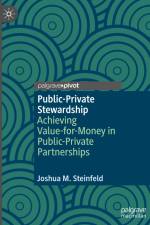
This book offers a defense acquisition perspective that provides action orientations and decision making to increase the value-for-money (VFM) of public-private partnerships (PPPs) through public-private stewardship (PPS). The differing motives of the public and the private sector are not conducive to partnership that leads to optimal outcomes. PPS is offered to practitioners and academics as a solution to failures of PPPs by following the public stewardship tenets of fiduciary responsibility and advancing the public interest while factoring in the additional elements of the private sector. The public values of transparency, accountability, responsibility, responsiveness, efficiency, effectiveness, equity, diversity, inclusion, fairness, and security, among others, can be shared in success between the public and private partners. By establishing shared values aligning with each stakeholder¿s measures for success, it is possible to devise value propositions for stakeholder decision making that supports inter-organizational strategy, operations, tactics, goals, and objectives. PPS practices can further ensue as the public-private steward utilizes tools of expertise and organizational capacity. The book provides seven portraits of practitioners in the practice of PPS to assist PPP stakeholders achieve VFM. PPS is illustrated using examples in the Department of Navy (DON) and Department of Defense (DOD).
This handbook supports the identification of inappropriate work design in manual materials handling and thus the prevention of overloading the body and of the development of health disorders. The approach at hand, The Dortmund Lumbar Load Atlas, is focussed exclusively on biomechanical aspects of loading, overload criteria and signs of overloading in the form of verifiable low-back diseases due its strikingly frequently affectedness.Manual materials handling is understood to be the holding, lifting or lowering, pulling or pushing as well as carrying of load objects and thus the application of forces mostly with one or both hands on the item handled. Due to the biomechanical similarity, special handling tasks are also addressed, such as shoveling bulk material, transporting goods via wheelbarrow and moving people manually in the care sector.The book aims to promote interest in biomechanical approaches and provides information to all persons involved in the design, evaluation and redesign of manual materials handling, e.g. ergonomists, occupational physicians, orthopaedists, employers or researchers, lecturers and students. This handbook enables analysis of manual materials handlings regarding potential lumbar overload and contains the following:a comprehensive collection of data on lumbar load in typical manual materials handling activities¿a load register on interbranch activities,synopses of previously analysed biomechanically challenging occupational activities¿a load register on branch-specific activities,explanations of the methodological approach to predicting moments and forces as well as their components in relation to the lumbar spine via biomechanical modelling andcriteria for the evaluation of load data with regard to potential lumbar overloading during single operations, working shifts and the entire occupational life.Thenew recommendations on maximum daily exposure for lifelong work for both men and women are bridging the former gap of biomechanically justified action frequency limits and now offer the possibility of a completely biomechanical path for risk assessment of manual materials handling. The book provides hence a serious contribution to the objectification of lumbar load and load-bearing capacity aiming at an ergonomic work design of manual materials handling for short- as well as long-term exposures.
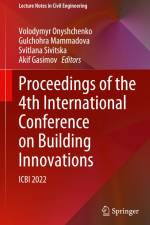
This book gathers the latest advances, innovations, and applications in the field of building design and construction, by focusing on new design solutions for buildings and new technologies creation for construction, as presented by researchers and engineers at the 4th International Conference Building Innovations (ICBI), held in Poltava ¿ Baku, Ukraine ¿ Azerbaijan, on May 19-20, 2022. It covers highly diverse topics, including structures operation, repairing and thermal modernization in existing buildings and urban planning features, machines and mechanisms for construction, as well as efficient economy and energy conservation issues in construction. The contributions, which were selected by means of a rigorous international peer-review process, highlight numerous exciting ideas that will spur novel research directions and foster multidisciplinary collaborations.
This book introduces recent research results for cyber deception, a promising field for proactive cyber defense. The beauty and challenge of cyber deception is that it is an interdisciplinary research field requiring study from techniques and strategies to human aspects. This book covers a wide variety of cyber deception research, including game theory, artificial intelligence, cognitive science, and deception-related technology. Specifically, this book addresses three core elements regarding cyber deception: Understanding human¿s cognitive behaviors in decoyed network scenarios Developing effective deceptive strategies based on human¿s behaviorsDesigning deceptive techniques that supports the enforcement of deceptive strategiesThe research introduced in this book identifies the scientific challenges, highlights the complexity and inspires the future research of cyber deception.Researchers working in cybersecurity and advanced-level computer science students focused on cybersecurity will find this book useful as a reference. This book also targets professionals working in cybersecurity.Chapter 'Using Amnesia to Detect Credential Database Breaches' and Chapter 'Deceiving ML-Based Friend-or-Foe Identification for Executables' are available open access under a Creative Commons Attribution 4.0 International License via link.springer.com.
The third edition of this handbook addresses not only the concept of resilience in children who overcome adversity, but it also explores the development of children not considered at risk addressing recent challenges as a consequence of the COVID-19 pandemic. The new edition reviews the scientific literature that supports findings that stress-hardiness and resilience in all children leads to happier and healthier lives as well as improved functionality across the lifespan. In this edition, expert contributors examine resilience in relation to environmental stressors as phenomena in child and adolescent disorders and as a means toward positive adaptation into adulthood.The significantly expanded third edition includes new and significantly revised chapters that explore strategies for developing resilience in families, clinical practice, and educational settings as well as its nurturance in caregivers and teachers. Key areas of coverage include: Exploration of the four waves of resilience research. Resilience in gene-environment transactions. Resilience in boys and girls. Resilience in family processes. Asset building as an essential component of intervention. Assessment of social and emotional competencies related to resilience. Building resilience through school bullying prevention. Resilience in positive youth development. Enhancing resilience through effective thinking. The Handbook of Resilience in Children, Third Edition, is an essential reference for researchers, clinicians and allied practitioners, and graduate students across such interrelated disciplines as child and school psychology, social work, public health as well as developmental psychology, special and general education, child and adolescent psychiatry, family studies, and pediatrics.
For small-scale fisheries around the world, the Blue Growth and Blue Economy initiatives may provide sustainable development, but only insofar as they align with the global consensus enshrined in the Voluntary Guidelines for Securing Sustainable Small-Scale Fisheries in the context of Food Security and Poverty Eradication. If states do nothing to fulfill the promises they made when they endorsed these guidelines in 2014, the Blue Economy will come at a loss for small-scale fisheries and further their marginalization in the ocean economy. Under the umbrella of Blue Justice, this book demonstrates that these risks are real and must be considered as states implement their sustainable ocean development plans. These are human rights issues, which are embedded into governance principles and institutions and which make a difference for small-scale fisheries people in their daily lives. In stressing the importance of policies and institutions that build on the experiences of small-scale fisheries people in the contexts in which they operate, this book draws on case studies of small-scale fisheries from countries on all continents to clarify what Blue Justice entails for small-scale fisheries and make suggestions for real change. "e;Through the Blue Justice paradigm, this book flags the relevance of recognizing the potential impact that different factors, including the Blue Economy approach, could bring to fishing communities, their livelihoods, cultural traditions, and other potential multidimensional conflicts. Vulnerability in fishing communities can increase and inequalities can be reinforced at different levels if individuals and community capabilities are not strengthened... A first of its kind, not to be missed, this book is informative, purposeful, and pertinent in an era of change"e;. Silvia Salas, CINVESTAV, Marine Resources Department, Merida, Mexico "e;The studies reveal that Blue Justice is a 'governability' issue, which requires establishing 'right' institutions, that are transdisciplinary (integrated), participatory, and holistic. It is implicit from these writings that the SSF Guidelines and Blue Growth initiatives do not form two different discourses, and that the implementation of the former would resolve many of the justice issues caused by the latter, in favor of small-scale fisheries and their communities"e;. Oscar Amarasinghe, Professor & Chancellor, Ocean University of Sri Lanka and President, Sri Lanka Forum for Small Scale Fisheries (SLFSSF)
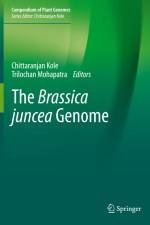
This book is the first comprehensive compilation of deliberations on elucidation and augmentation of the genome of Brassica juncea, one of the leading oilseed crops of the world, popularly called as brown mustard, Indian mustard, Chinese mustard, or Oriental mustard. It includes discussions on genepools; genetic diversity and its characterization; classical genetic and traditional breeding; basics and application of heteroploidy; techniques and applications of introgressive hybridization; in vitro culture for micro-propagation, somatic mutation, somatic embryogenesis, and somatic hybridization; genetic engineering including genetic transformation and gene silencing; and molecular genetic mapping and mapping of genes and comprehensive delineations on genome sequencing and comparative genomics; resequencing for elucidation of origin and diversity; large-scale genome analysis; plastid genome sequence; transcriptomics; metabolomics; proteomics; evolutionary genomics; role of regulatory genes in development and adaptation and their utilization in trait improvement; precise breeding for yield, quality, and resistance to biotic and abiotic stresses; and prospects of genome editing.
The shift of weather patterns has affected the incidence and prevalence of infectious diseases, including mycoses. Mycoses have remained neglected due to a lack of training and recognition within the medical community. Nonetheless, these diseases remain common worldwide while frequently being underdiagnosed. Climate change affects the distribution of fungal communities, provoking outbreaks in locations where these mycoses were absent or in low frequencies. Moreover, the reports of clinical cases related to new fungal pathogens have increased due to the description of new fungal species or due to the ability of some species to shift to new hosts. Thus, this book, The Impact of Climate Change on Fungal Diseases, is a contribution to the knowledge of a global environmental phenomenon and its relation to these diseases, and it serves as a guide for health professionals to dive deep into the repercussions of climate changeand how they can implement measures for the prevention and control of fungal infections.
This book offers a brand-new theoretical system and relevant tools for intelligently identifying errors in the decision-making process, investigating the complexities and erring mechanisms of dysfunctional socioeconomic systems, and therefore helping design error-proof systems. The error logic is invented to pioneer a new branch for the field of logic, which can be applied to various fields including mathematics, philosophy, computer science, artificial intelligence, linguistics, management science, and systems science. Researchers, postgraduates, and undergraduates in relevant fields can use it as a reference for enhancing their understanding of the tempo-spatial dynamics and transformation of errors in complicated systems. The manuscript also provides vivid and thought-provoking examples and applications to help readers understand how to apply the concepts and theory in real socioeconomic systems.
This monograph reevaluates a school of thought concerned with truth and inquiry. It examines the critique which asserts that it's not possible to live this Early Greek philosophy in practice. The investigation also details new discoveries on the reception of Skepticism by Empiricist Doctors, Early Greek Fathers, Medieval Arabic Thinkers, and Renaissance Thinkers.The author takes a careful look at the apraxia argument and how critics used it. He shows how anti-skeptical arguments rose in different stages of the development of the Skepticism. Coverage also details how the skeptics replied and gave more pragmatic coherence to their philosophy, starting with the proto-skeptics and continuing with the works of Sextus Empiricus. Readers will learn how skepticism endured despite the criticisms, becoming a coherent response to dogmatic philosophies such as Stoicism.The investigation also analyzes the two common approaches that philosophers have used to interpret Sextan philosophy. It considers their benefits as well as defects. In the process, the author presents an original way of interpreting Sextan thought, which the author calls the ¿suburban interpretation¿. He then applies this "middle way" to two works: Against the Grammarians and Against the Rhetoricians. Overall, the book provides readers with an insightful look at how this school of thought survived and spread throughout the ages.
Abonner på vårt nyhetsbrev og få rabatter og inspirasjon til din neste leseopplevelse.
Ved å abonnere godtar du vår personvernerklæring.