
















Gjør som tusenvis av andre bokelskere
Abonner på vårt nyhetsbrev og få rabatter og inspirasjon til din neste leseopplevelse.
Ved å abonnere godtar du vår personvernerklæring.Du kan når som helst melde deg av våre nyhetsbrev.

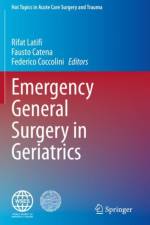
There is a growing need for a book on emergency general surgery in the elderly, as adults age 65 and older are the fastest growing segment of the population worldwide, and their number is expected to double to 89 million between now and 2050. Based on these changing demographics, it is expected that there will be a concurrent rise in the demand for a variety of surgical services, including vascular surgery (with a projected growth of 31%) and general surgery (with a projected growth of 18%), as well as in all sub-disciplines of surgery (thoracic, cardiac, oncology, hepatobiliary, transplant, plastic colorectal, orthopedic, gynecologic, urology and neurosurgery).In addition, older surgical patients often require a different level of care than younger patients during the preoperative, intraoperative and postoperative phases. Many of our geriatric population have multiple chronic illnesses beyond the one for which surgery is required, and therefore are prone to developing postoperative complications, functional decline, loss of independence, and other undesirable outcomes. In response, this book offers surgeons, geriatrists and nurses state-of-the-art surgical approaches and essential information on the complex perioperative care of the elderly.
The book shares the results of project research granted by the Castilla-La Mancha government, which has been composed by philosophers of law and criminal law researchers, whose main conclusions are represented by the manifestations and trends of the current crisis of the constitutional State. The works identify these trends and manifestations in order to develop alternatives and remedies to solve the current negation process that classical liberties are involved, from the point of view of philosophy, policy, and dogmatic.
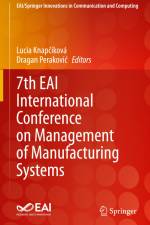
The book presents the proceedings of the 7th EAI International Conference on Management of Manufacturing Systems (MMS 2022), which took place in Krynica-Zdrój, Poland, 05-07 October 2022. The conference covers the management of manufacturing systems with support for Industry 4.0, logistics and intelligent manufacturing systems and applications, cooperation management, and its effective applications. Topics include RFID applications, economic impacts in logistics, ICT support for Industry 4.0, industrial and smart logistics, intelligent manufacturing systems and applications, and much more. The topic is of interest to researchers, practitioners, students, and academics in manufacturing and communications engineering.Presents the proceedings of the 7th EAI International Conference on Management of Manufacturing Systems (MMS 2022);Covers topics such as Industry 4.0, smart logistics, smart cities, and intelligent manufacturing;Relevant for researchers, academics, and professionals.
This book demonstrates how robust and evolving science can be relevant to public discourse about climate policy. Fighting climate change is the ultimate societal challenge, and the difficulty is not just in the wrenching adjustments required to cut greenhouse emissions and to respond to change already under way. A second and equally important difficulty is ensuring widespread public understanding of the natural and social science. This understanding is essential for an effective risk management strategy at a planetary scale. The scientific, economic, and policy aspects of climate change are already a challenge to communicate, without factoring in the distractions and deflections from organized programs of misinformation and denial. Here, four scholars, each with decades of research on the climate threat, take on the task of explaining our current understanding of the climate threat and what can be done about it, in lay language¿importantly, without losing critical aspects of the natural and social science. In a series of essays, published during the 2020 presidential election, the COVID pandemic, and through the fall of 2021, they explain the essential components of the challenge, countering the forces of distrust of the science and opposition to a vigorous national response. Each of the essays provides an opportunity to learn about a particular aspect of climate science and policy within the complex context of current events. The overall volume is more than the sum of its individual articles. Proceeding each essay is an explanation of the context in which it was written, followed by observation of what has happened since its first publication. In addition to its discussion of topical issues in modern climate science, the book also explores science communication to a broad audience. Its authors are not only scientists ¿ they are also teachers, using current events to teach when people are listening. For preservingEarth¿s planetary life support system, science and teaching are essential. Advancing both is an unending task.
Cleft lip and palate represents the most common congenital facial anomaly. Congenital anomalies are one of the top 10 causes of disability and suffering in many low and middle income countries (LMICs.) Further, an estimated 30% of the global burden of disease is treated primarily through surgery, and among surgical conditions, treating clefts conveys disproportionately large benefit relative to cost because suffering can be halted at a young age and deliver a lifetime of health. Over the last 50 years, cleft care has advanced in low-resource settings through international surgical missions and the efforts of sparse local providers. While exciting anecdotes of impact abound from these efforts, recent studies have identified a complication rate that often exceeds 50% and there is concern about the sustainability of foreign volunteer missions.This book serves as a thorough resource for providing medical and surgical care of cleft lip and palate deformities in low-resource settings, geared to the context of those settings. The content is consensus-based and evidence-based, with emphasis on treatment that is appropriate to a low-resource context and how this differs from that in higher-resource environments. It is authored by recognized cleft experts in close partnership with providers who practice in low-resource settings. It is heavily pictorially based through illustrative figures, photos and diagrams, to be facile for those who speak English as a second language. Following the introduction, Complete Cleft Care in Low-Resource Settings has six main sections: patient workup, surgical treatment, comprehensive care, educational innovation, care delivery models, and finally a series of illustrative case studies. Uniquely, the book¿s breadth encompasses cleft care comprehensively, but does so through a practical ¿how tö format with many ¿from the field¿ examples of what has worked.
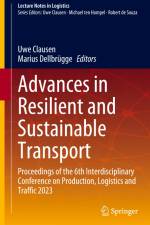
This book reports on recent research and developments at the interface between the areas of production, logistics and traffic. Gathering the proceedings of the 6th ICPLT, held on March 22-23, 2023, at TU Dortmund University, in Germany, this volume gives a special emphasis to theories, trends and technologies for planning and operating freight transport systems in a sustainable and resilient way. The twenty-two contributions included in this book cover algorithms, models, and experimental methods to addresses challenges and knowledge gaps relating to traffic flows and logistic processes. They also report on advanced technologies, human factors research and strategies that should help better understand the interdependencies and conflicts of interest in the field of production, logistics and traffic, and to develop feasible solutions. All in all, this book provides a timely snapshot of research and developments concerning freight and public transport, cargo bikes, maritimeand rail transport, electrical and hydrogen vehicles, simulation and optimization in production and logistics, production and supply chain management, sustainable logistics, and intralogistics and automation. It offers extensive information to researchers, engineers and other professionals, and public authorities that are active in all the above- mentioned fields.
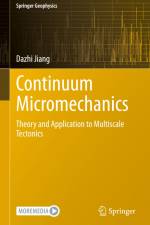
The book integrates theory, numerical methods, and practical applications seamlessly. MATLAB and MathCad programs are provided for readers to master the theory, understand the approach, and to further develop and apply the methods to geological problems. Multiscale and multi-physics investigations of Earth and planetary processes have been an active trend of research in Earth Sciences, thanks to the development of scientific computation and computer software and hardware. Based on the author's research and teaching over the past 15 years, the book stands alone as the first comprehensive text in unifying fundamental continuum micromechanics theory, geometric/kinematic analysis, and applications. The book should appeal to a broad audience of students and researchers, particularly those in the fields of structural geology, tectonics, (natural and experimental) rock deformation, mineral physics and rheology, and numerical modeling of multiscale and coupling processes.
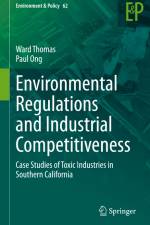
While polluting industries in the U.S. continue to emit billions of pounds of toxic chemicals into the air, land and water every year, many economists and policy makers argue that environmental regulations stifle economic growth and reduce the standard of living for the American people. This book takes a fresh look at this question through three case studies of highly regulated polluting industries in the Southern California region: metal finishing, wood furniture, and dry cleaning. The case studies are based on a mix of qualitative and quantitative methods, including in-depth interviews with corporate managers and environmental regulators. The authors find that there is no universal pattern for predicting the effects of environmental regulations on industrial competitiveness, but that the outcomes depend on the structure of the industry being regulated, the design of the regulations, and the technologies that are available for compliance. The book is written in straight forwardlanguage that is accessible to the non-economist and will prove an essential resource for academics and students of all levels, and professionals and policy makers in the fields of environmental policy and regional economic development.
This book brings together new thinking and research on religious education¿s complex and evolving role in the multicultural, diverse postmodern era. It facilitates new realism and understanding of the current situation from empirical and reflective accounts relating to a variety of countries and political contexts, as well as providing innovative methodological approaches to the study of education and religion.In different contexts around the world, at different levels of education, and from different theoretical lenses, religious education occupies a contested space. The ongoing, changing nature of the world due to increasing secularization, rapid technological change, mass immigration, globalization processes, conflict and challenging security issues, from inter to intra state levels, and with shifting geopolitical power balances, generates the need to reconceptualize where religious education is positioned. It claims that religious education on its own can be an agent of moral, social and spiritual transformation are disputed. There is significant controversy about whether special religious education, that is in-faith education, still has a role within the post-modern world.
This monograph addresses the complexity of China-Africa and Japan-Africa relations from a comparative perspective. The volume is divided into five sections. Section I focuses on the divergent perspectives that are reflected in the discourse on China-Africa relations. Section II discusses Japan¿s economic modernization and its potential lessons for Africa. Section III compares the foreign policies of Japan and China in Africa and analyzes their supposed rivalries on the continent. Section IV explores the relationship between Southeast Asia and China and its relevance to Africa-China relations. Section V provides an in-depth case study of Ethiopia-China relations over the last century. The book fills a major gap in the existing literature on the triad of Africa, China, and Japan. Under the guidance of the disciplines of African studies, international relations, political sociology, and international political economy, this volume elucidates and examines the complexities of theforeign policies of the two Asian powers toward Africa as well as their economic, political, and cultural underpinnings.
This book helps clinicians and postgraduate students to better understand the evidence in orthodontics and to use an evidence-based approach in their clinical practice. The book is written in a question-and-answer style, and each question is answered according to the hierarchy of evidence. At the end of each answer, an interpretation of the included systematic reviews, randomized clinical trials, or other studies is summarized and critically reviewed to give a better understanding of the evidence. This book covers a wide range of clinical topics, such as the treatment of Class II and Class III malocclusion, molar distalization, impacted canines, maxillary expansion, and temporary anchorage devices. Valuable material is provided on root resorption, white spot lesions, and orthodontic retention. As the book is written in Q&A style, it would be helpful to find the most relevant question without going through the whole chapter. The book includes the most asked questions aboutclinical orthodontics in discussions and will be a great help for orthodontist to defend their seen and unseen cases in exam.
This award-winning textbook delivers an earnest and comprehensive treatment of the rapidly evolving field of Materials Chemistry. It addresses inorganic-, organic-, and nano-based materials from a structure vs. property treatment, providing a suitable breadth and depth coverage of the field¿in a concise and accessible format.The updated 4th edition features significant updates to glasses and ceramics, solid-state impurities, nanomaterial toxicity, as well as materials used in energy storage, photovoltaic, and electronics applications. Advanced fabrication techniques such as additive manufacturing (3-D printing) and dynamic light scattering (DLS) characterization of suspended nanoparticles are now also included. This new edition also expands the coverage of sustainability and life cycle analysis, of increasing importance for a world plagued with the effects of climate change.Recognized by a 2008 Textbook Excellence Award from the Text and Academic Authors Association (TAA), Fahlman¿s Materials Chemistry is ideal for upper-level undergraduate students, as well as first-year graduate students in chemistry, physics, or engineering fields, and may also serve as a valuable reference to industrial researchers. Each chapter concludes with a section that describes important materials applications and an updated list of thought-provoking questions.
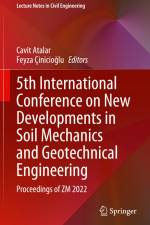
This volume highlights the latest advances and innovations in the field of soil mechanics and geotechnical engineering, as presented by leading international researchers and engineers at the 5th International Conference on New Developments in Soil Mechanics and Geotechnical Engineering (ZM), held in Nicosia, Northern Cyprus on June 30-July 2, 2022. It covers a diverse range of topics such as soil properties and characterization; shallow and deep foundations; soil improvement; excavations, support systems, earth-retaining structures and underground systems; earthquake geotechnical engineering; stability of slopes and landslides; fills and embankments; environmental preservation, water and energy; modelling and analyses in geotechnical engineering. The contributions, which were selected by means of a rigorous international peer-review process, present a wealth of exciting ideas that will open novel research directions and foster multidisciplinary collaboration among different specialists.
This book presents a novel design framework for the development of Digital Twin (DT) models for process- and motion-control applications. It is based on system-data acquisition using cutting-edge computing technologies, modelling of physical-system behavior through detailed simultaneous simulation of different aspects of the system, and optimal dynamic behavior-matching of the process. The design framework is enhanced with real-time data analytics to improve the performance of the DT¿s behavior-matching with the real system or physical twin.The methods of creating a DT detailed in Digital-Twin-Enabled Smart Control Engineering make possible the study of a system for real-time controller tuning and fault detection. They also facilitate life-cycle analysis for multiple critical and dangerous conditions that cannot be explored in the corresponding real system or physical twin. The authors show how a DT can be exploited to enable self-optimizing capabilitiesin feedback control systems.The DT framework and the control-performance assessment, fault diagnosis and prognosis, remaining-useful-life analysis, and self-optimizing control abilities it allows are validated with both process- and motion-control systems and their DTs. Supporting MATLAB-based material for a case study and an expanded introduction to the basic elements of DTs can be accessed on an associated website. This book helps university researchers from many areas of engineering to develop new tools for control design and reliability and life-cycle assessment and helps practicing engineers working with robotic, manufacturing and processing, and mechatronic systems to maintain and develop the mechanical tools they use.
This textbook is about working in teams to create functioning software. It covers skills in agile software development methods, team working, version control and continuous integration and shows readers how to apply some of the latest ideas from lean, agile and Kanban. Part I, which focuses on People, describes various project roles and the skills needed to perform each role. This includes members of self-organizing teams, scrum masters, product owners and activities for managing other stakeholders. The skills needed to create Product artefacts are detailed in Part II. These include skills to create agile requirements, architectures, designs as well as development and security artefacts. The agile development Process to coordinate with co-workers is described in Part III. It introduces the skills needed to facilitate an incremental process and to use software tools for version control and automated testing. Eventually some more advanced topics are explained in Part IV. These topics include large projects comprising multiple cooperating teams, automating deployment, cloud software services, DevOps and evolving live systems.This textbook addresses significant competencies in the IEEE/ACM Computing Curricula Task Force 2020. It includes nearly 100 exercises for trying out and applying the skills needed for agile software development. Hints, tips and further advice about tackling the exercises are presented at the end of each chapter, and a case study project, with downloadable source code from an online repository, integrates the skills learned across the chapters. In addition, further example software projects are also available there. This way, the book provides a hands-on guide to working on a development project as part of a team, and is inspired by the needs of early career practitioners as well as undergraduate software engineering and computer science students.
While most people assume that all bribery is unethical, the literature provides examples and philosophical arguments to support the proposition that some bribery may actually be ethical, based on utilitarian grounds. This book provides a theoretical and empirical examination of bribery from an ethical perspective. It examines empirical data from over 80 countries and reports on attitudes toward bribery examining demographic variables such as gender, age, ethnicity, education, income level, religion and social class. Multi-country comparisons are provided to determine whether views toward bribery differ by geographic location.
This book discusses current knowledge and challenges with the ecological management and conservation of wetlands, with a focus on the East Kolkata Wetlands of India. This area is referred to as a Ramsar Site, a designation given to areas with special protection statuses, since it is the largest natural waste recycling system in the world. The site faces many threats to its biodiversity and ecosystem functioning due to anthropogenic activity in the region, and therefore an assessment of the ecosystem services, bio-ecological uniqueness, and issues stemming from climate change and human impacts is needed to develop protection strategies for the future ecological functioning and sustainability of the wetlands. The authors use GIS and remote sensing techniques to assess and monitor harmful industrial and environmental impacts on the wetlands, and to inform mitigation and conservation strategies in the face of ongoing threats such as pollution, habitat destruction and bioinvasion. Thebook also highlights various social and economic aspects tied to the functioning and management of the wetlands, along with ecological, biological, and physio-chemical considerations. The study will be of use to students and researchers in aquatic ecology, biodiversity, and environmental sustainability and conservation, as well as to environmental planners, engineers, and policymakers.
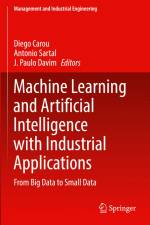
This book provides a state-of-the-art guide to Machine Learning (ML)-based techniques that have been shown to be highly efficient for diagnosis of failures in electronic circuits and systems. The methods discussed can be used for volume diagnosis after manufacturing or for diagnosis of customer returns. Readers will be enabled to deal with huge amount of insightful test data that cannot be exploited otherwise in an efficient, timely manner. After some background on fault diagnosis and machine learning, the authors explain and apply optimized techniques from the ML domain to solve the fault diagnosis problem in the realm of electronic system design and manufacturing. These techniques can be used for failure isolation in logic or analog circuits, board-level fault diagnosis, or even wafer-level failure cluster identification. Evaluation metrics as well as industrial case studies are used to emphasize the usefulness and benefits of using ML-based diagnosis techniques.
Abonner på vårt nyhetsbrev og få rabatter og inspirasjon til din neste leseopplevelse.
Ved å abonnere godtar du vår personvernerklæring.