














Gjør som tusenvis av andre bokelskere
Abonner på vårt nyhetsbrev og få rabatter og inspirasjon til din neste leseopplevelse.
Ved å abonnere godtar du vår personvernerklæring.Du kan når som helst melde deg av våre nyhetsbrev.

This book investigates whether legislative institutions, state and national, in Nigeriäs Fourth Republic have been able to harness constitutional powers to impact public policy. Presenting how the Nigerian state has not been able to showcase the expected dividends of presidential democracy since 1999, it analyzes the crisis of governance and its impact on political stability, social cohesion, and the livelihood of citizens. The book further discusses the depreciating infrastructure, corruption, and mismanagement of public resources, and shows how defiant attitudes of public political and bureaucratic officials define the new wave of corruption and profligacy in Nigeria, presenting this development as a result of a weakened legislature. The book displays the necessity of implementing a culture of accountability and discusses oversight mechanisms to make the executive accountable. These mechanisms are designed to ensure effective public service delivery. Finally, the book situates the legislative institutions in Nigeria within the context of the contributions of the National Assembly and the Assemblies of the State Houses to the development of this emerging democracy in Africa. The book will appeal to students and scholars of political science and public administration, as well as policy-makers and practitioners interested in a better understanding of democracy, separation of powers, governance, and Nigerian politics.
This book uniquely explores American cultural values as a factor in maternal health. It looks beyond the social determinants of health as primarily contributing to the escalating maternal morbidity and mortality in the United States. The United States is an outlier with poor maternal health outcomes and high morbidity/mortality in comparison to other high-resource and many mid-level resource nations. While the social determinants of health identify social and environmental conditions affecting maternal health, they do not answer the broader underlying question of why many American women, in a high-resource environment, experience poor maternal health outcomes. Frequent near-misses, high levels of severe childbearing-related morbidity, and high maternal mortality are comparable to those of lower-resource nations. This book includes contributions from recognized medical and cultural anthropologists, and diverse clinical and public health professionals. The authors examine American patterns of decision-making from the perspectives of intersecting social, cultural, and medical values influencing maternal health outcomes. Using an interdisciplinary critical analysis approach, the work draws upon decision-making theory and life course theory. Topics explored include:Cultural values as a basis for decision-makingSocial regard for motherhoodImmigrants, refugees and undocumented mothersCultural conflicts and maternal autonomyHealth outcomes among justice-involved mothersMaternal Health and American Cultural Values: Beyond the Social Determinants is an essential resource for clinical and public health practitioners and their students, providing a framework for graduate-level courses in public health, the health sciences, women¿s studies, and the social sciences. The book also targets anthropologists, sociologists, and women studies scholars seeking to explain the links between American cultural decision-making and health outcomes. Policy-makers, ethicists, journalists, and advocates for reproductive health justice also would find the text a useful resource.
This book presents an analysis of the techniques used for the synthesis of innovative functional carbon nanostructures. The chapters describe the research and development of various layered carbon nanostructures. Emphasis is given to the impact of defects on carbon nanostructures. The application of carbon nanostructured materials in biomedical field and energy storage is described.
This book presents a collection of chapters on modern bioelectrochemistry, showing different aspects of materials and electrode processes. The chapters cover biomimetics, bioelectrocatalysis, large-scale biodevices manufacturing, organic semiconductors for biorecognition, biofunctionalization, conducting polymers, carbon-based materials and 3D printed bioelectrochemical devices. They provide relevant bibliographic information for researchers and students interested in biomimetics applied in electrochemistry with impact in bioelectrocatalysis, large-scale deposition techniques applied to biodevices manufacturing and organic semiconductors as support material for electrochemical biorecognition. This book also presents insights on advantages and properties of biofunctionalization, conducting polymers with carbon-based materials in biosensors applications and progress on 3D printed electrochemical devices for sensing and biosensing of biomarkers.
In the current era, evidence-based medicine and various supporting technologies dominate everyday clinical practice, according to a disease-centred, as opposed to patient-centred, approach. They have obviously improved the clinical management of diseases and it is therefore unreasonable to think of a medicine in which they are not considered fundamental. In fact, the strength of the new medicine should be to adapt scientific knowledge to a specific clinical case.This book therefore looks at the prospect of a new 'person' centred medicine, which stands alongside the 'disease' and 'patient' centred medicine, which pays special attention to the subjectivity of scientific knowledge and the relationship between doctor and patient. It is important to emphasise that this book is written by several hands, i.e. by experts from different fields, doctors, philosophers, architects, sociologists, art critics, physicists and engineers. This is with the intention of providing as broad a perspective as possible on the doctor-patient relationship.Due to its translational and multicultural approach to the subject, the book will be of interest to a wide readership, from medical experts to students, psychologists, philosophers and institutional actors.
In the wake of the Great Depression, economic recovery and nutritional improvement in Britain simultaneously occurred with their decline in British Africa. While histories of science, medicine and British Empire have provided fertile analytical ground for decades, the field of nutrition science has received comparatively little attention. Widespread malnutrition between the World Wars called into question the role of the British state in preserving the welfare of both its citizens and its subjects, especially women, given their role in feeding their families. International organizations such as the League of Nations, empire- wide projects such as nutrition surveys conducted by the Committee for Nutrition in the Colonial Empire (CNCE), sub-imperial networks of medical and teaching professionals, and individuals on-the-spot wove a dense web of ideas on nutrition. Women, especially of the working class, bore the brunt of the struggle to access nutritious food as a wave of interest in thenew science of nutrition swept the globe between the wars, with imperial Britain in the lead. The British state buoyed the economic slump of the Great Depression in the metropole by importing more colonial goods more cheaply, feeding metropolitan Brits on the back of the colonial empire, particularly in Africa. This book stands apart for the way it places nutrition science in both Britain and Africa under a single analytic lens of economics, gender and empire, contributing to research on British and African history, British Empire, women¿s history and the history of science, medicine and health.
This book features a collection of high-quality and peer-reviewed papers from the 2022 6th International Conference on Applied Economics and Business (ICAEB), which was held in Stockholm, Sweden, during August 24-26, 2022. ICAEB serves as a platform for presentation of new advances and research results in the fields of applied economics and business. Applied economics is used to improve the quality of practice in business and public policy by thinking meticulously about new ways to approach old problems. Presentations at the conference include the topical areas of development, ecological, financial, forensic, information, institutional, international, labor, managerial, mathematical, monetary, and other related economic aspects. All these topics relate to an overall theme of sustainable development from an economic perspective. The conference brings together scientists from different fields of applied economic research in order to exchange ideas and experiences leading to improved methods of economic analysis.
This book sheds new light on the history of exercise physiology and how it essentially grew, thanks to the work of a few major Schools. Analysing and interpreting the evolution of the field, the authors focus on the School of Milano, which was founded by Rodolfo Margaria and is one of the most prominent representatives, having played a central role in promoting and advancing this field of physiology. In turn, the authors trace Margariäs biography; under his influence, the school introduced new concepts with regard to both the energetics of muscular exercise and to human locomotion. These concepts were further developed by Margariäs pupils and by subsequent generations. Indeed, the course that was set in Milano greatly influenced the entire history of modern physiology. Readers with a keen interest in the origins of modern concepts and technologies in exercise physiology will find this book a fascinating and informative read.
This book presents 50 of the most interesting and challenging sleep medicine clinical cases encountered by leaders in the field. The cases encompass the full spectrum of sleep medicine, with topics covering neurology, pulmonology, psychiatry, psychology, ENT, and beyond. In addition, adults and pediatric cases will be covered. Chapters that feature cases follow a similar format. A brief clinical history, is followed by physical examination, investigations/studies, differential diagnosis, discussion and management, and final or possible diagnosis. These cases are open to discussion and include teaching points. 50 Challenging Sleep Medicine Cases will intrigue residents interested in sleep medicine, sleep medicine fellows and professionals interested in case review for certification exams and to discuss unusual cases, as well as neurologists, psychiatrists, psychologists, neuropsychologists.
The 3rd edition of this book provides a comprehensive, fully updated, overview of diabetic neuropathy. Divided into three sections, chapters are authored by leading scientists and physicians in the world. The 1st section, Clinical Features and Diagnosis, discusses the clinical examination of diabetic neuropathy as well as the use of objective point-of-care devices in diagnosis. The 2nd section, Pathophysiology, reviews the pathophysiology of diabetic neuropathy and potential therapeutic targets. The last section, Clinical Consequences and Treatments, reviews the management of diabetic neuropathies as well as the latest treatment options for various neuropathies. Diabetic Neuropathy, Third Edition, will be of interest to clinicians, practitioners, and researchers, as well as students, residents, and fellows.
This fourth edition comprehensively covers peritoneal dialysis. Peritoneal dialysis represents an intracorporeal technique for blood purification. This unique dialysis system represents one of many human attempts to manipulate nature for sustenance of life. Recent advances have focused on further improvement of the technique, which are covered in full throughout the text. During the past decade, the time during which this therapy has been increasingly utilized, the 3rd Edition has continued to be recognized as the major source of the discipline's base knowledge. The evolution of this text to its newest edition parallels the growth of peritoneal dialysis from Continuous Ambulatory Peritoneal Dialysis in the eighties to the current therapy that encompasses manual and automated therapies with full emphasis on adequacy of dialysis dose. Nolph and Gokal's Textbook of Peritoneal Dialysis is the most in-depth publication on this dialysis technique and is an ideal resource for all clinicians practicing peritoneal dialysis.
This book uncovers the revolutionary journey of British Asian radio broadcasting. It investigates how British Asian radio broadcasting began in England in the 1960s and developed into the 2000s. The book reflects on the existing literature on media and migration, particularly the issues of settlement and race relations, and examines how the BBC and the government took initiative to address these issues. It also critically analyses the need and demand of the Asian community for its own radio platform, discerning the role of the BBC¿s radio initiatives, as well as other community-oriented radio experiments, in contributing to the creation of independent British Asian radio in England. This book is essential reading for anyone interested in Ethnic and Mother-tongue Radio Broadcasting, Cultural and Communication Studies, Media History and British Cultural History. It will also help broadcasters, media regulators and policy-makers understand the social and cultural context of the communities they address.
This book comprehensively covers minimally invasive laparoscopic and robotic surgical techniques suitable for use in abdominal operations. Chapters describe relevant techniques for abdominal wall reconstruction, esophageal, bariatric, hepatobiliary, and colorectal surgery. Detailed step-by-step procedural guidance is provided with relevant photographic illustrations.Techniques in Minimally Invasive Surgery is a vital resource for surgeons who perform minimally invasive gastrointestinal operations. The book is particularly addressed to trainees, fellows, and junior faculty.
This text uses a case-based approach to share knowledge and techniques on how to operationalize much of the theoretical underpinnings of hospital quality and safety. Written and edited by leaders in healthcare, education, and engineering, these 22 chapters provide insights as to where the field of improvement and safety science is with regards to the views and aspirations of healthcare advocates and patients. Each chapter also includes vignettes to further solidify the theoretical underpinnings and drive home learning. End of chapter commentary by the editors highlight important concepts and connections between various chapters in the text.Patient Safety and Quality Improvement in Healthcare: A Case-Based Approach presents a novel approach towards hospital safety and quality with the goal to help healthcare providers reach zero harm within their organizations.
After providing a historical overview, this book highlights the current state of knowledge, gaps in our knowledge, recent findings and future prospects with regard to the biological, chemical, geological, and geographical specificities of the Plitvice lakes in Croatia. The Plitvice lakes are a unique environment and home to tufa ¿ a type of calcium carbonate deposit that provides a substrate for living organisms. Its formation process has resulted in a vastly diverse environment of lakes, streams and riparian habitats. The Plitvice lakes have, therefore, historically been both an inspiration and a challenge for scientists, nature enthusiasts, artists, etc. Today, the lakes continue to offer an in-situ laboratory for new discoveries in all aspects of freshwater science.As in most habitats, global changes have become an important issue. Since the Plitvice lakes have remained largely untouched by direct human impacts and have a long historical tradition in research, they represent an ideal subject for assessing the effects of global changes in a temperate freshwater system. This book provides an ecological overview of the biogeochemical processes at work in a unique and virtually pristine European freshwater tufa-forming environment.
This book covers the theory, design and applications of computer networks, distributed computing and information systems. Networks of today are going through a rapid evolution, and there are many emerging areas of information networking and their applications. Heterogeneous networking supported by recent technological advances in low-power wireless communications along with silicon integration of various functionalities such as sensing, communications, intelligence and actuations is emerging as a critically important disruptive computer class based on a new platform, networking structure and interface that enable novel, low-cost and high-volume applications. Several of such applications have been difficult to realize because of many interconnections problems. To fulfill their large range of applications, different kinds of networks need to collaborate, and wired and next generation wireless systems should be integrated in order to develop high-performance computing solutions to problems arising from the complexities of these networks. The aim of the book "e;Advanced Information Networking and Applications"e; is to provide the latest research findings, innovative research results, methods and development techniques from both theoretical and practical perspectives related to the emerging areas of information networking and applications.
This book presents a detailed review of the mineral deposits and occurrences in the Arabian-Nubian Shield (ANS), including their distribution, mineralization styles, economic importance, and geological controls on the mineralization. The purpose of the book is to compile the results of past and recent investigations on mineral deposits and occurrences in the ANS that covering the countries of (Saudi Arabia, Yemen, Egypt, Sudan, Eritrea, and Ethiopia). In this regard, it discusses in detail the various genetic mineralization styles in the ANS including: (1) magmatic mineral deposits associated with mafic-ultramafic rocks (e.g. chromite, Ni-Cu-Co-PGE magmatic sulfides, Fe-Ti-V oxides), (2) intrusion-related (magmatic-hydrothermal) deposits associated with felsic to intermediate rocks (porphyry, epithermal Au-Ag/sulfide vein type family, skarn, granite-related pegmatite-REE deposits), (3) hydrothermal orogenic gold and volcanogenic massive sulfide (VMS) deposits, as well as (4) surficial mineral deposits (chemical-sedimentary, residual, mechanical and supergene enrichment deposits).
This book presents new research results in the field of gravity compensation in robotic systems. It explores topics such as gravity compensation of planar articulated robotic manipulators; the stiffness modeling of manipulators with gravity compensators; the multi-degree-of-freedom counter-balancing; the design of actuators with partial gravity compensation; a cable-driven robotic suit with gravity compensation for load carriage; various compensation systems for medical cobots and assistive devices; gravity balancing of parallel robots.The volume demonstrates that gravity compensation methods continue to develop, and new approaches and solutions are constantly being reported. These solutions apply both to new structural solutions and to their new applications. Cobots, exoskeletons and robotic suits, assistive devices, as well as biomechanical systems are among the most promising applications and most pressing areas for further innovation.
This book explores how power relationships, measured through qualitative social network analysis, impact planning participation and livelihood strategies of a marginalized group of farmers cultivating the Yamuna River floodplain in Delhi, India. Through an in-depth study of 165 farming households facing land development, this book offers insights from the ground-up into how social dynamics enable and constrain agency. A novel mixed-methods approach was used to measure social networks and access to resources based on the different types of people farmers might interact with as part of their livelihoods: hired laborers, vendors, other farmers, etc. Digging deeper into social network patterns, typologies of power are illustrated as they manifest household agency through diverse pathways. More broadly, a political ecology lens is used to link together the multiple and fragmented Yamuna farmers¿ stories with broader social, ecological, infrastructural, and economic contexts to suggest future directions for inquiry and policy related to localized urban food systems and sustainable development. This monograph will be of interest to academic faculty and graduate students in critical geography, cultural anthropology, food studies, landscape architecture/urban planning, and sociology.
This book presents deliberations on the molecular and genomic mechanisms underlying the interactions of crop plants with the biotic stresses caused by insects, bacteria, fungi, viruses, and oomycetes, etc. important to develop resistant crop varieties. Knowledge on the advanced genetic and genomic crop improvement strategies including molecular breeding, transgenics, genomic-assisted breeding and the recently emerging genome editing for developing resistant varieties in fruit crops is imperative for addressing FPNEE (food, health, nutrition. energy and environment) security. Whole genome sequencing of these crops followed by genotyping-by-sequencing have facilitated precise information about the genes conferring resistance useful for gene discovery, allele mining and shuttle breeding which in turn opened up the scope for 'designing' crop genomes with resistance to biotic stresses.The nine chapters, each dedicated to a fruit crop in this volume, deliberate on different types of biotic stress agents and their effects on and interaction with the crop plants; enumerate the available genetic diversity with regard to biotic stress resistance among available cultivars; illuminate on the potential gene pools for utilization in interspecific gene transfer; present brief on the classical genetics of stress resistance and traditional breeding for biotic stress resistance; depict the success stories of genetic engineering for developing biotic stress resistant varieties; discuss on molecular mapping of genes and QTLs underlying biotic stress resistance and their marker-assisted introgression into elite varieties; enunciate different emerging genomics-aided techniques including genomic selection, allele mining, gene discovery and gene pyramiding for developing resistant crop varieties with higher quantity and quality of yield; and also elaborate some case studies on genome editing focusing on specific genes for generating disease and insect resistant crops.
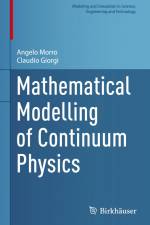
This monograph provides a comprehensive and self-contained treatment of continuum physics, illustrating a systematic approach to the constitutive equations for wide-ranging classes of materials. Derivations of results are detailed through careful proofs, and the contents have been developed to ensure a self-contained and consistent presentation.Part I reviews the kinematics of continuous bodies and illustrates the general setting of balance laws. Essential preliminaries to continuum physics ¿ such as reference and current configurations, transport relations, singular surfaces, objectivity, and objective time derivatives ¿ are covered in detail. A chapter on balance equations then develops the balance laws of mass, linear momentum, angular momentum, energy, and entropy, as well as the balance laws in electromagnetism.Part II is devoted to the general requirements on constitutive models, emphasizing the application of objectivity and consistency with the second law of thermodynamics. Common models of simple materials are then reviewed, and in this framework, detailed descriptions are given of solids (thermoelastic, elastic, and dissipative) and fluids (elastic, thermoelastic, viscous, and Newtonian).A wide of variety of constitutive models are investigated in Part III, which consists of separate chapters focused on several types of non-simple materials: materials with memory, aging and higher-order grade materials, mixtures, micropolar media, and porous materials. The interaction of the electromagnetic field with deformation is also examined within electroelasticity, magnetoelasticity, and plasma theory.Hysteretic effects and phase transitions are considered in Part IV. A new approach is established by treating entropy production as a constitutive function in itself, as is the case for entropy and entropy flux. This proves to be conceptually and practically advantageous in the modelling of nonlinear phenomena, such as those occurring in hysteretic continua (e.g., plasticity, electromagnetism, and the physics of shape memory alloys).Mathematical Modelling of Continuum Physics will be an important reference for mathematicians, engineers, physicists, and other scientists interested in research or applications of continuum mechanics.
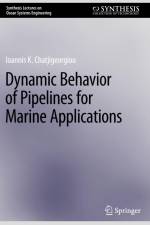
The dynamic behavior of pipelines describes the time-varying continuous response of these structures under extreme effects, that are generated by the surrounding environment (waves and sea currents) and motions imposed by the host floating facility. This book describes all known impacts that affect the behavior and operation of a pipeline conveying an inner flow for underwater applications. "Known Impacts" are those phenomena that are considered important according to practice and experience. Underwater pipelines are typical, unique structures that are attached to unique floating facilities. The design and utilization of underwater pipelines depend strongly on the installation site and the intended application's particulars. It is possible that future technology demands will require us to cope with additional challenges that will be considered important for the design and operation of underwater pipelines, leading inevitably to the enhancement of the "known challenges".
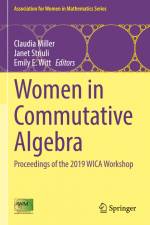
This volume features contributions from the Women in Commutative Algebra (WICA) workshop held at the Banff International Research Station (BIRS) from October 20-25, 2019, run by the Pacific Institute of Mathematical Sciences (PIMS). The purpose of this meeting was for groups of mathematicians to work on joint research projects in the mathematical field of Commutative Algebra and continue these projects together long-distance after its close. The chapters include both direct results and surveys, with contributions from research groups and individual authors.The WICA conference was the first of its kind in the large and vibrant area of Commutative Algebra, and this volume is intended to showcase its important results and to encourage further collaboration among marginalized practitioners in the field. It will be of interest to a wide range of researchers, from PhD students to senior experts.
Abonner på vårt nyhetsbrev og få rabatter og inspirasjon til din neste leseopplevelse.
Ved å abonnere godtar du vår personvernerklæring.