










Gjør som tusenvis av andre bokelskere
Abonner på vårt nyhetsbrev og få rabatter og inspirasjon til din neste leseopplevelse.
Ved å abonnere godtar du vår personvernerklæring.Du kan når som helst melde deg av våre nyhetsbrev.

Your government warns that 10% of your neighbors have a deadly contagious virus. The producer of a diagnostic test advertises that 90% of its tests are correct for any population. The test indicates that you have the virus. This book's author claims your test has a 50% chance of being false, given your test's result. Who do you believe? This book gives you insights necessary to interpret metrics that make a difference in life's decisions.This book gives methods and software that are essential to analyze change and error. Change describes a phenomenon across time points. Error compares diagnoses with the truth. Other texts give insufficient attention to these topics. This book's novel ideas dispel popular misconceptions and replace previous methods. The author uses carefully designed graphics and high school mathematics to communicate easily with college students and advanced scientists. Applications include but are not limited to Remote Sensing, Land Change Science, and Geographic Information Science."e;A wide range of tools to aid understanding of land cover and its change has been used but scientific progress has sometimes been limited through misuse and misunderstanding. Professor Pontius seeks to rectify this situation by providing a book to accompany the researcher's toolbox. Metrics That Make a Difference addresses basic issues of relevance to a broad community in a mathematically friendly way and should greatly enhance the ability to elicit correct information. I wish this book existed while I was a grad student."e; - Giles Foody, Professor of Geographical Information Science, The University of Nottingham"e;Metrics That Make a Difference provides a comprehensive synthesis of over two decades of work during which Dr. Pontius researched, developed, and applied these metrics. The book meticulously and successfully guides the reader through the conceptual basis, computations, and proper interpretation of the many metrics derived for different types of variables. The book is not just a mathematical treatise but includes practical guidance to good data analysis and good science. Data scientists from many fields of endeavor will benefit substantially from Dr. Pontius' articulate review of traditionally used metrics and his presentation of the innovative and novel metrics he has developed. While reading this book, I had multiple 'aha' moments about metrics that I shouldn't be using and metrics that I should be using instead."e; - Stephen Stehman, Distinguished Teaching Professor, State University of New York
This book focuses on advanced optical spectroscopy techniques for the characterization of cutting-edge semiconductor materials. It covers a wide range of techniques such as Raman, infrared, photoluminescence, and cathodoluminescence (CL) spectroscopy, including an introduction to their physical fundamentals and best operating principles. Aimed at professionals working in the research and development of semiconductors and semiconductor materials, this book looks at a broad class of materials such as silicon and silicon dioxide, nano-diamond thin films, quantum dots, and gallium oxide. In addition to the spectroscopic techniques covered, this book features a chapter devoted to the use of a scanning electron transmission microscope as an excitation source for CL spectroscopy. Written by a practicing industry expert in the field, this book is an ideal source of reference and best-practices guide for physicists, as well as materials scientists and engineers involved in the area of spectroscopy of semiconductor materials. Further, this book introduces the cutting-edge spectroscopy such as optical photothermal IR and Raman spectroscopy or terahertz time-domain spectroscopy (THz-TDS) etc.
This book presents deliberations on molecular and genomic mechanisms underlying the interactions of crop plants to the abiotic stresses caused by heat, cold, drought, flooding, submergence, salinity, acidity, etc., important to develop resistant crop varieties. Knowledge on the advanced genetic and genomic crop improvement strategies including molecular breeding, transgenics, genomic-assisted breeding, and the recently emerging genome editing for developing resistant varieties in pulse crops is imperative for addressing FHNEE (food, health, nutrition, energy, and environment) security. Whole genome sequencing of these crops followed by genotyping-by-sequencing has provided precise information regarding the genes conferring resistance useful for gene discovery, allele mining, and shuttle breeding which in turn opened up the scope for 'designing' crop genomes with resistance to abiotic stresses.The nine chapters each dedicated to a pulse crop in this volume elucidate on different types of abiotic stresses and their effects on and interaction with the crop; enumerate on the available genetic diversity with regard to abiotic stress resistance among available cultivars; illuminate on the potential gene pools for utilization in interspecific gene transfer; present brief on classical genetics of stress resistance and traditional breeding for transferring them to their cultivated counterparts; depict the success stories of genetic engineering for developing abiotic stress-resistant crop varieties; discuss on molecular mapping of genes and QTLs underlying stress resistance and their marker-assisted introgression into elite varieties; enunciate on different genomics-aided techniques including genomic selection, allele mining, gene discovery, and gene pyramiding for developing adaptive crop varieties with higher quantity and quality of yields, and also elaborate some case studies on genome editing focusing on specific genes for generating abiotic stress-resistant crops.
This book highlights the ways in which Britain and Belgium became culturally entangled as a result of their interaction in the period between the Napoleonic Wars and the First World War. In the course of the nineteenth century, the battlefields of Waterloo and Ypres in Belgium became veritable burial grounds for generations of dead British military, indirectly leading to the most intensive ties between the two countries. By exploring this twofold path, the author uncovers a series of cross-influences and creative similarities within the Belgo-British artistic community, and explores the background against which the British national identity was constructed. Revealing unknown links between some of the most famous artists on both sides of the channel, such as D.G. Rossetti and Jan Van Eyck; Christina Rossetti and Fernand Khnopff; John Millais and Pieter Breughel, and Lewis Carroll and Quentin Massys, the book emphasises an artistic cross-fertilisation that can be found within battlefield literature throughout the nineteenth century, including examples from the likes of William M. Thackeray, Frances Trollope and Charlotte Brontë. Providing a rich intercultural history of Belgo-British relations after the battle of Waterloo, this interdisciplinary book will appeal to scholars and students researching history, literature, art and cultural studies.
Jamshid al-Kashi's Miftah al-Hisab (Key to Arithmetic) was largely unknown to researchers until the mid-20th century, and has not been translated to English until now. This is the third and final book in a multi-volume set that finally brings al-Kashi's groundbreaking textbook to English audiences in its entirety. As soon as it was studied by modern researchers, Miftah changed some false assumptions about the history of certain topics in mathematics. Written as a textbook for students of mathematics, astronomy, accounting, engineering, and architecture, Miftah covers a wide range of topics in arithmetic, geometry, and algebra. By sharing al-Kashi's most comprehensive work with a wider audience, this book will help establish a more complete history of mathematics, and extend al-Kashi's influence into the 21st century and beyond.The book opens by briefly recounting al-KA shA 's biography, so as to situate readers in the work's rich historical context. His impressive status in the kingdom of Ulugh Beg is detailed, as well as his contributions to both mathematics and astronomy. As a master calculator and astronomer, al-KA shA 's calculations of 2I and sin(1 were by far the most accurate for almost two centuries. His law of cosines is still studied in schools today. This translation contributes to the understanding and appreciation of al-KA shA 's esteemed place in the scientific world. A side-by-side presentation of the source manuscript-one of the oldest known copies-and the English translation is provided on each page. Detailed footnotes are also provided throughout, which will offer readers an even deeper look at the text's mathematical and historical basis.Researchers and students of the history of mathematics will find this volume indispensable in filling in a frequently overlooked time period and region. This volume will also provide anybody interested in the history of Islamic culture with an insightful look at one of the mathematical world's most neglected figures.
This book uniquely provides a comprehensive and up-to-date overview of congenital and acquired deformities of the pediatric shoulder girdle, a field barely covered in existing books. It not only addresses bone deformities, but also examines the most important soft tissue alterations, e.g. muscular torticollis, thoracic outlet syndrome, shoulder dyskinesia, as well as brachial plexus birth injury and syndrome-related shoulder disorders. Following a consistent and treatment-oriented structure for each topic, leading international experts present epidemiology, key points in clinical, radiological diagnosis and treatment options, technical tips and tricks, and pertinent literature outcomes. Filling an existing gap, this book offers a timely and up-to-date resource for pediatric orthopedic fellows and attending surgeons, as well as for general orthopedists, primary care doctors and physiotherapists with an interest in the pediatric upper limb.
This book is devoted to the Little Bustard, a medium sized Paleartic steppe bird whose distribution ranges from the Iberian Peninsula to Central Asia. At present, the European population is suffering a severe decline mainly due to agricultural intensification, although its status and concerns in non-European countries are relatively unknown. In spite of this dramatic situation, the Little Bustard is an interesting model species for topics as varied as phylogeny, life history evolution and demographic traits, sexual selection and lekking behavior, habitat selection, intra- and interspecific relationships, or interaction with farming and other anthropogenic disturbances. This book provides an updated, interdisciplinary, and worldwide review of the most recent information of this crucial species in the Palearctic steppe-bird community, from specific biological aspects and traits to research-focused management. Some of the most prominent scientists from different fields (systematics, breeding ecology, behavior, competence, predation, population dynamics, farming, conservation) update and synthesize the existing information on a singular, threatened and vulnerable species.
This book examines the intersections between education, identity formation, and language in post-apartheid South Africa with specific attention to higher education. It does so against the backdrop of the core argument that the sector plays a critical role in shaping, (re)producing and perpetuating sectoral, class, sub-national and national identities, which in turn, in the peculiar South African setting, are almost invariably analogous with the historical fault lines determined and dictated by language as a marker of ethnic and racial identity. The chapters in the book grapple with the nuances related to these intersections in the understanding that higher education language policies - overt and/or covert - largely structure institutional cultures, or what has been described as curriculum in higher education institutions. Together, the chapters examine the roles played by higher education, by language policies, and by the intersections of these policies and ethnolinguistic identities in either constructing and perpetuating, or deconstructing ethnolinguistic identities upon which the sector was founded. The introductory chapter lays out the background to the entire book with an emphasis on the policy and practice perspectives on the intersections. The middle chapters describe the so-called "e;White Universities"e;, "e;Black Universities"e; and "e;Middle-Man Minorities Universities"e;. The final chapter maps out future directions of the discourses on language and identity formation in South Africa's higher education.
The Sin of Writing and the Rise of Modern Hebrew Literature contends that the processes of enlightenment, modernization, and secularization in nineteenth-century Eastern European Jewish society were marked not by a reading revolution but rather by a writing revolution, that is, by a revolutionary change in this society's attitude toward writing. Combining socio-cultural history and literary studies and drawing on a large corpus of autobiographies, memoirs, and literary works of the period, the book sets out to explain the curious absence of writing skills and Hebrew grammar from the curriculum of the traditional Jewish education system in Eastern Europe. It shows that traditional Jewish society maintained a conspicuously oral literacy culture, colored by fears of writing and suspicions toward publication. It is against this background that the young yeshiva students undergoing enlightenment started to ¿sin by writing,¿ turning writing and publication in Hebrew into the cornerstone of their constitution as autonomous, enlightened, male Jewish subjects, and setting the foundations for the rise of modern Hebrew literature.
This book comprehensively discusses both gestational diabetes and diabetes that pre-exists pregnancy (type 1 or type 2), highlighting conditions and complications that are expected to occur during and after pregnancy. The book focuses on clinical problems encountered in everyday practice, but also covers topics that contribute to a better understanding of the clinical issues (genetics, epigenetics, pathophysiology).Written by leading experts in various disciplines, the chapters draw on the authors' experience to critically evaluate relevant data on diagnosing and treating the disease and provide guidance on the optimal approach in each specific situation as well as on how to decide between alternatives. A series of learning objectives, tables, figures, algorithms and illustrations increase the book's readability and help readers improve their understanding of the material. This book serves as a practical and useful tool for general obstetricians, fetal-maternal specialists, endocrinologists, diabetologists, neonatologists, midwives and for anyone involved in the management of pregnant women with this condition.
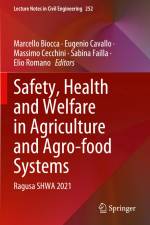
This book gathers the latest advances, innovations and applications in the field of agricultural biotechnology, agro-food systems and forestry, as presented by leading international researchers and engineers at the 5th International Conference on Safety, Health and Welfare in Agriculture and Agro-food Systems (SHWA), held in Ragusa, Italy, on September 15-18, 2021. The papers cover a range of topics such as agricultural assistive technologies, machine milking, animal welfare, sustainable livestock farming, work organization and logistic in agro-food supply chain, agricultural instrumentation and equipment, safety and health in building, agriculture 4.0, automation, occupational health, precision farming, effect of landscapes on human health, environmental safety, rural health, agricultural machinery, ROPS, augmented reality and IoT, cyber security. The contributions included in the book were selected by means of a rigorous peer-review process, and offer an extensive and multidisciplinary overview of interesting solutions in the field of sustainable agriculture.
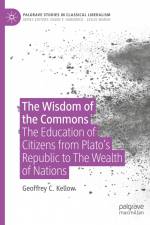
The Wisdom of the Commons examines the history and philosophy of civic education as the essential political part of liberal education. This study distinguishes itself from other works on liberal and civic education by focusing explicitly on the civic and liberal education of those citizens who are not destined for prominent positions within politics and government but are still a part of and relevant to political society. It considers this strand of liberal and civic education, in both its ancient and modern iterations, by focusing on the philosophies of Plato, Cicero, Locke, Rousseau, and Adam Smith.
This book tackles the complex topic of implementing innovation and the successful application of advanced technology in the construction industry. It provides a practical guide for the transformation of the industry by detailing appropriate and effective implementation methods, required skill sets and structural changes necessary to facilitate the practical and innovative application of technology. The construction industry is behind other industries in its level of innovation and adoption of technology, and is of critical importance to many of today's global challenges, such as climate change, global warming and resource scarcity. There is therefore a need for smarter and more efficient ways of managing available resources. This book elaborates on how the innovative application of technology could offer hope for the construction industry in it's imperative to rise to current and future global challenges. It includes the real-world case studies of innovative projects that go beyond the current state-of-the-art academic research, and have improved productivity, quality and performance in the construction sector.This book provides readers from both industrial and academic backgrounds with a comprehensive guide on transforming the construction industry with the efficient and effective implementation of technologies and modern methods of construction.
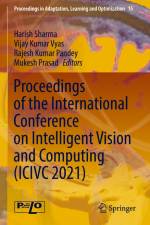
This book gathers outstanding research papers presented at the International Conference on Intelligent Vision and Computing (ICIVC 2021), held online during October 03-04, 2021. ICIVC 2021 is organised by Sur University, Oman. The book presents novel contributions in intelligent vision and computing and serves as reference material for beginners and advanced research. The topics covered are intelligent systems, intelligent data analytics and computing, intelligent vision and applications collective intelligence, soft computing, optimization, cloud computing, machine learning, intelligent software, robotics, data science, data security, big data analytics, and signal natural language processing.
This book focuses on research and development aspects of building data analytics workflows that address various challenges of e-learning applications.This book represents a guideline for building a data analysis workflow from scratch. Each chapter presents a step of the entire workflow, starting from an available dataset and continuing with building interpretable models, enhancing models, and tackling aspects of evaluating engagement and usability. The related work shows that many papers have focused on machine learning usage and advancement within e-learning systems. However, limited discussions have been found on presenting a detailed complete roadmap from the raw dataset up to the engagement and usability issues. Practical examples and guidelines are provided for designing and implementing new algorithms that address specific problems or functionalities. This roadmap represents a potential resource for various advances of researchers and practitioners in educational data mining and learning analytics.
This book analyses major themes in twenty-first-century east African politics. Predominantly authored by researchers and academics from the region, it examines recent political developments, public policy and governance across east and southern African countries. The book advocates for a regionally-focused comparative approach across Africa, arguing that it provides a greater level of analysis than a complete continental study. Adopting a multidisciplinary approach, it covers numerous topics relating to politics, public policy, state and nation-building in Africa. Filling an important void in current literature, the book will appeal to academics, practitioners, politicians and students of politics, public policy and governance.Chapter 16 and 20 are available open access under a Creative Commons Attribution 4.0 International License via link.springer.com.
This edited book brings together documented evidence and theoretical propositions on the essential mediating role of digital technology in L2 teacher education and professional development. Topics range from technological affordances in teacher education, to challenges and responses to emergency transition from face to face to virtual professional development, to successful practices of online teacher training courses. Bringing together examples from various countries and contexts of how L2 teacher trainers and trainee teachers view these forced changes and react to them, the volume fills a gap in the use of digital technology in contexts where teacher educators and trainee teachers are not technology-literate and not prepared for technology-oriented education. In addition to a Foreword by Mark Warschauer and Introduction and Conclusion chapters by Editors, the volume features 13 full-length chapters by some of the well-known experts from countries such as Australia, Finland, Mexico, the UK, the USA, Spain, Singapore, Turkey and Sweden.
This Handbook provides a comprehensive survey of major topics in the philosophy of punishment from many of the field¿s leading scholars. Key featuresPresents a history of punishment theory from ancient times to the present.Evaluates the main proposed justifications of punishment, including retributivism, general and specific deterrence theories, mixed theories, expressivism, societal-defense theory, fair play theory, rights forfeiture theory, and the public health-quarantine model.Discusses sentencing, proportionality, policing, prosecution, and the role punishment plays in the context of the state.Examines advances in neuroscience and debates about whether free will skepticism undermines the justifiability of punishment.Considers forgiveness, restorative justice, and calls to abolish punishment.Addresses pressing social issues such as mass incarceration, juvenile justice, punitive torture, the death penalty, and ¿cruel and unusual¿ punishment. · With its unmatched breadth and depth, this book is essential reading for scholars who want to keep abreast of the field and for advanced students wishing to explore the frontiers of the subject.
This book gathers peer-review contributions to the 4th International Workshop on Gerontechnology, IWoG 2021, held on November 23-24, 2021, in Evora, Portugal. They report on cutting-edge technologies and optimized workflows for promoting active aging and assisting elderly people at home, as well as in healthcare centers. They discuss the main challenges in the development, use and delivery of health care services and technologies. Not only they propose solutions for improving in practice the monitoring and management of health parameters and age-related diseases, yet they also describe improved approaches for helping seniors in their daily tasks and facilitating their communication and integration with assistive technologies, thus improving their quality of life, as well as their social integration. All in all, this book provides health professionals, researchers, and service providers with extensive information on the latest trends in the development and practical application of gerontechnology, with a special emphasis on improving quality of life of the elderly.
This book considers climate change from an economic and international policy perspective. It argues that an emissions trading systems (ETS) should first be adopted in all G20 countries with those national ETS then integrated into a global ETS. The topic of global warming is at the forefront of international discussions, especially given recent environmental policy changes in the US under Presidents Trump and Biden and the emergence of the Fridays For Future movement.Combatting climate change does not necessitate a trade-off between economic growth and climate policy provided that the latter is consistently linked to new economic policy. Policymakers should support innovation, effective redistribution policies and modern mobility concepts. Moreover, there are crucial links between financial market dynamics and price dynamics in ETS. If measures discussed here are coordinated effectively in the EU/G20, and at the global level, then climate neutrality could be achieved.
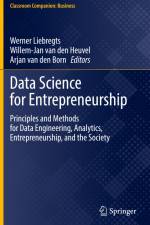
The fast-paced technological development and the plethora of data create numerous opportunities waiting to be exploited by entrepreneurs. This book provides a detailed, yet practical, introduction to the fundamental principles of data science and how entrepreneurs and would-be entrepreneurs can take advantage of it. It walks the reader through sections on data engineering, and data analytics as well as sections on data entrepreneurship and data use in relation to society. The book also offers ways to close the research and practice gaps between data science and entrepreneurship. By having read this book, students of entrepreneurship courses will be better able to commercialize data-driven ideas that may be solutions to real-life problems. Chapters contain detailed examples and cases for a better understanding. Discussion points or questions at the end of each chapter help to deeply reflect on the learning material.
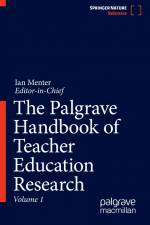
This handbook presents a timeless, comprehensive, and up-to-date resource covering major issues in the field of teacher education research. In a global landscape where migration, inequality, climate change, political upheavals and strife continue to be broadly manifest, governments and scholars alike are increasingly considering what role education systems can play in achieving stability and managed, sustainable economic development. With growing awareness that the quality of education is very closely related to the quality of teachers and teaching, teacher education has moved into a key position in international debate and discussion. This volume brings together transnational perspectives to provide insight and evidence of current policy and practice in the field, covering issues such as teacher supply, preservice education, continuing professional learning, leadership development, professionalism and identity, comparative and policy studies, as well as gender, equity, and social justice.
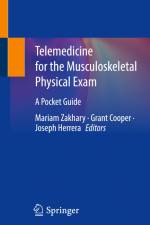
Telemedicine has ballooned in popularity and necessity in the COVID-19 world, and it has proved its worth. Even in the post-pandemic world, telemedicine will be here to stay, as it offers both patient and provider many advantages. However, physicians are often ill-equipped and lack sufficient training in how to conduct a physical examination remotely. Practical and timely, this book presents the current best practices for performing musculoskeletal examination remotely via telemedicine. It takes an anatomical approach, covering all joints and disorders commonly seen in the clinic, including preparation and general principles, the upper and lower extremities and the axial skeleton. For each region, the challenges and limitations of telemedicine are systematically highlighted and discussed, with techniques clearly described and illustrated. Concluding chapters present telemedicine procedures for both the functional assessment of a patient and evaluation and management of respiratory muscle dysfunction.Orthopedic and sports medicine practitioners, as well as general physicians, nurse practitioners, and physician assistants who treat patients with musculoskeletal disorders, will find this book highly engaging and enlightening.
Abonner på vårt nyhetsbrev og få rabatter og inspirasjon til din neste leseopplevelse.
Ved å abonnere godtar du vår personvernerklæring.