











Gjør som tusenvis av andre bokelskere
Abonner på vårt nyhetsbrev og få rabatter og inspirasjon til din neste leseopplevelse.
Ved å abonnere godtar du vår personvernerklæring.Du kan når som helst melde deg av våre nyhetsbrev.

This book provides an in-depth review of the knowledge of craniospinal arachnoid cysts, with emphasis on epidemiology, genetics, neuroimaging, clinical presentations, and operative management. Sections on postoperative complications, outcome, and medicolegal aspects of this entity are also included. This richly illustrated book will help the reader in choosing the most appropriate way to manage this challenging neurosurgical disease process. This work also considers future areas of investigation and innovative therapeutic philosophies. This comprehensive reference book will be an ideal source for neuroscientists at all levels of their training in multiple different disciplines, from graduate students to specific research scientists studying this topic, including neurosurgeons, neurologists, neuroradiologists, pediatricians, and those seeking both basic and more sophisticated information regarding craniospinal arachnoid cysts.
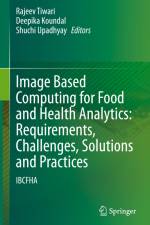
Increase in consumer awareness of nutritional habits has placed automatic food analysis in the spotlight in recent years. However, food-logging is cumbersome and requires sufficient knowledge of the food item consumed. Additionally, keeping track of every meal can become a tedious task. Accurately documenting dietary caloric intake is crucial to manage weight loss, but also presents challenges because most of the current methods for dietary assessment must rely on memory to recall foods eaten. Food understanding from digital media has become a challenge with important applications in many different domains. Substantial research has demonstrated that digital imaging accurately estimates dietary intake in many environments and it has many advantages over other methods. However, how to derive the food information effectively and efficiently remains a challenging and open research problem. The provided recommendations could be based on calorie counting, healthy food and specific nutritional composition. In addition, if we also consider a system able to log the food consumed by every individual along time, it could provide health-related recommendations in the long-term.Computer Vision specialists have developed new methods for automatic food intake monitoring and food logging. Fourth Industrial Revolution [4.0 IR] technologies such as deep learning and computer vision robotics are key for sustainable food understanding. The need for AI based technologies that allow tracking of physical activities and nutrition habits are rapidly increasing and automatic analysis of food images plays an important role. Computer vision and image processing offers truly impressive advances to various applications like food analytics and healthcare analytics and can aid patients in keeping track of their calorie count easily by automating the calorie counting process. It can inform the user about the number of calories, proteins, carbohydrates, and other nutrients provided by each meal. The information is provided in real-time and thus proves to be an efficient method of nutrition tracking and can be shared with the dietician over the internet, reducing healthcare costs. This is possible by a system made up of, IoT sensors, Cloud-Fog based servers and mobile applications. These systems can generate data or images which can be analyzed using machine learning algorithms.Image Based Computing for Food and Health Analytics covers the current status of food image analysis and presents computer vision and image processing based solutions to enhance and improve the accuracy of current measurements of dietary intake. Many solutions are presented to improve the accuracy of assessment by analyzing health images, data and food industry based images captured by mobile devices. Key technique innovations based on Artificial Intelligence and deep learning-based food image recognition algorithms are also discussed. This book examines the usageof 4.0 industrial revolution technologies such as computer vision and artificial intelligence in the field of healthcare and food industry, providing a comprehensive understanding of computer vision and intelligence methodologies which tackles the main challenges of food and health processing. Additionally, the text focuses on the employing sustainable 4 IR technologies through which consumers can attain the necessary diet and nutrients and can actively monitor their health. In focusing specifically on the food industry and healthcare analytics, it serves as a single source for multidisciplinary information involving AI and vision techniques in the food and health sector. Current advances such as Industry 4.0 and Fog-Cloud based solutions are covered in full, offering readers a fully rounded view of these rapidly advancing health and food analysis systems.
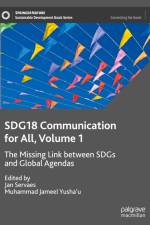
The 2030 agenda for development, or what is known as the Sustainable Development Goals (SDGs), is the most ambitious agenda collectively agreed upon by 193 countries in human history. In 2015, the UN Member States adopted the 17 SDGs as a framework that would help address the challenges being faced by humanity. From eradicating poverty, ending hunger, providing universal access to healthcare and education, and addressing climate change; to the partnering of individuals, communities, and nation-states to achieve global goals. Yet, the framers of the 2030 agenda forgot to dedicate one goal focused on the role of communication in achieving the SDGs. It is nearly impossible to achieve the SDGs without the articulation and embrace of the role of communication in development. Today, development has become a communication issue, and communication is a development issue. How could such a vital pillar of life be missing in the UN's Sustainable Development Goals? Volume 1 provides an overview of what the contributors have termed as the 'missing link' between existing SDGs: Communication for All.
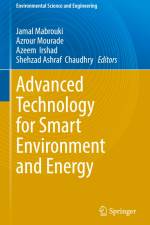
This book presents smart energy management in the context of energy transition. It presents the motivation, impacts and challenges related to this hot topic. Then, it focuses on the use of techniques and tools based on artificial intelligence (AI) to solve the challenges related to this problem. A global diagram presenting the general principle of these techniques is presented. Then, these techniques are compared according to a set of criteria in order to show their advantages and disadvantages with respect to the conditions and constraints of intelligent energy management applications in the context of energy transition. Several examples are used throughout the white paper to illustrate the concepts and methods presented. An intelligent electrical network (smart grid¿SG) includes heterogeneous and distributed electricity production, transmission, distribution and consumption components. It is the next generation of electricity network able to manage electricity demand (consumption/production/distribution) in a sustainable, reliable and economical way taking into account the penetration of renewable energies (solar, wind, etc.). Therefore, a (SG) smart grid also includes an intelligent layer that analyzes the data provided by consumers as well as that collected from the production side in order to optimize consumption and production according to weather conditions, the profile and habits of the consumer. In addition, this system can improve the use of green energy through renewable energy penetration and demand response.
¿This book comprises selected papers of the 26th International Conference on Difference Equations and Applications, ICDEA 2021, held virtually at the University of Sarajevo, Bosnia and Herzegovina, in July 2021.The book includes the latest and significant research and achievements in difference equations, discrete dynamical systems, and their applications in various scientific disciplines.The book is interesting for Ph.D. students and researchers who want to keep up to date with the latest research, developments, and achievements in difference equations, discrete dynamical systems, and their applications, the real-world problems.
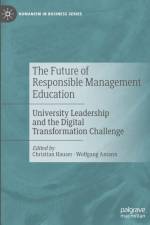
Business schools have been criticized for several things, such as lacking relevance, a too weak ethics orientation, dated paradigms, or commercialization. Simultaneously, there has been much positive change and accelerated dynamics toward forming future-ready companies and graduates. This book outlines how to better understand and master the digital transformation challenge. It is essential that business school deans, program directors, and faculty members embrace new opportunities to bring the UN-backed Principles of Responsible Management Education (PRME) to life successfully.Part of the Humanism in Business series, this book constitutes a valuable resource for leaders in universities and business schools, as well as individual faculty members aspiring to optimize how they respond to digital transformation. It can also be of use to those studying responsible management education, leadership and business ethics more generally.
This book provides a chronology of the 68th Nebraska Symposium on Motivation, which is focused on contemporary research knowledge about sexual violence and alcohol use. This book is more specific to dating and intimate partner sexual violence in young adult populations. The target audience is researchers, prevention agencies and policymakers within academia and military settings. Alcohol use has long been recognized as a major contributor to sexual assault, with an estimated 50% of sexual assaults in the U.S. involving drinking by the victim, perpetrator, or both. Beyond the usual harmful effects, alcohol-involved assaults are associated with unique sequelae for female victims, including increased self-blame, stigma, and greater alcohol use to cope. Moreover, heavier drinking on the part of the perpetrator is associated with more serious incidents of assault (e.g., involving physical force) that result in more severe outcomes for victims.The purpose ofthis Symposium on Motivation is to bring together a group of experts in the areas of alcohol and sexual aggression to articulate the causes, consequences, and mechanisms of alcohol-involved sexual assault. Speakers will talk about classic and contemporary research and theories on these issues using cutting-edge approaches (e.g., virtual reality, neuroscience, laboratory-based alcohol administration) from a variety of perspectives (perpetrators, victims, bystanders).
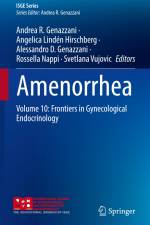
This volume comprehensively focuses on amenorrhea, one of the most important diseases in gynecology, affecting women from puberty to menopause.Amenorrhea is analyzed from its etiologies, pathogenesis, consequences and treatments throughout puberty, food and cycle disorders, exercise and stress impact, fertility- and sexual-related affection, and menopause transition.Written by experts in the field, this book will be of benefits to residents, general practitioners and specialists, gynecologists and endocrinologists, who deal with women¿s health care.
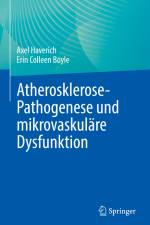
Dieses Buch bietet neue Einblicke in die Pathogenese der Atherosklerose. Die Kapitel befassen sich mit den Risikofaktoren für Atherosklerose, den Auswirkungen von Wachstum und Alterung auf die Gefäßarchitektur und der entscheidenden Rolle, die das Mikrogefäßsystem bei der Entstehung von Atherosklerose spielt. Eine mikrovaskuläre Dysfunktion würde erklären, warum die bekannten Risikofaktoren das Risiko für den Einzelnen tatsächlich erhöhen. Dieser Pathomechanismus würde nicht nur für die obstruktive Atherombildung gelten, sondern auch für die aneurysmatische Dilatation sowie für die Dissektion der Aorta und der peripheren Arterien. Durch diese Brille betrachtet, ergeben sich neue präventive und therapeutische Möglichkeiten.In Atherosclerosis Pathogenesis and Microvascular Dysfunction wird ein einheitlicher Mechanismus für die Entstehung von Atherosklerose vorgeschlagen und es werden potenzielle präventive und therapeutische Möglichkeiten auf der Grundlage dieses Konzepts beschrieben. Das Buch stellt daher eine zeitgemäße und wertvolle Ressource für Ärzte der Inneren Medizin, Kardiologie, Angiologie, Herz- und Gefäßchirurgen, Pathologen, Forscher, Auszubildende und Studenten dar.
Klang und Musik bieten vielfältiges Material, um die Anwendbarkeit von Mathematik darzulegen. Im vorliegenden Buch haben wir die Mathematik auf dem Niveau eines Bachelorstudiums vor Augen. Die Themen auf Seite von Klang und Musik betreffen u.a. Tonleitern, Schallwellen in Streich- und Blasinstrumenten, Kugelwellen, Töne und Obertöne, schwingende Membrane, Impedanz und gekoppelte schwingende (Klavier)saiten. Die Akustik bietet Anlass und viel Stoff, um auf ganz unterschiedliche Themen aus der Mathematik einzugehen und exemplarisch die Anwendbarkeit von elementarer wie fortgeschrittener Mathematik darzulegen. Themen aus der Mathematik sind u.a. Kettenbrücke, die Wellengleichung in verschiedenen Dimensionen, Fourieranalyse, Besselfunktionen und Besselgleichung, das Verfahren der stationären Phase, die Diskriminante von Polynomen. Das Konzept ist in mehreren Vorlesungen erprobt: Stoff aus Analysisvorlesungen wird durch die anschaulichen Themen dieses Buches lebendig gemacht, wasinsbesondere für Lehramtstudierende hilfreich sein kann.
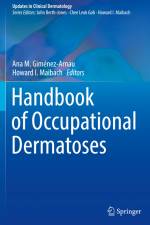
This handbook offers a comprehensive overview of the variety of skin issues that can arise while at work. It is meant to guide dermatologists, allergists, and industrial physicians in the successful diagnostic and management of the patients suffering from occupational skin dermatoses. It provides a look at the current modes of treatment available to practicing physicians while also offering updates on the most recent changes and advances for easy integration into practice. With an depth look at some of the more common diseases, like various urticaria and eczema as well as examining specific work places prone to exposure, this book will provide a quick and easy-to-use reference. Chapters contain patient photos and offer a multidisciplinary approach with special chapters on medical legal implications as well as exploring the minimum standards on prevention, diagnosis, and treatment as viewed worldwide. Handbook of Occupational Dermatoses is a must-have resource for dermatologists, allergists, and primary care physicians that deal with these skin issues everyday.
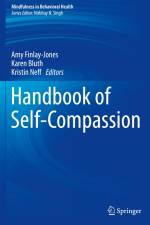
This handbook examines contemporary issues in self-compassion science and practice. It describes advances in the conceptualization and measurement of self-compassion as well as current evidence from cross-sectional and experimental research. The volume addresses the foundational issues of self-compassion, including its relationship to self-esteem and mindfulness. In addition, it considers the developmental origins of self-compassion and its relevance across the life course, including among adolescents and older adults. The handbook explores the role of self-compassion in promoting well-being and resilience and addresses new frontiers in self-compassion research, such as the neural underpinnings and psychophysiology of compassionate self-regulationKey areas of coverage include:The meaning of self-compassion for gender and sexuality minority groups.The cultivation of self-compassion among young people.The use of interventions to promote self-compassion.The role of compassion-based interventions in clinical contexts.Important insights for using self-compassion-based interventions in practice.The Handbook of Self Compassion is a must-have resource for researchers, professors, and graduate students as well as clinicians, therapists, and other practitioners in psychology, complementary and alternative medicine, and social work as well as all interrelated research disciplines and clinical practices.
¿This book explores pendular politics in Latin America, focusing on electoral cycles with a pattern of similar results. Latin America has been neoliberal in the 1990s, leftist during the 2000s, then conservative in 2016-2018 and progressist again since 2018.The reference to a right/left/right/left sequence over a period of thirty years undoubtedly accounts for a singular pendulum pattern yet proves to be excessively simplistic. The right/left dichotomy hides fractures and nuances that characterize each political camp.This book seeks to explain why some elections result in alternations and others do not. Based on an innovative theoretical framework and a unique collection of case studies, the book offers a rich understanding of Latin Americäs contemporary political evolutions.Voters are getting accustomed to punishing incumbents for not delivering in time of crises, resulting in frequent alternations. It might be good for democracy, not so much for governability.
The chapters in this book are based on the Visceral Pain conference in Adelaide, Australia, under the auspices of the International Federation for Neurogastroenterology and Motility in 2021. This is one of the hottest fields of science and includes mechanisms involving how the microbiome communicates with the brain and how, when disordered, these mechanisms contribute to clinical diseases such as Irritable Bowel Syndrome and Inflammatory Bowel Disease. Researchers from around the globe presented their latest findings as a review of the current state of the art in the field from both the clinical and scientific points of view. These systems are now appreciated as being critical for shaping our well-being and their disorders underlie chronic clinical conditions of significant morbidity and mortality. The author team includes long-established authorities who significantly contributed to the advances in visceral pain research over the past two decades and the new generation thatwill continue to contribute to advancing our understanding of the field.
For over 60 years, scientists and engineers have been trying to crack a seemingly intractable problem: how to build practical devices that exploit nuclear fusion. Access to electricity has facilitated a standard of living that was previously unimaginable, but as the world¿s population grows and developing nations increasingly reap the benefits of electrification, we face a serious global problem: burning fossil fuels currently produces about eighty percent of the world's energy, but it produces a greenhouse effect that traps outgoing infrared radiation and warms the planet, risking dire environmental consequences unless we reduce our fossil fuel consumption to near zero in the coming decades. Nuclear fusion, the energy-producing process in the sun and stars, could provide the answer: if it can be successfully harnessed here on Earth, it will produce electricity with near-zero CO2 byproduct by using the nuclei in water as its main fuel. The principles behind fusion are understood, but the technology is far from being fully realized, and governments, universities, and venture capitalists are pumping vast amounts of money into many ideas, some highly speculative, that could lead to functioning fusion reactors. This book puts all of these attempts together in one place, providing clear explanations for readers who are interested in new energy technologies, including those with no formal training in science or engineering. For each of the many approaches to fusion, the reader will learn who pioneered the approach, how the concept works in plain English, how experimental tests were engineered, the future prospects, and comparison with other approaches. From long-established fusion technologies to emerging and exotic methods, the reader will learn all about the idea that could eventually constitute the single greatest engineering advance in human history.
This book equips dental practitioners with all the information required in order to ensure successful endodontic treatment of children and adolescents. It describes pulp therapy from a holistic approach that highlights new developments in the field. Readers will find updates on the formation, structure and function of the dental pulp revealed by the latest single-cell technologies, and discussions on carious lesions and their impact on the pulp. The book examines clinical considerations in the decision to perform pulp treatment and emphasizes the need to integrate pupal diagnostics with patient-dependent factors such as behavior management and pulpal pain mechanisms. The second part of the book includes comprehensive descriptions of current treatments for each type of caries-inflicted tooth damage, from selective caries removal through direct pulp capping, pulpotomy, pulpectomy and root canal therapy for primary dentition to direct pulp capping and endodontic treatment of young permanent teeth. Traditional and new pulp-treatment materials are described as are the techniques and materials used to restore both primary and young permanent teeth. The book summarizes innovative biological approaches for pulp regeneration such as the use of stem cells. It is a must have for dental students, endodontists, pediatric dentists and general dentists with an interest in the subject.
This book covers next-generation nanocomposite supercapacitor materials. It deals with a wide range of emerging and sustainable supercapacitors based on, e.g., low-dimensional materials including transition metal oxides, carbons, Mxenes, etc., and metal-organic frameworks. Additionally, it features up-to-date coverage of advanced supercapacitors such as 3D printing, atomic layer deposition, recycling, quantum, on-chip, shape memory, self-healing, and micro-scale supercapacitors.This book is part of the Handbook of Nanocomposite Supercapacitor Materials. Supercapacitors have emerged as promising devices for electrochemical energy storage, playing an important role in energy harvesting for meeting the current demands of increasing global energy consumption. The handbook covers the materials science and engineering of nanocomposite supercapacitors, ranging from their general characteristics and performance to materials selection, design and construction.Covering both fundamentals and recent developments, this handbook serves a readership encompassing students, professionals and researchers throughout academia and industry, particularly in the fields of materials chemistry, electrochemistry, and energy storage and conversion. It is ideal as a reference work and primary resource for any introductory senior-level undergraduate or beginning graduate course covering supercapacitors.
This book elucidates heat transfer behavior for boiling of dilute emulsions- mixtures of two immiscible fluids- which has received little attention to date. Of the work completed in this area, the majority has been focused on pool boiling where no mean flow is present, and this book is the first major work to be published regarding flow boiling of emulsions. The book includes a comprehensive review and assessment of research on emulsion-based heat transfer. Recent experiments are reported and analyzed to characterize heat transfer in microgap flow boiling via a systematic investigation into the effects of gap size, mass flux, and volume fraction on the heat transfer coefficient and pressure drop. The emulsion used in all experiments comprises droplets of an immiscible electronics cooling fluid suspended in water. The volume provides a complete baseline for flow boiling of water in the microgaps, enabling a determination of the enhancement of the heat transfer coefficient when thedisperse component is present. Moreover, a subset of the data set pertains to flow boiling of dilute emulsions over microporous surfaces. The flow conditions for which the microporous surfaces enhance or degrade heat transfer are presented. Finally, this book provides a discussion of the physical phenomena which affect boiling and a set of nondimensional numbers that can be used for correlation.
This book addresses the critical gaps among understandings of teacher leadership across organizational and cultural contexts. It challenges the use of the term teacher leadership as if there is a widely shared understanding of what it is and what it means for exercising influence and making decisions. The book describes how implicit meanings and competing assumptions about teacher leadership may contribute to uncertainty and confusion in school communities. The authors caution against the incorporation of teacher leadership in international policy making discussions without adequate consideration of contextual, organizational, historical, and cultural differences that may lead to school community members struggling to accommodate the concept or, worse, ignoring other frameworks for facilitating more culturally appropriate decision making.This book shares the findings of research conducted in several North American, European, African, Latin-American, and Australasian contexts as part of the International Study of Teacher Leadership. Study findings are used to posit contextualized conceptualizations of teacher leadership and to offer a perspective for positioning researchers and practitioners in the international teacher leadership discourse.
This textbook presents all the basics for the first two years of a course in mathematical analysis, from the natural numbers to Stokes-Cartan Theorem.The main novelty which distinguishes this book is the choice of introducing the Kurzweil-Henstock integral from the very beginning. Although this approach requires a small additional effort by the student, it will be compensated by a substantial advantage in the development of the theory, and later on when learning about more advanced topics.The text guides the reader with clarity in the discovery of the many different subjects, providing all necessary tools ¿ no preliminaries are needed. Both students and their instructors will benefit from this book and its novel approach, turning their course in mathematical analysis into a gratifying and successful experience.
This book explores wind-adaptive architectural design blending the parametric design with digital simulations and suggests a novel approach for specific, even extreme conditions, as the first step in creating architecture that can act in response to the nature around. The chapters propose an urban and architectural design that emerges from the specific wind microclimate of the design site and responds to the changes in the ambient wind conditions. The book looks closely at A) the interdisciplinary wind-driven design method for architects, engineers, and urbanists employing open-source software for CFD analysis and B) the tensegrity-membrane adaptive building façades. The main questions the authors try to answer are: How does the wind-driven methodology enhance the wind comfort around buildings? How can it contribute to the reduction of wind surface loads acting on buildings?
Since research on meiobenthos was last compiled in a textbook (2008/2009), the number of theoretical and applied studies has been growing rapidly. Supported by new methods and digital evaluation, meiobenthology has developed into a wide field, with more and more researchers studying cross-disciplinary aspects. New perspectives were summarized in a booklet (2019) to draw attention to promising research directions. The present book, written by leading experts, is a compilation of new thinking, data, methods and approaches in many relevant fields of recent meiobenthos research. The topics addressed range from bacteria and biofilms to globally changing processes, from polar regions to the deep-sea and from freshwater ecosystems to the ocean. So, this book is not simply another meiobenthos textbook - it is an attempt to identify new horizons in meiobenthos research, driven by the vision of advancing knowledge and understanding of benthic ecosystems.
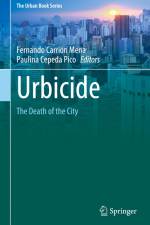
This book uses the reflection of academics specialized in the urban area of ¿¿Latin America, Europe and the United States, to initiate a comparative debate of the different dynamics in which Urbicidio expresses itself. The field or focal point of analysis that this publication approaches is the city, but under a new critical perspective of inverse methodology to that has been traditional used. It is about understanding the structural causes of self-destruction to finally thinking better and then going from pessimism to optimism.It is a deep look at the city from an unconventional entrance, because it is about knowing and analyzing what the city loses by the action deployed by own urbanites, both in the field of its production and in the field of its consumption. This suppose that the city does not have an ascending linear sequential evolution in its development but neither in each of its parts in the improvement process, showing the face that commonly not seen but others live.The category used for this purpose is that of Urbicidio or the death of the city, which contributes theoretically and methodologically to the knowledge of the city, as well as to the design of urban policies that neutralize it. In addition, it is worth mentioning that the book has an inclusive view of the authors. For this reason, gender parity, territorial representation and the presence of age groups have been sought.
This book explores the most recent Edge and Distributed Cloud computing research and industrial advances, settling the basis for Advanced Swarm Computing developments. It features the Swarm computing concepts and realizes it as an Ad-hoc Edge Cloud architecture.Unlike current techniques in Edge and Cloud computing that solely view IoT connected devices as sources of data, Swarm computing aims at using the compute capabilities of IoT connected devices in coordination with current Edge and Cloud computing innovations. In addition to being more widely available, IoT-connected devices are also quickly becoming more sophisticated in terms of their ability to carry considerable compute and storage resources. Swarm computing and Ad-hoc Edge Cloud take full advantage of this trend to create on-demand, autonomic and decentralized self-managed computing infrastructures.Focusing on cognitive resource and service management, the book examines the specific research challenges of the Swarm computing approach, related to the characteristics of IoT connected devices that form the infrastructure. It also offers academics and practitioners insights for future research in the fields of Edge and Swarm computing.
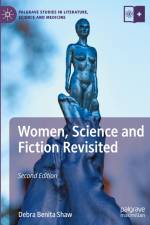
Women, Science and Fiction Revisited is an analysis of selected science fiction novels and short stories written by women over the past hundred years from the point of view of their engagement with how science writes the world. Beginning with Charlotte Perkins Gilman's Herland (1918) and ending with N K Jemisin's The City We Became (2020), Debra Benita Shaw explores the re-imagination of gender and race that characterises women's literary crafting of new worlds. Along the way, she introduces new readings of classics like Ursula Le Guin's The Left Hand of Darkness and Margaret Atwood's The Handmaid's Tale, examining the original novels in the context of their adaptation to new media formats in the twenty-first century. What this reveals is a consistent preoccupation with how scientific ideas can be employed to challenge existing social structures and argue for change.
Abonner på vårt nyhetsbrev og få rabatter og inspirasjon til din neste leseopplevelse.
Ved å abonnere godtar du vår personvernerklæring.