

















Gjør som tusenvis av andre bokelskere
Abonner på vårt nyhetsbrev og få rabatter og inspirasjon til din neste leseopplevelse.
Ved å abonnere godtar du vår personvernerklæring.Du kan når som helst melde deg av våre nyhetsbrev.

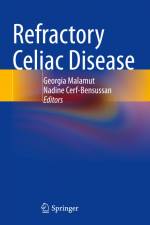
This book is about recurring celiac disease, its diagnosis and management. It starts by discussing the pathogenesis of refractory celiac disease and the role of viruses, microbiota and genetics in this disease. It also covers the epidemiological aspects.Refractory Celiac Disease is a unique resource on the topic written by a team of international experts in the topic and will be of great use to gastroenterologists and researchers in the field.
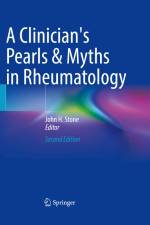
This book builds upon the first edition with new and improved chapters. The book explores the rich assemblage of clinical wisdom from expert rheumatologists from a wide range of specialties including Vasculitis and Sjogren¿s syndrome. It examines the nuggets or ¿pearls¿ of wisdom gained from collective clinical experience about the diagnosis or treatment of various diseases whilst also aiming to debunk myths that have influenced the practice of rheumatology by many clinicians. The second edition of A Clinician's Pearls and Myths in Rheumatology is a critical resource for both practitioners and students of rheumatology. This book provides a clear guide for those wishing to take a ¿deep dive¿ into the diagnostic and therapeutic elements of rheumatology.
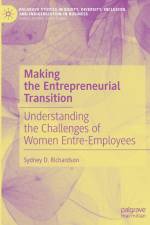
Entre-employees are those who work for an organization while running their own company, with no interest in the transition to full-time entrepreneurship. This book explores the history, challenges, and leadership development of women entre-employees. The author examines the impact of COVID as well as race and sexism in the workplace on women entre-employees. She also discusses how women are more likely to embrace community-driven businesses, which often face slow growth. Given these challenges, the author proposes ways that employers can support women entre-employees, who have been proven to be valuable workers. Using the life stories of women entre-employees, this useful addition to the entrepreneurship field will appeal to entrepreneurship scholars as well as those interested in topics related to leadership and gender at work.
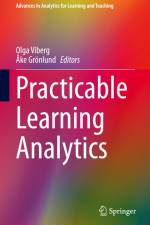
This book is about practicable learning analytics, that is able to become a successful part of practice, ultimately leading to improved learning and teaching. The aim of the book is to shift our perspective on learning analytics creation and implementation from that of ¿designing of¿ technology to that of ¿designing for¿ a system of practice. That is, any successful implementation of learning analytics requires a systematic approach, which the book explains through the lens of the Information Systems Artefact, constituting of the three interdependent artefacts: ¿technical¿, ¿information¿ and ¿social¿.The contributions of this book go beyond a consideration of particular humans such as teachers and students, and their individual activities to consider the larger systems of activity of which analytics become part of. The chapters included in this book present different cases of learning analytics implementation across countries, and the related opportunities and challenges related to generalizability of the results.The book is written for designers, students and educators of learning analytics who aim to improve learning and teaching through learning analytics.
This book discusses linguistic diversity, linguistic prejudice, and language variation and change from a Global South perspective by analyzing Brazilian Portuguese, Brazilian Sign Language (LIBRAS) and indigenous languages spoken in Brazil. It brings together studies and reflections on linguistic prejudice and social discrimination based on data and examples from Brazil and aims to bridge the gap between academic findings and popular notions related to linguistic diversity to promote language diversity and fight linguistic intolerance. Chapters in this volume present contributions to understand the origins and motivations of linguistic prejudice and foster awareness of entrenched opinions regarding linguistic diversity.The first part of the book brings together chapters analyzing basic sociolinguistic questions concerning linguistic prejudice based on theoretical discussions and qualitative research. The second part is composed of chapters that analyze linguistic prejudicein Brazil in major communities that speak Brazilian Portuguese varieties and minor communities that speak native and sign languages.Understanding Linguistic Prejudice: Critical Approaches to Language Diversity in Brazil will be a valuable resource for researchers in sociolinguistics interested in language diversity, language justice and language policy. It will also be of interest to sociologists, anthropologists and other social scientist interested in the relationship between language, diversity, equity and inclusion.
By incorporating the latest advancement in complex system modeling and simulation into the service system research, this book makes a valuable contribution to this field that will lead service innovation and service management toward the digital twin and metaverse. It covers important topics such as computational experiments and parallel execution of a parallel service system, the modeling of artificial service systems, semi-parallel service systems, parallel service, and digital twin/metaverse. It also provides a unified framework for realizing a parallel service system that demonstrates the capabilities or potentials of adopting digital twin and metaverse.In addition, the book contains numerous solutions to real-world problems, through which both academic readers and practitioners will gain new perspectives on service systems, and learn how to model a parallel service system or how to use the model to analyze and understand the behaviors of the system. For academic readers, it sheds light on a new research direction within the service science/engineering domain made possible by the latest technologies. For practitioners, with the help of methods such as Agent-based Modeling and Simulation, the book will enable them to enhance their skills in designing or analyzing a service system.
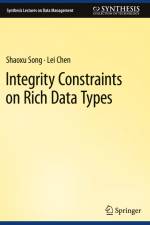
This book examines the recent trend of extending data dependencies to adapt to rich data types in order to address variety and veracity issues in big data. Readers will be guided through the full range of rich data types where data dependencies have been successfully applied, including categorical data with equality relationships, heterogeneous data with similarity relationships, numerical data with order relationships, sequential data with timestamps, and graph data with complicated structures. The text will also discuss interesting constraints on ordering or similarity relationships contained in novel classes of data dependencies in addition to those in equality relationships, e.g., considered in functional dependencies (FDs). In addition to exploring the concepts of these data dependency notations, the book investigates the extension relationships between data dependencies, such as conditional functional dependencies (CFDs) that extend conventional functional dependencies (FDs). This forms in the book a family tree of extensions, mostly rooted in FDs, that help illuminate the expressive power of various data dependencies. Moreover, the book points to work on the discovery of dependencies from data, since data dependencies are often unlikely to be manually specified in a traditional way, given the huge volume and high variety in big data. It further outlines the applications of the extended data dependencies, in particular in data quality practice. Altogether, this book provides a comprehensive guide for readers to select proper data dependencies for their applications that have sufficient expressive power and reasonable discovery cost. Finally, the book concludes with several directions of future studies on emerging data.
The aim of this book is to open a vision to sustainability and development through a holistic perspective comprising the critical blocks of energy, environment and economy. From renewable energy, urban infrastructure, societal health to industrial symbiosis, the book assesses critical issues to reach a green future with realistic solutions proposed by a diverse range of multidisciplinary experts. It is intended for a broad readership of academics, researchers and industry experts focusing on these fields, and with specializations in sustainability. The book is divided into different clusters starting with an introductory foreword to express the theme of the book and the route of the titles. The first cluster of the book highlights various multidisciplinary perspectives considering the interaction between different expertise. From engineering to economy supported with social pillars, this section gives the critical points of selected topics to focus on the future with a sustainability vision. The second cluster focuses on health issues, with discussion about the impacts of the COVID-19 pandemic and the way forward. Critical points like vaccines, health care and food security are highlighted. The third cluster is comprised of titles related to the urban environment and infrastructure. New solutions and discussions on biodesign, waste management and transportation are covered in this section. The last cluster covers energy, and highlights renewable energies such as bioethanol, biogas and wind.
Rainbows have been a source of fascination since time immemorial. They have been the subject of myth and superstition, an inspiration to poets, a challenge to painters, the object of intense scientific interest and a touchstone for ideas about the nature of light and colour. Above all, the rainbow has been the embodiment of wonder from the earliest times to the present day.Beginning with the circumstances in which you are likely to see a rainbow and descriptions of its salient features, this book recounts and explains the myths and superstitions about rainbows, and describes how poets, painters and, above all, leading scientists in every age have sought to discover and understand the rainbow¿s secrets.Readers with a love of nature and art and an interest in the history of science will enjoy this attractive and informative book.
This handbook integrates the best leadership and followership theories and practices between the Global North-West (countries of Western individualistic cultures in Europe, North America, Australia and Oceana) and the Global South-East (countries of Eastern collectivistic cultures in Asia, Africa, South America, and South-East Asian and Oceana). There is a need to bring the Global North-West and the Global South-East together to address global challenges such as the climate change, global hunger and poverty, domestic and international terrorism, social justice, gender inequality, and domestic and global abuse of human and natural resources. This innovative volume proposes that the democratic leadership of the Global North-West and the human-centered followership of the Global South-East can transform the world if leadership and followership values, education, and practices are integrated. It utilizes findings from positive psychology, social psychology, organizational behavior, and world religions and contemplative wisdom traditions to highlight the case for global leadership and followership.
This book satisfies the interest and curiosity of beginners in thin film electrode preparations, characterizations, and device making, while providing insight into the area for experts. The considerable literature on ¿metal chalcogenides based carbon composites and their versatile applications¿ reflect its importance for research and demonstrate how it¿s now reached a level where the timely review is necessary to understand the current progress and recent trends and future opportunities. In the book, the authors examine recent advances in the state-of-the-art fabrication techniques of metal sulfide based carbon composites along with their working mechanisms, associated issues/solutions, and possible future are discussed. In addition, detailed insight into the properties and various applications including principles, design, fabrication, and engineering aspects are further discussed.
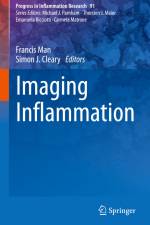
Imaging Inflammation provides updates on cutting-edge imaging methods being applied to problems in inflammation research. From state-of-the-art research tools to diagnostic tests, and from single-cell to whole-body imaging, this volume offers a comprehensive overview of how imaging experts across a range of disciplines are expanding our understanding of inflammation and immunity.
Cholesterol is an essential component of the plasma membrane. Phosphatidylinositol 4,5-bisphosphate (PI(4,5)P2), although a minor phospholipid, is the most abundant membrane phosphoinositide. Both lipids play key roles in a variety of cellular functions including as signalling molecules and major regulators of protein function. Studies on these important lipids have traditionally focused on the effect of each lipid individually. Accumulating evidence indicates, however, that these lipids may cross-regulate each other¿s levels. Furthermore, it is becoming evident that cholesterol and PI(4,5)P2 can act together to modulate protein function and biological processes. This book provides an overview of cellular functions and molecular mechanisms in which cholesterol and PI(4,5)P2 functions extend from parallel existence to crosstalk. It includes four sections. The first section introduces the reader to cholesterol and PI(4,5)P2. The second section demonstrates the mutual influence of these two critical lipids on their levels. The third section, divided into two parts, describes the co-modulation of protein function by cholesterol and PI(4,5)P2. The first part focuses on ion channels and the second - on lipid transfer proteins. The fourth section highlights other cellular processes at the intersection of cholesterol and PI(4,5)P2 involvement. Collectively, the book portrays the emerging relationship between cholesterol and PI(4,5)P2 in a broad array of biological systems and processes. The book will be of interest to a wide audience of research scientists with an interest in the biophysical properties of lipids and the physiological consequences of their presence in biological systems, as well as graduate students, postdoctoral trainees, basic and clinical researchers, and pharmaceutical scientists. Specifically, the content will be relevant to researchers in the fields of biochemistry, molecular biophysics, pharmacology, neurobiology, cardiovascular biology, among others.Provides a comprehensive overview of the current knowledge of the interplay between cholesterol and PI(4,5) P2Provides an overview of the emerging relationship between cholesterol and PI(4,5)P2 in biological systems and processesDiscusses cellular processes and molecular mechanisms where lipid functions extend from parallel existence to crosstalk
¿This book explores the timely issue of how small businesses, micro firms and entrepreneurs respond to crises. A largely overlooked area of research, the author posits that by better understanding crisis management in small and micro firms, we can help to protect these businesses from the potentially devastating effects of a crisis.Offering guidance for scholars and practitioners, including small business owners, to better understand the concept, limitations and considerations of crisis management - specifically in the small business context - the author demonstrates that there is no single solution for a small business to cope with a crisis. Drawing from the thematic findings, the author offers valuable recommendations on how small business owners can strategically plan for the future and better manage their capability when faced with a crisis.
The aim of this book is to inform nurses about the most common and the more serious errors made in caring for neonatal patients. Nurses play the largest role in patient care and their overwhelming workload may sometimes lead to errors that are, in some cases, irreversible or even fatal, putting a great deal of responsibility on nurses to avoid errors. And amongst patients that nurses care for, the most vulnerable of these are neonates. This book covers learnings about the uniqueness of neonatal patients and common conditions that are seen with patients in the neonatal intensive care unit (NICU). Factors that are predisposing and contributing factors for nursing errors are reviewed. The types of errors, consequences, detection, and monitoring for nursing errors are included. The book describes how errors can be avoided with necessary precautions, and managed appropriately based on current evidence-based practice. Recommendations for further study are also provided. This resource can be a useful tool for professional nurses, as well as nurse educators, leaders, and mentors to educate and guide their students and novice nurses.
Tissues, Cultures, Art narrates the twenty-five years of collaborative and sometimes provocative artistic practice and scholarly thought of Catts & Zurr, who pioneered the use of regenerative biology techniques to create Semi-Living art using living cells, tissues, and technological surrogate bodies. Through hands-on work in biological laboratories, the authors researched concepts such as partial-life and DNA-Chauvinism and explored the fantasies of living in a technologically mediated victimless utopia. The authors delve into life¿s resistance to reductionism, systemisation and control, asking whether there is something unique to life without the need to resort to metaphysics. Their practices reach beyond the confines of art and are often cited as precursors to the cellular agriculture and biofabrication industries. Through a hybrid of personal reflections, poetics, and anecdotes with a more rigorous, scholarly approach ¿ all illustrated with artworks - the authors present a critical view on the use of life as a raw material for human manipulation.
In this book, rock-cut and underground structures of Koramaz Valley on the Anatolian Plateau in Turkey are described in detail. The valley; located in eastern Turkey near the town of Kayseri, has hundreds of rock-cut structures, in addition to several underground cities, and almost none of them have been studied before. Research conducted by a team from 2014 to 2020, resulted in this overview of all the rock-cut and underground structures in and around seven different settlements in the valley and aims for the physical documentation and inventory of all these structures.The book studies cliff settlements, rock-cut churches, underground cities, and funerary architecture in the valley. These shelters are estimated to have been built between the 7th and 10th centuries and even the smallest of these structures offer rich details for architectural, socio-cultural and historical studies. The rock-cut churches date to the Byzantine Empire period and during the research period, over 400 of these structures were explored, surveyed, and mapped in the region and with all these historical and natural values. Recently, the Koramaz Valley was accepted to the UNESCO World Heritage tentative list. This book is of interest to archaeologists and scholars of built heritage.
This book provides an introduction to secret sharing, a key technology for practical applications and higher-level cryptographic protocols. This survey analyzes existing work, and systematically presents secret sharing protocols for various adversary models. It provides intuitive as well as formal descriptions of the different types of adversaries, including their computational powers and capabilities. In addition, it then offers guidance and support in selecting the appropriate type of protocol for a given application domain, present representative protocols, and provide useful references for further reading and research. This book aims to support software developers and engineers in realizing highly secure cloud-based applications, and also provides an introduction to the field including some relevant technical background for interested students and computer scientists.
This book discusses reliability and other related issues, such as reporting and decision-making, pertinent to sustainability and corporate responsibility reporting practices. Investors, governments, and NGOs expect businesses to report their environmental and social performance. This information is used to legislate, regulate industries, and guide the investment of billions of dollars through pensions and mutual funds. But can we trust these measurements? In order to answer this question, the editors and contributors, all academic thought leaders from a variety of fields, offer a set of reflections on problems that various stakeholders might be exposed to. These problems are mainly due to a lack of standardized reporting practices and guidelines, and inconsistencies in measurements used for the valuation of corporate sustainability performance indicators. This book is of great interest to students, scholars, and stakeholders to help comprehend the importance of accounting on sustainability practices for decision-making and measures therein, but also the reliability risks involved in these measurements. Thus, it moves away from simply pushing for more sustainability reporting towards a more critical discussion of measurement issues and potential consequences of the aforementioned problems to different fields such as finance, marketing, or strategy.
This book offers an alternative to perspectives of distributive justice which fail to resolve economic inequality and exacerbate social problems by ignoring the real causes of inequality. The main impact of the book is to highlight the importance of self-ownership and private property, showing how market participation advances liberty and prosperity.The idea that we should pay reparations to disadvantaged racial groups as compensation for historical injustice is deeply contested. The debates often focus on the practical implications of paying reparations, but overlook more fundamental questions about the meaning of justice. What is justice? What are the implications of wealth redistribution for individual liberty and the rule of law? This book answers these questions through an analysis of classical liberal perspectives in law, philosophy and economics.The book questions whether economic inequality stems from historical injustice, and explores the wider implications of attempting to create equal outcomes through legislative mandates. The book argues that free markets, resting on libertarian rights, are the best way to help disadvantaged members of society and to create the conditions more likely to advance economic equality. The book will be of interest to researchers and students of economics, law, politics and philosophy.
An understanding of intellectual property is an essential component of management and business strategy in many industries. It can be used to generate value and create competitive advantage and goes hand-in-hand with the study of technology innovation and international business. However, the literature on intellectual property has been dominated by writers with backgrounds in legal science and economics.This book advocates an interdisciplinary view on intellectual property management for business and management students and professionals. It provides an outline of the field in terms that are tailored to management scholarship and with an emphasis on business decision making. It is intended for business school students of intellectual property management, innovation, strategic management and industry studies, as well as professionals in need of an accessible and business-minded approach to intellectual property management.
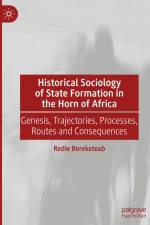
This book analyses the historical sociology of state formation in the Horn of Africa. It examines the genesis, trajectories, processes, routes and consequences of the evolution of state formation. Three analytical and explanatory models explain the process of state formation in the HOA: proto-state, colonial and national liberation. The models, heuristically and innovatively, provide understanding, interpretation and analysis of state formation. While the proto-state model explicates an indigenous historical process of state formation, the colonial model refers to an externally designed and imposed process of state formation. The national liberation model concern state formation conducted under liberation movement and ideology. The distinct significance of these models is that collectively they generate sufficient analysis of state formation. They are also unique in that they have never been employed as aggregate analytical and explicative instruments to address the predicament of state formation in the Horn of Africa.
The primary aim of this book is to bridge the gap between lab-based and clinical research by disseminating the latest interdisciplinary scientific findings on interpretational processing biases in the context of emotional psychopathology. It is designed to help the practitioner by drawing explicit links between the basic science and implications for clinical practice. This enables an enhanced interaction between science and practice, strengthening bi-directional translational links, and the potential to produce more meaningful and significant advances in the treatment of emotional psychopathology. This in turn will facilitate an innovative step-change in the area of both research and clinical practice. The book focuses on cognitive processing biases that are common across a wide range of psychological disorders, meaning that the conclusions drawn have relevance across the whole spectrum of psychopathology and will stimulate and inspire a broad range of discussions and future work. From the foreword by Nikolaos Kazantzis:"The practice of CBT is complex and requires a tailored approach. Every technique has a specific target but may be used for multiple purposes simultaneously in support of the client¿s therapeutic goals. The purpose of Dr. Woud¿s book is to elucidate the ways in which interpretational biases can be a focus of intervention for CBT therapists at all stages of professional development, from those undertaking training to master clinicians. Dr. Woud has succeeded admirably in this regard."
This book is focused on trigeminal neuralgias and their management, a field in which, during the two past decades, there were numerous advances in comprehension of mechanisms of the disease and diagnosis with imaging, as well as in medical therapies and in surgical treatment. The authors are well-known specialists for this treatment and summarize their long experience in this comprehensive and practical book. They are experts not only on the surgical treatment of trigeminal neuralgia with the micro-vascular decompression procedure but also with the lesioning procedures. In this pictorial guide, readers can find the pathways for diagnosis, and practical guidelines to help decision-making among the most appropriate treatments, tailored on to every patient¿s need. Neurologists, neurosurgeons, and dentists, but also ENT specialists, ophthalmologists, and maxillofacial specialists, would find an invaluable support in this book devoted to a rather frequent problem to deal with.
Sleep disorders are very common among women during their lifespan, presenting in isolation or in combination with other illnesses particularly psychiatric and neurologic disorders. Pregnancy-related sleep disorders pose an interesting dilemma as this is a transient phase; these are associated with potential long-term effects on maternal and fetal health. Menopause and pre-menopausal stages lead to a significant change in sleep architecture, sometimes associated with insomnia with or without sleep related breathing disorder. Sleep architecture in men and women varies due to significant hormonal differences between the genders. However, sleep complaints are disproportionately higher among women. This book presents 20 clinical cases to understand the differences in presentation of symptoms and treatment options for various sleep disorders that are more commonly noted among women. These cases cover a spectrum of sleep related breathing disorders, sleep related movement disorders, hypersomnias, parasomnias, issues of sleep fragmentation leading to insomnia in association with hormonal changes and some unique cases encountered in our clinical practices. This compilation of interesting clinical cases presents trainees and experienced physicians with a useful guide to assist in their clinical practices and will stimulate further research and studies.
While the ambitious objectives outlined in the EU¿s Green Deal aim at making Europe the first climate-neutral continent by 2050, national implementation greatly varies depending on local geographies, history, culture, economics, and politics. This book analyses Member States¿ and EU neighbours¿ national efforts to combat climate change. It subsequently draws on these factors to highlight local challenges, tensions, and opportunities on the road towards climate neutrality. In the context of inter-country dependencies following Russiäs war against Ukraine, it addresses strategic questions regarding EU integration, the transformation of our economies, the reduction of energy dependencies, and public perception of the above. The book also makes concrete recommendations, in various policy areas, on how individual countries and the EU as a whole should deal with the climate crisis.
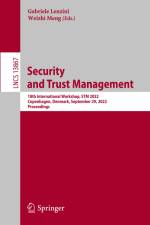
This book constitutes the post proceedings of the 18th International Workshop on Security and Trust Management, STM 2022, co-located with the 27th European Symposium on Research in Computer Security, ESORICS 2022, which took place in Copenhagen, Denmark, in September 2022.The 7 full papers together with 4 short papers included in this volume were carefully reviewed and selected from 18 submissions. The workshop presents papers with topics such as security and trust access control, cryptographic protocols, identity management, security metrics, and privacy.
Abonner på vårt nyhetsbrev og få rabatter og inspirasjon til din neste leseopplevelse.
Ved å abonnere godtar du vår personvernerklæring.