















Gjør som tusenvis av andre bokelskere
Abonner på vårt nyhetsbrev og få rabatter og inspirasjon til din neste leseopplevelse.
Ved å abonnere godtar du vår personvernerklæring.Du kan når som helst melde deg av våre nyhetsbrev.

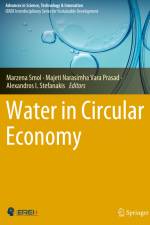
This book presents possible solutions for a circuler economy (CE) in the water and wastewater sector through an inventory of multidisciplinary knowledge with high scientific and practical importance which can contribute to support the transition to the CE model in water and wastewater sector. Water in modern studies exceeds being an important source for irrigation and drinking. It is now a significant source of renewable energy and a catalyst in most industrial and manufacturing products. The protection and sustainable management of water resources and water-based waste (as wastewater, sewage sludge, or sewage sludge ash) are important aspects of the CE, which is defined as a regenerative growth model that gives back to the planet more than it takes. Our book, entitled "Water in Circular Economy", delivers a comprehensive overview of the latest research covering the following aspects of water management from the perspective of the CE implementation: · Water as a key resource in the circular economy;· Innovative solutions in transition to the circular economy in water and wastewater sector;· Monitoring of circular economy implementation in water and wastewater sector.
Humans are electric beings. We are managed, monitored, and stimulated electrically. This textbook provides students and practitioners with a solid foundation and understanding of human electricity and the work currently being done to further develop electrical signals for medical purposes and related goals. The book introduces the fundamentals of how biological systems generate electrical signals, covering a wide range of biomedical engineering topics including bioelectricity, biomedical signals, neural engineering, and brain-computer interface. The book is presented in three sections: Part I explains how electrical signals and impulses manage the human body; Part II examines the kinds of electrical signals from the human body and how they are monitored, controlled, and used; Part III looks at clinical use of electrical stimulation toward the human body and how they are being developed for interventions in medicine. The book is also a valuable professional reference for practicing engineers and scientists. Explains humans as electric beings who are managed, monitored, and stimulated electrically;Deals with the electricity of major human organs;Covers a wide range of biomedical engineering topics
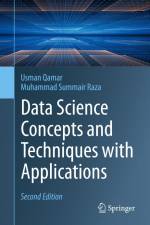
This textbook comprehensively covers both fundamental and advanced topics related to data science. Data science is an umbrella term that encompasses data analytics, data mining, machine learning, and several other related disciplines. The chapters of this book are organized into three parts: The first part (chapters 1 to 3) is a general introduction to data science. Starting from the basic concepts, the book will highlight the types of data, its use, its importance and issues that are normally faced in data analytics, followed by presentation of a wide range of applications and widely used techniques in data science. The second part, which has been updated and considerably extended compared to the first edition, is devoted to various techniques and tools applied in data science. Its chapters 4 to 10 detail data pre-processing, classification, clustering, text mining, deep learning, frequent pattern mining, and regression analysis. Eventually, the third part (chapters 11 and 12) present a brief introduction to Python and R, the two main data science programming languages, and shows in a completely new chapter practical data science in the WEKA (Waikato Environment for Knowledge Analysis), an open-source tool for performing different machine learning and data mining tasks. An appendix explaining the basic mathematical concepts of data science completes the book. This textbook is suitable for advanced undergraduate and graduate students as well as for industrial practitioners who carry out research in data science. They both will not only benefit from the comprehensive presentation of important topics, but also from the many application examples and the comprehensive list of further readings, which point to additional publications providing more in-depth research results or provide sources for a more detailed description of related topics. "This book delivers a systematic, carefully thoughtful material on Data Science." from the Foreword by Witold Pedrycz, U Alberta, Canada.
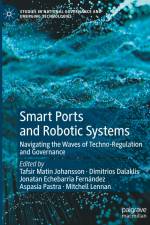
This book provides a comprehensive overview of smart ports and remote technologies in the maritime industry. It demonstrates how modern advances in artificial intelligence and robotics have transformed the shipping industry, and assesses the impact of this technology from a law and governance standpoint. The book covers a range of topics including port autonomous operations systems, cybersecurity, big data analytics, digitalization and blockchain to throw light on the opportunities and benefits of these new technologies in improving security and safety. It also considers the challenges and threats of their application. It concludes by examining the trajectory of national and international regulatory developments. The book will appeal to scholars and students of maritime technology, law and governance, as well as practitioners and policymakers.Chapters 8, 19 and 20 are available open access under a Creative Commons Attribution 4.0 International License via link.springer.com.
This edited volume brings together an international perspective of 22 diverse learning theories applied to a range of informal science learning environments. The book is divided into 7 sections: community of practice, critical theory, identity theory, sociocultural, socioscientific, and social entrepreneurship, systems theory, and theory development. The chapters present how researchers from diverse backgrounds and cultures use theories in their work and how these may be applied as theoretical frameworks for future research. The chapters bridge theory and practice and collectively address a wide range of ages (children-adults) and contexts. The book is written to engage a broad audience of researchers in universities and museums, while appealing to the growing number of researchers and educators who recognize the importance of informal learning to the development of environmental and scientific literacy. It is essential reading for inexperienced researchers and those seeking new theoretical perspectives.
This edited volume showcases current science education research in Canada, from pre-Kindergarten to Grade 7, conducted in Canada by a diverse group of researchers from across the country. We draw on the themes that emerged from our previous book, Science Education in Canada: Consistencies, Commonalities, and Distinctions, to guide the structure of this book on elementary science education research. In particular, chapters on science teacher preparation; Indigenous perspectives; environmental education; science, technology, engineering, and mathematics (STEM); and science, technology, society, and the environment (STSE) reflect a Canadian perspective. However, these themes are of global interest and authors include ideas for how science education research in Canada might be used by academics and researchers in other countries. This book builds a cohesive picture of current elementary science education research in Canada, highlighting themes that will resonate with international readers.
This book outlines essential elements of the evaluation of health surveillance within the One Health concept. It provides an introduction to basic theoretical notions of evaluation and vividly discusses related challenges. Expert authors cover the entire spectrum of available, innovative methods, from those for system process evaluations to methods for the economic evaluation of the surveillance strategies. Each chapter provides a detailed description of the methodology required and the tools available as illustrated by practical examples of animal health or One Health surveillance evaluations in both developed and developing countries.Targeting not only scientists, including epidemiologists, but also technical advisers of decision-makers, the present work is suitable for the evaluation of any type of health surveillance system - animal, human or combined - regardless of the socio-economic context. The volume is richly equipped with practical tools and examples, which enables the reader to apply the methods described. Increasing importance of health surveillance, and threats from disease outbreaks such as the coronavirus pandemic, underline the practical relevance of this work, which will fill an important gap in the literature.
This book challenges the reader to rethink and reimagine what diversity in language education means in transnational societies. Bringing together researchers and practitioners who contributed to the international LINguistic and Cultural DIversity REinvented (LINCDIRE) project, the book examines four pillars of innovation in language education: the Action-oriented approach, Plurilingualism, Indigenous epistemologies and Technology enhanced learning. The book critically discusses plurilingual pedagogical approaches that draw on learners' linguistic and cultural repertoires to encourage and support the dynamic use of languages in curricular innovation. It is a fundamental resource for language teachers, curriculum designers and educational researchers interested in understanding current thinking on the relevance and benefit of a plurilingual paradigm shift for language education in today's societies. More specifically, this book: Examines the development of plurilingualism and the potential of real-life oriented teaching and learning. Explores the concept of plurilingual and pluricultural competence. Focuses on collaboration and reflection from a humanistic tradition. Explores educational technology and explains the limitations and challenges of adopting ready-made tools. Highlights the iterative, design-based research process that informed the development of LINCDIRE's pedagogical framework and action-oriented scenarios. Introduces practical examples of action-oriented tasks and scenarios, and illustrates the online tool (LITE) in terms of its current functionalities and design. Describes the implementation challenges and opportunities of plurilingual action-oriented tasks and discusses the results of implementation. Finally, the book examines future pedagogical innovation and research directions in order to help readers reflect on the implications of achieving sustainable change in language education.This exciting collection addresses an important question in language education: How can plurilingualism and cultural diversity be harnessed to promote sustainable innovation in language learning and teaching? Readers will find contributions from the diverse authors timely, compelling, and engaging.- Dr. Bonny Norton, FRSC, University Killam Professor, UBC Dept. of Language & Literacy Education, CanadaEmbracing a design-based research framework, this book offers learners and teachers powerful validation and a rich, relatable and inspiring action-oriented approach to holistic, dynamic, mediated, embodied, true-to-life, plurilingual language teaching and learning.- Dr. Elka Todeva, Professor of Applied Linguistics, MATESOL Program / Advanced Seminar in Plurilingual Pedagogy, SIT Graduate Institute, Washington, D.C.Anyone seeking innovation in Language Education will find in this volume a treasure trove of theoretical, empirical and methodological insights to answer the questions that arose among the 25 co-authors' discussions to rethink language use, language learning, and language teaching.- Dr. Mercedes Bernaus, Emeritus Professor, Universitat Autnoma de Barcelona, SpainThis thought-provoking and timely book argues convincingly for the need to reconceptualize innovation in language education in an increasingly diverse world. -Dr. Regine Hampel, Associate Dean (Research Excellence), Faculty of Wellbeing, Education and Language Studies, The Open University, UK
This volume focuses on the learning of host-country languages by migrants in Europe. It identifies, clarifies, and offers insights into issues and central questions related to the learning of host-country languages with an emphasis on adolescent and adult language learners in formal and informal settings. The book draws on data collected following the refugee 'crisis' in Europe of 2015-16, which led to dramatic increases in the number of migrants arriving in Europe.
Through the original writings and photography of renowned geologist Harold Rollin Wanless, this book paints a thorough and engaging picture of the White River Badlands¿ landscape, geology, biology, pioneer settlers, and how life was lived 100 years ago in a harsh, challenging, remote setting. In the summer of 1920, Harold Rollin Wanless, fresh from an undergraduate geology degree at Princeton, spent the first of three summers in the Badlands of South Dakota camping, hiking, and collecting fossil vertebrate skulls. Harold produced a fascinating and thorough diary and report, illustrated with over 100 image plates, in which he explains the geology, biology, and climate of this famous area. Wanless became deeply involved with and vividly records the life, hopes, trials and character of the new homesteading pioneers of the area, and the people and livelihoods he encountered are reflected in the diary as well. This is an engaging lookat the history, environment, people and geological character of a unique portion of the American West. Combining a first-hand look at the White River Badlands and its people a century ago with the fossil history contained in its Cenozoic sediments gives a well-rounded historical presentation. This diary was found, compiled, and edited by Drs. Harold Rogers Wanless (the diarist¿s son and an accomplished geologist himself) and Emmett Evanoff. In the introductory and concluding chapters of this book, they provide a broader perspective of Harold Rollin Wanless¿s life and his significant achievements beyond the Badlands venture described here. In addition, this narrative - written ¿only¿ a century ago - provides a stark contrast with how we travel, communicate, conduct research and survive today, yet shows that human curiosity and kindnesses have not changed.
This volume aims to explore project management contributions to sustainable business change based on renewability, reuse, and repair as well as the effect of circular economy business solutions on project management in terms of the management approach, governance, and leadership. The main aim of integrating project management with a circular business paradigm is not only to learn how project management can contribute to achieving circular economy principles, but also to understand the impact of business needs on project management. By understanding these needs, recommendations can be developed and promoted among different stakeholders such as governments, financial institutions, and education institutions with the goal of supporting and assisting project management to drive sustainable business change. This approach will enable readers to assess how project management professions can support a shift toward sustainable business. The primary audience of this work is management scholars, educators, researchers, and students. Scholars, government representatives, financial institutions, management educators, start-up companies, innovative entrepreneurs, and all others who use the circular economy to support sustainable development can also find much of use in this book.
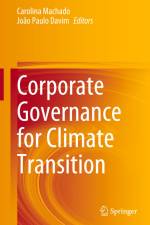
This book is a focussed and up-to-date review about the key challenges, trends, implications, strategies, and ways of overcoming, that dynamic and competitive organizations are facing now and increasingly in future by climate change. The book creates a better understanding of the impacts that climate transition will have on organizations and how they are responding to find opportunities while overcoming the risks. What corporate governance models can and are organizations developing? What climate transition strategies are organizations creating? Who should be involved in the decision-making processes? To what extent are principles of transparency, equity, participation, inclusion, effectiveness, and efficiency present in corporate governance for climate transitions? These and other issues are just a few of the challenges that organizations by the climate change transition.International experts from a wide range of disciplines and perspectiveshave been invited to contribute to this book in order for providing a comprehensive and informed perspective for researchers, corporate leaders and students of business and management as well as environmental studies.
The importance of the Neotropics to the world's climate, biogeochemical cycling and biodiversity cannot be questioned. This book suggests that gradients are key to understanding both these issues and Neotropical ecosystem structure, function and dynamics in general. Those gradients are either spatial, temporal or spatio-temporal, where many temporal and spatio-temporal gradients are initiated by disturbances (e.g., tree-fall, landslide, cultivation). And in particular for the Neotropics, three large spatial gradients - latitude, longitude, altitude (elevation) - are of critical importance. The editor has over 30 years of experience investigating Neotropical gradients in Costa Rica, Puerto Rico, Peru and Ecuador, and has published 5 previous books on different aspects of the Neotropics. Once again he has assembled top-shelf Neotropical scientists and researchers, here to focus on gradients: their nature, interactions and how they structure ecosystems.
This book presents an inclusive approach to deal with plant stresses in light of recent technological advances. As we have entered into a new decade, researchers and scientists should review and evaluate the recent findings in the field of plant stress management and visualize what we need to focus upon in the near future to increase crop yield. Above all, global climate changes present the greatest challenges of all time for plant scientists. In this context, the book highlights the recent findings and future perspectives in crop improvement to the faculties, scientists, research scholars, and postgraduate students. Major features of the book include an inclusive approach in understanding the mechanism of stress tolerance; recent advances and innovations in the field of allied disciplines like microbiology, molecular biology, biotechnology, plant breeding, nanobiotechnology, etc., for improving plant stress tolerance; and illustrative sketches to convey the mechanism and strategies of stress alleviation.
The adoption of multilayer analysis techniques is rapidly expanding across all areas of knowledge, from social sciences (the first facing the complexity of such structures, decades ago) to computer science, from biology to engineering. However, until now, no book has dealt exclusively with the analysis and visualization of multilayer networks. Multilayer Networks: Analysis and Visualization provides a guided introduction to one of the most complete computational frameworks, named muxViz, with introductory information about the underlying theoretical aspects and a focus on the analytical side. Dozens of analytical scripts and examples to use the muxViz library in practice, by means of the Graphical User Interface or by means of the R scripting language, are provided. In addition to researchers in the field of network science, as well as practitioners interested in network visualization and analysis, this book will appeal to researchers without strong technical or computer science background who want to learn how to use muxViz software, such as researchers from humanities, social science and biology: audiences which are targeted by case studies included in the book. Other interdisciplinary audiences include computer science, physics, neuroscience, genetics, urban transport and engineering, digital humanities, social and computational social science.Readers will learn how to use, in a very practical way (i.e., without focusing on theoretical aspects), the algorithms developed by the community and implemented in the free and open-source software muxViz. The data used in the book is available on a dedicated (open and free) site.
The intense debate over US targeted drone strikes outside war zones has been limited by the failure to review and assess a considerable body of quantitative research and qualitative material on the impacts of such strikes on terrorist groups and civilians. This book fills an important gap in the literature by conducting a careful and rigorous review of such evidence. It argues that decisions about the use of targeted strikes as a counterterrorism instrument, as well as legal and ethical evaluations of such use, must be informed by our best understanding of the insights that empirical evidence can provide on the effectiveness of strikes and the costs they impose on populations where they occur.
Abonner på vårt nyhetsbrev og få rabatter og inspirasjon til din neste leseopplevelse.
Ved å abonnere godtar du vår personvernerklæring.