













Gjør som tusenvis av andre bokelskere
Abonner på vårt nyhetsbrev og få rabatter og inspirasjon til din neste leseopplevelse.
Ved å abonnere godtar du vår personvernerklæring.Du kan når som helst melde deg av våre nyhetsbrev.

This textbook provides a concise but lucid explanation of the fundamentals of spread-spectrum systems with an emphasis on theoretical principles. The choice of specific topics is tempered by the author's judgment of their practical significance and interest to both researchers and system designers. Throughout the book, learning is facilitated by many new or streamlined derivations of the classical theory. Problems at the end of each chapter are intended to assist readers in consolidating their knowledge and to provide practice in analytical techniques. This third edition includes new coverage of topics such as CDMA networks, Acquisition and Synchronization in DS-CDMA Cellular Networks, Hopsets for FH-CDMA Ad Hoc Networks, and Implications of Information Theory, as well as updated and revised material on Central Limit Theorem, Power Spectral Density of FH/CPM Complex Envelopes, and Anticipative Adaptive-Array Algorithm for Frequency-Hopping Systems.
This book offers a comprehensive overview of the use of platelet rich plasma (PRP), typically by injection, and its usage across medical disciplines. This multi-authored, multi-institutional, and multi-specialty based text is designed to guide health care providers in the varied uses of PRP -- starting from its history and preparation and moving through a variety of disciplines to illustrate how PRP can help healing. Clinical Applications of Platelet Rich Plasma in Medicine is divided into three sections: The first gives an overview of the basic science of PRP; the second provides a detailed overview of the clinical indications of PRP; and the third section discusses potential complications in conjunction with relevant case studies. It will feature a wealth of images and diagrams to illustrate best practices in using PRP.Written to be used by oral and maxillofacial surgeons, plastic surgeons, cosmetic surgeons, otolaryngologists, dentists, orthopedic surgeons, and general surgeons to name a few, this book will provide an evidence-based approach to using PRP in practice. The editors have extensive academic experience and have authored multiple scientific publications, while the contributions included in the text have been written by experts and leaders in the fields touched upon in the book.
This book addresses the effectiveness of existing protected areas at conserving the diversity of genes, species and ecosystems on land and at sea. The book synthetizes the main biodiversity conservation outcomes of protected areas in the 2010-2019 decade, drawing on a systematic literature review of scientific publications and case studies from around the world demonstrating successes and failures. It provides region-specific results for land and sea ecosystems as well as for developed and developing countries. It also reviews current methodological approaches used to assess protected area effectiveness. The work is timely, since there is growing concern on the global biodiversity crisis among researchers, government organizations and the general public, as demonstrated by the 2030 targets established by the UN Sustainable Development Goals for Life Below Water (SDG 14) and Life On land (SDG15). The book is written in an easy and enjoyable style using numerous pictures, tables and graphs to make the content more engaging and understandable. The main intended audiences of the book are academics, from post-graduate students to university lecturers, and senior researchers in the fields of biodiversity conservation, sustainable development and environmental policy, as well as protected area managers and practitioners.
This book presents the latest achievements in the field of theory and practice of information processing in the CNS SEMS. Recently, the task of integrating computer technologies, transmitting and storing information, monitoring and controlling objects of the physical world has become urgent. This capability is provided by Smart Electromechanical Systems (SEMS) used in Cyber-Physical Systems (CPhS). The main tasks in the field of theory and practice of SEMS are to ensure the efficiency, reliability and safety of functioning in real time. The task of obtaining reliable information about the selection environment, as well as object recognition and identification, is especially important when several SEMS interact in a group. Since in this case, it is necessary to ensure the safety and speed of the planned behavior of all members of the group.The purpose of the publication is to familiarize with the latest achievements of scientists of the Russian Academy of Sciences and leading universities of Russia in the field of theory and practice of information processing in the CNS of EMS, as well as to familiarize with the development of methods and algorithms for recognition, identification and modeling based on the principles of bionics, adaptivity, intelligence and parallelism in information processing and computing.Topics of primary interest include, but are not limited to the following: Methods and systems of recognition and identification;Mathematical and computer modeling; Measurement systems to identify the simulation of the selection environment;Sensors and auxiliary SEMS systems.This book is intended for students, scientists and engineers specializing in smart electromechanical systems and robotics.
Landscapes and Landforms of the Slovakia provides an attractive physiographical overview of the most prominent landscapes of Slovakia and the distinctive landforms associated with them. It describes the main driving factors leading to their evolution and importance for geoconservation and geotourism.The richly illustrated book provides the reader with enjoyable and informative descriptions of the selected sites within their regional geographical and geological settings range from the Tatras Mts. with glacially shaped relief as the highest region in the Carpahians to caves and lowlands taking into account fluvial, gravity-induced, karst and structural landscapes of the Slovakia.The book is organized in 3 parts: a) Introduction, which presents a general framework of the physical geography of Slovakia, b) Geomorphological landscapes, presenting papers dealing with key geomorphological areas, resp. landforms, c) Geoheritage and landscape protection, providing an updated vision on the geomorphological/geological heritage sites and landscape protection policy in Slovakia.The book will be relevant to scientists, scholars and any readers interested in geomorphology, geology, physical geography, geoheritage, landscape tourism and environmental protection. It can be also used for undergraduate and graduate courses in Earth and environmental sciences.
The book presents the proceedings of four conferences: The 26th International Conference on Parallel and Distributed Processing Techniques and Applications (PDPTA'20), The 18th International Conference on Scientific Computing (CSC'20); The 17th International Conference on Modeling, Simulation and Visualization Methods (MSV'20); and The 16th International Conference on Grid, Cloud, and Cluster Computing (GCC'20). The conferences took place in Las Vegas, NV, USA, July 27-30, 2020. The conferences are part of the larger 2020 World Congress in Computer Science, Computer Engineering, & Applied Computing (CSCE'20), which features 20 major tracks. Authors include academics, researchers, professionals, and students.Presents the proceedings of four conferences as part of the 2020 World Congress in Computer Science, Computer Engineering, & Applied Computing (CSCE'20);Includes the research tracks Parallel and Distributed Processing, Scientific Computing, Modeling, Simulation and Visualization, and Grid, Cloud, and Cluster Computing;Features papers from PDPTA'20, CSC'20, MSV'20, and GCC'20.
Solidarity is an ¿unthought¿ in the fields of organizational theory and management sciences. However, it is an increasingly important feature in the management of organizations. The contemporary world suffers from a double unsustainability: the abusive exploitation of natural resources endangers the balance of the climate and biodiversity, while growing inequalities condemn our ability to maintain a balanced society. These unsustainabilities are mutually reinforcing and call for the affirmation of a double solidarity, which unites humans among themselves, and links humans and nonhumans. Such an effort cannot be decreed. It must be organized.Based on numerous grassroots initiatives and citizens¿ experimentations that are being invented every day around the world and on a historical and anthropological approach, this book explores different ways of combining solidarity and organization. Solidarity-based management, governance of the commons, and Buen Vivir approaches are some of the perspectives analyzed in the context of a North-South dialogue in order to formulate the conceptual framework and practical steps of a social and environmental transition. It offers both theoretical background and living examples to students, professors and researchers to better understand and better teach new avenues for management.
This book helps prepare anesthesiology residents for safe practice of pediatric anesthesia. It features 26 index cases, which are classic clinical scenarios - all covering a spectrum of pediatric anesthesia, neuro-anesthesia, cardiac anesthesia, regional anesthesia, and anesthesia and critical care medicine. Chapters are divided into case-based formats with each chapter containing a scenario layout, useful equipment, major teaching points for an after simulation debrief, and a learner evaluation form. This tiered education method will assist learners in working though essential team building skills, increasing their knowledge base and finally having concrete items in which to further their professional skills. Each chapter starts with a learning objective and presents the simulation case before launching into the case progression, detailing how the simulated patient's vital signs, physical exam findings, and clinical picture change over the course of the simulation. They are concluded with a master checklist of items the learner should accomplish during the course of the simulation along with a section summary and important teaching points. Pediatric and Adult Anesthesiology Simulation Education is designed to be used by both academic programs and private practice groups. It is beneficial to anesthesiology residents who are currently in training as well as those who have recently graduated and are preparing for board exams.
This volume investigates Eric Weil¿s innovative conceptualization of the place of violence in the philosophical tradition with a focus on violence¿s relationship to language and to discourse. Weil presents violence as the central philosophical problem. According to this reading, the western philosophical tradition commonly conceptualizes violence as an expression of error or as a consequence of the weakness of will. However, by doing so, it misses something essential about the role that violence plays in our conceptual development as well as the place violence holds in our discursive practices.The author draws comparisons between Weil¿s work and that of Robert Brandom. Brandom¿s inferentialism creates a sophisticated program at the junction of pragmatics and semantics, philosophy of language, logic, and philosophy of mind. The monograph builds on these insights in order to show how an inferentialist reading of Eric Weil is fruitful for both Weilian studies and for inferentialism. This volume will notably be of interest to scholars in philosophy, argumentation theory, and communication studies.
This book focuses on the displacement and convergence of transnational crimes in North Africa and in the area of the Mediterranean Sea, providing empirical analysis of human smuggling and of drug trafficking. It discusses the displacement of crime due to the exploitation of asymmetries in legislation, law enforcement, and other vulnerabilities.Using an innovative multimethodology, this volume describes the evolution of illicit flows related to human smuggling and trafficking of illicit goods. This approach helps to provide critical information such as traffickers¿ modi operandi, most exploited paths, and trafficked goods, that would not be achievable through more traditional methods.The Evolution of Illicit Flows will be a valuable resource for scholars and researchers of criminology and migration studies, as well as for policymakers and law enforcement working in transnational crimes and trafficking.
Renal Cancer: Current Status and Innovations provides a useful guide to the fundamental basics and latest diagnostic and treatment techniques for Renal Cancer. It features clearly structured and easy-to-understand chapters enabling the reader to develop a thorough understanding of screening, surveillance, diagnostics, pathology, robotic and open surgical approaches, ablation, medical treatment, psychology, and future innovations. The book provides a valuable resource for the full spectrum of clinicians involved in the multidisciplinary management of Renal Cancer.
This book, written in honor of Arno Tausch, presents cutting-edge research on globalization, development, and global values. Internationally renowned authors cover topics such as global economic and political cycles, global values, and support for terrorism. Over the last five decades, the Austrian political scientist Arno Tausch was a pioneer in studies on globalization, development and global values. This collection of essays takes up the issues dealt with by Tausch and presents perspectives for the 21st Century. Throughout his work, Tausch applied quantitative methods to study the fundamental issues of the global political economy and the global political system, like dependency, economic and political cycles, and global values, based on a rigorous study of available social scientific data, like the World Values Survey and the Arab Barometer.
Will research soon be done by artificial intelligence, thereby making human researchers superfluous? This book explains modern approaches to discovering physical concepts with machine learning and elucidates their strengths and limitations. The automation of the creation of experimental setups and physical models, as well as model testing are discussed. The focus of the book is the automation of an important step of the model creation, namely finding a minimal number of natural parameters that contain sufficient information to make predictions about the considered system. The basic idea of this approach is to employ a deep learning architecture, SciNet, to model a simplified version of a physicist's reasoning process. SciNet finds the relevant physical parameters, like the mass of a particle, from experimental data and makes predictions based on the parameters found. The author demonstrates how to extract conceptual information from such parameters, e.g., Copernicus' conclusion that the solar system is heliocentric.
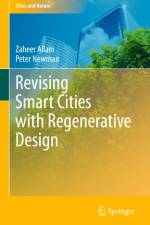
This book presents a road map to urban regeneration through the contemporary concept of smart cities. It investigates why the concept has gained adoption as it has but until now it has been geared towards a profit-making venture by large corporations and ignoring the economic aspirations of smaller companies and city councils. The technologies can provide enhanced liveability levels if the concept is redefined.This work will be of interest to academics and policy makers looking at exploring how to drive urban regeneration in a sustainable and inclusive fashion while supporting local economies. It presents a case study of Port Louis, Mauritius, with unique insights and data. Academics, policy makers and urban developers could potentially adopt the model and calibrate it to various cities and quantify the economic and social benefits.
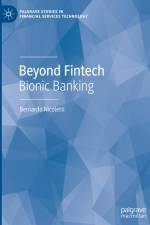
Enterprise management theories about the so-called bionic organization currently face a significant funding gap. Bionic theories have been mainly applied to enterprise lifecycle because of the presence of similarities between economic organizations and organisms. The digital transformation has offered advancements in the bionics research field which enable us to discuss bionic organizations for the first time as business realities in which humans and machines, especially robotic process automation systems and artificial intelligence tools, cooperate in executing operations.This book determines how a bionic organization can be defined and what are its fundamental elements in the case of banking. Specifically, it investigates the two pillars of bionic enterprise which are technology and humans, as well as the core objectives and outcomes. In order to provide an exhaustive overview, the book proposes a new conceptualization of the business model of a bionic organization on the basis of the Business Model Canvas framework. Ultimately, the study of bionic organizations is aimed to discover also how they evolved in the post pandemic phase as a result of the disruptive events generated by the spread of the pandemic.The research on the book has been conducted through a qualitative and descriptive methodology with the intent to build further knowledge about the topic starting from the information available in literature. To provide actual evidence of the reality of bionic financial services, the book includes case studies. The organizations observed in the study have been selected since they present some of the key traits identified by the bionic enterprise theory. The book demonstrates that bionic enterprise theory can be further enriched with the conceptualization of a bionic business model in which the paradigm of collaboration between humans and machines is a recurring element.
The interaction between mathematicians and statisticians has been shown to be an ei ective approach for dealing with actuarial, insurance and financial problems, both from an academic perspective and from an operative one. The collection of original papers presented in this volume pursues precisely this purpose. It covers a wide variety of subjects in actuarial, insurance and finance fields, all treated in the light of the successful cooperation between the above two quantitative approaches. The papers published in this volume present theoretical and methodological contributions and their applications to real contexts. With respect to the theoretical and methodological contributions, some of the considered areas of investigation are: actuarial models; alternative testing approaches; behavioral finance; clustering techniques; coherent and non-coherent risk measures; credit scoring approaches; data envelopment analysis; dynamic stochastic programming; financial contagion models; financial ratios; intelligent financial trading systems; mixture normality approaches; Monte Carlo-based methods; multicriteria methods; nonlinear parameter estimation techniques; nonlinear threshold models; particle swarm optimization; performance measures; portfolio optimization; pricing methods for structured and non-structured derivatives; risk management; skewed distribution analysis; solvency analysis; stochastic actuarial valuation methods; variable selection models; time series analysis tools. As regards the applications, they are related to real problems associated, among the others, to: banks; collateralized fund obligations; credit portfolios; defined benefit pension plans; double-indexed pension annuities; efficient-market hypothesis; exchange markets; financial time series; firms; hedge funds; non-life insurance companies; returns distributions; socially responsible mutual funds; unit-linked contracts. This book is aimed at academics, Ph.D. students, practitioners, professionals and researchers. But it will also be of interest to readers with some quantitative background knowledge.
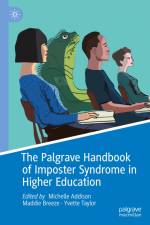
This handbook explores feeling like an ¿imposter¿ in higher education and what this can tell us about contemporary educational inequalities. Asking why imposter syndrome matters now, we investigate experiences of imposter syndrome across social locations, institutional positions, and intersecting inequalities. Our collection queries advice to fit-in with the university, and authors reflect on (not)belonging in, with and against educational institutions. The collection advances understandings of imposter syndrome as socially situated, in relation to entrenched inequalities and their recirculation in higher education. Chapters combine creative methods and linger on the figure of the ¿imposter¿ - wary of both individualising and celebrating imposters as lucky, misfits, fraudsters, or failures, and critically interrogating the supposed universality of imposter syndrome.
This book, which examines the role of African women in the conversation on nationalism during South Africäs era of segregation, excavates female voices and brings them to the provocative fore. From 1910 to 1948, African women contributed to political thought as editorialists, club organizers, poets, leaders, and activists who dared to challenge the country¿s segregationist regime at a time when it was bent on consolidating White power. Daughters of Africa founder Cecilia Lillian Tshabalala and National Council of African Women President Mina Tembeka Soga feature in this work, which employs the artistic theory of ¿sampling¿ and decoloniality to highlight and showcase how these women and others among their cadre spoke truth to power through the fiery lines of their poetry, newspaper columns, thought-provoking speeches, organizational documents, personal testimonies, and musical compositions. It argues that these African women left behind a blueprint to grapple with and contest the political climate in which they lived under segregation, by highlighting the role and agency of African women intellectuals at Apartheid¿s dawn.
Abonner på vårt nyhetsbrev og få rabatter og inspirasjon til din neste leseopplevelse.
Ved å abonnere godtar du vår personvernerklæring.