












Gjør som tusenvis av andre bokelskere
Abonner på vårt nyhetsbrev og få rabatter og inspirasjon til din neste leseopplevelse.
Ved å abonnere godtar du vår personvernerklæring.Du kan når som helst melde deg av våre nyhetsbrev.

This edited volume summarizes multidisciplinary work on wildlife conservation in the Tarangire Ecosystem of northern Tanzania. By drawing together human-centered, wildlife-centered, and interdisciplinary research, this book contributes to furthering our understanding of the often complex mechanisms underlying human-wildlife interactions in dynamic landscapes. By synthesizing the wealth of knowledge generated by anthropologists, ecologists, conservationists, entrepreneurs, geographers, sociologists, and zoologists over the last decades, this book also highlights practicable and locally adapted solutions for shaping human-wildlife interactions towards coexistence.Readers will discover the reciprocal and often unexpected direct and indirect dynamics between people and wildlife. While boundaries (e.g. between people and wildlife, between protected and un-protected areas, and between different groups of people) are a common theme throughout the different chapters, this book stresses the commonalities, links, and synergies between seemingly disparate disciplines, opinions, and conservation approaches. The chapters are divided into clear sections, such as the human dimension, the wildlife dimension and human-wildlife interactions, representing a detailed summary of anthropological, ecological, and interdisciplinary research projects that have been conducted in the Tarangire Ecosystem over the last decades. Beyond, this work contributes to the debate about land-sharing versus land-sparing and provides an in-depth case study for understanding the complexities associated with human-wildlife coexistence in one of the few remaining ecosystems that supports migratory populations of large mammals.The topic of this book is particularly relevant for students, scholars, and practitioners who are interested in reconciling the needs of human populations with those of the environment in general and large mammal populations in particular.
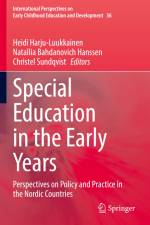
This book explores policies and practices in special education in the early years, highlighting shared enablers and barriers. It examines research, policies and practices from different Nordic countries and discusses the theory and empirical data underlying the research. It looks at specific issues including gifted children, social inequality and exclusion, teaching children with autism, inclusive practice, language and emotions. The book offers critical perspectives, highlights potential developmental objects and gives recommendations for further research as well as policy and practice. The book features many aspects of the so-called Nordic model - the economic and social policies common to the Nordic Countries: Denmark, Finland, Norway and Sweden. The findings provide important insights into the Nordic model and advance the understanding of relevant issues facing the Nordic countries.
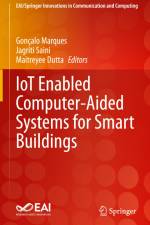
This book focuses on the integration of IoT and computer aided systems for the development of smart buildings. The scope of the book includes, but is not restricted to, advanced technologies for monitoring, energy management, smart gardening, protection, safety, assisted living, and intelligent operations. The authors cover the wide aspects of interconnected smart services with convenient interfacing to the end-users. The features of this book include discussion on various aspects of IoT and computer aided systems for smart architecture designs and innovative object interconnections. The book also provides highlights on the applications of IoT in the development of intelligent structures for technology-enabled lifestyles. Furthermore, it provides prominent scopes for future inventions in the field of electrical engineering, building system management, and computer-aided advancements. The content of this book is useful to graduate and post-graduate students, researchers, and professionals working on the concept of smart building, smart city, and smart environments.
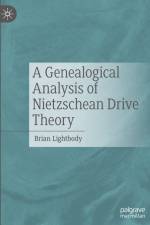
Nietzsche¿s ¿drive theory¿, as it is referred to in the secondary literature, is a rich, unique and fascinating articulation of the human condition. In broad brushstrokes, Nietzsche appears to contend that all human psychology is either directly reducible to animal drives (e.g. sex, aggression) or indirectly explicable to the historical transformations thereof (e.g. ressentiment). Moreover, Nietzsche¿s initial elucidation of drive theory in On the Genealogy of Morals (and elsewhere) is well-complemented with a fecund, profound, and clear elucidation of the concept in the secondary literature.Yet, there remains a glaring lacuna for all the discussion of drive theory in the scholarship. The secondary literature is delinquent in explaining how animal drives became incorporated to form the human psyche. Nietzsche¿s account to elucidate how drives became ¿digested¿ or in his words ¿inpsychated¿ is called the Internalization Hypothesis. However, as it appears in GM:II, 16, the hypothesis is grossly inchoate. The result of this undertheorization is manifold; its deleterious effects resonate along many axes of Nietzsche¿s philosophy. The present book, Internalized Valuation: A Genealogical Analysis of Nietzschean Drive Theory, offers an original and fruitful interpretation of Nietzsche¿s philosophical psychology. First, it clarifies what drives are. Second, it provides a new way of thinking about Nietzsche¿s genealogical methods and then applies these insights to The Genealogy itself. What follows is a work that not only sheds much-needed light on Nietzsche¿s philosophy of mind in general and his theory of emotions in particular, but also informs and illuminates problematic passages of Nietzsche¿s Genealogy.
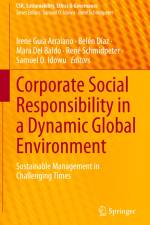
This book highlights the latest research on responsible business and its practical implications for the economy, society, academia, and politics. It presents selected contributions from respected scholars and experts who have conducted international research on corporate social responsibility, sustainability, ethics, corporate governance, finance, and responsible investing. The book examines the spreading and enhancement of CSR and sustainability at the micro, meso, and macro levels, especially in light of their increased relevance following the recent pandemic.Taken together, the results of the empirically and theoretically based contributions offer a unique and multi-faceted perspective on current global trends and expected developments in this area. They cover a wide range of contexts and situations, helping readers expand their knowledge and drive effective change to tap their organizations¿ full potential.
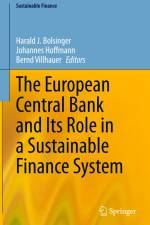
This book analyses the new strategic decisions of the European Central Bank. Contributors from different fields examine especially the sustainability strategy of the ECB: What role can the European Central Bank play in fighting climate change? ECB President Christine Lagarde has repeatedly confirmed that the central bank wants to play a role in coping with climate change. What will this role be? What instruments does the ECB have to make a difference in challenges such as the defossilization of the economy and transport, biodiversity, the energy transition, resource consumption and other sustainability areas? Is it entitled or obliged to go beyond the classic mandate of maintaining price stability?The volume includes contributions from academics and practitioners from the financial sector, civil society and institutions involved at European level.
Modern tree fruit orchards and vineyards constitute complex production systems that are exposed to highly dynamic and stochastic natural, financial and societal forces, and face demands for increased production using fewer resources, with reduced environmental impact. Successful operation of orchards and vineyards under these conditions is practically impossible without careful and extensive use of state-of-the-art automation technologies and careful planning of future operations (e.g., training systems when replanting) that can be enabled by knowledge of emerging technologies and future trends. Also, improvement of existing automation technologies and development of novel future systems cannot be accomplished without a working understanding of the tree and vine biological production systems, their management needs, and the capabilities and limitations of existing automation systems. The book aims to provide the necessary knowledge to achieve the above goals in a way that can engage readers without engineering or horticultural backgrounds.
This book will provide readers with a good overview of some of most recent advances in the field of technology for perovskite materials. There will be a good mixture of general chapters in both technology and applications in opto-electronics, Xray detection and emerging transistor structures. The book will have an in-depth review of the research topics from world-leading specialists in the field. The authors build connections between the materials¿ physical properties to the main applications such as photovoltaics, LED, FETs and X-ray sensors. They also discuss the similarities and main differences when using perovskites for those devices.
Abonner på vårt nyhetsbrev og få rabatter og inspirasjon til din neste leseopplevelse.
Ved å abonnere godtar du vår personvernerklæring.