








Gjør som tusenvis av andre bokelskere
Abonner på vårt nyhetsbrev og få rabatter og inspirasjon til din neste leseopplevelse.
Ved å abonnere godtar du vår personvernerklæring.Du kan når som helst melde deg av våre nyhetsbrev.

Conventional grief models focus on the bereaved, including actions that they need to take to get back to normalcy following the death of a loved one. This book suggests that it might be helpful in the grieving process to focus on the deceased, instead. Research points to the benefits of altruistic acts and thoughts, including improvements in mood. Altruistic acts and thoughts also could be extended to the deceased, who in death have experienced a loss as well. By taking on the perspective of and being empathic toward the deceased, a "response shift" occurs that could result in mood improvement and happiness in the bereaved. The book provides guidelines for this alternative grief model in the death of a child, of a teenager, of a spouse/partner, and of a sibling; and in multiple deaths and persistent grief experience among others. Based on motivational principles, a workbook has also been provided for monitoring progress in coping with bereavement. Each chapter includes a list of comprehension questions and additional readings to help the reader further explore the topic at hand.This book would be useful in a course on death, dying and bereavement; to healthcare practitioners/bereavement counsellors; and to scholars in death, dying and bereavement across different fields including Psychology, Sociology, Social Work, Public Health and Religion.
This third edition is a comprehensive and extended study about the best known approaches for preparing the main types of glycosides, covering the classic and more recent glycosylation reactions used for preparing simple and challenging glycosides currently used as potent antiviral and antineoplastic drugs, or fluorogenic substrates used for enzymatic detection in cell biology. Besides, this new edition provides more examples of the glycosidic methodologies followed for preparing complex glycoconjugates such as glycoproteins and glycosphingolipids and gangliosides used as adjuvants or as synthetic vaccines candidates.Also, additional mechanistic evidence is presented for better understanding of the glycosylation reaction, trying to identify the variables mainly depending on protecting and leaving groups, as well as catalyst and reaction condition which altogether directs the anomeric stereo control.A chapter on the glycoside hydrolysis is included in view of the increasing interest in the use of biomass as a natural and renewable source for obtaining important intermediates or products used in food or valuable materials.The author includes information in the characterization of glycosides section with the aim of giving additional tools for the structural assignment through NMR, X-Ray and mass spectra techniques.
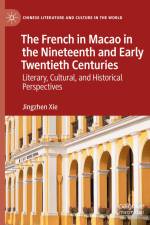
The French in Macao in the Nineteenth and Early Twentieth Centuries: Literary, Cultural, and Historical Perspectives investigates the role that Macao played as a meeting place of the East and the West during this period of time and its decline as a Portuguese colony in the eyes of the Europeans. The book provides a comprehensive view of representations of Macao as portrayed by the French. These texts in French have been studied less than Chinese or Portuguese texts on Macao. Overall, the book contributes to the study of colonial history, cultural studies, and China in the late Qing dynasty.
The book examines prominent literary works from the past two decades by Russian women writers dealing with the Soviet past. It explores works such as Daniel Stein, Interpreter by Ludmilla Ulitskaya, The Time of Women by Elena Chizhova, Secondhand Time: The Last of the Soviets by Svetlana Alexievich, and In Memory of Memory by Maria Stepanova, and uncovers connecting thematic structures and features. Focusing on the concepts of displacement and postmemory, the book shows how these works have given voice to those on the margins of society and of ¿great history¿ whose resistance was often silent. In doing so, these women writers portray the everyday experiences and trauma of displaced women and girls during the second half of the twentieth century. This study offers new insights into the importance of these women writers¿ work in creating and preserving cultural memory in post-Soviet Russia.
Abonner på vårt nyhetsbrev og få rabatter og inspirasjon til din neste leseopplevelse.
Ved å abonnere godtar du vår personvernerklæring.