













Gjør som tusenvis av andre bokelskere
Abonner på vårt nyhetsbrev og få rabatter og inspirasjon til din neste leseopplevelse.
Ved å abonnere godtar du vår personvernerklæring.Du kan når som helst melde deg av våre nyhetsbrev.

This book provides a reference for people working in the design, development, and manufacturing of medical devices. ¿While there are no statistical methods specifically intended for medical devices, there are methods that are commonly applied to various problems in the design, manufacturing, and quality control of medical devices. The aim of this book is not to turn everyone working in the medical device industries into mathematical statisticians; rather, the goal is to provide some help in thinking statistically, and knowing where to go to answer some fundamental questions, such as justifying a method used to qualify/validate equipment, or what information is necessary to support the choice of sample sizes.While, there are no statistical methods specifically designed for analysis of medical device data, there are some methods that seem to appear regularly in relation to medical devices. For example, the assessment of receiver operating characteristic curves is fundamental to development of diagnostic tests, and accelerated life testing is often critical for assessing the shelf life of medical device products. Another example is sensitivity/specificity computations are necessary for in-vitro diagnostics, and Taguchi methods can be very useful for designing devices. Even notions of equivalence and noninferiority have different interpretations in the medical device field compared to pharmacokinetics. It contains topics such as dynamic modeling, machine learning methods, equivalence testing, and experimental design, for example.This book is for those with no statistical experience, as well as those with statistical knowledgeable¿with the hope to provide some insight into what methods are likely to help provide rationale for choices relating to data gathering and analysis activities for medical devices.
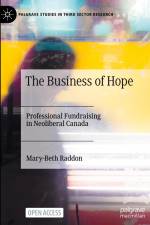
This open access book contributes to research on the ascendance of neoliberalism in Canada through the vantage point of professional fundraising in the 1990s and 2000s. Fifty high-ranking fundraisers from across Canada were interviewed through 2008 and 2009 about changes they had witnessed since starting their careers. Fundraising as an occupation was burgeoning in this period in response to the devolution of state responsibility across the major domains of nonprofit activity: education, health care, social services, the arts, recreation, overseas humanitarian activities, and environmental protection. Welfare state retrenchment left the nonprofit and voluntary sector competing for private sources of funding with the help of these newly hired expert staff. As fundraisers worked to instill a culture of philanthropy, while targeting the ultra-rich and advocating for tax-favourable treatment of major gifts, they became both products and promoters of the neoliberal political and culturalreconstruction of Canadian society.This is an open access book.
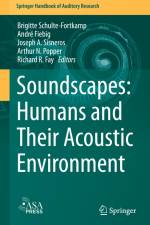
The concept of the ¿Soundscapes¿ includes all of the sounds in one¿s environment and focuses not only on the sounds itself. Instead, it focuses on the interrelationships between person and activity and place, both in space and time. Soundscape also include influences on the acoustic environment through auditory sensation, its interpretation, and the responses to the acoustic environment in context. The conceptual framework of Soundscape describes the ¿process of perceiving or experiencing and/or understanding an acoustic environment, highlighting general concepts and their relationships: context, sound sources, acoustic environment, auditory sensation, interpretation of auditory sensation, responses, and outcomes¿ (International Organization for Standardization, ISO 12913-1:2014 Acoustics Soundscape Part Definition and Conceptual Framework, ISO, Geneva, 2014).With soundscape, one achieves a deeper understanding of acoustic environment and its effects on people. The ISOstandard 12931-1 on soundscape provides an important, and rigorous, distinction in the use of ¿Soundscape.¿ But, it is recognizable that some individuals, particularly planners, designers, lay persons, and even those primarily interested in management of the acoustic environment through environmental noise control, will find it convenient to use ¿Soundscape¿ as a synonym for the physical acoustic environment.When it comes to noise management and urban planning, soundscape research has the potential to promote healthy urban environments by sharing and incorporating the significant knowledge of all concerned parties. Understandably, this shows that the communication with regard to noise management has to be forced to guarantee that the specifics of Soundscapes (i.e., the relevance of perception) are seriously considered alongside the whole.This book will bridge the gap between soundscape theory and practice and therefore it will be different from our earlierpublications as ¿Soundscape and the built environment¿ (ed. by J. Kang and B. Schulte-Fortkamp CRC Press, Taylor and Francis Group, Boca Raton, Fl 2016) and also from the respective Special Issues on Soundscapes in 2012 in The Journal of the Acoustical Society of America (ed. by B. Schulte-Fortkamp and J. Kang), and also the Special Issue in Acta Acustica 2006 *(ed. by B. Schulte-Fortkamp and D. Dubois), and the E-book on soundscape This volume will be driven by the difficult process of standardization of Soundscape and its evaluation procedures. The main goal of the proposed volume is to present and review the developments in Soundscape, reflecting the standardization procedure and the diverse inputs. the needs in management and planning in urban acoustic environments, the book will also focus on the difficulties, as well as the solutions, in interdisciplinary grounded communication, that is, on the one hand, related to science, but on the other to application, that needs guidance.
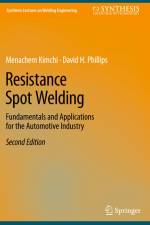
The early chapters of this book provide thorough coverage of resistance spot welding fundamentals and principles. Topics covered include lobe and current range curves, contact resistance vs. electrode force, dynamic resistance, heat balance, nugget growth, etc. Equipment issues such as machine types, power supplies, and electrodes are addressed. Subsequent chapters focus on specific spot welding challenges to modern automotive manufacturing. Approaches to welding modern materials including advanced high-strength steels, coated steels, and aluminum alloys are covered in much detail. The final chapters focus on many common production and quality control issues, such as electrode wear, monitoring and testing, computational modeling, and welding codes. The overall goal of the book is to provide a comprehensive resource for automotive engineers and technicians who work with modern spot welding equipment and automotive materials.
This book offers the latest research results on blockchain technology and its application for cybersecurity in cyber-physical systems (CPS). It presents crucial issues in this field and provides a sample of recent advances and insights into the research progress. Practical use of blockchain technology is addressed as well as cybersecurity and cyber threat challenges and issues. This book also offers readers an excellent foundation on the fundamental concepts and principles of blockchain based cybersecurity for cyber-physical systems. It guides the reader through the core ideas with expert ease.Blockchain technology has infiltrated all areas of our lives, from manufacturing to healthcare and beyond. Cybersecurity is an industry that has been significantly affected by this technology, and maybe more so in the future. This book covers various case studies and applications of blockchain in various cyber-physical fields, such as smart cities, IoT, healthcare, manufacturing, onlinefraud, etc.This book is one of the first reference books covering the application of blockchain technology for cybersecurity in cyber-physical systems (CPS). Researchers working in the cybersecurity field and advanced-level students studying this field will find this book useful as a reference. Decision-makers, managers and professionals also working in this field will want to purchase this book.
Bread and leavened bakery products have been essential to human nourishment for millennia. Traditionally, bread production has relied on the use of sourdough as a leavening agent and to impart a characteristic quality to baked goods. In recent years, improved understanding of the biodiversity and microbial ecology of sourdough microbiota, the discovery of new species, the improved management and monitoring of its meta-community and the commercialization of innovative products have vastly expanded the potential of sourdough fermentation for making baked goods. For example, raw materials such as cereals, pseudo-cereals, ancient grains, and gluten-free substrates, as well as a large number of baked good varieties (e.g., typical and industrial breads, sweet baked goods, gluten-free products) may benefit from advances in sourdough fermentation. In addition, biotechnological tools and culture properties have been discovered to improve both the shelf life and the sensory and textural qualities of baked goods, as well as their nutritional and health-promoting properties.Now in its second edition, the Handbook on Sourdough Biotechnology remains the only book dedicated completely to sourdough biotechnology with the contribution of the most experienced researchers from the field. It reviews the history of sourdough and the potential of sourdough fermentation in the production of bread and baked goods. A thorough discussion of the various processing steps includes the chemical properties of the raw matter, the taxonomy, diversity, and metabolic properties of starter yeasts and lactic acid bacteria, and the effects of sourdough fermentation on the shelf life and the sensory, textural, nutritional, and health-promoting properties of baked goods.
This book is based on the accepted research papers presented in the International Conference "Artificial Intelligence in Engineering & Science" (AIES-2022). The aim of the AIES Conference is to bring together researchers involved in the theory of computational intelligence, knowledge engineering, fuzzy systems, soft computing, machine learning and related areas and applications in engineering, bioinformatics, industry, medicine, energy, smart city, social spheres and other areas. This book presents new perspective research results: models, methods, algorithms and applications in the field of Artificial Intelligence (AI). Particular emphasis is given to the medical applications - medical images recognition, development of the expert systems which could be interesting for the AI researchers as well for the physicians looking for the new ideas in medicine. The central audience of the book are researchers, industrial practitioners, students specialized in the Artificial Intelligence.
Gaetano Salvemini (1873 ¿ 1957), one of the most influential Italian intellectuals of his generation, was an historian, a professor, and a tireless anti-fascist who mentored a new generation of young intellectuals and political activists, such as Piero Gobetti, Ernesto Rossi, and Carlo & Nello Rosselli. After losing his wife and children in the 1908 Messina earthquake, Salvemini began a new family with his second wife, Fernande Dauriac, and her two children, Jean and Ghita. Yet, despite its marked influence on his life and politics, Salvemini¿s second family and its involvement with fascism has never been studied before. By exploiting hitherto unused archival sources, The Inimical Son explores an until-now little known dimension of Salvemini's life; it uncovers the personal costs of his anti-fascism, including the tragic embrace of fascism by his stepson, Jean Luchaire.
This book reviews Marx's contributions to the debate on the working class. The first part of the work presents the synthesis of the main contributions of Marx and Engels (and 20th century Marxist writers) to the understanding of social classes, the class struggle, and the working class. The remaining parts present exercises of dialogue between Marx's and Marxists¿ discussions on the working class, presented in the first part, and empirical elements of class reality today, as well as debates in the social sciences and historiography on the same issues. The thesis defended in the book is simple: the "working class,¿ also called the "proletariat,¿ as it appears in the work of Karl Marx, had and has validity as an analytical category for the understanding of social life under capitalism. Nevertheless, Marx¿s discussion on the issue is complex and the category ¿working class¿ in his approach is wider than many Marxists have presented it.
This handbook examines what education would look like if it prepared gifted students to transform the world¿to make it a better place for all, not just for those who receive extra resources from schools in return for being labeled as ¿gifted.¿ The editors explore how transformationally gifted people can seek to make the world a better and more just place: they try to make a positive, meaningful, and possibly enduring contribution to changing things in the world that are not working. They do not view ¿giftedness¿ merely as a transaction whereby, in exchange for being labeled as ¿gifted,¿ they accrue benefits to themselves: such as a more prestigious education, more income, or residence in a more exclusive community. The overarching aim of this book is to present conceptions of what identification and instruction of the gifted would look like if the focus of gifted education was transformational rather than transactional. What if gifted education did not focus so much on acceleration vs.enrichment, or pull-out versus in-class integration, but rather on how to be gifted in giving back¿in using one¿s gifts to create a better world?
This book sheds new light on the evolution and transformation of polytheistic religions. By applying economic models to the study of religious history and by viewing religious events as the result of rational choices under given environmental constraints, it offers a political economy perspective for the study of Indo-European polytheism. The book formally models the rivalry or competition among multiple gods in a polytheistic system and the monotheistic solution to this competition. Presenting case studies on the transformation and demise of various polytheistic religions, it highlights the pivotal role of the priestly class in driving religious change and suggests a joint explanation for the demise of Greco-Roman religion and the resilience of Hinduism and Zoroastrianism. It will appeal to scholars of the economics of religion and religious history and to anyone seeking new insights into the birth and death of religions, and the birth of monotheism in particular.
This book analyses the challenges facing the European Union through the frame of the rule of law. It shows how over the last decades the increased dissensus and contestation of the rule of law has given rise to heightened tensions between national and EU institutions, leading to the establishment of new soft and hard policy tools to safeguard it at the supranational level. The book proposes a comprehensive and multifaceted analysis of the current state of debates by exploring how EU institutional actors seek to uphold the Union¿s values. It shows that European integration in core state powers is the outcome of the clash between liberal and anti-liberal ideas, between dissensus and contestation over how collective problems should be solved, in a community of voices featuring assent and dissent, all of which give democracy its substance. Beyond the analysis of the emerging EU¿s rule of law policy, the book will help readersto better understand the EU¿s fragilities and resilience and the potential challenges for the future of EU integration.
Dieses zweibändige Lehrbuch bietet einen umfassenden Überblick über das weite Feld der Tierbiotechnologie mit besonderem Schwerpunkt auf der Reproduktion und Zucht von Nutztieren. Der Leser wird mit einer Vielzahl modernster Technologien und neuer genetischer Instrumente und deren Anwendungen in der Tierproduktion vertraut gemacht. Außerdem werden ethische und rechtliche Aspekte der Tierbiotechnologie erörtert und neue Trends und Entwicklungen auf diesem Gebiet kritisch bewertet. Das zweibändige Werk ist ein Muss für Doktoranden, fortgeschrittene Studenten und Forscher auf dem Gebiet der Veterinärmedizin, Genetik und Tierbiotechnologie.Dieser erste Band befasst sich hauptsächlich mit künstlicher Befruchtung, Embryotransfertechnologien bei verschiedenen Tierarten und der Kryokonservierung von Eizellen und Embryonen.
The AFS Textbook of Foregut Disease serves as a comprehensive guide of information covering the fast-evolving field of foregut disease. This textbook is designed as a partnership between gastroenterologists & gastrointestinal surgeons with an understanding that an essential component of moving forward in this field is through collaboration. This AFS textbook has been developed by the American Foregut Society, a premier society for foregut disease and all chapters are written by experts in the field. Readership is intended for gastroenterologists, GI and thoracic surgeons, gastroenterology and general surgery residents and fellows, medical students, and integrated health members that manage foregut disease. All chapters follow an organized format that contains many graphs, tables, intraoperative photographs, and illustrations of techniques. This textbook provides the most up-to-date scientific information and will be the definitive resource to guide both the diagnosis and management of foregut disease for years to come.
This third volume of the Balkan Yearbook of European and International Law (BYEIL) is devoted in particular to the specific legal challenges faced by Southeast European countries in the area of intellectual property law. The authors discuss a range of topics in Serbian and Bosnian and Herzegovinian copyright law, trademark and patent law, the relevance of which extends beyond their national borders. The papers included in the permanent sections on European law and international law explore contemporary challenges in public and private law. These challenges concern various legal fields, including consumer law, commercial law, corporate and criminal law, and the corresponding papers tackle a number of fundamental theoretical issues, while also highlighting the latest developments in legal practice.
Abonner på vårt nyhetsbrev og få rabatter og inspirasjon til din neste leseopplevelse.
Ved å abonnere godtar du vår personvernerklæring.