




















Gjør som tusenvis av andre bokelskere
Abonner på vårt nyhetsbrev og få rabatter og inspirasjon til din neste leseopplevelse.
Ved å abonnere godtar du vår personvernerklæring.Du kan når som helst melde deg av våre nyhetsbrev.

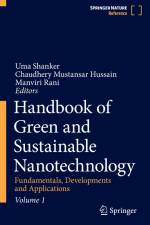
The Handbook of Green and Sustainable Nanotechnology presents sustainable and green technologies for the development of products and processes which are environmental friendly, economically sustainable, safe, energy-efficient, decrease waste and diminish greenhouse gas emissions. It provides the overall spectrum of fundamentals, development and applications of sustainable and green technologies. Topics such as legal, health and safety issues are discussed as well. The book elucidates paths to real time utilization of green and sustainable nanotechnology at commercial scale.
This book describes how reliability can be embedded into the product development using a design methodology that uses parametric accelerated lifecycle testing (ALT) .The book has these features:¿ A new reliability methodology, based on inferential statistics, that can determine whether the reliability of a mechanical/civil system is achieved.¿ A unique reliability methodology to prevent reliability disasters in new mechanical products in the field, e.g., automobiles and airplanes.¿ Robust design methodology of mechanical/civil product to withstand a variety of loads.¿ Explanation of an alternative experimental Taguchi methodology.¿ Discussion of how parametric ALT can alsobe used to predict product reliability¿lifetime and failure rate.¿ Detailed case studies that demonstrate parametric ALT methodology.This book will be useful for senior-level undergraduate and graduate students, professional engineers, college and university-level lecturers, researchers, and design managers in mechanical and civil engineering.
This SpringerBrief explores unconventional functions of eight different transcription factors and concludes with a discussion of their biological significance and impact, including effects on processes within the cell nucleaus during development and in adult organisms. Chapter One details unconventional functions of the transcription factors GAGA, HP1, Rb, STAT, ATF-2 and NF-kB. Surprisingly, all of these transcription factors can be found in association with heterochromatin as well as euchromatin, and in some cases unconventional functions have been demonstrated for these heterochromatin-associated factors. Chapter Two focuses on the unconventional functions of STAT and HP1 and discusses their roles in the promotion of longevity, and in protection from cancer and DNA damage. Chapter Three explores the biological significance of the findings presented in the first two chapters and considers how global changes in the epigenome brought about by factors such as STAT and HP1 might affect processes within the cell nucleus during development and in adult organisms. This succinct yet thorough SpringerBrief is essential for researchers studying epigenetics, and to instructors of the subject. It should also appeal to people interested in the control of gene transcription and other processes in the cell nucleus, and to those interested in development.
This book shows how psychological and social interventions can help people with psychosis. It brings together both theoretical chapters that contribute to the reconceptualization of psychosis and clinical cases illustrating how contemporary psychotherapeutic intervention models can be applied in the treatment of this mental health condition, with reflections, strategies and practical guidelines demonstrating how these models can inform professional practice in mental healthcare. Chapters brought together in this volume aim to reflect a paradigm shift in psychosis care. They present person-centered models that lead to a way of seeing, understanding and treating psychosis that is very different from the traditional biomedical model. Current authors and approaches are revolutionizing an outdated model trapped in purely pharmacological actions and tautological explanations of a biological nature, where symptom control is the basic and fundamental form of approach, and in which psychotherapeutic actions take second place as subsidiary to the former. Approaches such as Acceptance and Commitment Therapy, Acceptance and Recovery Therapy by Levels, Open Dialogue, Compassion-Centered Therapy or the Hearing Voices movement, to name but a few of those presented in this book, represent a journey of self-knowledge and learning for those recovering from psychosis, and have an intense transformative potential for the therapeutic team.The fundamental principle that guides this book is to share models belonging to psychology that aim at personal development while respecting the needs, values and goals of each person, and that can be adopted by any professional or student of clinical psychology, psychiatry, nursing, social work or any other discipline searching for more humanistic approaches to treat psychosis.
This contributed volume analyzes flooding scenarios in Brazilian cities using a geographic and spatiotemporal approach to explore impacts and ways to mitigate future disasters. The problem of urban flooding is growing in Brazilian cities due to the increasing number of natural disasters in the context of global climate change; this is a topic that poses challenges to urban planners and academics. Through three sections, this volume offers theoretical-conceptual, methodological and technical case studies, as well as cases that explore urban socio-environmental problems associated with flooding. Throughout the book, the concepts of risk, vulnerability and adaptation are used to explore future flood scenarios in Brazil.The integrated vision offered in this volume covers the floods themselves, evaluation of flood impacts, and the management process before, during, and after the flood event. The case studies presented here elucidate the concept of comprehensive urban flood management, offering a technical and diagnostic basis for the problem in different cities in Brazil. The present and future challenges presented by these chapters offer widely-transferable lessons that can be applied to making cities around the world more sustainable and disaster-resilient.
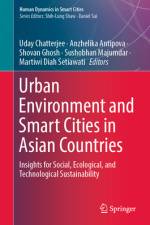
This book offers a thorough description of the challenges posed by increasing global urbanization. In addition, comprehensive perspectives are offered on how the contemporary urban challenges of our time are tackled by existing designers, architects, urban planners, and landscape architects thereby considering climate change, migration, resilience, politics, and environmental degradation. It includes insights from environmental design, geography, strategic planning, and engineering design. It goes beyond the jargon of technical innovation, and exposes the political, social and physical effects of digitalizing the world in smart cities. The book focuses on the application of geospatial technology of smart cities ¿ including system design for basic services, real-time control and the Internet of Things. It highlights the planning of land use, strategic development, and ecosystem-based knowledge to enhance economic growth and healthy urban environment and smart city management. The book also shows the contradictory aspects of smart city studies, and provides useful insights into the creation and execution of policies to strengthen decision-making processes in smart cities. This book leads the reader to a greater understanding of smart city growth, both theoretical and realistic and as such it provides an interesting read for urban geographers, urban designers and planners, environmental specialists, practitioners, students.
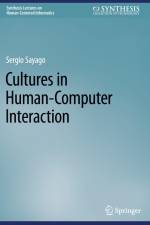
This book provides an interdisciplinary synthesis of the topic of culture in the context of Human-Computer Interaction (HCI) and a structured overview of a large body of HCI research on (and with) culture. The book presents a short and guided overview of the concept of culture. It offers some background on the origin and development of the term culture. It also outlines some of its key traits and ingredients and summarizes three main perspectives of culture across disciplines. The book argues that culture matters considerably in HCI and discusses a number of reasons for and against its relevance. Arguments against include a lack of a universal or common definition of the term culture and globalization. Arguments in favor touch upon important aspects of HCI, including a diversely growing user base, the need to provide designers with enough support to design across cultures, and the inseparable relationship between culture and technology. The issues explored in this book can be classified into three, non-mutually exclusive, categories: theoretical, practical, and controversial. The book outlines the main conceptual perspectives of culture within HCI, including Geert Hofstede¿s cultural dimensions theory, Edward T. Hall¿s cross-cultural theory of communication, and Richard Nisbett¿s cultural cognitive systems of thought as well as examining the ways in which culture has been operationalized in HCI research and the main functions of culture in this area. It closes with a discussion of some open issues intended to spark debate and future research. The literature this book draws upon covers a wide range of research disciplines, including Anthropology, Sociology, Cultural Studies, Robotics, Disability Studies, Cultural and Cross-Cultural Psychology, Usability, and Design. This book aspires to provide a useful overview of culture for HCI scholars at all levels.
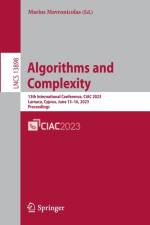
This book constitutes the refereed proceedings of the 13th International Conference on Algorithms and Complexity, CIAC 2023, which took place in Larnaca, Cyprus, during June 13¿16, 2023. The 25 full papers included in this book were carefully reviewed and selected from 49 submissions. They cover all important areas of research on algorithms and complexity such as algorithm design and analysis; sequential, parallel and distributed algorithms; data structures; computational and structural complexity; lower bounds and limitations of algorithms; randomized and approximation algorithms; parameterized algorithms and parameterized complexity classes; smoothed analysis of algorithms; alternatives to the worst-case analysis of algorithms (e.g., algorithms with predictions), on-line computation and competitive analysis, streaming algorithms, quantum algorithms and complexity, algorithms in algebra, geometry, number theory and combinatorics, computational geometry, algorithmic game theory and mechanism design, algorithmic economics (including auctions and contests), computational learning theory, computational biology and bioinformatics, algorithmic issues in communication networks, algorithms for discrete optimization (including convex optimization) and algorithm engineering.
The ¿Re-Inventing Organic Metaphors for the Social Sciences¿ is a volume with the specific goal: to challenge psychological understandings by connecting psychological approaches with multidimensional perspectives of various other scientific streams, meanwhile imbedding the generated knowledge in metaphors that allows researchers to follow phenomena into a deeper and more (w)holistic understanding of its appearance. This is particularly important when the humankind faces challenges due to systemic biological changes, as the phenomenological dynamics bonded to those challenges can be conserved in appropriated context. For this purpose, the organic metaphors are introduced. A tool that has central advantage over mechanical metaphors as it can capture the complex and open-systemic nature of biological, psychological, and social phenomena. For example¿the widely used notion ¿mind as a computer¿ may be more productively replaced by ¿mind as a membrane¿¿with implications (e.g. focus on borders in-between, or in systems in themselves- exosystemic realities in our world). There are many other fertile opportunities not yet explored in the realms of psychology and other sciences. Furthermore, the contributors operated also as cross-reviewers for each other¿s. In this occasion a new dimension, in chapter construction, will be introduced. Beside the traditional reviewing of another paper the reviewer has been asked to add a small list of extending questions toward the reviewed paper. These added questions have been introduced as potential questions that the authors were demanded to add into a final sub-chapter of their contribution. The subchapter has been titled as ¿Dialogue¿ (the author was free to select between the questions and ideas on those they believe could inhabit an especially worth for the future readers).
This is an open access book. It gathers the proceedings of the 18th Global Conference on Sustainable Manufacturing, held on October 5-7, 2022, as a hybrid event, in/from Berlin, Germany. With a focus on manufacturing advances and practices driving the circular economy, the chapters selected for this book report on sustainable manufacturing technologies for the mobility, energy and construction sector, and for machines and equipments, covering applications of artificial intelligence and industry 4.0. Moreover, they discuss energy-efficient process, waste reuse, and CO2 neutral production, giving a special emphasis to developing sustainable manufacturing in emerging countries. This book offers extensive and timely information for both researchers and professionals in the field of manufacturing and business development.
More than one billion individuals worldwide experience digestive or gastrointestinal (GI) problems, including acid reflux, bloating, constipation, diarrhea, and many others. This book was written with these individuals in mind and to help guide them. In this comprehensive yet high-yield and patient-friendly book, trusted medical expert Dr. James H. Tabibian shares his professional insights and personal experiences to empower patients to gain better understanding of and control over their digestive health. This book addresses questions that commonly arise among those with GI problems, such as ¿What condition do I really have?¿, ¿Should I be worried?¿, ¿At what point do I need to see a specialist?¿, ¿What should I tell the doctor?¿, ¿Is the doctor ordering the right tests for me?¿, ¿What treatment options are there and which ones work best for me?¿, ¿Am I seeing the right subspecialist for my problem?¿, and more. It presents up-to-date scientific knowledge and tenets that are relevantacross the spectrum of common GI problems, providing a summary of key concepts, underlying causes of digestive problems, how to best embark on a medical evaluation, and the vast array of pharmacological and non-pharmacological therapeutic options. Drawing upon both Western and Eastern methodologies and a combination of integrative and functional medicine, this book provides important practical information to help navigate life with GI problems, the complexities of modern healthcare, and the quest for digestive wellness, debunking misconceptions along the way.
This book offers an international account of the use of linguistic landscapes to promote multilingual education, from primary school to the university, and in teacher education programs. It brings linguistic landscapes to the forefront of multilingual education in school settings and teacher education, expanding the disciplinary domains through which they have been studied. Drawing on multidisciplinarity and placing linguistic landscapes in the field of language (teacher) education, this book presents empirical studies developed in eleven countries: Australia, France, Germany, Israel, Japan, Mozambique, The Netherlands, Portugal, Russia, Spain, and The United States. The chapters illustrate how multilingual pedagogies can be enhanced using linguistic landscapes in mainstream education and are written by partners of the Erasmus Plus project LoCALL ¿LOcal Linguistic Landscapes for global language education in the school context¿.
This book provides a comprehensive, state-of-the-art overview of imaging modalities used in the diagnosis, staging, and management of pancreatic cancer. In addition to profiling the most commonly-used imaging modalities for pancreatic cancer, the text reviews recent advances in endoscopic ultrasound, staging characteristics utilized in determining appropriate treatment options, and reviews the role of imaging in pancreatic cancer screening in specialized patient populations. The book also spotlights the use of radiation therapy for pancreatic cancer in patients who cannot have surgery, as well as when fiducial marker placement should be considered in targeting a malignancy. Written by experts in the field, Imaging Diagnostics in Pancreatic Cancer: A Clinical Guide is a valuable resource for gastroenterologists, surgeons, oncologists, radiologists, and other practitioners who manage patients with pancreatic cancer.
This book provides detailed and practical information for anesthesia providers worldwide who are challenged with providing anesthesia for both emerging and infrequently performed procedures. Concise and well-structured 42 chapters in this book provide accurate and up-to-date information that helps the reader to safely anesthetise patients presenting for a variety of procedures such as conjoined twin separation, pediatric heart and lung transplantation, pancreas and small intestine transplantation, endobariatric procedures, peroral endoscopic myotomy, jugular foramen tumors, robotic gynecological surgeries, proton beam therapy and many other complex surgeries and procedures.Anaesthesia for Uncommon and Emerging Procedures fills a unique void long felt by anesthesia providers. The book is a must for in every department or library as it provides handy reference even for providers engaged in providing anesthesia for such procedures on a regular basis. Anesthesiologists, CRNAs/AAs and those in in preoperative clinics such as hospitalists and APRN/PA providers will find this book to be an invaluable resource for optimizing outcomes in anesthesia.
This atlas offers a comprehensive overview of neuromuscular diseases. It discusses all aspects of neuromuscular disorders, including general tools, the cranial and spinal nerves, the nerve plexus, peripheral nerves, mono- and polyneuropathies, entrapment syndromes, the neuromuscular junction, motor neuron diseases, muscle disease, and autonomic involvement. Each chapter is structured into the following sections: anatomy, symptoms, signs, pathogenesis, diagnosis and differential diagnosis, therapy, and prognosis. The diagnostic tools used for neuromuscular disease are explained, and the therapeutic options for each disease are described. This updated third edition includes new chapters addressing a range of topics: from histology to molecular mechanisms, genetic aspects, the mechanisms of emerging new therapies, neuroimaging, neuromuscular disease, and new pathogenic mechanisms. The book aims to be a useful companion for neuromuscular disease. The homogenous structure, illustrations with figures, and representative images makes the atlas easy to read and helpful in understanding neuromuscular problems.
This book brings a unique perspective to animal movement studies because all studies come from African tropical environments where the great diversity, either biological and structurally (trees, shrubs, vines, epiphytes), present the animals with several options to fulfil their basic needs. These conditions have forced the evolution of unique movement patterns and ecological strategies. ¿The book follows on our previous book ¿Movement Ecology of Neotropical Forest Mammals¿ but focuses on tropical African forests. Movement is an essential process in the life of all organisms. Animals move because they are looking for primary needs such as food, water, cover, mating and to avoid predators. Understanding the causes and consequences of animal movement is not an easy task for behavioural ecologists. Many animals are shy, move in secretive ways and are very sensible to human presence, therefore, studying the movements of mammals in tropical environments presents logistical and methodologicalchallenges. However, researchers have recently started to be solved these challenges and exciting new information is emerging. In this book we are compiling a set of extraordinary studies where researchers have used new technology and the strongest methodological approaches to understand movement patterns in wild African forest mammals. This second book should inspire early career researchers to investigate wild mammal¿s movements in some of the most amazing forest in the world: African tropical forests.
This book describes the groundbreaking work of Chaim Leib Pekeris and his collaborators. Between 1955 and 1963 they used the first electronic computer built in Israel, the Weizmann Automatic Computer (WEIZAC), to develop powerful numerical methods that helped achieve new and accurate solutions of the Boltzmann equation, calculate energy levels of the helium atom, produce detailed geophysical and seismological models derived from the study of the free oscillations of the earth, and refine models used to predict meteorological phenomena and global oceanic tides. This book provides a unique account of the pioneering work of Chaim L. Pekeris in applied mathematics and explains in detail the background to the rise of the Weizmann Institute as a world-class center of scientific excellence. This hitherto untold story is of great interest to historians of twentieth-century science with special emphasis on the application of computer-assisted numerical methods in various branches of mathematical physics.
Embodied, Embedded, and Enactive Psychopathology presents a new way of thinking about mental disorder that is holistic yet critically minded, biologically plausible yet value-inclusive, and scientific yet deeply compassionate. Grounded in an embodied, embedded, and enactive (3e) view of human functioning, this book presents a novel conceptual framework for the study and treatment of mental disorders and explores implications for the tasks of classification, explanation, and treatment. Chapters one to three argue for the central role of conceptualization in the study and treatment of mental disorders. Popular conceptual models are critiqued, including other recent enactive frameworks. Chapters four to seven then present 3e Psychopathology and explore its implications. This includes analysis of both research-based efforts to explain mental disorders, and methods for formulating individual-level explanations in clinical practice. New answers are presented for important questionssuch as: are mental disorders things we do or get? Are mental disorders defined in nature or are they socially constructed? Are mental disorders the same things across different cultures? And, are mental disorders located in our brains, bodies, or environments? This engaging work offers fresh insights that will appeal to clinicians, researchers, and those with an interest in the philosophy of psychiatry.
The book discusses the best international practices in digital agriculture. The book aims to form systemic scientific and methodological support and develop comprehensive applied solutions to unlock the potential of sustainable development of digital agriculture for food security.The book¿s contribution to the literature lies in its comprehensive treatment of public and corporate management of farms representing digital agriculture. The research novelty is associated with the systemic disclosure of economic, legal, and technological issues in the development of digital agriculture. Thus, the book provides a solid foundation for integrating food security interests into farming practices.The first part of the book reflects the economic, legal, and technological support of quality management and sustainable development in digital agribusiness based on the best international practices. The second part focuses on Russian and international agricultural policies forfood security.The book is intended for members of the academic community who will find promising solutions to current problems of food security through the development of digital agriculture. The book will also be of interest to farmers and representatives of the state regulation of the agricultural economy. In this book, they will find practical recommendations for improving government and corporate management of food security through the development of digital agriculture.
This book gathers the latest advances and innovations in the field of dynamic loads and testing of composite materials and sandwich structures, as presented by international researchers and engineers at the International Symposium on Dynamic Response and Failure of Composite Materials (DRAF), held in Ischia, Italy, on June 21¿24, 2022. Contributions include a wide range of topics such as low and high velocity impacts, smart composites, hull slamming, shock and blast, hail and bird impact, damage resistance and tolerance, failure mechanisms, composite structures, delamination and fractures, progressive damage modeling, micromechanics, ballistic impacts, ceramic and CMC, auxetic materials and structures, additive manufacturing, crashworthiness, green composites, and structural health monitoring.
This book introduces a measure of firms¿ competition culture based on a textual analysis and natural language processing (NPL) of firms¿ 10-K filings. Using this measure, the book explores the relationship between competition culture and various phenomena in corporate finance, specifically, institutional ownership structure, stock return performance, idiosyncratic stock price crash risk, meeting/beating analysts¿ earnings expectations, and earnings management activity, for a large sample of US-based financial and non-financial firms. In particular, the book provides evidence that transient institutional ownership intensifies firms¿ competition culture, while dedicated institutional ownership lessens it. In addition, the book¿s findings suggest that firms with greater levels of competition culture achieve higher levels of short-term stock return performance, experience greater incidence of idiosyncratic stock price crashes, and are more prone to meet/beat analysts forecast and engagein accruals-based earnings manipulation.Finally, the book examines the role played by competition culture in financial firms (i.e., banks). Specifically, the book explores the effect of competition culture on bank lending and shows that banks with greater levels of competition culture are generally more prone to engage in procyclical lending activity. The findings of the book have significant policy implications and will be of interests to regulators, accounting standard-setters, managers and those charged with firm governance, career academics and researchers, graduates, and those generally interested in the role played by corporate culture in the related fields of finance, economics, and accounting.
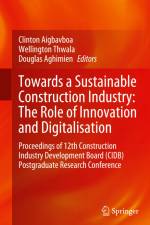
This book gathers papers from the 12th Construction Industry Development Board (CIDB) Postgraduate Research Conference, which was held at the International Convention Centre, East London, Eastern Cape, South Africa, from July 10 to 12, 2022. The conference directly addresses the objectives of SDG9: ¿Building resilient infrastructure, promoting inclusive and sustainable industrialization and fostering innovation¿. Moreover, the conference is designed to promote capacity development and transformation within the built-environment space by providing an all-inclusive platform to established and emerging researchers to discuss the recent advancements needed to move the industry forward.
Abonner på vårt nyhetsbrev og få rabatter og inspirasjon til din neste leseopplevelse.
Ved å abonnere godtar du vår personvernerklæring.