





















Gjør som tusenvis av andre bokelskere
Abonner på vårt nyhetsbrev og få rabatter og inspirasjon til din neste leseopplevelse.
Ved å abonnere godtar du vår personvernerklæring.Du kan når som helst melde deg av våre nyhetsbrev.

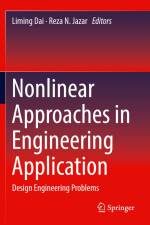
Nonlinear Approaches in Engineering Applications: Design Engineering Problems examines the latest applications of nonlinear approaches in engineering and addresses a range of scientific problems. Chapters are authored by world-class scientists and researchers and focus on the application of nonlinear approaches in different disciplines of engineering and scientific applications, with a strong emphasis on application, physical meaning, and methodologies of the approaches. Topics covered are of high interest in engineering and physics, and an attempt has been made to expose engineers and researchers to a broad range of practical topics and approaches. This book is appropriate for researchers, students, and practicing engineers who are interested in the applications of engineering, physics, and mathematics in nonlinear approaches to solving engineering and science problems.
This book analyses how and why we are living at a critical moment in the history of human life on earth and explores how we find grounds for the hopes that will enable us to address the challenges and crises of our time. The author analyses hope both practically and philosophically as a generative virtue to realistically discern the situations in which we find ourselves, and imaginatively to anticipate possibilities when the future is unknown and uncertain. The author argues that hope is a mean between anomy, disillusionment, and despair, on the one hand, and wishful thinking, dreaming, and fanaticizing, on the other hand. The book not only examines ¿ and analyzes from a historical perspective - the contemporary crises such as climate change, environmental degradation and its effects such as the social costs of these developments, but also further analyzes the character and micro-dynamics of hope and how it makes a difference in how we manage the crises which inevitably emerge.Though contemporary crises are those we tend to focus on, the author also engages with what is involved in a due regard for history and the relevance of a sense of history for addressing the crises of our time. He shows us what we can learn from revisiting some thoughtful reflections by thinkers like Niebuhr, Jaspers, Camus, and Arendt. Finally, the author shows us what is involved practically in anticipating possibilities, by looking at hope as a social practice and noting how hopeful people make a difference.
This book provides comprehensive discussion on key topics related to the usage and deployment of AI in urban transportation systems including drones. The book presents intelligent solutions to overcome the challenges of static approaches in the transportation sector to make them intelligent, adaptive, agile, and flexible. The book showcases different AI-deployment models, algorithms, and implementations related to intelligent cyber physical systems (CPS) along with their pros and cons. Even more, this book provides deep insights into the CPS specifically about the layered architecture and different planes, interfaces, and programmable network operations. The deployment models for AI-based CPS are also included with an aim towards the design of interoperable and intelligent CPS architectures by researchers in future. The authors present hands on practical implementations, deployment scenarios, and use cases related to different transportation scenarios. In the end, the design and research challenges, open issues, and future research directions are provided.
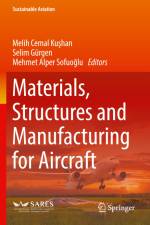
This book offers a comprehensive look at materials science topics in aerospace, air vehicle structures and manufacturing methods for aerospace products, examining recent trends and new technological developments. Coverage includes additive manufacturing, advanced material removal operations, novel wing systems, design of landing gear, eco-friendly aero-engines, and light alloys, advanced polymers, composite materials and smart materials for structural components. Case studies and coverage of practical applications demonstrate how these technologies are being successfully deployed. Materials, Structures & Manufacturing for Aircraft will appeal to a broad readership in the aviation community, including students, engineers, scientists, and researchers, as a reference source for material science and modern production techniques.
This volume is the third (III) of four under the main themes of Digitizing Agriculture and Information and Communication Technologies (ICT). The four volumes cover rapidly developing processes including Sensors (I), Data (II), Decision (III), and Actions (IV). Volumes are related to ¿digital transformation¿ within agricultural production and provision systems, and in the context of Smart Farming Technology and Knowledge-based Agriculture. Content spans broadly from data mining and visualization to big data analytics and decision making, alongside with the sustainability aspects stemming from the digital transformation of farming. The four volumes comprise the outcome of the 12th EFITA Congress, also incorporating chapters that originated from select presentations of the Congress. The focus of this book (III) is on the transformation of collected information into valuable decisions and aims to shed light on how best to use digital technologies to reduce cost, inputs,and time, toward becoming more efficient and transparent. Fourteen chapters are grouped into 3 Sections. The first section of is dedicated to decisions in the value chain of agricultural products. The next section, titled Primary Production, elaborates on decision making for the improvement of processes taking place with the farm under the implementation of ICT. The last section is devoted to the development of innovative decision applications that also consider the protection of the environment, recognizing its importance in the preservation and considerate use of resources, as well as the mitigation of adverse impacts that are related to agricultural production.Planning and modeling the assessment of agricultural practices can provide farmers with valuable information prior to the execution of any task. This book provides a valuable reference for them as well as for those directly involved with decision making in planning and assessment of agricultural production.Specific advances covered in the volume: Modelling and Simulation of ICT-based agricultural systemsFarm Management Information Systems (FMIS) Planning for unmanned aerial systems Agri-robotics awareness and planning Smart livestock farming Sustainable strategic planning in agri-production Food business information systems
This book provides a comprehensive overview of the physiology, pathophysiology, diagnosis, medical and surgical management, and future therapies for tricuspid valve disease. It is divided into two sections. The first section covers the basics of the tricuspid valve, including anatomy, epidemiology, and clinical diagnosis with individual chapters focused on hemodynamics, echocardiography, MRI, and CT assessment. The second section examines current treatments for tricuspid valve disease including both surgical and medical management. It discusses special clinical scenarios of tricuspid valve pathology such as tricuspid regurgitation in patients with ICD and pacemaker implants and the role of tricuspid valve disease in patients with heart failure and LVAD therapy. Tricuspid Valve Disease: A Comprehensive Guide to Evaluation and Management is an essential resource for general cardiologists, interventional cardiologists, cardiac surgeons, and innovators in the field of structural heart disease.
This book analyzes how quality of life research results can be transferred to policy making, and considers the role of actors in this process---researchers, policy makers, and citizens---as well as their interrelationships. This book points to the need to include actors other than the state in public policy-making related to quality of life and well-being issues, in defining problems and formulating alternatives. It identifies obstacles and facilitators in the process and offers a review of different types of aid that affect well-being and quality of life. Finally, it shows possible pathways for various stakeholders in policy-making to interact with one another in the building of good societies.
Investors, customers and employees increasingly expect organizations to take responsibility for the social impact of their activities. This book applies theory and research on moral psychology and social identity, to offer a new perspective on organizational social responsibility and business ethics. The authors use their unique approach to highlight recurring moral challenges in organizational behavior, such as leadership, work motivation, diversity, organizational change and stakeholder relations. Their analysis explains that people are reluctant to acknowledge and confront moral flaws in their workplace behavior, because this constitutes a source of identity threat. Common strategies to cope with this threat invite justifications and symbolic actions ¿ and prevent moral improvement. Each chapter draws together a wealth of research findings and organizational cases. These not only identify and clarify common moral pitfalls, but also show ways to enhance the likelihood that organizations acquire the knowledge, willingness and ability to build an ethical work climate.
This volume presents a collection of essays from experienced crime analysts from around the world. It explores themes relevant to anyone embarking on, or already into a career in crime analysis.Divided into two sections, this book addresses technical issues central to the profession, from collection of data to presenting findings to reluctant audiences. It incorporates a collection of methodological case studies, demonstrating the ways analysis has made a meaningful difference to policing and security.This volume is intended for scholars who study and work with crime analysts, the global community of undergraduate and graduate students who may take one of these roles in the future, and law enforcement.
¿This book presents both theory of financial data analytics, as well as comprehensive insights into the application of financial data analytics techniques in real financial world situations. It offers solutions on how to logically analyze the enormous amount of structured and unstructured data generated every moment in the finance sector. This data can be used by companies, organizations, and investors to create strategies, as the finance sector rapidly moves towards data-driven optimization.This book provides an efficient resource, addressing all applications of data analytics in the finance sector. International experts from around the globe cover the most important subjects in finance, including data processing, knowledge management, machine learning models, data modeling, visualization, optimization for financial problems, financial econometrics, financial time series analysis, project management, and decision making. The authors provide empirical evidence as examples of specific topics. By combining both applications and theory, the book offers a holistic approach. Therefore, it is a must-read for researchers and scholars of financial economics and finance, as well as practitioners interested in a better understanding of financial data analytics.
The Covid pandemic has led us into an upheaval that has made us question the certainties underlying what it means to be a human being in our age; the ability to control medical and social facts through evidence. For the first-time western and developed countries have had to confront what many populations from the developing world (Africa. Latin America, etc) face on a daily basis with HIV and Ebola, etc. The Interconnectedness of Globalization has been the real disseminating catalyst of COVID 19, and many scientists wonder if this virus is the result of the Anthropocene age, with its indisputable lack of respect for the natural ecosystems. The virus has demonstrated that our frailty is only skin deep, and it has not only brought death, despair, but it has broken our interdependency as human beings, by imposing self- isolation as well as creating new ways of connections so that safety cannot imply loneliness. In this book, the coping strategies that originate from the multiple languages of care such as narrative, literature, science, philosophy, art, digital science are shown not only as reflective tools to promote health but also wellbeing amongst carers, patients, students, and citizens of our planet Earth. These strategies should be supported by the decision makers since they are low-cost investments necessary to make the health care system work. They however require a change of cultural paradigm. This book is a useful toolkit for patients, citizens and care services physicians who want to learn more on how to live better with this new world.
This book is concerned with the development of the understanding of the relational structures of information, knowledge, decision¿choice processes of problems and solutions in the theory and practice regarding diversity and unity principles of knowing, science, non-science, and information¿knowledge systems through dualistic-polar conditions of variety existence and nonexistence. It is a continuation of the sequence of my epistemic works on the theories on fuzzy rationality, info-statics, info-dynamics, entropy, and their relational connectivity to information, language, knowing, knowledge, cognitive practices relative to variety identification¿problem¿solution dualities, variety transformation¿problem¿solution dualities, and variety certainty¿uncertainty principle in all areas of knowing and human actions regarding general social transformations. It is also an economic¿theoretic approach in understanding the diversity and unity of knowing and science through neuro-decision¿choice actions over the space of problem¿solution dualities and polarities. The problem¿solution dualities are argued to connect all areas of knowing including science and non-science, social science, and non-social-science into unity with diversities under neuro-decision¿choice actions to support human existence and nonexistence over the space of static¿dynamic dualities. The concepts of diversity and unity are defined and explicated to connect to the tactics and strategies of decision¿choice actions over the space of problem¿solution dualities. The concepts of problem and solution are defined and explicated not in the space of absoluteness but rather in the space of relativity based on real cost¿benefit conditions which are shown to be connected to the general parent¿offspring infinite process, where every solution generates new problem(s) which then generates a search for new solutions within the space of minimum¿maximum dualities in the decision¿choice space under the principle of non-satiation over the space of preference¿non-preference dualities with analytical tools drawn from the fuzzy paradigm of thought which connects the conditions of the principle of opposites to the conditions of neuro-decision¿choice actions in the zone of variety identifications and transformations. The Monograph would be useful to all areas of Research, Learning and Teaching at Advanced Stages of Knowing and Knowledge Production.
This book provides a practically applicable guide to the latest techniques in kidney transplantation in an easy-to-digest format. Background is provided on relevant aspects of anatomy and physiology. Detailed step-by-step procedural guidance describes how to successfully perform benching surgery, kidney transplantation and graftectomy techniques. Surgical methods of non-laparoscopic kidney procurement from deceased and living donors are also covered. Potential complications with relevant prevention and resolution strategies are discussed to assist the reader in developing a deep understanding of the methodologies presented. In this book, the author shares his knowledge and experience gained over 35 years in the field of kidney procurement, preparation and transplantation. The book is a monograph and contains many of the author's individual views on certain kidney procurement and transplantation techniques.Kidney Transplantation: Step-by-Step Surgical Techniques is a concise overview of techniques for kidney procurement, benching and transplantation. Therefore, it is a valuable resource for all practicing and trainee practitioners who encounter these patients in their day-to-day practice.
This book addresses challenges and opportunities in the Energy-Water-Environment (EWE) nexus, with a particular focus on research and technology development requirements in harsh desert climates. Its chapters include selected contributions presented during the 1st international conference on sustainable Energy-Water-Environment nexus in desert climates (ICSEWEN-19) held at the Qatar Environment and Energy Research Institute (QEERI) in Doha, Qatar in December 2019. This volume is comprised of three main chapters, each describing important case studies and progress on water, energy and environmental questions. A fourth chapter on policies and community outreach on these three areas is also included. This compilation aims to bridge the gap between research and industry to address the socioeconomic impacts of the nexus imbalance as perceived by scientists, industrial partners, and policymakers. The content of this book is of particular importance to graduate students, researchers and decision makers interested in understanding water, energy and environmental challenges in arid areas. Re searchers in environmental and civil engineering, chemistry, hydrology and environmental science can also find unique in-situ observations of the current nexus imbalance in deserts climate to validate their investigations. It is also an invaluable guide for industry professionals working in water, energy, environment and food sectors to understand the rapidly evolving landscape of the EWE nexus in arid areas. The analyses, observations and lessons-learned summarized herein are applicable to other arid areas outside North Africa and the Arabian Peninsula as well, such as central Australia, the southwest of the United States and deserts in central Asia.
Abonner på vårt nyhetsbrev og få rabatter og inspirasjon til din neste leseopplevelse.
Ved å abonnere godtar du vår personvernerklæring.