















Gjør som tusenvis av andre bokelskere
Abonner på vårt nyhetsbrev og få rabatter og inspirasjon til din neste leseopplevelse.
Ved å abonnere godtar du vår personvernerklæring.Du kan når som helst melde deg av våre nyhetsbrev.

Armorial porcelains comprised the output of most European ceramics factories in the 18th and 19th Centuries in response to the large quantity of armorial porcelain services that were being imported from China bearing the coats of arms and crests of aristocratic families. Whereas these armorial services have been identified and covered for most porcelain manufactories the information relevant to their production by the two relatively short-lived Nantgarw and Swansea China Works has not been addressed as a theme until now. As an integral component of the holistic forensic appraisal of porcelain, a functional and decorative artwork manifestly part of our cultural heritage and its ongoing preservation , the recording and identification of such artefacts is material for the future establishment of a database of factory production . The Nantgarw and Swansea factories only operated for a limited period in the second decade of the 19th Century and their porcelains were much appreciated for their high quality and desirability by Georgian households. Today, examples are to be found in many museums and ceramics collections and continue to excite the interest of specialists and the general public . This text provides the first comprehensive assessment of armorial porcelains from these two factories and the methodology and procedure for the identification of unknown armorial bearings and crests is illustrated; individual bearings are discussed in detail and existing incorrect assignments in the literature are re-appraised. The difficulties in attribution of armorial heraldic achievements that are only minimally depicted are considered and directions for further studies using historical documentation are invoked. This book therefore fills a currently existing gap in the ceramics literature of the 19th Century.
This edited volume uses an African-centred approach to examine a renewed vision of development education in Africa. The purpose of the volume is to supplant prevailing Western ideologies, traditions, and rhetoric in the development education discourse in Africa and to advocate for alternative paradigms, knowledges, beliefs, and practices through the effort of dialogue between competing orientations, values and experiences. The book argues that Africa's development challenges are uniquely African requiring indigenous African solutions. Consequently, this book offers an insightful collection of case studies and conceptual papers that examine how indigenous African knowledge, philosophies, traditions, beliefs, and values shape the theory and practice of development education in Africa. Reimagining Development Education in Africa exemplifies an interdisciplinary and multifaceted scholarship, addressing topical issues and advances in development education in Africa. The book discusses among other topics, Ubuntu-inspired education for sustainable development, decolonising African development education, Afrocentricity, Globalisation, and gender equality. This book is a must read for scholars and students interested in understanding indigenous educational efforts aimed at promoting sustained improvements in the quality of life of African peoples.
'This book, Gynecological Oncology-Basic Principles and Clinical Practice, is a detailed resource. It gives relevant principles to help successfully utilize the latest diagnostic methodologies and management strategies in all aspects of gynecologic oncology. It deals with practical tips and evidence on core topics such as surgical practices, chemotherapy, radiation and palliative care in oncology which help with skill enhancement and improve understanding. Besides, laying the foundation for management of clinical gynecological oncology, it promotes lateral thinking, a holistic approach and is useful in daily practice as a go-to for practitioners and academics with teaching commitments.
Dieses Buch analysiert die Pressepolitik in Böhmen von den Revolutionen von 1848 bis zur Tábory-Zeit (1867-71). Nach den Revolutionen erwies sich der habsburgische Staat keineswegs als historisches Relikt, sondern vielmehr als kühn und innovativ, indem er liberale Reformen einführte, vor allem im Bereich der Rechtsstaatlichkeit. Diese Reformen halfen ihm zwar, die unmittelbaren Herausforderungen zu überstehen, doch schufen sie paradoxerweise ein Umfeld, in dem die periodische Presse auch in der Ära des Neoabsolutismus weiterhin die für die Revolution emblematischen Perspektiven vertrat. Dieses neue rechtliche Umfeld begünstigte die Entstehung der bürgerlichen Öffentlichkeit, wie sie Jürgen Habermas theoretisiert, und die politischen Bewegungen, die zu ihrem Untergang beitragen sollten, wie die Tábory-Kampagne von 1867-71 zeigte. An der Schnittstelle zwischen Zivilgesellschaft und Staat standen die für die öffentliche Ordnung und Sicherheit zuständigen habsburgischen Landesbeamten. Sie machten die Erfahrung, dass sie die vom kaiserlichen Zentrum auferlegten Ideale der Rechtsstaatlichkeit und ihre eigenen vitalen Sorgen um den Fortbestand der Monarchie in Einklang bringen mussten. Die vorliegende Arbeit konzentriert sich erstmals auf die Rolle dieser Beamten, die bestimmten, was im Druck erscheinen durfte und was nicht. Dieses Buch ist eine Übersetzung einer englischen Originalausgabe. Die Übersetzung wurde mit Hilfe von künstlicher Intelligenz (maschinelle Übersetzung durch den Dienst DeepL.com) erstellt. Eine anschließende menschliche Überarbeitung erfolgte vor allem in Bezug auf den Inhalt, so dass sich das Buch stilistisch anders liest als eine herkömmliche Übersetzung.
Dieses Buch untersucht den Regionalismus in der Entwicklungsgemeinschaft des Südlichen Afrika (SADC) und beleuchtet die Einflussnahme der Europäischen Union (EU) als außerregionaler Akteur auf die Organisation und den Integrationsprozess. Die SADC, eine ehrgeizige Organisation, die die Zusammenarbeit in einer Reihe verschiedener Politikbereiche fördert, ist eine Fallstudie darüber, wie erfolgreicher Regionalismus als Strategie für politische Sicherheit und wirtschaftlichen Wohlstand dienen kann, ähnlich wie das erfolgreiche Beispiel des europäischen Integrationsprozesses. Muntschicks Studie zeigt, dass Südafrika eine regionale Schlüsselrolle als Motor für die Integration spielt, während der externe Einfluss der EU ambivalenten Charakter hat, da er sowohl eine unterstützende als auch eine behindernde Wirkung auf den Regionalismus in der SADC entfaltet. Der Autor argumentiert, dass die EU auf der Grundlage von Mustern asymmetrischer Interdependenz Einfluss auf regionale Integrationsprozesse in der SADC gewinnt und zu einem "gamechanger" wird, insofern sie Lösungen für regionale Kooperationsprobleme entweder erleichtert oder behindert.
Der Roman als Netzwerk: Formen, Ideen, Waren beschäftigt sich mit dem zeitgenössischen englischsprachigen Roman und seinen Derivaten und Nebenprodukten wie Graphic Novels, Comics, Podcasts und Quality TV. Dieser Sammelband untersucht die Bedeutung des Romans im größeren System der zeitgenössischen Medienproduktion und (Post-)Printkultur und betrachtet den Roman durch die Linse der Akteur-Netzwerk-Theorie als einen Knotenpunkt im Roman-Netzwerk. Die Kapitel unterstreichen die enge Verbindung zwischen allen Aspekten des Romans, zwischen dem Roman als (literarischer) Form, als Idee und als Ware. Der Sammelband bringt Expert*innen aus amerikanischer und anglistisches Literaturwissenschaft und Postcolonial Studies sowie den Buch- und Medienwissenschaften zusammen und bietet einen neuen Blickwinkel auf den Roman in seinen vielfältigen Erscheinungsformen.
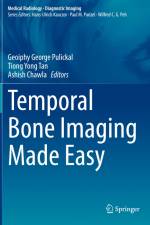
This book presents standard imaging techniques, basic anatomy and an approach to common pathology encountered in temporal bone imaging. Intended as a survival guide for residents and general radiologists, it covers all topics comprehensively, and provides intuitive point-by-point summaries, similar to those of popular radiology reference sites, for easy comprehension at a glance. The book also offers guidance on the pertinent points that need to be included in a report and how to answer basic questions that are likely to be asked by the referring clinician or supervising radiologist.This book will be a valuable resource for general radiologists, radiology residents, ENT residents, otology surgeons and anyone involved in the occasional temporal bone study.
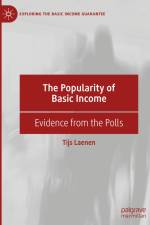
This book provides a state-of-the-art overview of the popularity of basic income among the general public. Using data from a wide array of public opinion polls conducted in different countries and years, the book first charts popular support for the ideal-typical version of basic income, broadly defined as a "periodic cash payment unconditionally delivered to all on an individual basis, without means-test or work requirement¿. On top of that, the book maps popular support for the many other, differently designed varieties of basic income that are part of real-world proposals, pilots, and experiments ¿ including, for example, a participation income, a negative income tax, and a stakeholder grant. By investigating how and why support for different types of basic income varies across countries, evolves over time, and differs between individuals with different characteristics, this book offers crucial information about the political constituencies that can be mobilized in favor of (or against) the introduction of basic income, thereby contributing to our knowledge on the political feasibility of basic income.
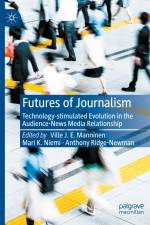
This book examines how technologies are changing, will change, or could change the relationship between audiences and news media. It highlights how novel technologies could have fundamental implications for the way that news media interact with wider society. The book comprises of four thematic parts. Firstly, it focuses on the impact of technological development on the news media business, exploring how news media uses new technologies to improve their sustainability. Secondly, it considers the ethical dilemmas that arise when audience-news media relationships are transformed by technological development. The third part of the book approaches the effects of novel technologies from the journalists' viewpoint: how do new technologies intervene in the audience-news media relationship through journalistic work? Finally, the fourth part dissects the ways new technologies can impact audience-news media relationships through transforming audience agency, audience preferences and news media's understanding of them.
Technologies of Feminist Speculative Fiction: Gender, Artificial Life, and the Politics of Reproduction explores how much technology has reshaped feminist conversations in the decades since Donna Haraway's influential "e;Cyborg Manifesto"e; was published. With sections exploring reproductive technologies, new ways of imagining femininity and motherhood via artificial means, queer readings of gender as a social technology, and posthuman visions of a world beyond gender, this book demonstrates how feminist speculative fiction offers an urgently needed response to the intersections of women's bodies and technology. This collection brings together authors from Europe, Japan, the US and the UK to consider speculative films and texts, reproductive technologies and food futures, and opportunities to rethink family, aging, gender and sexuality, and community through feminist speculative fiction, a social technology for building better futures.
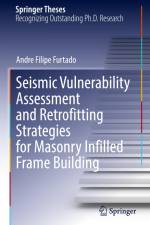
This book reports on a comprehensive experimental characterization of the material, mechanical and dynamic properties of masonry infill walls. It analyses the critical parameters affecting their out-of-plane seismic behavior, including the effects of the panel support conditions, gravity load, and previous damage. Further, it offers an extensive review of infill masonry strengthening strategies and reports on the experimental assessment of various textile-reinforced mortar (TRM) strengthening solutions. It also presents the development, implementation and calibration of a numerical model to simulate the infill panels¿ seismic behavior, with the corresponding findings of various tests to assess the seismic vulnerability of an infilled RC structure. All in all, this outstanding PhD thesis offers a comprehensive review of masonry infill walls, and a timely overview of numerical and experimental methods for testing and preventing the out-of-plane seismic collapse of RC buildings.
The Video-Atlas of Pulmonary Sublobar Resections aims to be a reference multimedia book for Thoracic Surgeons. Mainly focused on operative technical aspects, each individual segmentectomy and many combinations are described. Each chapter opens with anatomical 3D reconstructions of the segment and its bronchoscopic anatomy. Then, the main steps for performing the procedure, that are illustrated in high-definition (HD) video-clips and figures, are described. Expert authors highlight specifical tips & tricks for succesfully performing the resection, and include anatomical variations that also illustrate with HD video-clips.This illustrated guide provides thoracic surgeons with an incredibly useful tool for learning and improving their technique in sublobar resections.Videos and more: Download the free Springer Multimedia App - Scan dedicated images in this book to stream videos or access and download supplementary material.
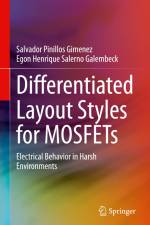
This book describes in detail the semiconductor physics and the effects of the high temperatures and ionizing radiations in the electrical behavior of the Metal-OxideSemiconductor Field Effect Transistors (MOSFETs), implemented with the first and second generations of the differentiated layout styles. The authors demonstrate a variety of innovative layout styles for MOSFETs, enabling readers to design analog and RF MOSFETs that operate in a high-temperature wide range and an ionizing radiation environment with high electrical performance and reduced die area.
This book provides a survey of a number of the major issues in the philosophy of mathematics, such as ontological questions regarding the nature of mathematical objects, epistemic questions about the acquisition of mathematical knowledge, and the intriguing riddle of the applicability of mathematics to the physical world. Some of these issues go back to the nascent years of mathematics itself, others are just beginning to draw the attention of scholars. In addressing these questions, some of the papers in this volume wrestle with them directly, while others use the writings of philosophers such as Hume and Wittgenstein to approach their problems by way of interpretation and critique. The contributors include prominent philosophers of science and mathematics as well as promising younger scholars. The volume seeks to share the concerns of philosophers of mathematics with a wider audience and will be of interest to historians, mathematicians and philosophers alike.
This book uniquely provides actionable strategies along the wellness continuum in multiple dimensions: personal, institutional and professional; while applicable across disciplines: nursing and allied health, advanced practice providers and physicians. Further, the content is presented in a manner that can be taught to those entering the workforce, or serve as a primer for Wellness Officers. Most mental health texts focus on the needs of patients and ignore the mental health needs of clinicians. This book fills that gap embracing wellness initiatives as a matter of mental health. Wellness strategies for Inclusion Diversity and Equity are presented. The often ignored subject of suicide is approached head-on with evidence-based strategies for prevention. At the far end of the continuum of wellness, grief management after losing a colleague to death and/or suicide will be addressed. Each chapter includes learning objectives, a brief presentation of the science, application of principles into wellness practice, opportunities for future research and discussion questions. Artwork created by healthcare workers are included to augment transfer of knowledge through art as a way of knowing. Videos are offered to demonstrate through simulation lessons taught through the book.
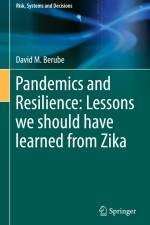
The aim of the book was to produce the most comprehensive examination of a pandemic that has ever been attempted. By cataloging the full extent of the Zika pandemic, this book will be the most complete history and epistemic contextualization ever attempted to date. The work should function as the primary source for students, researchers, and scholars who need information about the Zika pandemic.This book examines the technical literature, digital and popular literature, and online materials to fully contextualize this event and provide a bona fide record of this event and its implications for the future. It is somewhat serendipitous that while this work was underway, we are going through another pandemic. One of the primary lessons we did not learn by Zika was pandemic events will return repeatedly, and we need to learn from each one of them to prepare the planet for the next one. Just because Zika seemed to have died out does not make it less important. We were lucky that thevirus evolved into what seemed to be a less virulent version of itself, and the vector mosquitoes were concentrated elsewhere. Finally, this book represents a tour de force in scholarship involving nearly 4,000 sources of information and does not shy from a detailed examination of the controversies, conspiracies, and long-term consequences when we avoid learning from outbreaks, such as Zika.
This book examines the status of intercultural education in Chile. It does this through three axes: the first is multidisciplinary, including historical, anthropological, sociological, and pedagogical, to account for varied aspects of the Chilean intercultural education. The second is the consideration of multiple indigenous peoples, analyzing students¿ groups or indigenous peoples, such as the Rapa Nui, Aymara, or Mapuche. Finally, the book has a multilevel perspective that recognizes that educational policy involves different actors, from the central government to local communities.The book incorporates study material enriched with the experience and analysis of different perspectives and methodologies of its authors, being useful for understanding intercultural education in the country. It is a versatile resource for understanding this topic, as well as a support for the development of programs and policies.Translation from the Spanish language edition: Educación Intercultural en Chile. Experiencias, pueblos y territorios by Ernesto Treviño, et al., © Ediciones UC 2017. Published by Ediciones UC. All Rights Reserved.
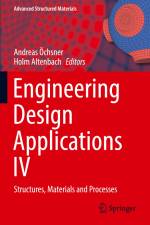
This book presents the developments in engineering design application. The chapters on mechanical, materials, computer and process engineering provide the foundation for the design and development of improved structures, materials and processes. They present alternatives with cost reduction and environmental demands. The book content links the interaction of classical engineering with the health, medical and environmental sector.
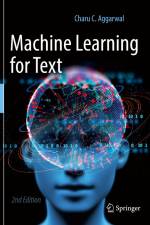
This second edition textbook covers a coherently organized framework for text analytics, which integrates material drawn from the intersecting topics of information retrieval, machine learning, and natural language processing. Particular importance is placed on deep learning methods. The chapters of this book span three broad categories:1. Basic algorithms: Chapters 1 through 7 discuss the classical algorithms for text analytics such as preprocessing, similarity computation, topic modeling, matrix factorization, clustering, classification, regression, and ensemble analysis.2. Domain-sensitive learning and information retrieval: Chapters 8 and 9 discuss learning models in heterogeneous settings such as a combination of text with multimedia or Web links. The problem of information retrieval and Web search is also discussed in the context of its relationship with ranking and machine learning methods. 3. Natural language processing: Chapters 10 through 16 discuss various sequence-centric and natural language applications, such as feature engineering, neural language models, deep learning, transformers, pre-trained language models, text summarization, information extraction, knowledge graphs, question answering, opinion mining, text segmentation, and event detection. Compared to the first edition, this second edition textbook (which targets mostly advanced level students majoring in computer science and math) has substantially more material on deep learning and natural language processing. Significant focus is placed on topics like transformers, pre-trained language models, knowledge graphs, and question answering.
This book offers an introduction to applied statistics through data analysis, integrating statistical computing methods. It covers robust and non-robust descriptive statistics used in each of four bivariate statistical models that are commonly used in research: ANOVA, proportions, regression, and logistic. The text teaches statistical inference principles using resampling methods (such as randomization and bootstrapping), covering methods for hypothesis testing and parameter estimation. These methods are applied to each statistical model introduced in preceding chapters.Data analytic examples are used to teach statistical concepts throughout, and students are introduced to the R packages and functions required for basic data analysis in each of the four models. The text also includes introductory guidance to the fundamentals of data wrangling, as well as examples of write-ups so that students can learn how to communicate findings. Each chapter includes problems forpractice or assessment. Supplemental instructional videos are also available as an additional aid to instructors, or as a general resource to students. This book is intended for an introductory or basic statistics course with an applied focus, or an introductory analytics course, at the undergraduate level in a two-year or four-year institution. This can be used for students with a variety of disciplinary backgrounds, from business, to the social sciences, to medicine. No sophisticated mathematical background is required.
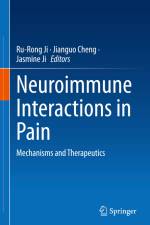
As lifespans increase, more people around the world find themselves victims of chronic pain. In spite of this, treatment options continue to be severely limited. Anti-inflammatory drugs can only do so much, while painkillers like opioids have led to crippling addictions and fatal overdoses. The subject of the book is the role of immune cells, including glial cells, and neuroimmune interactions in chronic pain. The book begins by examining the preclinical and clinical evidence supporting the involvement of non-neuronal cells in chronic pain. It discusses the interactions between non-neuronal cells and neurons in the regulation of chronic pain. It then presents the implications of these findings, including promising and emerging treatments such as specialized pro-resolving mediators (SPMs, such as resolvins and protectins), immune cell therapy, and complementary and alternative medicine, as well as neuromodulation and regenerative medicine, which may prove to be theturning point for hundreds of millions of patients world-wide who struggle to escape from the shadow of chronic pain. The book presents ground-breaking research that will alter current perspectives on chronic pain.
This book details how the water quality of the Blesbokspruit River in Gauteng, South Africa was socially constructed by stakeholders and key individuals in the context of acid mine drainage (AMD) and its treatment. Social constructionism is used as the framing for this research to explain how water is intrinsically social. Findings presented here show that stakeholders are aware that the changes in the physicality of the Blesbokspruit resulted from human interventions and varied uses of the water over the years. Such knowledge, among factors such as the historical context of mining, current coal mining, flows and volumes of water, technology used and processes followed, information and communication, and vested interests influence social constructions of the water quality. What counts as the truth about water varies depending on the individual's perspective, their purpose, and their individual interests. Further, how one defines water quality influences what treatment processes are preferred in order to improve water quality. The book explains why, for example, a treatment process meant to improve water quality gained a bad reputation by the public because of the South African government's silo approach. The book explains how these social constructions are entrenched in power relations between stakeholders regarding AMD treatment and illustrates how power was used to influence decisions to improve the water quality of the Blesbokspruit. The case presented in this book offers insights and recommendations for policymakers working in water governance, including means to influence social constructions of water quality and ways to clarify roles and responsibilities in pursuit of improved cooperative government.
This compact text is a powerful introduction to the Excel/VBA computing environment. The book presents some of the most useful features of Excel. First by introducing mathematical puzzles that will grab the reader's attention with the reader invited to think hard on solving those puzzles. Then, solutions are presented in a logical manner. The book goes on to describe modern and up-to-date engineering problems and their solutions. Based on many years of the authors' teaching, the book provides a practical, useful and enjoyable learning methods for readers to become expert in Excel and its application to engineering.
This book covers the fundamentals and applications of carbon dioxide vapor compression refrigeration thermodynamic cycles. In particular, it presents new application areas, such as making ice and snow in the Winter Olympic Games, food cooling and refrigeration. The book explores the physical and chemical characteristics of CO2 fluid, and the unique traits of its thermodynamic cycle. The contributors explain how CO2 refrigeration is a developing, eco-friendly technology, and emphasize its importance for refrigeration and air-conditioning in the current and future market.This book is a valuable source of information for researchers, engineers and policy makers looking to expand their applicable knowledge of high-potential refrigeration technology using carbon dioxide. It is also of interest to postgraduate students and practitioners looking for an academic insight into the industry¿s latest eco-friendly technologies.
This book contains full papers presented at the First Virtual Conference on Mechanical Fatigue (VCMF 2020), which was organised by the University of Porto (FEUP, Portugal), the Wroclaw University of Science and Technology (Poland), University of Electronic Science and Technology of China (China), Siberian Federal University (Russia), and the ESIS/TC12 Technical Committee (European Structural Integrity Society-ESIS), between 9 and 11 of September 2020. This conference was intended to be a forum of discussion of new research concepts, equipment, technology, materials and structures and other scientific advances within the field of mechanical fatigue and fracture. The first edition of the VCMF 2020 event has reached more than 60 participants from more than 20 nationalities demonstrating the vitality of this new event.
Abonner på vårt nyhetsbrev og få rabatter og inspirasjon til din neste leseopplevelse.
Ved å abonnere godtar du vår personvernerklæring.