




























Gjør som tusenvis av andre bokelskere
Abonner på vårt nyhetsbrev og få rabatter og inspirasjon til din neste leseopplevelse.
Ved å abonnere godtar du vår personvernerklæring.Du kan når som helst melde deg av våre nyhetsbrev.

This book aims to increase understanding of alibis and corroborators, examining the role alibis play - or fail to play - in innocence cases. It analyses the factors that can influence the suspect, the defense team, the alibi corroborator, and ultimately the alibi statement itself. Recognition of and reactions to wrongful convictions have been on the rise as researchers and society take a closer, more critical look at America's criminal justice system. In addition to serving as a complete review of the science, this volume discusses issues such as alibi generation; alibi believability; a proposed theory of alibis; international comparisons of issues in alibi corroboration; age and gender differences in alibi corroboration; attorney perceptions and use of alibi evidence; and erroneous alibis. Offering an in-depth, empirical view, this book will appeal to students and researchers interested in Criminology, Legal Psychology, Social Psychology, Law, and practitioners in our legal and criminal justice systems who are making tough decisions about this distinctive witness type.
This open access book describes the latest advances in the anal incontinence diagnostic and therapeutic processes. Anal incontinence is a devastating condition heavily impacting on the patients¿ lives. Those suffering from this disorder are generally very embarrassed and reluctant to undergo an appropriate clinical evaluation, thus becoming more isolated and worsening the quality of their life. Luckily, nowadays a wide range of treatments is available to improve this oppressive condition; however, the recognition of the related pathophysiological alterations is mandatory to grant its successful management. This volume will help the surgeons community to keep abreast of developments in diagnostics and treatment of this impairing condition. and will provide all health professionals with the appropriate tools to face this impairing condition.
Readers will discover the relatively new and rapidly growing field of regenerative surgery and fat grafting, valuable for numerous plastic surgery, reconstructive, and aesthetic/cosmetic essentials.Though many books have covered specific areas or topics in regenerative surgery, the market lacks a work that tackles the full spectrum of regenerative surgery and its clinical application. This book responds to that need and presents chapters written by the best: world-renowned surgeons in their field.After an introduction that reflects basic research, most of the book focuses on clinical experience as it relates to applied techniques of processing fat and on the different uses from head to toe. Readers will learn about the history of regenerative surgery, important definitions and background information, and the evidence supporting the use of regenerative surgery. Practitioners will also find valuable guidance regarding the application of stem cells, evaluation of patient needs, and operative techniques for fat transfer. Subsequent chapters address topics such as graft types, the skin, wound healing, scar treatment, osteoarthritis, burns, scleroderma, hair rejuvenation, facial enhancement combined with facelift, chin augmentation with fat, and breast argumentation or reconstruction with fat. Particular attention is paid to gluteal augmentation with fat, body contouring, genital male and female rejuvenation, and upper and lower extremity regenerative surgery. Surgical anatomy and complications treatment and prevention were emphasized when applied. This resulted is two volumes that encompass 114 chapters, with multiple figures, and video clips, written by 242 authors (including 72 female colleagues) from five continents.Highly informative and carefully structured, this book provides invaluable insight for beginners and experienced plastic surgeons alike, while benefitting advanced surgeons, specialists, and undergraduate and graduate students.
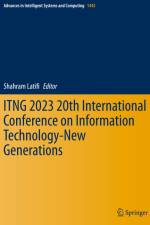
This volume represents the 20th International Conference on Information Technology - New Generations (ITNG), 2023. ITNG is an annual event focusing on state of the art technologies pertaining to digital information and communications. The applications of advanced information technology to such domains as astronomy, biology, education, geosciences, security, and health care are the among topics of relevance to ITNG. Visionary ideas, theoretical and experimental results, as well as prototypes, designs, and tools that help the information readily flow to the user are of special interest. Machine Learning, Robotics, High Performance Computing, and Innovative Methods of Computing are examples of related topics. The conference features keynote speakers, a best student award, poster award, service award, a technical open panel, and workshops/exhibits from industry, government and academia. This publication is unique as it captures modern trends in IT with a balance of theoretical and experimental work. Most other work focus either on theoretical or experimental, but not both. Accordingly, we do not know of any competitive literature.
These books bring together a panel of expert arbovirologists who recall the history of arbovirology from very personal perspectives. In these timely volumes, the authors describe seminal moments in their experiences in the field and how they integrated these findings with lab studies to further clarify the ecology and epidemiology of diverse arboviruses. Authors identify the most pressing questions that remain to be answered, providing a basis for current research and a stimulus to engage those entering the field. Over the last 20 years a generational gap has developed between the giants of arbovirus research and discovery and the new generation. This gap developed due to an ebbing of training and investment in passing the scepter to the next generation, leading to a lack of continuity among the generations that threatens to derail the rich history of virus discovery, field epidemiology and understanding of the richness of diversity that surrounds us. This lack of continuity may have immediate and disastrous consequences for public health when yet to be discovered arboviruses emerge. The purpose of these books is to bridge this gap by providing a historical context for the work being done today and provide continuity between the generations. To this end, the books provide a narrative of the thrill of scientific discovery and excitement of field adventures and lab studies of that generation -- essential reading for every arbovirologist, and highly recommended for all virologists and public health officials, as well as those students considering future research options. Volume I consists of the personal reflections of arbovirologists who played a significant role in the advancement of arbovirology across the globe. Volume II transitions to descriptions of region-specific and virus family-specific perspectives of arbovirology, as well as recollections of the early events of molecular advances and pathogenesis studies.
This book explores the modification of various synthesis processes to enhance the photocatalytic activity in varied applications in the fields of environmental remediation and energy production. It outlines the enhancement of photocatalytic activity via alloys synthesis, thin film coatings, electro-spun nanofibers and 3D printed photocatalysts. The book further states the diverse applications of materials for degrading organic pollutants and airborne pathogens, improving indoor air quality and as a potential antimicrobial agent. The application of photocatalysts in green organic synthesis, biomedical field and in hydrogen evolution are also presented in the book. It covers theoretical studies of photocatalytic material and conversion of CO2 to value added chemical feed stocks. The book is of relevance to researchers in academia and industry alike in the fields of material science, environmental science & technology, photocatalytic applications andin energy generation and conversion.
This book highlights the recent findings and advances in science engineering technology and sustainability issues. It aims to discuss, reflect and share experience in addressing the findings in science engineering technology and sustainability. The book aims to report the various interrelated disciplines from different institutions to discuss, reflect and share technology and experience in addressing new findings and strategies. This book presents the proceedings of the Science Engineering Technology and Sustainability International Conference (SETS2021) which was held virtually¿as sustainable virtual conferences become the new normal¿during December 23¿25, 2021. This book is presenting latest research findings, and it is suitable for researchers, postgraduate students, professionals and experts. The book includes interesting and top research in fuzzy modeling and decision-making applications in computer science. Several chapters address trending research about bioremediation and phytoremediation. There are mainly three research findings that cover artificial intelligence, sustainability and new technologies.
This text presents the basic theory of random walks on infinite, finitely generated groups, along with certain background material in measure-theoretic probability. The main objective is to show how structural features of a group, such as amenability/nonamenability, affect qualitative aspects of symmetric random walks on the group, such as transience/recurrence, speed, entropy, and existence or nonexistence of nonconstant, bounded harmonic functions. The book will be suitable as a textbook for beginning graduate-level courses or independent study by graduate students and advanced undergraduate students in mathematics with a solid grounding in measure theory and a basic familiarity with the elements of group theory. The first seven chapters could also be used as the basis for a short course covering the main results regarding transience/recurrence, decay of return probabilities, and speed. The book has been organized and written so as to be accessible not only to students in probability theory, but also to students whose primary interests are in geometry, ergodic theory, or geometric group theory.
The book presents guides to the diagnosis and management of Oral Submucous Fibrosis, and includes a concise update on the recent evidence on aetiology and aetiopathogenesis to educate the reader on the prevention of the disease. Oral Submucous Fibrosis is a potentially malignant disorder that leads to the development of oral cancer. The first part of the book is dedicated to the epidemiology, the clinical features and the classification of Oral Submucous Fibrosis and associated conditions. The aetiology of Oral Submucous Fibrosis including lifestyle and genetic factors is discussed in the second part of the book followed by two chapters on the etiopathogenesis of the disease. Readers will find clear guidance on investigative techniques and the management of Oral Submucous Fibrosis. The last part of the book considers the connection between Areca nut and the disease and outlines methods of supporting areca nut chewers on habit cessation. The book is designed to serve as a comprehensive resource and reference in the oral health domain for learners at all levels, researchers, clinicians, and public health professionals. It will be of great value for students and trainees on any graduate program in dentistry.
This specialized textbook will be dedicated to the various disease topics of pediatric neurosurgery and management strategies. The text will cover the different aspects of the field of pediatric neurosurgery in a unique way by giving state of the art up-to-date synopsis with references to recent publications. More specifically, the whole book is dedicated to a comprehensive discussion of brainstem tumors and other lesions. It will be composed of 20 chapters. The various chapters will start from updates regarding the development of the nervous system and the clinical differences in assessing the infant or a child in comparison to the adult patient. The book then will focus on various pathologies starting with hydrocephalus, pediatric brain and spine tumors, congenital malformation, spasticity, epilepsy, and more. The proposed textbook will be enriched with diagnostic and surgical images, and illustrations that cover all types of pediatric neurosurgery pathologies, with an emphasis on evidence-based data that reflects the controversies and possible solutions. The main structure of each chapter will include a short synopsis of the topic at hand, questions and answers that will inspire the reader for better understanding, learning objectives, and key references for further reading. Written by experts in the field, Pediatric Neurosurgery Board Review serves as a valuable resource for neurosurgery residents and fellows studying for their neurosurgery exams, as well as an educational material for neurosurgery specialists after graduation by discussing pediatric neurosurgery in more convenient way to review and understand key information in this field.
The ¿Integrated Science of Global Epidemics¿ is the new proposed volume of Integrated Science Book series, aiming to publish the results of the most updated ideas and reviews on Global Epidemics. The whole world is suffering from complex problems, border less problems and global solution should be developed. The Integrated Science of Global Epidemics aims to highlight the combination of different disciplines, including formal sciences, physical-chemical sciences and engineering, biological sciences, medical sciences, and social sciences, to deal with complex problems such as global epidemics. This contributed volume could be used as guidelines for the entire scientific community and policy makers to successfully face these global threats.Chapter 27 is available open access under a Creative Commons Attribution 4.0 International License via link.springer.com.
Reading Slaughter: Abattoir Fictions, Space, and Empathy in Late Modernity examines literary depictions of slaughterhouses from the development of the industrial abattoir in the late nineteenth century to today. The book focuses on how increasing and ongoing isolation and concealment of slaughter from the surrounding society affects readings and depictions of slaughter and abattoirs in literature, and on the degree to which depictions of animals being slaughtered creates an avenue for empathic reactions in the reader or the opportunity for reflections on human-animal relations. Through chapters on abattoir fictions in relation to narrative empathy, anthropomorphism, urban spaces, rural spaces, human identities and horror fiction, Sune Borkfelt contributes to debates in literary animal studies, human-animal studies and beyond.
The book describes the historical evolution and development of accounting theories and principles. Value and valuation have been reviewed extensively. The author provides a detailed comparison between historic and fair value accounting. A comprehensive review of the literature and researchers' opinions about measurement, fair value, and historical cost value will enable the readers to understand the concepts in detail. Additionally, the book includes case studies evaluating the accounting practices in Turkey and Romania to illustrate how these concepts are implemented in practice. The reader will obtain a good understanding of the local nationalized accounting systems, and up to what extent countries have adapted to IFRS. The books discusses the usage of IT tools in accounting and analyses the impact of information technology such as big data, artificial intelligence, and data analytics in the field of accounting.
This book provides an international perspective on teaching and learning geography in the primary classroom. It describes the essence of primary school geography and identifies the 'big ideas', thereby offering a synthesis of the international geography curricula and classroom profiles against these big ideas. Each chapter discusses current and new research on a set topic, yet a common thread running between chapters is the assessment relevant to that particular topic. By providing a portrait of the central concepts, the essential skills and necessary inquiry processes of a primary geography education, the book will be of interest to education researchers, classroom teachers and the pre-service teacher, curriculum writers and policy writers.
This book focuses on the observability of hybrid systems. It enables the reader to determine whether and how a hybrid system¿s state can be reconstructed from sometimes necessarily partial information. By explaining how available measurements can be used to deduce past and future behaviours of a system, the authors extend this study of observability to embrace the properties of diagnosability and predictability.H-systems shows how continuous and discrete dynamics and their interaction affect the observability of this general class of hybrid systems and demonstrates that hybrid characteristics are not simply generalizations of well-known aspects of traditional dynamics. The authors identify conditions for state reconstruction, prediction and diagnosis of the occurrence of possibly faulty states. The formal approach to proving those properties for hybrid systems is accompanied by simple illustrative examples. For readers who are interested in the use of state estimation for controller design, the book also provides design methods for hybrid state observers and covers their application in some industrial cases.The book¿s tutorial approach to the various forms of observability of hybrid systems helps to make H-systems of interest to academic researchers and graduate students working in control and to practitioners using control in an industrial environment.
This book features an extensive index and all Mathcad worksheets.Vinyl is back, tubes/valves are back, on the high-end field SMD-free analog amplification surpasses digitalized chains, and top microphone manufacturers still set on good old op-amps or on fully discrete BJT, FET, and/or tube-driven amplifiers. There is only one problem that is not satisfyingly well solved by the manufacturers: It is the noise production of the active components and the useful reflection in simulation tools, in tables or graphs of the datasheets/data books.Nowadays, mostly surrounded by many digital helping tools, it makes sense using them-also by analog aficionados. It saves cost and time simulating first before spending money. Presented in this book the software tool LTSpice which is the free software solution from Linear Technology (today Analog Devices) that could also be used by full analog lovers to simulate the noise production of their amplifier design. All we need is the right creation approach to develop simulation models for the active components. Inter alia this is already done for tubes and BJTs in the 2nd editions of my "e;How to Gain Gain"e; and "e;Balanced Phono-Amps"e; books. For op-amps, the missing approaches are presented in the book on hand.It cannot be denied that mathematical software like Mathcad is extremely helpful to find the right equations for graphically presented noise curves which we can find in the literature. Nevertheless, it also works well with other types of math software to fulfill the parameter needs of the here presented modeling approaches for the input referred voltage and current noise of-not only-excellent sounding vintage op-amps, applicable in the audio range from 1 Hz to 100 kHz.
The study is aimed at reconstructing the historical process at the base of any significant theatre architecture. The modern space for the show is no longer intended as a direct derivation from classical types, but as a product of the transformation of the urban fabric in our cities. The research was conducted at the academies, state and municipal historical archives of numerous towns, in particular Rome, Milan, Mantua, Ferrara, Venice, London and Prague. All images are original. The work also includes the list of about 700 major Italian historical theatres.
This book discusses single-channel, device-to-device communication in the Internet of Things (IoT) at the signal encoding level and introduces a new family of encoding techniques that result in significant simplifications of the communication circuitry. These simplifications translate into lower power consumption, smaller form factors, and dynamic data rates that are tolerant to clock discrepancies between transmitter and receiver. Readers will be introduced to signal encoding that uses edge-coded signaling, based on the coding of binary data as counts of transmitted pulses. The authors fully explore the far-reaching implications of these novel signal-encoding techniques and illustrate how their usage can help minimize the need for complex circuitries for either clock and data recovery or duty-cycle correction. They also provide a detailed description of a complete ecosystem of hardware and firmware built around edge-code signaling. The ecosystem comprises an application-specific processor, automatic protocol configuration, power and data rate management, cryptographic primitives, and automatic failure recovery modes. The innovative IoT communication link and its associated ecosystem are fully in line with the standard IoT requirements on power, footprint, security, robustness, and reliability.
The world is faced with a growing number of complex and interconnected challenges. Water is among the top 5 global risks in terms of impacts, which would be far reaching beyond socio-economic challenges, impacting livelihoods and wellbeing of the people.As freshwater resources and population densities are unevenly distributed across the world, some regions and countries are already water scarce. Water scarcity is expected to intensify in regions like the Middle East and North Africa (MENA), which has 6% of the global population, but only 1% of the world's freshwater resources. Climate change adds to this complexity as it is leading to rainfall uncertainty and extended droughts periods, mostly in arid areas.Increasing water scarcity is now recognized as a major cause of conflict, social unrest and migration and at the same time water is increasingly considered as an instrument for international cooperation to achieve sustainable development. Tapping and assessing sustainably every available option in water-scarce areas is needed as pressure continues to build on limited water resources.The stark fact is that conventional water provisioning approaches relying on snowfall, rainfall and river runoff are not enough to meet growing freshwater demand in water-scarce areas. Water-scarce countries need a radical re-think of water resource planning and management that includes the creative exploitation of a growing set of viable but unconventional water resources for food production, livelihoods, ecosystems, climate change adaption, and sustainable development. Unconventional water resources are generated as a by-product of specialized processes; need suitable pre-use treatment; require pertinent on-farm management when used for irrigation; or result from a special technology to collect/access water.
Essentials of Industrial Pharmacy is an attempt to comprehensively present, in a single book, various pharmaceutical processes and equipment that are frequently used for production of pharmaceutical dosage forms, along with quality control tests of these dosage forms. Pictorial/graphical illustrations provide easier understanding of complex pharmaceutical concepts, manufacturing processes of pharmaceutical dosage forms. Since it is imperative for pharmacy students to have a clear understanding of the basic concepts used in development of drugs into suitable and stable dosage forms.This book offers a wealth of information regarding basic aspects of pharmaceutical processes and dosage forms, in a single book, for undergraduate pharmacy students or science students (with no pharmacy background) intended to work in the pharmaceutical Industry.
This book provides a detailed overview of a range of simulation models that have been developed which are applicable to urology. Chapters feature critical analysis of techniques including synthetic bench top models, computer-assisted virtual reality and box simulators. Furthermore, details of best practice, the latest innovations and guidance on how to select potential low-cost options is provided, enabling the reader to systematically develop a thorough understanding of the subject.Practical Simulation in Urology is a comprehensive resource that critically analyses the latest simulation techniques that are applicable in urology, making it an ideal resource for the practicing and trainee urologist seeking an up-to-date overview on the subject.
Many significant achievements in new ultrasound technologies to measure bone and models to elucidate the interaction and the propagation of ultrasonic waves in complex bone structures have been reported over the past ten years. Impaired bone remodeling affects not only the trabecular compartment but also the cortical one. Despite the crucial contribution of the cortical structure to the whole bone mechanical competence, cortical bone was understudied for a long time. A paradigm shift occurred around 2010, with a special focus placed on the importance of cortical bone. This has sparkled a great deal of interest in new ultrasound techniques to assess cortical bone. While our book 'Bone Quantitative Ultrasound' published in 2011 emphasized techniques to measure trabecular bone, this new book is devoted for a large part to the technologies introduced recently to measure cortical bone. These include resonant ultrasound spectroscopy, guided waves, scattering, and pulse-echo and tomography imaging techniques. Instrumentation, signal processing techniques and models used are detailed. Importantly, the data accumulated in recent years such as anisotropic stiffness, elastic engineering moduli, compression and shear wave speeds of cortical bones from various skeletal sites are presented comprehensively. A few chapters deal with the recent developments achieved in quantitative ultrasound of trabecular bone. These include (i) scattering-based approaches and their application to measure skeletal sites such as the spine and proximal femur and (ii) approaches exploiting the poro-elastic nature of bone. While bone fragility and osteoporosis are still the main motivation for developing bone QUS, this Book also includes chapters reporting ultrasound techniques developed for other applications of high interest such as 3-D imaging of the spine, assessment of implant stability and transcranial brain imaging.This book, together with the book 'Bone Quantitative Ultrasound' published in 2011 will provide a comprehensive overview of the methods and principles used in bone quantitative ultrasound and will be a benchmark for all novice or experienced researchers in the field.The book will offer recent experimental results and theoretical concepts developed so far and would be intended for researchers, graduate or undergraduate students, engineers, and clinicians who are involved in the field.The book should be considered as a complement to the first book publisher in 2011, rather than a second edition, in the sense that basic notions already presented in the first book are not repeated.
This book's central focus is to provide academics, students, policy-makers, and practitioners with a unique insight into a wide variety of perspectives on settings-based health promotion. It offers clarity amidst different interpretations and ideological understandings of what applying a settings-based approach means. Emphasis is given to a salutogenic focus, exploring how the creation of wellbeing and fostering of potential in settings to best enable individuals and populations to flourish implies that the setting itself must be the entry point for health promotion. Building on this, the text explores how the settings approach to health promotion strives for changes in the structure and ethos of the setting - detailing how changes and developments in people's health and health behavior are easier to achieve if health promoters focus on settings rather than solely on individuals. The book comprises 15 chapters organized in three sections:In Part I, Evolution, Foundations and Key Principles of the Settings-Based Approach, the first four chapters present the determinants, theoretical basis, and generic commonalities that are consistent over various settings initiatives and formulate the grounds for the settings-based health promotion approach.In Part II, Applying the Settings-Based Approach to Key Settings, Chapters 5-13 introduce the key settings initiatives - both traditional and non-traditional (new and contemporary) - with their developments and specific features. In Part III, Gaia - The Ultimate Setting for Health Promotion, the last two chapters consider the settings approach in the context of future challenges and explore possible directions for further development.Handbook of Settings-Based Health Promotion has novel information and perspectives on the topic that provide readers with up-to-date specialist knowledge and application of global developments to develop and enhance a common understanding and generate new thinking in relation to contemporary settings. This timely tome will engage the academic community in the fields of health promotion and public health including students, teaching staff, and researchers. Additionally, it is a useful resource for policy-makers and practitioners in these fields.
Abonner på vårt nyhetsbrev og få rabatter og inspirasjon til din neste leseopplevelse.
Ved å abonnere godtar du vår personvernerklæring.