












Gjør som tusenvis av andre bokelskere
Abonner på vårt nyhetsbrev og få rabatter og inspirasjon til din neste leseopplevelse.
Ved å abonnere godtar du vår personvernerklæring.Du kan når som helst melde deg av våre nyhetsbrev.

This two-volume book provides an enriching insight into the laser, covering different types of lasers, the basic science behind the technology, their role at the cutting-edge of current scientific research, and their wide-ranging applications. With just high school physics as a prerequisite and favoring qualitative yet scientifically sound explanations over high-level mathematics, this book is aimed at a broad spectrum of readers in physics, chemistry, engineering, medicine, and biology. Its engaging and lucid presentation is enhanced with plenty of illustrations, making the world of the laser accessible to undergraduate students in the sciences and any other inquisitive readers with high school physics under their belts. Furthermore, the text is often laced with anecdotes, picked from history, that are bound to pique the minds of the readers. It is ideal for self-study or as a complement to courses on optics and optoelectronics. This volume, Part 1 of 2, explains the fundamentals of optics, what a laser is, how it works, and what is unique about the light it emits, from fundamental quantum theory through population inversion and cavity to common laser types. It is followed by Part 2 which depicts the many advances in science enabled by the laser, including spectroscopy, nonlinear optics, optical cooling and trapping, and optical tweezers, among many others, and provides a glimpse into the ways that the laser affects our lives via its uses in medicine, manufacturing, the nuclear industry, energy, defence, communication, ranging, pollution monitoring, art conservation, fashion, beauty, and entertainment.
This is the first of two volumes that together provide a global overview of the impact of agriculture on soil degradation, tracing the most critical drivers like the use and abuse of agrochemicals, mechanization, overgrazing, irrigation, slash and burn agriculture, and the use of plastics. This book covers the main effects of agriculture practices on soil degradation in several countries from Africa, America, Asia, and Oceania, and it elucidates the impact of chemical agents on soil quality, namely, the use of fertilizers, herbicides, pesticides, soil acidification and microplastics pollution. In these continents, a large number of the population depend on agriculture, which sets an enormous pressure on the ecosystems. Divided into 13 chapters, the book offers authoritative contributions about the fundamental soil degradation problems in countries such as Argentina, Australia, Peru and Bolivia, Brazil, Chile, China, Colombia, India, Israel, Kenya, Mexico, South Africa, the United States of America. As soil degradation issues are often linked with biodiversity loss and poverty, readers will also find in this book an important discussion of the different social, economic, political, and environmental aspects contributing to soil quality and sustainable management. Given the breadth and depth of its coverage, the book offers an invaluable source of information for researchers, students, environmental managers and policymakers alike.
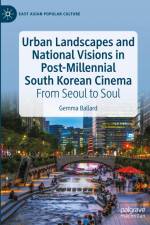
This book explores South Korean cinemäs inimitable relationship with the urban landscape and identifies the ways in which Seoul is utilised as a celluloid canvas, national artefact and, above all else, a distinctive cultural backdrop. Using five di¿erent approaches to urban space, from five distinctive and contrasting theoretical perspectives, Urban Landscapes in Post-Millennial South Korean Cinema investigates and seeks to understand why the cinematic representation, identity and presence of Seoul have been central to the preservation and recognition of the South Korean film industry as an independent, autonomous and nationally unique institution.
This book describes how comfort, energy and climate change in developing countries and vulnerable sectors of the population relate to buildings.The building sector is currently facing significant challenges connected to energy consumption, energy poverty and climate change effects. When studied in developing countries and vulnerable sectors of the population, these factors, which are commonplace in the tropics and the southern hemisphere, are interlinked and share a critical component: environmental comfort. Although progress has been made in environmental comfort through research and the development of standards and policies at the international level, in the Global South, where the countries with the highest levels of income inequality are concentrated, environmental comfort has its own characteristics and challenges that prevent a clear understanding from the established vision of the Global North.This book presents research, theories and techniques related to Thermal comfort, Indoor air quality, Visual comfort, and Acoustic comfort and its relationship with energy use and energy efficiency, seeking to address different barriers to environmental comfort. It shows how to improve the way buildings are designed and operated to promote healthier environmental conditions and more sustainable construction, by presenting studies and reflections carried out in the target geographical area: the Global South. In this way, this book contributes to developing the concept of environmental comfort, visualising how progress has been made in understanding it from a tropical and southern perspective, and posing common challenges.The book is intended for engineers, architects, and researchers of the built environment who are interested in environmental comfort and its influence on energy consumption, energy poverty, and other related factors in the Global South context. It is also a useful resource for decision-makers and public policy developers concerned with the indoor comfort of buildings. Moreover, the book aims to provide guidance for those in developing countries by gathering existing knowledge in the field for the tropics and southern hemisphere climatic and sociocultural contexts, allowing us to move forward in this subject with actions and proposed solutions that fit our particular needs.
Dieses Buch basiert auf der Auffassung, dass die menschliche Existenz aus dem Zusammenspiel von vier Dimensionen resultiert: Geist, Herz, Körper und Seele, die ihren Ausdruck in Gedanken, Emotionen, Empfindungen und Bestrebungen finden. Durch die Verbindung von Theorie und Praxis, einschließlich der persönlichen Erfahrungen, die der Autor während seiner zwei Jahrzehnte währenden humanitären Arbeit in Notstandsgebieten gemacht hat, zielt das Buch darauf ab, den Leser zum Verstehen (Gedanken), Fühlen (Emotionen) und Erleben (Empfindungen) zu bringen und ihm den Wunsch zu vermitteln, Teil eines Paradigmenwechsels zu sein, der auf einen lokalen und globalen Wandel abzielt (Bestreben). Es wird eine Methodik vorgestellt, mit der das Zusammenspiel zwischen dem Einzelnen und den Institutionen und Gesellschaften, in denen er arbeitet, seine Familie aufzieht und seine Träume verfolgt, optimiert werden kann. Darüber hinaus wird versucht, den Zweck wieder in den Mittelpunkt des täglichen Lebensund der humanitären Institutionen zu stellen. Die zentrale Botschaft des Buches lautet, dass eine bessere Welt nicht abstrakt und abstrus ist und auch nicht sein sollte, sondern dass sie in den Händen eines jeden liegt.
This book systematically discusses the algorithms and principles for achieving stable and optimal beam (or products of the beam) parameters in particle accelerators. A four-layer beam control strategy is introduced to structure the subsystems related to beam controls, such as beam device control, beam feedback, and beam optimization. This book focuses on the global control and optimization layers. As a basis of global control, the beam feedback system regulates the beam parameters against disturbances and stabilizes them around the setpoints. The global optimization algorithms, such as the robust conjugate direction search algorithm, genetic algorithm, and particle swarm optimization algorithm, are at the top layer, determining the feedback setpoints for optimal beam qualities.In addition, the authors also introduce the applications of machine learning for beam controls. Selected machine learning algorithms, such as supervised learning based on artificial neural networks and Gaussian processes, and reinforcement learning, are discussed. They are applied to configure feedback loops, accelerate global optimizations, and directly synthesize optimal controllers. Authors also demonstrate the effectiveness of these algorithms using either simulation or tests at the SwissFEL. With this book, the readers gain systematic knowledge of intelligent beam controls and learn the layered architecture guiding the design of practical beam control systems.
This Brief introduces a novel research approach to investigate freedom of the press in Hong Kong. The authors pair computational analyses from the field of natural language processing with qualitative content analysis of patterns of journalistic practice in volatile political settings. Together, these shed light on the evolution of press freedom in Hong Kong since its return to Chinese sovereignty. Providing an interdisciplinary perspective, the Brief will appeal to a wide range of readers with interests in computational social science, public policy, political sciences as well as policy-makers, think tanks, and practitioners who focus on the China-Hong Kong nexus.
This second volume of Research in Computational Topology is a celebration and promotion of research by women in applied and computational topology, containing the proceedings of the second workshop for Women in Computational Topology (WinCompTop) as well as papers solicited from the broader WinCompTop community. The multidisciplinary and international WinCompTop workshop provided an exciting and unique opportunity for women in diverse locations and research specializations to interact extensively and collectively contribute to new and active research directions in the field. The prestigious senior researchers that signed on to head projects at the workshop are global leaders in the discipline, and two of them were authors on some of the first papers in the field. Some of the featured topics include topological data analysis of power law structure in neural data; a nerve theorem for directional graph covers; topological or homotopical invariants for directed graphs encoding connections among a network of neurons; and the issue of approximation of objects by digital grids, including precise relations between the persistent homology of dual cubical complexes.
This book shows the continuing importance of art education. Art education attracts students who see multiple meanings and justifications for the worth of that education. Their engagement in art education is not limited to the uncertain prospects for jobs or routes into employment in the arts. Fürst and Nylander approach art education through a rich array of empirical examples derived from Swedish folk high school programs in music, visual arts, and creative writing. Based on an analytical framework of pragmatic sociology, the book allows the reader to understand the competences and critical capacities held by students and teachers. The book challenges the dominant public perception of art education and broadens our understanding of what it is good for. The Value of Art Education is essential reading for those defending the status of this vital sector of education, offering a deeper understanding of why people engage, what they gain, and the social importance of the arts.
This book argues that ¿race¿ and ¿whiteness¿ are central to the construction of the modern world. Constructive Theology needs to take them seriously as primary theological problems. In doing so, Constructive Theology must fundamentally change its approach, and draw from the emerging field of Philosophy of Race. Christopher M. Baker develops a genealogy of race that understands ¿whiteness¿ as a kind secular soteriology, and develops a counternarrative theological method informed by resources from Philosophy of Race. He then deploys that method to read science fiction cinema and superhero stories as cultural, racial, and theological documents that can be critically engaged and redeployed as counternarratives to dominant racial narratives.
This book presents selected papers from the 12th edition of the Spring School of Transition and Turbulence which took place in 2020. The papers cover applications on a number of industrial processes, such as the automotive, aeronautics, chemicals, oil and gas, food, nanotechnology, and others. The readers find out research and applied works on the topics of aerodynamics, computational fluid dynamics, instrumentation and experiments, multi-phase flows, and theoretical and analytical modeling.
This book presents the main results of the 19th Latin American Congress of Automatic Control held in November 2022 in Havana, Cuba. The Congress showed several main research results obtained by researchers from diverse countries in the last four years.Of the papers sent to Congress, 28 were finally accepted for presentation after a rigorous analysis of scientific novelty and quality. For their presentation in this book, the papers were divided into 5 major sections that appear in the following order:Part 1. Robust and Nonlinear ControlThe main research topics addressed in this part are related to fault-tolerant control loops, control by sliding modes, and robust tuning of PID controllers. Examples of electrical motors and chemical processes are used to demonstrate the feasibility of using the proposed techniques.Part 2. Fault Diagnosis in Industrial SystemsFault diagnosis in industrial plants is a very important topic in the Industry 4.0 paradigm.In this part, new techniques of fault diagnosis in mechanical systems using Poincaré features; a real case study for predicting the time of the remaining job cycle at a water treatment plant; and a predictive fault diagnosis for isolated photovoltaic systems are presented. A novel methodology for detecting and locating cyber-attacks in water distribution networks using computational intelligence tools is also presented.Part 3. Robotic and Autonomous SystemsNew control strategies for path following for autonomous tractors and unmanned aquatic vehicles are analyzed in this part. Moreover, the important topic related to the battery health-aware model predictive control planning for autonomous racing vehicles and the use of robots for monitoring and remediation applications are examined.Part 4. Modeling, Identification, and Delayed SystemsA model-based methodology for the efficient selection of centrifugal pumps; the use of probabilistic Boolean networks in smart grid models; the utilization of PSO metaheuristic algorithm in the selection of a model structure; and two schemes to control high-order delayed systems are among the main topics examined in this part.Part 5. Low-Cost Systems and Biomedical ApplicationsIn this part, some applications of low-cost monitoring and control systems and two automatic systems used for the characterization of creatinine in wastes samples during hemodialysis process and differential acquisition of blood pressure are shown.
This book presents the concept of Control Barrier Function (CBF), which captures the evolution of safety requirements during the execution of a system and can be used to enforce safety. Safety is formalized using an emerging state-of-the-art approach based on CBFs, and many illustrative examples from autonomous driving, traffic control, and robot control are provided. Safety is central to autonomous systems since they are intended to operate with minimal or no human supervision, and a single failure could result in catastrophic results. The authors discuss how safety can be guaranteed via both theoretical and application perspectives. This presented method is computationally efficient and can be easily implemented in real-time systems that require high-frequency reactive control. In addition, the CBF approach can easily deal with nonlinear models and complex constraints used in a wide spectrum of applications, including autonomous driving, robotics, and traffic control. Withthe proliferation of autonomous systems, such as self-driving cars, mobile robots, and unmanned air vehicles, safety plays a crucial role in ensuring their widespread adoption. This book considers the integration of safety guarantees into the operation of such systems including typical safety requirements that involve collision avoidance, technological system limitations, and bounds on real-time executions. Adaptive approaches for safety are also proposed for time-varying execution bounds and noisy dynamics.
In this concise, accessible, and comprehensive reference, world experts in the field of lymphedema detail all of the non-surgical and surgical approaches to the multidisciplinary management of patients with upper and lower extremity lymphedema. There is particular focus on the surgical treatments for lymphedema, where the reader is taken step-by-step through illustrated guides for each procedure by the leading experts in the field of lymphedema microsurgery; from patient selection, preoperative evaluation, surgical technique, and postoperative management. The book is strictly organized so that readers can quickly find content and provides readers with the necessary tools and framework to readily apply these innovative and state-of-the art techniques to their patients to optimize outcomes of surgical and non-surgical treatments for their lymphedema patients. Each chapter features a standardized content layout with full-color illustrations and clinical photographs to visually represent the content and includes key tips from experts in lymphedema, accompanied by key video contributions from the authors to demonstrate the surgical techniques. There is key emphasis on advances in our understand of the etiology of lymphedema, the most important surgical topics in lymphedema microsurgery, the current evidence available for the surgical treatment of lymphedema, and recent advances in lymphedema including new pharmacological treatments that target inflammation and fibrosis Edited by leaders in lymphedema microsurgery and contributed to by a multidisciplinary group of international experts to provide a full and comprehensive guide, Multimodal Management of Upper and Lower Extremity Lymphedema is aimed at a wide target audience that includes surgeons that perform lymphedema surgeries, other medical specialties that treat patients with cancer, lymphedema therapists, physical therapists, and occupational therapists, as well as nursing specialties and trainees.
This catalog is the first in-depth investigation of comets that were reported since the 17th century, but not confirmed and subsequently lost. Volume I of this two-volume work covers objects observed between 1600 and 1899, a period that was dominated by visual observations and was experiencing a rapid evolution in science.The book uniquely combines the history and culture of comet hunting and discovery with modern tools of orbital mechanics to present a wholesome catalog of unconfirmed and suspected comets. Each case includes a presentation of the observations, a discussion about the observer (when possible), consideration of the historic context, and a conclusion as to the nature of the object. In most cases, the book presents material from original sources, including some never before published that were acquired from observatories, libraries, and historical societies around the world.Although some of these unconfirmed comets turned out to be misidentifications of planets or star clusters, fabrications, or poor observations of comets that were already being observed, the Authors did identify many objects that were likely real comets. In some cases, the Authors were even able to derive orbits for the first time. These observations may be valuable in the future, as they could prove to be observations of periodic comets still to be discovered.
Despite their rich fossil history, there are only four surviving species of sirenians or sea cows, the only fully aquatic herbivorous mammals. The three species of manatees and the dugong live in the coastal waters rivers and lakes of more than 80 tropical and subtropical countries and are all on the IUCN Red List of Threatened Species. This book examines sirenian conservation biology through the lens of their behavioral ecology and ethology. Sirenian feeding, diving, movement, social and reproductive behaviors are reviewed by an international team of scientists from eight countries, with an emphasis on data gathered in the past 15 years.
This book examines the influence of American poetry on Seamus Heaney's achievement by close attention to the themes, style, and resonances of his poetry at different stages of his career, including his appointments in Berkeley and Harvard. Beginning with an examination of Heaney's education at Queen's University, this study presents comparative close readings which explore the influence of five American poets he read during this period: Robert Frost, John Crowe Ransom, Theodore Roethke, Robert Lowell, and Elizabeth Bishop. Laverty demonstrates how Heaney returned to several of these poets in response to difficulty and to consolidate later aesthetic developments. Heaney's ambivalent critical treatment of Sylvia Plath is investigated, as is his partial misreading of Bishop, who is understood today more sensitively than in her lifetime. This study also probes the reasons for his elision of other prominent American writers, making this the first comprehensive assessment of American influence on Heaney's poetry.
This book is about the dynamics of neural systems and should be suitable for those with a background in mathematics, physics, or engineering who want to see how their knowledge and skill sets can be applied in a neurobiological context. No prior knowledge of neuroscience is assumed, nor is advanced understanding of all aspects of applied mathematics! Rather, models and methods are introduced in the context of a typical neural phenomenon and a narrative developed that will allow the reader to test their understanding by tackling a set of mathematical problems at the end of each chapter. The emphasis is on mathematical- as opposed to computational-neuroscience, though stresses calculation above theorem and proof. The book presents necessary mathematical material in a digestible and compact form when required for specific topics. The book has nine chapters, progressing from the cell to the tissue, and an extensive set of references. It includes Markov chain models for ions,differential equations for single neuron models, idealised phenomenological models, phase oscillator networks, spiking networks, and integro-differential equations for large scale brain activity, with delays and stochasticity thrown in for good measure. One common methodological element that arises throughout the book is the use of techniques from nonsmooth dynamical systems to form tractable models and make explicit progress in calculating solutions for rhythmic neural behaviour, synchrony, waves, patterns, and their stability. This book was written for those with an interest in applied mathematics seeking to expand their horizons to cover the dynamics of neural systems. It is suitable for a Masters level course or for postgraduate researchers starting in the field of mathematical neuroscience.
This book presents selected contributions from ICMFM XX and the Polish National Conference-KKMP. The XX International Colloquium on Mechanical Fatigue of Metals (ICMFM XX) was organized on 15-17 September 2021, in the Faculty of Mechanical Engineering of the Wroclaw University of Science and Technology, in WrocA aw City, Poland, in a remote form. Its aim was to facilitate and encourage the exchange of knowledge and experiences among the different communities involved in both basic and applied research in the field of fatigue of metals, looking at the problem of fatigue from a multiscale perspective, and exploring analytical and numerical simulative approaches, without losing the perspectives of the application. The Polish National Conference-KKMP 2021-was organized remotely with 50-80 prominent international participants from the fracture mechanics community.
This edited collection provides an intersectional and transnational exploration of representations of sexual violence and rape within films, television shows, and digital media in the contemporary context of the #MeToo and #TimesUp movements. Drawing upon sociology, gender studies, cultural studies, media studies, and Black feminist studies, chapters focus on women and texts at the margins of mainstream culture¿s depictions of sexual violence. The editors and contributors examine the dominant narrative of the thin, cisgender, heterosexual white female victim, and the ways in which social and cultural conversations around race and gender impact and are impacted by depictions of sexual violence in media.This book will be of interest to scholars and students in sociology, gender studies, and media studies, particularly those interested in the intersectionality of race and gender.Chapter 1 is available open access under a Creative Commons Attribution 4.0 International License via link.springer.com.
This book collects ground-breaking works on the actual and potential impact of big data and data-integrated design for resilient urban environments, including human- and ecology-centred perspectives. Comprehending and designing for urban social, demographic and environmental change is a complex task. Big data, data structuring, data analysis (i.e. AI and ML) and data-integrated design can play a significant role in advancing approaches to this task. The themes presented in this book include urban adaptation, urban morphology, urban mobility, urban ecosystems, urban climate, urban ecology and agriculture. Given the compound nature of complex sustainability problems, most chapters address the correlation between several of these themes. The book addresses practitioners, researchers and graduate students concerned with the rapidly increasing role of data in developing urban environments.
Transfer pricing is considered a new and complex concept in terms of guidelines and regulations. In this context, more and more academics and tax professionals are interested in understanding the mechanism of a transfer pricing analysis. The main objective of the book is to help them in this process by presenting in a practical approach (using case studies and schemes) and in accordance with the OECD Transfer Pricing Guidelines for Multinational Enterprises and Tax Administrations the way in which are operating the basic transfer pricing elements.Moreover, considering that the manufacturing sector is the chief wealth-producing sector of the global economy, the book illustrates complete transfer pricing analyses applicable for manufacturing transactions (using Orbis database).In the end, the book presents some recent disputes between manufacturing entities and tax authorities in relation to the transfer pricing analysis for manufacturing transactions.Chapter "e;TAMSAT"e; is available open access under a Creative Commons Attribution 4.0 International License via link.springer.com.
Abonner på vårt nyhetsbrev og få rabatter og inspirasjon til din neste leseopplevelse.
Ved å abonnere godtar du vår personvernerklæring.