









Gjør som tusenvis av andre bokelskere
Abonner på vårt nyhetsbrev og få rabatter og inspirasjon til din neste leseopplevelse.
Ved å abonnere godtar du vår personvernerklæring.Du kan når som helst melde deg av våre nyhetsbrev.

The disability-adjusted life year (DALY) is a generic measure of health effect that can be used in cost-effectiveness analysis as an alternative to the quality-adjusted life year (QALY). Infectious diseases are one of the major to cause significant losses of DALY and QALY. Human infectious diseases are disorders that are triggered by the micro-organisms such as bacteria, fungi, viruses, or parasites. The majority of such diseases are contagious and create a public health menace. There are several reasons why infectious diseases are deadly diseases, and one of the primary reasons is the drug resistance developed over time. Drug resistance-associated mutations are linked to increasing drug efflux, modifications of the drugs, or their targets. Every year, new drugs are being approved by FDA to treat infectious diseases. Nonetheless, the infectious diseases will undoubtedly persist as permanent and main threats to humanity for now and in the future.A total of four books are covered under the series of Infectious drug diseases.- Malarial drug delivery systems- Tubercular drug delivery systems- Viral drug delivery systems- Infectious disease drug delivery systemsInfectious diseases are the world¿s greatest killers that present one of the most significant health and security challenges. Humans have lived with emerging and re-emerging pathogens since before the documented history of civilization. The only determining fact today is - If the situation is ¿worse¿ or ¿better¿ than in past. The answer is probably ¿worse¿, may be due significant increase in human population, increased cross-continent mobility, imbalanced (stressed) life style, irregular food habits leading to compromised innate immunity and over or under practiced hygiene routine. When the incidence of such a disease in people increases over 20 years or threatens to increase, it is called an ¿emerging¿ disease, and a growing number have made watch lists andheadlines in nearly every country -like highly pathogenic H5N1 avian influenza, severe acute respiratory syndrome (SARS), Ebola virus, food- and waterborne illnesses, and a range of antimicrobial-resistant bacterial diseases TB. This book addresses current and new therapy developments in treating such infectious diseases, updates on finding new drugs, identification of innovative diagnostic methods, understanding of disease research models and clinical trials performances of new treatment modalities.Audiences from a broad range of groups, from researchers, academicians, and public health bodies to regulatory experts, can benefit from the compiled information to learn more about patient needs and current research advances in the field of infectious diseases and related research.
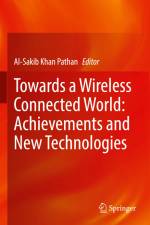
This book gathers key advances in various areas related to using wireless Internet and wireless connectivity to achieve a more connected world.The world is now highly dependent on Internet connectivity. Even though some parts of the globe remain isolated, the smoothly running world all around us relies on Internet services for countless businesses and activities. During the COVID-19 pandemic, we have seen that exclusively relying on wired Internet would leave out a large part of our tech-savvy world. Hence, wireless connectivity is essential to anywhere, anytime connectivity. Further, in the event of a new pandemic or other disaster of global scale, wireless Internet offers a reliable way to keep us all connected. The contributors to this book, hailing from academia, industrial and research laboratories, report on the latest solutions, trends and technologies with the potential to make wireless Internet more reliable and secure for the years to come.
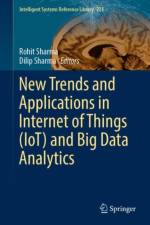
This book focuses on the use of The Internet of Things (IoT) and big data in business intelligence, data management, Hadoop, machine learning, cloud, smart cities, etc. IoT and big data emerged from the early 2000s data boom, driven forward by many of the early internet and technology companies. The Internet of Things (IoT) is an interconnection of several devices, networks, technologies, and human resources to achieve a common goal. There are a variety of IoT-based applications being used in different sectors and have succeeded in providing huge benefits to the users. The generation of big data by IoT has ruptured the existing data processing capacity of IoT and recommends to adopt the data analytics to strengthen solutions. The success of IoT depends upon the influential association of big data analytics. New technologies like search engines, mobile devices, and industrial machines provided as much data as companies could handle-and the scale continues to grow. In a study conducted by IDC, the market intelligence firm estimated that the global production of data would grow 10x between 2015 and 2020. So, the proposed book covers up all the aspects in the field discuss above.
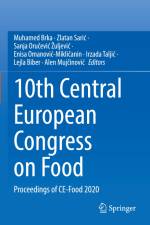
This book presents the proceedings of the 10th Central European Congress on Food (CEFood), held on June 11-13, 2020, in Sarajevo, Bosnia and Herzegovina. It reports on recent advances in the area of food science and food technology, and is divided into 5 major topical sections: food analysis, food energy systems, food trends and competitiveness, food and feed chain management, and modern challenges. Offering a timely snapshot of cutting-edge, multidisciplinary research and developments in modern food science and technology, these proceedings facilitate the transfer of these findings to industry. As such, the book will appeal to researchers and professionals in the food and agricultural industries, as well as those at regulatory and food safety agencies.
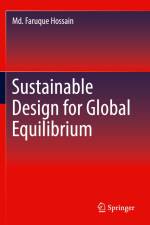
This book focuses on holistic approaches of applying sustainable practices in all sectors of building, infrastructure, and energy to achieve a best-balanced global energy, building, infrastructure, transportation, and water technology (EBITW) regime. It presents a series of solutions based on innovative research and applications for building a sustainable Earth for future generations. The goal of this book is to define the context of instigation for thinking through the scientific theories and practical applications of sustainability mechanisms to confirm a global equilibrium by the implementation of the following main practices: Sustainable Energy, Sustainable Architectural and Engineering Design Technology, Sustainable Environment and Society, and Sustainable Earth.
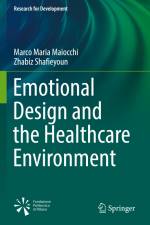
For all of the tremendous advances in medicine and treatment the world has seen in the modern era, the human body's ability to heal itself remains a (literally) vital and often overlooked facet of healthcare.Through the use of emotional design, aimed at transforming healthcare environments, such as waiting rooms, in such a way as to boost the emotional wellbeing of patients, and thus their general attitudes, including in regard to their own healing processes, medical institutions can improve outcomes for the people they treat while simultaneously lowering overall costs.Design, as an inherently transdisciplinary, problem-solving activity, is well-suited to this task. And when combined with a field of study such as neuroscience, which can literally map out the perceptions that lead to the experience of particular emotions, healthcare environments can be transformed into spaces (through such innovations as Kansei engineering) that then subsequently transform the people who rely on them the most, leading to more efficiency and less red ink.
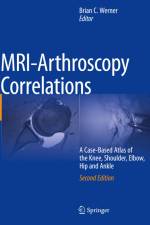
Integrating MRI findings associated with the spectrum of problems seen in the most commonly treated joints in sports medicine with the diagnostic findings seen during arthroscopy of the same joint in the same patient, this unique text correlates this pathology and applies these findings to the clinic, the radiology reading room and the operating suite. Representing a microcosm of daily patient care, this atlas of interactive correlation is an exceedingly effective tool for education and continued learning, an impetus for interdisciplinary research collaboration, and a critical part of an approach to optimum patient care. Furthermore, this case-based correlation between MRI imaging and arthroscopic findings and treatment has been a well-received and effective method for teaching and discussion at meetings and instructional courses.The second edition of this popular case atlas is organized into five sections highlighting the major joints in which MRI and arthroscopy are most commonly used in sports medicine: knee, shoulder, elbow, hip, and a brand new section on the ankle. Chapters have been reformatted to a consistent presentation, beginning with an overview of the specific disease entity and followed by selected cases chosen by the chapter authors that best illustrate common or noteworthy disease entities or pathology, with an emphasis on the parallel MRI imaging and arthroscopic findings. Throughout the text, updated arthroscopy images reflect current surgical techniques, many of which have changed significantly since the original edition was published. Authors and section editors, many new to this edition, are nationally recognized experts, teachers and pioneers in their respective areas of sports medicine and have covered the gamut of topics in each of their sections.Taken together, this will be an invaluable resource for sports medicine specialists, orthopedic surgeons and musculoskeletal radiologists alike, promoting increasingly accurate diagnoses of pathology and advanced treatment options to aid in the optimization of patient care and recovery.
This book explores the philosophy and the foundations of quantum chemistry. It features chapters written by experts in the field. The contributions analyze quantum chemistry as a discipline, in particular, its relation with both chemistry and physics from the viewpoint of realism and reduction. Coverage includes such topics as quantum chemistry as an "e;in-between"e; discipline, molecular structure and quantum mechanics, quantum chemical models, and atoms and molecules in quantum chemistry.The interest of this book is twofold. First, the contributions aim to update and refresh the discussions regarding the foundations of quantum chemistry. Second, they seek to develop new philosophical perspectives that this discipline can suggest to philosophers of science.From its origins, quantum chemistry filled a problematic position in the disciplinary space. On the one hand, it is a branch of theoretical chemistry. On the other hand, it appeals essentially to theoretical tools coming from physics. This peculiar position triggered conceptual questions about its own identity. Inside this book, readers will find updated discussions on the foundations and the philosophy of this complex discipline.
Taking a transnational approach to the study of film culture, this book draws on ethnographic fieldwork in a South Korean university film club to explore a cosmopolitan cinephile subculture that thrived in an ironic unevenness between the highly nationalistic mood of commercial film culture and the intense neoliberal milieu of the 2000s. As these time-poor students devoted themselves to the study of film that is unlikely to help them in the job market, they experienced what a student described as 'a different kind of fun', while they appreciated their voracious consumption of international art films as a very private matter at a time of unprecedented boom in the domestic film industry. This unexpectedly vibrant cosmopolitan subculture of student cinephiles in neoliberal South Korea makes the nation's film culture more complex and interesting than a simple nationalistic affair.
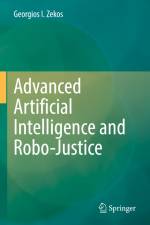
The book deals with digital technology which is transforming the landscape of dispute resolution. It illustrates the application of AI in the legal field and shows the future prospect of robo-justice for an AAI society in the advanced artificial intelligence era. In other words, the present justice system and the influence of current AI upon courts and arbitration are investigated. The transforming role of AI on all legal fields is examined thoroughly by giving answers concerning AI legal personality and liability. The analysis shows that digital technology is generating an ever-growing number of disputes and at the same time is challenging the effectiveness and reach of traditional dispute resolution avenues. To that extent, the book presents in tandem the impact of AI upon courts and arbitration, and reveals the role of AAI in generating a new robo-justice system.Finally, the end of the perplexing relation of courts and arbitration is evidenced methodically and comprehensively.
This edited collection offers an insight into the dynamic of HRM in thirteen developing countries across Africa, Asia, and the Middle East. Taking readers through the realities of HRM in the global South, the book identifies the significance of contexts, diversity of cultures, and dissimilarity of processes in managing people. In other words, the book addresses general issues of HRM in cross-national settings to give readers an understanding of HR that is comparative and country-specific. Covering issues in Nigeria, South Africa, Egypt, China, India, Pakistan, Malaysia, Bahrain, Jordan, United Arab Emirates, and Argentina, each chapter draws out the unique and diverse configurations of HRM in each country. Also examining digital HRM, technology-based entrepreneurship, gig work, artificial intelligence and digitalization in business practice, this book is an invaluable resource for all HRM practitioners, policymakers, students, HRM scholars, international HRM, international business, and business managers across the globe.
This book addresses one the most contentious issues of postwar Western Europe, namely the organization of the primary and secondary stages of schooling in state education systems. In examining the politics of continuity and change in postwar schooling in Britain and the Federal Republic Germany, Gregory Baldi seeks to contribute to more general understandings of education's place in the welfare state, the development of social institutions, and the relationship between material and ideational factors in shaping political outcomes over time.
The first book in the newly created book series, Computer-Aided Drug Discovery and Design, focuses on the computational aspects of early drug discovery, drug target identification, and validation. It revises current classical paradigms in target and phenotypic-based drug design with still ingrained approximations and concepts and discusses the research in the new network approach concept that include kinetic selectivity and metabolic analysis.Many often-overlooked approximations and concepts in drug discovery are fully covered. Drug Target Selection and Validation includes both introductory sections and research-based sections to be of use to both students and research scientists in drug discovery, design, kinetics and metabolic analysis. Pharmaceutical scientists, pharmaceutics, drug developers, pharmacologists, biomedical researchers in computer science, medicinal chemists, and precision medicine developers benefit from the information provided. The book concludes with a chapter on chemical and structural databases.
This book describes a unique combination of quantum chemical methods for calculating the basic physical properties of luminescent materials, or phosphors. These solid inorganic materials containing an optically active dopant are key players in several major fields of societal interest, including energy-efficient lighting, solar cells, and medical imaging. The novel ab initio methods described in this book are especially designed to target the crowded and complex electronic excited states of lanthanide activators in inorganic solids. The book is well suited to both new and experienced researchers alike and appeals to a broad range of theoretical and experimental backgrounds. The material presented enables an adept understanding of elaborate calculations, which, in tandem with experiments, give essential insight into difficult luminescence problems and quandaries, thus fully preparing the reader for an educated search for new functional luminescent materials
This book builds upon recent theoretical approaches that define queerness as more of a temporal orientation than a sexual one to explore how Edgar Allan Poe's literary works were frequently invested in imagining lives that contemporary readers can understand as queer, as they stray outside of or aggressively reject normative life paths, including heterosexual romance, marriage, and reproduction, and emphasize individuals' present desires over future plans. The book's analysis of many of Poe's best-known works, including "e;The Raven,"e; "e;The Fall of the House of Usher,"e; "e;The Black Cat,"e; "e;The Masque of the Red Death,"e; and "e;The Murders in the Rue Morgue,"e; show that his attraction to the liberation of queerness is accompanied by demonstrations of extreme anxiety about the potentially terrifying consequences of non-normative choices. While Poe never resolved the conflicts in his thinking, this book argues that this compelling imaginative tension between queerness and temporal normativity is crucial to understanding his canon.
This volume highlights unique features of L2 teachers' motivation, autonomy and career development in Far East counties (including Japan, South Korea and China), using diverse methodological research approaches incorporating both quantitative and qualitative paradigms. While much of current research focuses on students' psychology, this volume looks into EFL teachers' motivation and autonomy. Both discussions of theoretical issues of teacher motivation and autonomy and practical, classroom-based investigations are included and written to appeal to researchers, as well as applied teacher audiences. The theoretical chapters give readers a solid grounding in the issues of interest to the field. The practical chapters offer cutting edge insights and can also serve as templates on which postgraduate and postdoctoral researchers can base future studies. This helps the book to offer a dual service to the research community, addressing both issues of theorization of research and the practice of conducting research investigations.
This book highlights recent advances in the discipline of biogeochemistry that have directly resulted from the development of critical zone (CZ) science. The earth's critical zone (CZ) is defined from the weathering front and lowest extent of freely circulating groundwater up through the regolith and to the top of the vegetative canopy. The structure and function of the CZ is shaped through tectonic, lithologic, hydrologic, climatic, and biological processes and is the result of processes occurring at multiple time scales from eons to seconds. The CZ is an open system in which energy and matter are both transported and transformed. Critical zone science provides a novel and unifying framework to consider those coupled interactions that control biogeochemical cycles and fluxes of energy and matter that are critical to sustaining a habitable planet. Biogeochemical processes are at the heart of energy and matter fluxes through ecosystems and watersheds. They control the quantity and quality of carbon and nutrients available for living organisms, control the retention and export of nutrients affecting water quality and soil fertility, and influence the ability for ecosystems to sequester carbon. As the term implies, biogeochemical cycles, and the rates at which they occur, result from the interaction of biological, chemical, and physical processes. However, finding a unifying framework by which to study these interactions is challenging, and the different components of bio-geo-chemistry are often studied in isolation. The authors provide both reviews and original research contributions with the requirement that the chapters incorporate a CZ framework to test biogeochemical theory and/or develop new and robust predictive models regarding elemental cycles. The book demonstrates how the CZ framework provides novel insights into biogeochemistry.
This book is a detailed, state-of-the-art account of the applications and uses of luminescence thermometry. It covers a wide range of fields, including biomedicine, biology, and catalysis. The book also explains the luminescence thermometric parameters used to sense temperature via luminescence with different materials, analyzing the different strategies used to improve thermal sensitivity and temperature resolution.The readers of this book are any researcher interested in the field, because of its topical coverage, as well as bachelor and graduate students, as an introduction to this novel field. The book ends with a general critical analysis of the results presented, where the editors discuss about the challenges and opportunities in the development of these highly sensitive new class of thermometers.
Abonner på vårt nyhetsbrev og få rabatter og inspirasjon til din neste leseopplevelse.
Ved å abonnere godtar du vår personvernerklæring.