



















Gjør som tusenvis av andre bokelskere
Abonner på vårt nyhetsbrev og få rabatter og inspirasjon til din neste leseopplevelse.
Ved å abonnere godtar du vår personvernerklæring.Du kan når som helst melde deg av våre nyhetsbrev.

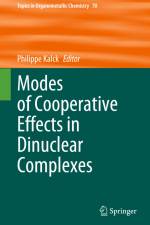
This book presents recent advances in dinuclear complexes in which the metal-metal cooperative effect operates for obtaining substrate activation and high performance catalysts. Catalysis continues to be a fast expanding area to design efficient tools in synthesis and in industrial chemistry. It allows performing syntheses with short reaction times, atom economy, reduced consumption of energy and loss of reagents, and low level of wastes. Dinuclear complexes are known to be more efficient than the mononuclear analogues for the reaction rates and the selectivities. This book analyses the latest research, focusing on the key concepts, in building and using these dinuclear complexes. The book is aimed at researchers, graduate students and chemists at all levels in academia and industry.
This book on systematic social observation (SSO) methodology provides detailed, step-by-step guidance for researchers on using the method. It identifies varieties of approaches and uses of SSO, the different steps used when performing SSO, and the benefits and challenges associated with using SSO. The chapters discuss different aspects related to SSO, such as:Access to the field or footageEthics, including informed consent with data collectionUse of body-worn camera footage for SSOIt is ideal for criminology and police researchers looking for assistance outlining their research frame.
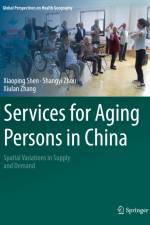
This volume draws upon one of the first comprehensive studies on the regional variations of services for aging persons in China to provide an empirical and theoretical understanding of the impact of China's rapidly growing aging population on the country's socioeconomic, cultural, and political systems. In three parts, the manuscript combines case-oriented comparative methods with variable-oriented statistical and GIS analyses to examine the spatial patterns and relationships between supply and demand of affordable and accessible services for aging persons in China. Part one gives a historical review of population aging in China, including the development of services for aging persons and government policies and programs geared towards elders. Part two provides an analysis of spatial variations of supply and demand for services including food, housing, health, and community services for aging persons. Part three uses case studies to analyse the regional and local dimensions of elderly services. Suggestions are made for future planning, development, and policies. This book will appeal to policy makers, city planners, service providing businesses, and advanced undergraduate and graduate students studying economic geography, planning, and regional development.
This book provides a cross-disciplinary, multi-scale assessment of the development of adsorption-based refrigerants and super-adsorbent-based wastewater purification. The book covers two major aspects from the 21st century, including the development of an environmentally benign adsorption cooling system and the preparation of a super-adsorbent for water purification. Although work has been published on these topics, the authors present the latest findings and introduce some new perspectives. The book is written as a reference book with contributions from global field experts and will appeal to water engineers, chemists, environmentalists, physicists, material scientists, nano-technologists, and environmental technologists.
This book discusses new possibilities and trends in analog circuit design, including applications in communication, measurement and RF systems. The authors combine the main features for circuit design with actual circuit realizations and demonstrate several performance limitations with example circuits.
Periodontitis is a disease that affects more than half the adult population in the world. Treatment is often based on ancient recommendations consisting in mechanically removing material from damaged zones. However, novel therapeutic management strategies exist, from prevention to efficient treatment, and regeneration. The need of integrative approaches to circumvent this worldwide pledge can be achieved through:A better understanding of this complex disease by promoting scientific research and a comprehensive multidisciplinary approach, including epidemiology, microbiology, immunology, physiology, therapeutics, psychology, etc. A better outreach by promoting vulgarization and recommendations for health professionals.A better information of the empowered patients, leading them to consider prevention and to take part in their therapeutic course.The book "e;Periodontitis: Advances in Experimental Research"e; includes a timely collection of chapters covering all the fields of research about periodontitis, consisting in concise reviews by the best specialists themselves and with clinical perspectives for periodontitis. Recent technological advances have allowed to explore shadowed areas of periodontology.The book "e;Periodontitis: Advances in Experimental Research"e; is a unique occasion to set a milestone for a more integrated field of periodontitis, with a broad scientific, medical, and public audience thanks to dedicated sections in each chapter:Abstract and main body (scientific audience and expert clinicians)Highlights (scientific audience and clinicians)Impact for Practice (clinicians and economical/political decision makers)Summary for Patients (patients and economical/political decision makers)
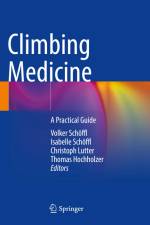
This book comprehensively discusses the medical aspects of sports climbing, a still young but emerging sport, which will be one of the disciplines at the Tokyo Olympics. Its rapid development from niche to popular sport has been accompanied by an increase in the number of climbing-sports-specific injuries and has attracted growing interest within the sports medicine community.Gathering expertise from around the globe, the book covers all aspects related to this discipline - from physiology, biomechanics and anatomy through upper and lower extremity injuries to cardiology, gynecology, pediatric and adolescent conditions. Following a coherent structure, each chapter equips readers with evidence-based diagnostic and therapeutic guidelines.Enriched by a wealth of pictures, this manual offers a timely and up-to-date resource for sports physicians, orthopedic surgeons and traumatologists, as well as trainers, physiotherapists and other health professionals involved in climbing.
Although endometriosis and adenomyosis are often assessed under the same umbrella, the epidemiology, clinical manifestations and management strategies of endometriosis and adenomyosis occur differently during the life cycle of a woman. Endometriosis can be diagnosed at many points across the lifespan, including adolescence and the climacterium, as well as pregnancy. Being associated with potential adverse health effects, different clinical presentations requiring different therapeutic approaches render it imperative to tailor management strategies for each period of the lifespan: in utero and early life, puberty and adolescence, reproductive years, pregnancy, late reproductive age, and the menopause. This book provides comprehensive insight into the general aspects, diagnosis and treatment modalities of endometriosis and adenomyosis in all stages of a woman's life - a unique element of its approach. Thematic sections discuss the basics of diagnosis and management of both endometriosis and adenomyosis from birth through menopause, including aspects of fertility preservation, sexual dysfunction, psychological considerations and prevention. The current pharmaceutical approaches and efficacy are presented, including progestins, oral contraceptives, aromatase inhibitors and GnRH agonists and antagonists. The final section provides current practice guidelines for the management of both conditions as well as an investigation into future research and clinical strategies. Taking a truly global perspective, Endometriosis and Adenomyosis will be a valuable resource for reproductive endocrinologists, infertility specialists and obstetricians and gynecologists worldwide.
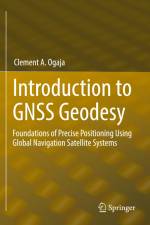
Introduction to GNSS Geodesy is a concise reference for beginners and experts in GNSS-based satellite geodesy. It covers all of the important concepts in almost a third of the space of the other GNSS books. Th e book begins with a case study in Augmented Reality to set the stage for what is to come and then moves on to the key elements of GNSS geodesy that make accurate and precise geopositioning possible. For example, it is important to understand the geodetic reference systems and the associated GNSS data processing strategies that enable both accurate and high-precision geopositioning. Chapter 2 gives an overview of GNSS constellations and signals, highlighting important characteristics. Chapter 3 then introduces reference systems in geodesy, covering such topics as time systems, geodetic datums, coordinate systems, coordinate conversions and transformations, and International Terrestrial Reference Frame. Th is lays the framework for the rest of the book. Chapters 4 and 5 dig deep into mathematical formulation of GNSS parameter estimation and observation models. All the concepts are presented clearly and concisely, with diagrams to assist reader comprehension. Chapter 6 describes Continuously Operating Reference Station (CORS) networks and their role in geodesy and definition of reference frames. Various global and regional CORS networks are presented in this section. Th e chapter also covers GNSS data and common formats such as RINEX and RTCM. Chapter 7 introduces the whole cycle of GNSS data processing, including preprocessing, ambiguity fixing, and solution reprocessing methods as commonly used in both epoch solutions and time series data. Th e book concludes with appendices on orbit modelling, GNSS linear combinations, application examples, and an example linear model.
This book is based on the understanding that the diversity and heterogeneity of science and society are not only issue of critique, but engender experimental forms of collaboration. Building on John Dewey's experimental theory of knowledge and inquiry, practice theory, science and technology studies and the anthropology of nature, the book offers a trenchant redefinition of a present-focused sociology as a science of experience in the spirit of experimentalism. Crisis, instead of being a mere problem, is understood as the baseline for creativity and innovation. Committed to the experimental pursuit, the book provides an experience-based methodological approach for an inter- and trans disciplinary sociology. Finally, it argues for a globalized and transformative sociological outreach beyond established epistemic and national borders. This book is of interest to sociologists and other social scientists pursuing experimentalism in theory, method and/or practice.
This edited volume addresses the role of non-state actors (NSAs) in international relations. From their emergence in the early 20th century, entities of non-state status have played a role of increasing prominence in international politics. Scholarly work has been slow to catch up, approaching NSAs mainly through the scope of legitimacy and international law or limiting focus to NGOs, international organizations, and economic corporations. This volume remedies that, creating a typology of NSAs based on systematic and coherent analysis.Presenting a series of cases of NSAs across the continuum of international relations, the chapters firmly ground NSAs in the ontology of international relations theory. Filling a gap in the current literature, this book will be of interest to students and researchers of international relations theory, international politics, international security, diplomatic history, and European and Middle East politics, as well as policy-makers and practitioners.
This new edition fully updates and expands Faro and Mohamed¿s Functional Neuroradiology, a gold standard, comprehensive introduction to the state-of-the-art functional imaging in neuroradiology, including the physical principles and clinical applications of Diffusion, Perfusion, Permeability, MR spectroscopy, Positron Emission Tomography, BOLD fMRI and Diffusion Tensor Imaging. With chapters written by internationally distinguished neuroradiologists, neurologists, psychiatrists, cognitive neuroscientists, and physicists, Functional Neuroradiology is divided into 12 major sections, including: Diffusion and Perfusion Imaging, Magnetic Resonance Spectroscopy and Chemical Exchange Saturation Transfer Imaging, Multi-Modality Functional Neuroradiology, BOLD Functional MRI, Diffusion Tensor Imaging, Presurgical Brain Tumor Mapping, Emerging neuroimaging techniques, Functional Spine and Hydrocephalus imaging, and Neuroanatomical Gray and Whitematter Brain Atlases. This second edition is fully updated throughout and includes more than 15 new chapters on topics such as: Brain tumor Radiogenomics, CNS Tumor Surveillance and Functional MR Perfusion Imaging, CNS Machine Learning, Focused Ultrasound therapy, TBI Sports Related Injury, and CNS Lymphatic system. By offering readers a complete overview of functional imaging modalities and techniques currently used in patient diagnosis and management, as well as emerging technology, Functional Neuroradiology is a vital information source for physicians and cognitive neuroscientists involved in daily practice and research.
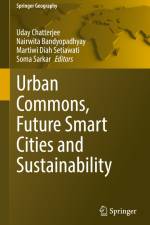
This book provides a critical theoretical framework for understanding the implementation and development of smart cities as innovation drivers, with long-term effects on productivity, livability, and the sustainability of specific initiatives. This framework is based on an empirical analysis of 21 case studies, which include pioneer projects from various regions. It investigates how successful smart city initiatives foster technological innovation by combining regulatory governance and private agency. The typologies of smart city-making approaches are thoroughly examined. This book presents the holistic approach of smart cities, which start from current issue and challenges, advanced technological development, disaster mitigation, ecological perspective, social issue, and urban governance. The book is organized into five major parts, which reflect interconnection between theories and practice. Part one explains the introduction which reflects the diversity andchallenges of the urban commons and its regeneration. Part two covers the current and future situation of urban growth, anglomeration agglomeration, and urban infrastructure. This section includes rethinking urban sprawl: moving towards sustainable cities, drivers of urban growth and infrastructure, urban land use dynamics and urban sprawl and urban infrastructure sustainability and resilience. Part three describes climate crisis, urban health, and waste management. This section includes climate change and health impacts in urban areas, green spaces: an invaluable resource for delivering sustainable urban health, health and wellbeing and quality of life in the changing urban environment, urban climate and pollution¿case study, sustainable urban waste management and urban sustainability and global warming and urban heat Island. Part four covers the ecological perspectives, advanced technology, and social impact for i.e., smart building, ecosystem services, society and future smart cities (SSC). This section includes urban ecosystem services, environmental planning, and city management, artificial intelligence and urban hazards and societal impact, and using geospatial application and urban/smart city energy conservation¿case study. Part five covers urban governance, smart solutions, and sustainable cities. It includes good governance, especially e-governance and citizen participation, urban governance, space and policy planning to achieve sustainability, smart city planning and management and Internet of things (IoT), advances in smart roads for future smart cities, sustainable city planning, innovation, and management, future strategy for sustainable smart cities and lessons from the pandemic: the future of smart cities.
The geotourism industry has grown rapidly in recent years. This book introduces the geotourism industry, its attractions, activities and developments, in selected countries of the Middle East. A number of publications and studies have investigated the nature and scope of the phenomenon of geotourism (tourism which starts from geology) and geotourists worldwide. However, despite the breadth of these studies, few publications have investigated the phenomena in the Middle Eastern countries.Consequently, this book seeks to shed light on the different aspects of geotourism and geo-diversity in the Middle East and provides a number of case studies from this region. It assists in bridging the lacuna in the tourism and geology literature and helps planners, marketers, managers, scholars and researchers to enhance their knowledge about such issues. It outlines opportunities for, as well as barriers to, geotourism development in the Middle East as well as providing recommendations for the advancement of geotourism in the region.
This handbook takes stock of the African Union¿s Vision 2020 to rid the African continent of wars, civil conflicts, human rights violations, and humanitarian disasters ¿ including violent conflicts and genocide ¿ and provides recommendations on how to address contemporary threats to peace and security in Africa. It explores the continent¿s current peace and security landscape, including new actors, emerging threats, and the prospects for achieving sustainable peace. With contributions from highly respected experts in the field, both academics and practitioners, the volume unpacks the sources of conflict, instability and the challenges of peace and development, and provides research-based policy advice to guide and inform African governments, policy makers, practitioners, and scholarly audiences on the continent and beyond.
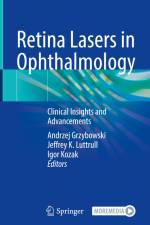
This book discusses the new era of modern retinal laser therapy and its clinical applications. While the photocoagulation era universally presupposed the therapeutic necessity of laser-induced retinal damage, the modern retinal laser therapy is equally opposed to this idea. The evidence for this sea-change in the understanding of retinal laser is well presented within this book, and the conceptual and clinical consequences are discussed with particular emphasis on the emergence of retinal laser therapy as the first reasonable preventive and restorative intervention for the most important retinal disorders. Finally, the future of modern retinal laser therapy is highlighted with respect to coming technological advances, remaining challenges, and the place of retinal laser in the management of retinal disease. This book is an essential resource for all ophthalmic residents and clinicians seeking a clear and concise guide to modern retinal laser therapy in their everyday practice.
This books presents a brief review of modern concepts of the Sun-Earth problem and proposed physical mechanisms of solar-terrestrial relations (STR). This field covers a wide range of fundamental and actual applied problems of paramount importance (Space Weather, radiation hazard in space, functioning of space-borne and ground-based technological systems, heliobiology etc.). It is also closely tied with some general gnosiological problems.The author provides state-of-the-art information about existing problems and discusses different channels for extraterrestrial influences at the up-to-date level: electromagnetic waves and fields, total solar irradiance, solar wind, energetic solar particles, galactic cosmic rays, cosmic dust, etc. Some of the well-known and suggested STR effects and corresponding physical mechanisms are illustrated by several examples. In particular, a number of different external ¿signals¿ in observed changes of terrestrial climate and weather are considered. Especially, an expected impact of geophysical disturbances on the accuracy of some precise physical measurements and experiments is analysed. Due attention is paid to the heliobiological aspects of STR. Particular emphasis is on the multifactor nature of magneto-biological effect (MBE), its non-stationary and non-linear behaviour. The author also discusses main features of different physical mechanisms (electromagnetic fields, ionising radiation, triggers, rhythmic and resonances in solar-terrestrial systems) and their applicability to the Sun-Earth problem. The most of them are still needed in more sophisticated theoretical development and experimental confirmation. The main goals of interdisciplinary studies in this field are to determine partial impacts of solar-geomagnetic variability on the terrestrial environments and estimate (separate) relative contributions of different factors into various STR phenomena.The book is based on lectures given on advanced undergraduate leveland will also benefit newcomers (physicists and engineers) to the field.
The Parthenon marbles case is the most famous international cultural heritage dispute concerning repatriation of looted antiquities, the Parthenon marbles in the British Museum¿s ¿Elgin Collection¿. The case has polarised observers ever since Elgin had the marbles hacked out of the ancient temple at the turn of the 19th century in Ottoman-occupied Athens. In 1816, a debt-stricken Elgin sold the marbles to the British government, which subsequently entrusted them to the British Museum, where they have remained since then.Much ink has been spilled on the Parthenon marbles. The ethical and cultural merits of their repatriation have been fiercely debated for years. But what has generally not been considered are the legal merits of their return in light of contemporary international law. This book is the first in legal scholarship to provide an international law perspective of the cause célèbre of international cultural heritage disputes and, in doing so, toclarify the new customary international law on the return of cultural property unlawfully removed from its original context.The book, which includes a foreword by Andrew Wallace-Hadrill, is a unique reference work on the legal case for the return of the Parthenon marbles and the new normative framework for the protection of cultural heritage.
This book reviews, in one place, the breadth of articles that form the basis for the current practice of medicine. When physicians examine medical literature, there are articles that are quoted over and over again, as well as articles that have established the standards that are so embedded that we no longer think of where those standards came from. When clinicians treat patients with diabetes, why do we aim for an A1c less than 7%? That standard comes primarily from two trials, the DPPT and the UKPDS trial, both of which broke new ground when they were published. In addition, the ACCORD trial informed us that a lower A1c goal does not improve outcomes, and may in fact lead to worse outcomes. Understanding these trials helps physicians to make better decisions for their patients and gives them a greater appreciation for the information they work with every day.The chapters are organized by system such as respiratory, cardiovascular, diabetes, etc. and within each system,in the chronological order of publication. Each article reviewed includes a succinct overview of methodology and the results, followed by a discussion that puts the results into clinical context. All articles are selected and chapters written by primary care physicians who understand what is relevant to the intended audience for the book. Written by experts in the field, Top Articles Every Clinician Should Know provides readers with one source where information can be found about the most important articles published in the medical literature that informs the way clinicians practice primary care today.
Abonner på vårt nyhetsbrev og få rabatter og inspirasjon til din neste leseopplevelse.
Ved å abonnere godtar du vår personvernerklæring.