












Gjør som tusenvis av andre bokelskere
Abonner på vårt nyhetsbrev og få rabatter og inspirasjon til din neste leseopplevelse.
Ved å abonnere godtar du vår personvernerklæring.Du kan når som helst melde deg av våre nyhetsbrev.

This book examines the essence of a particular personal experience within a New York City public space. The principal approach, both theoretical and methodological, is the phenomenological perspective, an in-depth study of such a surprising experience in the real world from the first-person point of view. The book introduces a new concept of ¿the situated self,¿ that is, the whole entity of the respondent¿s subjective world about his or her particular urban experience in public. It is one¿s ¿being-in-the-word¿ or lived experience in the real world. Another important feature of ¿the situated self¿ is its comprehensive constitution of all certain human traits, perceptions, emotions, bodily sensations, cognition, and behavioral reaction, and their close situational connectivity to one another. By implication, this public experience of ¿the situated self¿ is a common denominator shared among regular users of New York City public spaces for making their city life with urban strangers more routinized, predictable, tolerant, and civic.
This book focuses on elementary and middle school children¿s understanding of mathematics as well as the cognitive aspects involved in the development of mathematical knowledge, skills, and understanding. Children¿s success in and understanding of mathematics stem from factors beyond the mathematics curriculum. Researchers are increasingly becoming aware of the necessity to consider a complex set of variables when accounting for large individual differences in mathematics achievement. These chapters contribute to how both researchers and educators can consider the multidimensionality of skills involved in developing mathematical knowledge in the middle school years as well as to how this knowledge can be used to enhance practices in the mathematics classroom. Topics include the cognitive and spatial skills involved in mathematics knowledge, the role of motivation in mathematics learning, the neurological processes and development of children¿s mathematics skills, the development ofunderstanding of arithmetic and fraction concepts, the factors relating to children¿s word problem success, and techniques to promote mathematics understanding. This book and its companion, Mathematical Teaching and Learning, take an interdisciplinary perspective to mathematical learning and development in the elementary and middle school years. The authors and perspectives in this book draw from education, neuroscience, developmental psychology, and cognitive psychology. The book will be relevant to scholars/educators in the field of mathematics education and also those in childhood development and cognition. Each chapter also includes practical tips and implications for parents as well as for educators and researchers.
This book features the second volume of the proceedings of the 9th International Conference of the International Association of Cultural and Digital Tourism (IACuDiT). Held at the Syros Island in Greece in September 2022, the conference's lead theme was ¿Tourism, Travel, and Hospitality in a Smart and Sustainable World¿.With a full appreciation of the contributions made by numerous writers toward the progress in tourism research, this book presents a critical academic discourse on sustainable practices in a smart tourism context, stimulating future debates and advancing knowledge and understanding in this critical area of knowledge. It also puts emphasis on the knowledge economy and smart destinations notion. It enacts new modes of tourism management and development and presents chapters on emerging technologies, such as location-based services, Internet of Things, smart cities, mobile services, gamification, digital collections and the virtual visitor, social media, social networking, and augmented reality
This book investigates how we are involved in politically informed structures and how they appear to us. Following different approaches in contemporary aesthetics and cultural philosophy, such as everyday aesthetics, atmosphere and aestheticization, the contributions explore how embedded powers in politics, education, democracy, and landscape are analyzed through aesthetics.
This book overviews latest ideas and developments in financial econometrics, with an emphasis on how to best use prior knowledge (e.g., Bayesian way) and how to best use successful data processing techniques from other application areas (e.g., from quantum physics). The book also covers applications to economy-related phenomena ranging from traditionally analyzed phenomena such as manufacturing, food industry, and taxes, to newer-to-analyze phenomena such as cryptocurrencies, influencer marketing, COVID-19 pandemic, financial fraud detection, corruption, and shadow economy. This book will inspire practitioners to learn how to apply state-of-the-art Bayesian, quantum, and related techniques to economic and financial problems and inspire researchers to further improve the existing techniques and come up with new techniques for studying economic and financial phenomena. The book will also be of interest to students interested in latest ideas and results.
This is the first known book on economic evaluations specifically geared to oral health professionals. The book serves as a starting point that explains the concepts and tools required for practitioners with little or no formal training or experience in economic evaluation to conduct such evaluations in oral health(care). It provides the foundation for applying economic evaluation principles to oral health programs as well as more advanced technical information for those interested in acquiring knowledge of health economics within the context of oral health care.In the book, the authors describe the different types of economic evaluation and discuss their role and application in oral health care. Topics explored among the chapters include:Why carry out an economic evaluation in oral health care?Aspects of decision modelling for economic evaluation in oral health careInterpreting economic evaluation in oral healthWorked examples in cost-effectiveness, cost-benefit, and cost-utility analysesAssessing the quality and usefulness of economic evaluation in oral health: a practical approach for cliniciansUsing economic evaluations to inform decision-making in oral health: TransferabilityEconomic evaluation: uses and potential uses in oral health policy developmentIntroduction to Economic Evaluation in Oral Health Care has an applied orientation that emphasizes practical solutions to managing existing problems and situations in oral health care. As such, the book is essential reading for oral health professionals including dentists, oral health therapists, and dental hygienists, as well as students in the oral health professions. The text is also an appropriate and useful resource for other health practitioners and managers who are interested in enhancing their practical understanding of economic evaluation including health economists and other health professionals and decision-makers.
This volume aims to provide a state-of-the-art and the latest advancements in the field of intelligent control and smart energy management. Techniques, combined with technological advances, have enabled the deployment of new operating systems in many engineering applications, especially in the domain of transport and renewable resources. The control and energy management of transportation and renewable resources are shifting towards autonomous reasoning, learning, planning and operating. As a result, these techniques, also referred to as autonomous control and energy management, will become practically ubiquitous soon. The discussions include methods, based on neural control (and others) as well as distributed and intelligent optimization. While the theoretical concepts are detailed and explained, the techniques presented are tailored to transport and renewable resources applications, such as smart grids and automated vehicles. The reader will grasp the most important theoretical concepts as well as to fathom the challenges and needs related to timely practical applications. Additional content includes research perspectives and future direction as well as insight into the devising of techniques that will meet tomorrow's scientific needs. This contributed volume is for researchers, graduate students, engineers and practitioners in the domains of control, energy, and transportation.
Around 1 in 6 of the world¿s children live in a conflict zone, and of these 357 million children, 165 million are affected by high intensity conflicts. Pediatric war injuries pose a huge challenge to health professionals treating such patients. The evidence base on the quality and scale of this challenge is scarce, and the majority of clinicians treating these patients are either not sufficiently experienced in the treatment of war injuries, are not pediatric surgeons, or both. The majority of the evidence in the literature comes from a small subset of children who were managed in well-resourced military facilities that differ drastically from the conditions in which the majority of war wounded children are treated.This book - the first of its kind - is a comprehensive and state-of-the art guide for both local and humanitarian non-pediatric specialists who are often forced to operate on and treat children with war injuries with little or no previous experience or training. It provides healthcare workers in conflict settings with knowledge and practical advice on the entire continuum of care, from point of injury, to treatment and reconstruction, to rehabilitation and mental health support. It is comprised of concise yet comprehensive overviews of the current status of the pediatric war casualty patient treatment and will help guide patient management based on evidence from the literature, clinical and surgical experience and ongoing research and will stimulate investigative efforts in this dynamic and active field of war medicine. The book draws on the knowledge and long experience of clinicians at the American University of Beirut Medical Center, one of the largest tertiary care and referral centers in the Middle East, which has been the foremost civilian academic hospital treating war injuries, both adult and pediatric, initially from the Lebanese war and then the Iraqi and Syrian wars.
This book analyzes the informal practices of contemporary cities through a close dialogue between different research perspectives, with the shared goal of giving voice to informality and evaluating its benefits and potential in a multidimensional key of social factors. Recently, the human sciences have seen the emergence of this new term ¿informality,¿ at first sight in conflict with their function of giving order and form to social phenomena. A term with which, in this book, the authors, having as reference the Italian and European experience, specifically identify those unsatisfied social demands and those collective actions ¿from below¿ that aim at the recovery of urban space and the renewal of its organization, often not following the trajectories of legality and institutions. By means of a close dialogue between different areas of social research, this book attempts to establish the different declinations and applications of the term, evaluating the causes and effects, benefits, and potential of the phenomena attributable to it, within a multidimensional analysis that calls into question the regeneration and collective use of spaces, political-institutional confrontation and conflict, legal innovation, and social-economic benefits.
This book is a compact clinical introduction to Lyme borreliosis for physicians of all specialties who care for patients with suspected B. burgdorferi infection, whether in hospital or general practice. The book provides a great deal of practice-oriented information on symptomatology, diagnosis, treatment, and prophylaxis with a special emphasis on the situation in Europe. At the same time, it describes contemporary scientific knowledge in as much detail as is required in order to understand the pathogenetic relationships and their relevance to medical care. The authors are members of an interdisciplinary expert group of epidemiologists, biologists, microbiologists, and clinicians who have been working in the area of tick-borne diseases for many years. The personal experience of each of the authors, accumulated through their daily work with patients in special clinics or by confrontation with complicated questions in basic research, epidemiology, and laboratory diagnostics of Lyme borreliosis, represents an important mainstay of the book. Written from the perspective of clinical management and practical problem-solving, this topical monograph will assist clinicians in meeting diagnostic challenges and providing appropriate medical aid to patients with Lyme borreliosis.
The book shares a cutting-edge approach to innovation strategies and product innovation by showing how advances in management and science can now help explain and predict innovation response and market outcomes across industries (health, cosmetics, food, leisure, insurance, automotive). A comprehensive review of the latest breakthroughs - from behavioral science to sustainable practices - sheds a new light on product innovation management allowing brands and teams to develop daring yet low-risk innovation strategies, while increasing their positive impact on people and planet.Readers will particularly benefit from the self-paced online video-based learning modules provided with the innovative Book+Course format.
This handbook provides a reference resource to showcase insightful and nuanced perspectives on Africäs agriculture, industry, services, and manufacturing sectors; factors affecting the sectors¿ competitiveness; and the sectors¿ contribution to employment, economic growth, and sustainable development. It also addresses the potential benefits that the sectors could harness from the planned Continental Free Trade Area (CFTA), and in particular how CFTA could increase the efficiency and competitiveness of these sectors.This book provides evidence-based holistic analyses of the past and current state of Africäs economic sectors, with a strong emphasis on tangible and specific policy recommendations for the purpose of enhancing future economic growth, employment, and sustainable development of the continent. It also assesses the impact of the first-ever Continental Free Trade Area in Africa, and its potential implications for Africäs integration into regional and global economy and competitiveness relative to other fast developing economies (such as those in Asia). This handbook gives an in-depth analysis of fundamental domestic factors that have relevance on the sectors¿ expansion and growth and their contributions to employment, economic growth, and sustainable development in Africa with differential effects across the continent.
Dieser Band bietet systematische Forschung zum Regionalismus in Afrika und untersucht die Rolle und den Einfluss externer Partner auf die Dynamik, die institutionelle Gestaltung und die Leistung regionaler Integrationsprojekte. Dabei wird der mehrstufige und mehrdimensionale Charakter des Regionalismus mit seiner Vielfalt an kooperativen Institutionen und Politikbereichen anerkannt und herausgearbeitet, während die ungleichen Beziehungen zu externen Akteuren in afrikanischen Regionalorganisationen genau betrachtet werden. Die beiden umfassenden Mapping-Studien des Buches untersuchen Muster asymmetrischer Interdependenzen zwischen dem Regionalismus in Afrika und externen Partnern in Europa, wobei der Schwerpunkt auf Handel und Geberfinanzierung liegt, und zeigen strukturelle Ungleichgewichte und (un)beabsichtigte Folgen auf. Fünf weitere Fallstudien bieten eingehende Analysen verschiedener afrikanischer Regionalorganisationen, vor allem mit Schwerpunkt auf dem Sicherheitsregionalismus, und zeigen auf, wie externe Partner Integrationsprozesse und -projekte beeinflussen und beeinträchtigen. Obwohl der Regionalismus in Afrika von den Außenbeziehungen und Partnerschaften mit Europa profitiert hat, stellen die Beiträge in diesem Band diesen positiven Eindruck in Frage, indem sie einige der wichtigsten Faktoren und Akteure hervorheben, die ihn untergraben.
Dieses Buch beschreibt eine Reihe von SystemC-basierten Analysemethoden für virtuelle Prototypen, einschließlich Entwurfsverständnis, Verifikation, Sicherheitsvalidierung und Entwurfsraumuntersuchung. Der Leser erhält einen Überblick über die neuesten Forschungsergebnisse auf dem Gebiet der Electronic Design Automation (EDA) auf der elektronischen Systemebene (ESL). Die besprochenen Methoden ermöglichen es den Lesern, wichtige Aufgaben und Anwendungen im Entwurfsprozess leicht zu bewältigen.Übersetzt mit www.DeepL.com/Translator (kostenlose Version)
Dieses Buch bietet dem Leser einen einfachen Einstieg in das Quantencomputing sowie in den Entwurf entsprechender Geräte. Die Autoren behandeln verschiedene Entwurfsaufgaben, die für das Quantencomputing wichtig sind, und stellen entsprechende Lösungen vor. Eine Besonderheit des Buches ist, dass diese Aufgaben und Lösungen explizit aus der Perspektive der Entwurfsautomatisierung diskutiert werden, d.h. unter Verwendung von cleveren Algorithmen und Datenstrukturen, die von der Entwurfsautomatisierungs-Community für konventionelle Logik (d.h. für elektronische Geräte und Systeme) entwickelt worden sind und nun für diese neue Technologie angewendet werden. Auf diese Weise können relevante Entwurfsaufgaben wesentlich effizienter als bisher durchgeführt werden, was zu Verbesserungen um mehrere Größenordnungen führt (in Bezug auf die Laufzeit und andere Entwurfsziele). Beschreibt den aktuellen Stand der Technik für den Entwurf von Quantenschaltungen, für deren Simulation und für deren Abbildung auf reale Hardware; Bietet eine erste umfassende Einführung in die Entwurfsautomatisierung für Quantencomputer, die sich mit praxisrelevanten Aufgabenstellungen befasst; Es richtet sich sowohl an die Quantencomputer-Gemeinschaft als auch an die Gemeinschaft der Entwurfsautomatisierung und zeigt, welche beeindruckenden Verbesserungen möglich sind, wenn man das Wissen beider Gemeinschaften kombiniert.
Following the vexed codification attempts of the International Law Commission and the relevant jurisprudence of the International Court of Justice, this book addresses the permissibility of the practice of diplomatic asylum under general international law.In the light of a wealth of recent practice, most prominently the case of Julian Assange, the main objective of this book is to ascertain whether or not the practice of granting asylum within the premises of the diplomatic mission finds foundation under general international law. In doing so, it explores the legal framework of the Vienna Convention on Diplomatic Relations 1961, the regional treaty framework of Latin America, customary international law, and a possible legal basis for the practice on the basis of humanitarian considerations.In cases where the practice takes place without a legal basis, this book aims to contribute to bridging the legal lacuna created by the rigid nature of international diplomatic law with the absolute nature of the inviolability of the mission premises facilitating the continuation of the practice of diplomatic asylum even where it is without legal foundation. It does so by proposing solutions to the problem of diplomatic asylum.This book also aims to establish the extent to which international law relating to diplomatic asylum may presently find itself within a period of transformation indicative of both a change in the nature of the practice as well as exploring whether recent notions of humanity are superseding the traditional fundaments of the international legal system in this regard.
This book systematically discusses state-of-the-art dew-point evaporative cooling and provides key insights into current research efforts and future research interests. Novel energy-efficient and environment-friendly cooling technologies are essential to reduce the sharply rising energy consumption and greenhouse gas emissions and achieve carbon neutrality. Conventional air-conditioners which adopt a vapor compression cycle are neither energy-efficient nor sustainable due to the use of compressors and chemical refrigerants, as well as their intrinsic coupling of sensible and latent cooling loads. With the merits of high energy efficiency and the ability to decouple cooling loads without using chemical refrigerants, indirect dew-point evaporative cooling provides an ideal alternative solution to air conditioning in a variety of applications. A comprehensive review of evaporative cooling and their underlying engineering challenges is included. Advanced engineering andmodeling experience critical to the development of dew-point evaporative coolers are highlighted. The effective analysis techniques for dew-point evaporative coolers are documented, and their intrinsic characteristics captured by these methods are reported. Lastly, advanced dew-point evaporative cooling systems in various energy-connected applications are discussed by providing multiple case studies. Specifically targeted at HVAC engineers, thermal scientists, and energy-engineering researchers, this book will balance fundamental concepts, industrial applications, and leading-edge research. As this book provides readers with depth and breadth of coverage, it can also be used by graduate-level students in relevant fields.
This book comprises the peer-reviewed proceedings of the 1st Conference on Georesources, Geomaterials, Geotechnologies and Geoenvironment (4GEO), Porto, Portugal, on November 7¿8, 2019. The book interests all researchers, practitioners, and students in engineering geosciences, geotechnics, georesources, materials engineering, and earth and environmental sciences.Georesources, geomaterials, geotechnologies, and geoenvironment are very topical subjects and therefore deserve a deeper reflection by academia, practitioners, and society. That approach is vital to a correct sustainable resource management and an engineering design with nature within a geoethical framework. Georesources, understood as geological, hydrological and energetic resources are greatly important to society. Minerals, rocks, and water are resources that, over time, have assumed an important role in the technological development of communities. Given the increase in population and theincreasing needs and intensification of their use, it is very important to ensure their sustainable management. Geomaterials are functional geological materials artificially processed for the generality of the activities developed by societies. The functional geomaterials may include rock, clay, granular materials, treated soils, and industrial waste. Geotechnologies are a very important tool for decision-making, supporting the collection, mapping, processing, and analysis of data with geographical information systems and other geo-techniques used in the most diverse fields, including to support the monitoring and prediction of geohazards. The geoenvironment is a transversal field that identifies continuous earth changes and to find solutions to the resulting socioeconomic and environmental changes. Climate change, industrialization, and anthropic activity are, among others, factors of pressure and alteration of the natural environment, so minimizing impacts and emerging hazards and risks.Main topics include:1. Geomaterials, Geotechnics, and Georesources2. Geotechnologies, Engineering Geosciences, and Geohazards3. Geoenvironment, Water, and Climate Change
This book provides an insightful analysis of recent developments in immigration, asylum and citizenship law in the broader social and political context. Written accessibly by an experienced practitioner, it critically examines the development of UK immigration control since the second world war, identifying and focusing on the grievous collateral damage being caused to the rule of law and to society. It examines the decline in standards of public administration, the secular failure to follow the rule of law, and the related issues of social corrosion and lack of democratic accountability. Speaking to academics, practitioners, policy makers and all those concerned about the impact of the hostile environment, it makes proposals for legal changes which prioritise social cohesion: a shared burden of proof, a simple regularisation scheme and clear path to citizenship, and details how these would operate in practice.
This book examines the evolution of the EU¿s Common Security and Defence Policy (CSDP) from its inception in 1998 to the present day. Using the theoretical framework of historical institutionalism, it examines both the successes and failures of the CSDP. Drawing on a series of interviews with officials and researchers from various EU institutions, NATO, and diplomatic missions of EU member states, it assesses what has instigated changes in the CSDP, and why some events have proven more determining and influential than others. The book reviews six crises that have shaped the CSDP, including the Yugoslav Wars, the Second Gulf War, the Libyan campaign, the Ukrainian crisis, the Syrian crisis, and Brexit, in order to understand how real-life events have influenced policy. In this context, the book defines the term ¿European Strategic Autonomy¿ dynamically, as the residual effect of negotiation over time. It will appeal to government officials and policymakers, as well as students and scholars of European politics and international relations.
This book explores the evolution of the role of the heirs to the throne of Italy between 1860 and 1900. It focuses on the future kings Umberto I (1844-1900) and Vittorio Emanuele III (1869-1947), and their respective spouses, Margherita of Savoia (1851-1926) and Elena of Montenegro (1873-1952). It sheds light on the soft power the Italian royals were attempting to generate, by identifying and examining four specific areas of monarchical activity: firstly, the heirs¿ public role and the manner in which they attempted to craft an Italian identity through a process of self-presentation; secondly, the national, royal, linguistic and military education of the heirs; thirdly, the promotion of a family-centred dynasty deploying both male and female elements in the public realm; and finally the readiness to embrace different modes of mobility in the construction of italianità. By analysing the growing importance of the royal heirs and their performance on the public stage in post-Risorgimento Italy, this study investigates the attempted construction of a cohesive national identity through the crown and, more specifically, the heirs to the throne.
This book tells the comprehensive history of cosmography from the 15th Century Age of Discovery onward. During this time, cosmography¿a science that combined geography and astronomy to inform us about our place in the universe¿was deeply tied to ongoing developments in politics, exploration, culture, and technology.The book offers in-depth historical context over nearly four centuries, focusing in particular on the often neglected role that Portugal and Spain played in the development of cosmography. It details the great activity emerging from the Iberian and Italic peninsulas, including numerous voyagers of exploration, a clear commercial intention, and advancements in map-making techniques. In doing so, it provides a unique perspective on the ¿Longitude problem¿ not available in most other literature on the topic.Rigorously researched and sweeping in scope, this book will serve as an invaluable source for historians and readers interested in the history of science, of astronomy, and of exploration from a southern European perspective.
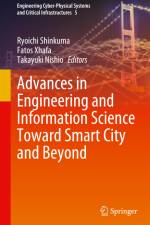
This book presents advances on the state of the art in smart cities systems and applications based on the proof of concept and prototyping for smart cities in an interdisciplinary context of engineering and information sciences. Smart cities have emerged as highly complex technological endeavors that combine knowledge and technology from many disciplines ranging from information sciences to engineering. Due to their complex nature, the modeling, development, and prototyping of applications in smart cities present a myriad of challenges, including technical, economic, and social ones, across application subdomains such as smart transportation, social welfare, tourism, and smart industry. It becomes difficult or sometimes impossible to provide a solution for such potential research issues and challenges from a traditional disciplinary-approach only; to tackle such research issues and to make the paradigm of smart cities a reality, interdisciplinary approaches are deemed necessary. Readers, developers, practitioners, and policy-makers in the field find in the book insights, experiences, findings, and perspectives on smart cities applications with an emphasis on real-life prototyping, beyond the confines of laboratory experiments.
Abonner på vårt nyhetsbrev og få rabatter og inspirasjon til din neste leseopplevelse.
Ved å abonnere godtar du vår personvernerklæring.