












Gjør som tusenvis av andre bokelskere
Abonner på vårt nyhetsbrev og få rabatter og inspirasjon til din neste leseopplevelse.
Ved å abonnere godtar du vår personvernerklæring.Du kan når som helst melde deg av våre nyhetsbrev.

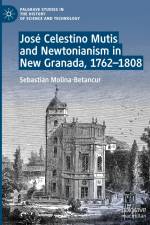
This book presents the process of circulation and adoption of Newtonianism in the Viceroyalty of New Granada (modern-day Colombia) in the eighteenth century by examining José Celestino Mutis¿s lectures at the Colegio del Rosario between the 1760s and 1770s. Mostly famous for his botanical activities as director of the botanical expedition, Mutis lectured the first course of mathematics ever created in New Granada on his arrival in Bogota in 1762, in which he included several lectures on physics that encompassed multiple aspects of his interpretation of Newton¿s experimental physics.
This book brings together multiple theoretical perspectives and disciplinary approaches to study the acquisition and development of written language by children as well as the implications for teaching and learning of writing practices in a variety of languages and cultural contexts. Chapters in this contributed volume present both theoretical contributions and results of research carried out with students and teachers from 11 countries (Belgium, Brazil, Chile, Israel, Italy, Mexico, the Netherlands, Portugal, Spain, UK and USA) who speak seven different languages: Portuguese, Spanish, English, Italian, French, Dutch and Hebrew. By bringing together research developed in diverse cultural contexts it enriches the debates in the interdisciplinary field of writing studies by analyzing a wide range of topics at the interface between research and educational implications for the teaching and learning of writing by children.The book consists of five parts, each one addressing a specific set of topics. Part I presents studies on topics related to written language representation systems (phonological and morphological awareness) and on the relationship between grammar and the quality of texts of different genres. Part II includes studies related to compositional processes of writing texts, and the factors involved in these processes. Part III focuses on the difficulties faced by students during the acquisition and development of writing. Part IV is dedicated to chapters that discuss and compare writing practices in different social environments. Finally, chapters in part V deal with teaching and learning of writing in the school setting.Development of Writing Skills in Children in Diverse Cultural Contexts: Contributions to Teaching and Learning will be of interest to researchers and students in the fields of psychology, education and linguistics, as well as to other social scientists in the broader interdisciplinary field of writingstudies.
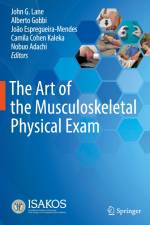
This book is an invaluable resource for all those seeking to enhance their proficiency in physical examination. Emphasizing its importance for thorough assessments and accurate diagnoses, it equips practitioners with comprehensive theoretical and practical knowledge. With seven sections devoted to different orthopedic structures, the book meticulously examines their underlying anatomy, pathological conditions, and diagnostic methodologies. Each author presents joint-specific tests, and detailed anatomical insights, enabling accurate assessments and identification of underlying conditions.Written and edited by members of ISAKOS, this collaboration draws upon the expertise of leading international experts. Appealing to a broad readership, it is an invaluable tool for orthopedists, sports medicine physicians, physical therapists, athletic trainers and students.
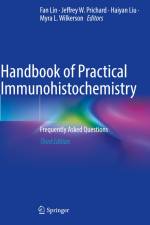
As in the second edition, the third edition of Handbook of Practical Immunohistochemistry - Frequently Asked Questions is written in a question and answer (Q&A) format and intended to be a practical, user-friendly, quick reference for information related to using the most up-to-date immunohistochemistry and in situ hybridization in clinical diagnosis. The new edition demonstrates a significant revision and improvement over the second edition. Five new chapters have been added that cover the following: 1) Immunohistochemistry: Leica's perspective; 2) Immunohistochemistry: Maixin perspective; 3) RNA in situ hybridization: Applications in anatomic pathology; 4) Applications of rapid immunohistochemistry on frozen tissue sections during intraoperative pathologic diagnosis; and 5) Cutaneous lymphomas. In addition to extensive additions and changes, over 150 new questions and answers were added throughout this new edition. All chapters have been updated to include relevant new questions, new markers, more refined IHC panels, representative pictures, and current references. An extensive set of high-quality color pictures and diagnostic algorithms, if available, is included in each chapter to illustrate some of the key antibodies, including many recently discovered and substantiated antibodies used in that chapter.Written by experts in the field, Handbook of Practical Immunohistochemistry Third Edition is a comprehensive and practical guide for surgical pathologists, pathology residents and fellows, cytopathologists, and cytotechnologists.
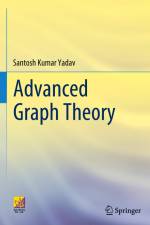
The present book is based on the curriculum of undergraduate and postgraduate courses of universities in India and abroad. Every effort is made to present the various topics in the theory of graphs in a logical manner with adequate historical background and include suitable figures to illustrate concepts and results ideally. The formidable exercises, neither easy nor straightforward, are bold faced and highlighted. The theory portion of each chapter is studied thoroughly as it helps solve many of the problems with comparative ease. Selected material from this book is used for a semester course on graph theory, while the entire book serves for a whole session course.
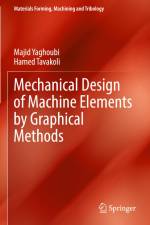
This book covers designing of various machine elements and serves as a reference for mechanical designing of machine elements in academia and industry. It provides information on designing approaches and several examples and problems, enabling readers to make all of their required calculations for their specific mechanical design or fabrication tasks by using the book's plots (graphs), instead of complicated formulas.
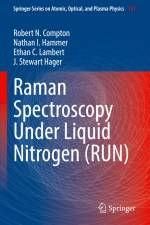
This book describes a simple yet innovative method for performing Raman spectroscopy of samples submerged under liquid nitrogen. While Raman spectroscopy has proven to be a powerful tool for the characterization of the structure of matter in the gaseous, liquid, and solid phases, one major difficulty in its application has been laser damage to the material under investigation, especially for biological samples. This book demonstrates how immersion of the sample in liquid nitrogen protects the sample from thermal degradation and oxidation at high incident laser power and allows improvements in sensitivity and spectral resolution over room-temperature Raman spectroscopy, leading to the so-called RUN (Raman Spectroscopy Under liquid Nitrogen) technique. Cooling to liquid nitrogen temperature also allows the selection of the lowest energy molecular conformation for molecules which may have many low energy conformers. In addition, the presence of liquid nitrogen over a roughened surface improves the sensitivity of Surface Enhanced Raman Spectroscopy (SERS), enabling the closely related SERSUN (Surface-Enhanced Raman Spectroscopy Under liquid Nitrogen) technique. This book starts with the theoretical and experimental basics of Raman and polarized Raman spectroscopy, before moving on to detailed descriptions of RUN and SERSUN. Room temperature and RUN spectra are provided for over fifty molecules.
Diabetes mellitus has become epidemic on a global scale, and millions of new cases are diagnosed every year. With an estimated 80% of people with diabetes living in disadvantaged regions, and the key roles of lipoproteins in the pathogenesis of the chronic complications of diabetes, this volume will be relevant to many readers globally. It is our intention that the contents will advance knowledge of the readers who will use it to contribute to the reduction of the burden associated with altered lipoproteins in people with diabetes. The second edition of this book provides an updated and comprehensive review of the field. The book, which includes many tables and figures, is presented in three main sections: (i) Lipoprotein metabolism, qualitative changes and measurements; (ii) Lipoproteins and the complications of diabetes; and (iii) the treatment of lipoproteins in diabetes. Each chapter from the first edition has been updated, and new topics added. New topicsinclude the links between glycemia and lipoproteins, the role of lipoproteins in ischemic stroke, the diagnosis and management of statin intolerance (which is thought to be more common in people with diabetes) and the use of PCSK9 inhibitors and fish oils in the management of lipoproteins in people with diabetes. This book is written by an international group of experts in the clinical, laboratory and research aspects of lipoproteins in diabetes. Lipoproteins in Diabetes Mellitus, 2nd Edition is a comprehensive reference on the clinical and scientific aspects of lipoproteins in diabetes. It is a must-have resource for primary care and specialist clinicians, clinical and basic science researchers and to trainees and students.
Niels Bohr's atomic theory of 1913 is one of the absolute highlights in the history of modern science. It was only with this work that physicists realized that quantum theory is an essential ingredient in atomic physics, and it was also only with this work that Rutherford's nuclear model dating from 1911 was transformed into a proper theory of atomic structure. In a longer perspective, Bohr's quantum atom of 1913 gave rise to the later Heisenberg-Schrodinger quantum mechanics and all its marvellous consequences. This book is a detailed account of the origin of the Bohr atom centred around his original scientific articles of 1913 which are here reproduced and provided with the necessary historical background. In addition to the so-called trilogy - the three papers published in Philosophical Magazine - also two other and less well-known yet important papers are included.The present work starts with a condensed biographical account of Bohr's life and scientific career, from his birth in Copenhagen in 1885 to his death in the same city 77 years later. It then proceeds with a chapter outlining earlier ideas of atomic structure and tracing Bohr's route from his doctoral dissertation in 1911 over his stays in Cambridge and Manchester to the submission in April 1913 of the first part of the trilogy. The reproduction of Bohr's five articles is followed by notes and comments directly related to the texts, with the aim of clarifying some of the textual passages and to explicate names and subjects that may not be clear or well known. The reception of Bohr's radically new theory by contemporary physicists and chemists is discussed in a final chapter, which deals with the immediate reactions to Bohr's theory 1913-1915 mostly among British, German and American scientists.Historians of science have long been occupied with Bohr's atomic theory, which was the subject of careful studies in connection with its centenary in 2013. The present work offers an extensive source-based account of the original theory aimed at a non-specialist audience with an interest in the history of physics and the origin of the quantum world. In 1922 Bohr was awarded the Nobel Prize for his theory. The coming centenary will undoubtedly cause an increased interest in how he arrived at his revolutionary picture of the constitution of atoms and molecules.
This handbook is unique in its consideration of social and cultural contributions to sustainable oceans management. It is also unique in its deconstruction of the hegemonic value attached to the oceans and in its analysis of discourses regarding what national governments in the Global South should prioritise in their oceans management strategy. Offering a historical perspective from the start, the handbook reflects on the confluence of (western) scientific discourse and colonialism, and the impact of this on indigenous conceptions of the oceans and on social identity. With regard to the latter, the authors are mindful of the nationalisation of island territories worldwide and the impact of this process on regional collaboration, cultural exchange and the valuation of the oceans. Focusing on global examples, the handbook offers a nuanced, region relevant, contemporary conceptualisation of blue heritage, discussing what will be required to achieve an inclusive oceans economy by 2063, the end goal date of the African Union¿s Agenda 2063. The analysis will be useful to established academics in the field of ocean studies, policymakers and practitioners engaged in research on the ocean economy, as well as graduate scholars in the ocean sciences.
This textbook provides in-depth treatment of all systems associated with wind energy, including the aerodynamic and structural aspects of blade design, the flow of energy and loads through the wind turbine, the electrical components and power electronics including control systems. It explains the importance of wind resource assessment techniques, site evaluation and ecology and describes the integration of wind farms into the electrical grid. The reader will also become familiar with the offshore technology, the youngest and most promising aspect of wind energy. The completely revised and updated new edition provides new sections on fatigue design, analytical models for structural analysis and topology optimization. The book is written by experts in research, teaching and industry. It conveys the importance of wind energy in the international energy policy debate and offers clear insight into the subject for all students learning about wind engineering. Problemswith solutions are perfect for self-study. It is also an authoritative resource for engineers designing and developing wind energy systems, energy policy-makers and economists in the renewable energy sector.The translation of some chapters was done with the help of artificial intelligence (machine translation by the service DeepL.com). A subsequent human revision was done primarily in terms of content.
This book offers a comprehensive and multidisciplinary global overview of populism and human rights in the light of globalization. It examines why the dominant (neo)liberal paradigm of the last decades resulted in major economic and social inequalities which resulted in the surge of national populism, led by the election success of right-wing parties, movements, and leaders across the world. It discusses, among other topics, the success of Brexit in Britain and the election success of Donald Trump and Marine Le Pen and explains why there is a need for a dialogue on human rights and globalization in this era of populism.Further contributions analyze various important topics of the field, including cross-culturalism, globalization, human rights, challenges and threats, diversity, curbing global corruption, sustainable development, populism, the decline of free speech, the new nationalism, internationalization, global regime of human rights, leadership theory, global management competencies, gender, quality management, individualism-collectivism, and examples of new initiatives in global organizations. This makes the book a valuable and useful resource for students, researchers, and scholars of international relations, political science, sociology, political psychology, law, diplomatic studies, Communication and media studies, economics, education and management, as well as practitioners and policy-makers interested in a better understanding of globalization, populism, and human rights.
This book covers the fundamentals of different laser-based manufacturing and processing, namely laser shock peening, laser micromachining, laser cleaning, cladding, remelting, laser honing, and other several aspects of lasers. The book discusses the general laser interaction with different materials. The application of laser-based post-processing of additive manufacturing and repair engineering is reported. It also provides the reader with mechanism of lasers in manufacturing and recent developments in tools, technologies, controls, and operations.
This book discusses a wide range of health-related mining issues, with particular reference to occupational diseases, metal toxicity, postural injuries in miners, modern fire safety controls, noise-induced hearing loss prevention, and noise mapping. Mining plays a central role in the development of modern civilization. By providing the essential raw materials, mining ensures progress, safety, and comfort of people. However, this necessary activity comes with several woes, the most important of which are occupational health hazards. Mines act as sources of constant danger and risk to the miners irrespective of the scale of mining, such as large-scale industrial mining or small-scale artisanal mining. Not only are there accidents, but continuous exposure to dust, metal toxicity, hazardous gases and fumes, and loud noises, giving rise to a variety of diseases to mine workers. The comprehensive coverage of issues and the case studies will make this book an essential reference and critical reading. Medical geology is a necessary discipline in earth sciences. Unfortunately, not much literature is available on this subject. Therefore, this book is essential for practicing engineers and supervisors in mines, health and safety professionals, researchers, and mining industry students.
This book focuses on cosmetic genital surgery encompassing from basic through advanced techniques, discussing indications, contraindications, short- and long-term complications, and postoperative care of each surgical procedure.Stemming from the 20-years practical experience of the author, this volume comprehends different techniques enriched by more than 400 original photos, detailed operational steps, and updated evidence-based literature.Both practitioners and professionals in gynecology, plastic surgery, dermatology and urology will benefit from the uniform and clear structure of this book and from the multiple choice questionnaire for self-assessment.Additional questions via app: Download the Springer Nature Flashcards app for free and use exclusive additional material to test your knowledge: https://sn.pub/tvlq7Q
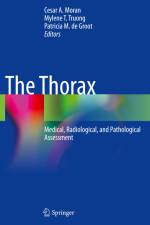
The current medical practice has become more of a team effort rather than an isolated practice. The current evaluation of patients in the daily practice is essentially performed by medical assessment of the patient in question followed by diagnostic imaging, and when needed and possible the evaluation of tissue for diagnosis with its subsequent assessment of biomarkers and other ancillary tools that play an important role in the evaluation and prognosis. The book herein proposed will exactly provide such assessment focused in the thoracic assessment of patients afflicted with any particular disease of the thorax. Expert clinician in pulmonary medicine will provide the state of the art in the evaluation of such patients, which will provide the most important background in the clinical impression and further assessment of these patients. This assessment in most cases is followed by the evaluation of imaging, which provides a highly important information of not only the exact location of the process but also of the nature of whether is localized, infiltrative, diffuse, bilateral, etc., as well as the possible compromise of other adjacent structures. Such information is crucial as imaging and clinical information will provide a working diagnosis, which ultimately will be defined by the pathological assessment. Therefore, in real practice neither one of these subspecialties works alone or in isolation. On the contrary, each one depends on the other for the final diagnosis and proper management of patients with thoracic diseases. Based on such experience is that the current text will provide in the same text of the needed information that a clinician, radiologist or pathologist will need in order to arrive to the best possible conclusion. The scope of this book is unique in its nature as currently, even though there are several text on either one of those specialties, those publication are strictly on the either radiology, medicine or pathology. Our proposed text will bring all those together in a single text and written by experts in their respective field. This book should be of interest to all of those in the practice of thoracic medicine (radiologist, pulmonologist, pathologists) and any one who in the general practice is confronted with the evaluation of these patients.
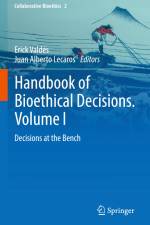
The Handbook of Bioethical Decisions is aimed at addressing and analyzing the most important ethical concerns and moral quandaries arisen in biomedical and scientific research. As such, it identifies and problematizes on a comprehensive range of ethical issues researchers must deal with in different critical contexts. Thus, the Handbook, Vol. I, may be helpful for them to make decisions and deliberate in complex practical scenarios. In this fashion, the volume reunites different points of view to give readers room enough to get a better knowledge and take their own position on pressing bioethical issues of the day. Consequently, this work seeks to engender dense ethical epistemology scientists can count on when conducting latest generation biomedical research. By bringing together an impressive array of contributions on the most important elements and categories for ¿at the bench¿ bioethical decisions as well as offering chapters by some of the most world renowned and prominent experts in bioethics, the Handbook, Vol. I, is a paradigmatic text in its area and a valuable resource for courses on bioethics, and biomedical research, as well as courses that discuss ethics and the biosciences at different professional levels, biomedical industry, pharmacological companies and the public sphere in general.
This book focusses on teaching and learning in elementary and middle school mathematics and suggests practices for teachers to help children be successful mathematical thinkers. Contributions from diverse theoretical and disciplinary perspectives are explored. Topics include the roles of technology, language, and classroom discussion in mathematics learning, the use of creativity, visuals, and teachers¿ physical gestures to enhance problem solving, inclusive educational activities to promote children¿s mathematics understanding, how learning in the home can enhance children¿s mathematical skills, the application of mathematics learning theories in designing effective teaching tools, and a discussion of how students, teachers, teacher educators, and school boards differentially approach elementary and middle school mathematics.This book and its companion, Mathematical Cognition and Understanding, take an interdisciplinary perspective to mathematical learning and development in the elementary and middle school years. The authors and perspectives in this book draw from education, neuroscience, developmental psychology, and cognitive psychology. The book will be relevant to scholars/educators in the field of mathematics education and also those in childhood development and cognition. Each chapter also includes practical tips and implications for parents as well as for educators and researchers.
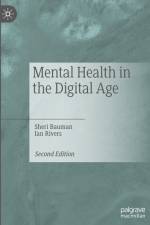
This second edition of this highly impactful book examines the intersection of mental health and digital technology to make informed decisions about the new options provided by digital technology. It highlights the rise in online therapy and social media and examines the ethical dilemmas involved in online research to suggest that the benefits created far outweigh the possible risks. This expanded and updated second edition, includes practical suggestions for clinicians and public, builds upon the first by updating readers on recent developments in technology and research in this area since 2015. It explores ways in which governments and practitioners responded to the mental health crisis caused by the Covid-19 pandemic, and looks at the challenges as well as the benefits of our increasing interaction online.
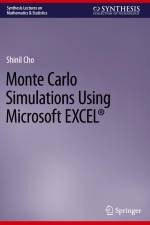
This book ¿offers step-by-step descriptions of various random systems and explores the world of computer simulations. In addition, this book offers a working introduction to those who want to learn how to create and run Monte Carlo simulations. Monte Carlo simulation has been a powerful computational tool for physics models, and when combined with the programming language Excel, this book is a valuable resource for readers who wish to acquire knowledge that can be applied to more complex systems. Visualization of the simulation results via the Visual Basic built in Microsoft EXCEL is presented as the first step towards the subject. Prior experience with the Excel add-in VBA is kept to a minimum. In addition, a chapter on quantum optimization simulation utilizing Python is added to explore the quantum computation. Readers will gain a fundamental knowledge and techniques of simulation physics, which can be extended to STEM projects and other research projects.
This book serves as a guide to the pulmonary and critical care complications of hematopoietic stem cell transplantation (HSCT). HSCT is an important therapeutic modality for a variety of malignant and non-malignant conditions. The outcomes of these patients have been improving and the number of HSCT cases is increasing around the world. These patients, however, continue to have post-transplant complications related to conditioning regimens and graft vs. host disease. Pulmonary complications following HSCT remain a major cause of morbidity and mortality in this patient population.The book begins with an overview of HSCT and graft vs. host disease. Chapters then cover particular complications, including immunological changes in lungs, diffuse alveolar hemorrhage, bronchiolitis obliterans and pulmonary fibrosis. Other complications, including neurologic, renal, gastrointestinal, and cardiac, are covered. Chapters are comprehensive and consistent with each defining the scope of the complication, epidemiology, risk factors, diagnostic approach, management, outcome and predictors of outcome, and future directions. The book provides insight as well on matters that arise during the care of HSCT patients such as provider burnout, nursing care, intensive care unit organization, nutritional support, and pulmonary and physical rehabilitation. This is an ideal guide for pulmonologists, critical care physicians, transplant specialists, oncologists, and relevant trainees caring for patients who have undergone HSCT.
Abonner på vårt nyhetsbrev og få rabatter og inspirasjon til din neste leseopplevelse.
Ved å abonnere godtar du vår personvernerklæring.