














Gjør som tusenvis av andre bokelskere
Abonner på vårt nyhetsbrev og få rabatter og inspirasjon til din neste leseopplevelse.
Ved å abonnere godtar du vår personvernerklæring.Du kan når som helst melde deg av våre nyhetsbrev.

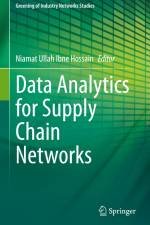
The objective of the book is to adopt the application of data analytics to enhance the sustainability and resilience of the green supply chain networks. To demonstrate the applicability and usefulness of the method, the book adopts different data analytic models and approaches against the backdrop of case studies. In summary, this book attempts to address the question of methods, tools, and techniques that can be used to create resilient, anti-fragile, reliable, and invulnerable green supply chain networks.
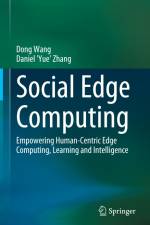
The rise of the Internet of Things (IoT) and Artificial Intelligence (AI) leads to the emergence of edge computing systems that push the training and deployment of AI models to the edge of networks for reduced bandwidth cost, improved responsiveness, and better privacy protection, allowing for the ubiquitous AI that can happen anywhere and anytime. Motivated by the above trend, this book introduces a new computing paradigm, the Social Edge Computing (SEC), that empowers human-centric edge intelligent applications by revolutionizing the computing, intelligence, and the training of the AI models at the edge. The SEC paradigm introduces a set of critical human-centric challenges such as the rational nature of edge device owners, pronounced heterogeneity of the edge devices, real-time AI at the edge, human and AI interaction, and the privacy of the edge users. The book addresses these challenges by presenting a series of principled models and systems that enable the confluence of the computing capabilities of devices and the domain knowledge of the people, while explicitly addressing the unique concerns and constraints from humans. Compared to existing books in the field of edge computing, the vision of this book is unique: we focus on the social edge computing (SEC), an emerging paradigm at the intersection of edge computing, AI, and social computing. This book discusses the unique vision, challenges and applications in SEC. To our knowledge, keeping humans in the loop of edge intelligence has not been systematically reviewed and studied in an existing book. The SEC vision generalizes the current machine-to-machine interactions in edge computing (e.g., mobile edge computing literature), and machine-to-AI interactions (e.g., edge intelligence literature) into a holistic human-machine-AI ecosystem.
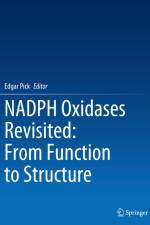
This book provides a unique, comprehensive, and up-to-date overview of the various NADPH oxidases and narrates the history of their discovery, biochemical characteristics, genetics, molecular structure, and multiple functions in health and disease. It covers the subject in a manner that serves both the expert and the novice researcher in the field.The book starts with an overview of the major milestones in the discovery of the archetypical NADPH oxidase, known as cytochrome b558, and its cytosolic regulators. This is followed by personal recollections by pioneers of the field, descriptions of the work of the major figures of the past by their followers, and a rendering of the history of the discovery of the Nox family. The central section of the book consists of chapters devoted specifically to an in depth description of the individual members of the Nox family, and is followed by chapters focused on the modulators of their function. A subsequent section comprises chapters dealing with methodologies of Nox research, interaction with other proteins, and Nox inhibitors. A distinct section of the book deals with non-mammalian Noxs, from amoeba to zebrafish. Subsequent chapters focus on Nox structure, a field in which extraordinary progress was made in recent years. The volume ends with chapters on Chronic Granulomatous Disease, the consequence of Nox loss-of-function, and its treatment by gene therapy. The coda is a crystal ball perspective of the hopes for the clinical translation of basic Nox research. Written for biochemists, cell biologists, molecular biologists, and clinicians, this book is aimed at both senior scientists and young investigators in the field.
This book focuses on green nanoremediation addressing aspects related to the use of nanomaterials generated through green synthesis protocols to efficiently restore polluted environs. Nanomaterials¿ characteristics such as large surface area, capacity to easily reach into contaminated sites, good reactivity, and possibility of being developed to present photocatalytic activity and/or to deal with targeted substances by chemical surface modification are useful specially to perform remediation. As an alternative to conventional physicochemical methods, the green-based synthesis protocols reject the use of harmful reagents, prevent waste production, apply renewable energy source and/or materials, and consider in first place offering the smallest negative impact possible to living beings and to the ecosystem. Green synthesis in nanotechnology field involves the use of seaweeds, bacteria, cyanobacteria, yeasts, fungi, plants (living ones, biomass, extracts) and/or bio-derived products to generate the nanomaterials. The introductory chapter will be dedicated to nanomaterials¿ characteristics that enable them to be used in environmental remediation. The first part of the book will be dedicated to organic and inorganic pollution and the threats they pose to living forms; advantages, disadvantages and mechanisms of nanoremediation; comparison between conventional strategies of environmental pollution remediation and the green nanoremediation; carbon-based and non-carbon-based green nanomaterials capable of promoting environs¿ remediation; cost/benefits of using nanomaterials and nanoinformatics to a safe nanotechnology. The second part will be dedicated to green nanoremediation of water and soil, microbe-based, algae-based and plant-based synthesis of nanomaterials to nanoremediation. This part will also contain chapters dedicated to relevant nanomaterials for green nanoremediation protocols, nano-phytoremediation strategies, strategies to evaluate the efficiency of protocols related to this kind of remediation, main interactions of green nanomaterials and microbes during nanoremediation and, as a consequence of it, biocompatibility of green nanomaterials. This book¿s main purpose is to offer readers extensive knowledge on green nanoremediation as a feasible strategy to fight pollution's harmful consequences and clean environmental pollution, but also present the challenges that should be surpassed.
This book explores how Canada is imagined primarily by US writers, and what readers and scholars on both sides of the Canada-US border can learn from these recent depictions by examining a selection of US-authored fiction from 9/11 to the present. The novels ¿ and occasionally paintings, films, and musicals ¿ that are the subject of the book provide a deliberately varied set of case studies to probe how US texts, along with works of art produced on both sides of the Canada-US border, uncover moments in Canadian historical and literary studies that have been buried or occluded to protect Canada's self-representation as an exceptional nation.
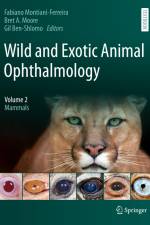
This Volume 2 of a two-volume work is the first textbook to offer a practical yet comprehensive approach to clinical ophthalmology in wild and exotic mammals. A phylogenetic approach is used to introduce the ecology and importance of vision across the entire diversity of mammal species before focusing on both the diverse aspects of comparative anatomy and clinical management of ocular disease from one animal group to the next. Edited by three of the most esteemed authorities in exotic animal ophthalmology, this two-volume work is separated into non-mammalian species (Volume 1: Invertebrates, Fishes, Amphibians, Reptiles, and Birds) and Mammals (Volume 2: Mammals).Wild and Exotic Animal Ophthalmology, Volumes 1 and 2 is an essential collection for veterinary ophthalmologists and other veterinary practitioners working with wild and exotic animals.
This book constitutes the refereed proceedings and revised selected papers from the 15th International Symposium on Music in the AI Era, CMMR 2021, which took place during November 15¿19, 2021 as a virtual event. The 24 full papers included in this book were carefully reviewed and selected from 48 submissions. The papers are grouped in thematical sessions on Music technology in the IA era; Interactive systems for music; Music Information Retrieval and Modeling; and Music and Performance Analysis.
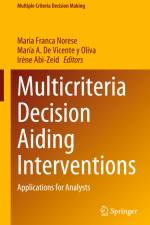
This book introduces readers to multicriteria decision aiding (MCDA) interventions used in complex situations. In each chapter, expert analysts propose a piece of the puzzle, while the final, complete puzzle offers an interesting reflection of the main challenges and difficulties associated with decision aiding interventions, as well as the different tools adopted in response. Particular attention is given to the approaches used to identify and overcome specific difficulties.Designed for analysts familiar with several multicriteria methods but seeking detailed information and experience, this book helps to elaborate and validate MC models in real-life decision aiding interventions. In addition, it helps novice analysts appreciate the difficulty of decision aiding and use the available methods to reduce or control them with the help of socio-technical approaches.
This is the first volume to comprehensively discuss the ethical, regulatory, and social aspects of xenotransplantation research.Organized into four parts, Xenotransplantation begins by examining ethical issues around informed consent of the potential xenograft recipient, the major ethical issues encountered when doing this research on pigs, and allocation issues. Part two examines regulatory aspects from a global perspective, specifically from three major regions of the world doing xenotransplantation research currently, of which include the United States, Western Europe, and Asia. Following this, part three describes religious aspects of xenotransplantation amongst the major world religions, including Christianity, Islam, Judaism, and Hinduism. The book closes with an analysis of quantitative and qualitative studies conducted by the editors that assess the public¿s perception of xenotransplantation. Featuring original data collectedby the editors, this book is an instrumental resource for all clinicians involved in the research and practice of xenotransplantation.
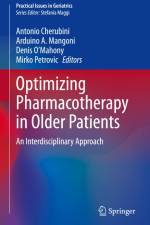
This book summarizes the broad and rapidly evolving field of geriatric pharmacotherapy, which is becoming increasingly relevant for practicing physicians who care and prescribe medications for older patients. Around the globe, ageing populations are associated with an increased prevalence of chronic diseases. Older adults are often affected by multimorbidity, i.e., suffer from more than one chronic disease. The main consequence of multimorbidity is polypharmacy, which is commonly defined as the regular use of five or more medicines. Polypharmacy has now reached epidemic proportions in our societies, and is associated with an increased risk of drug-drug interactions, drug-disease interactions and adverse drug reactions. The management of polypharmacy in older patients with complex multimorbidity poses several challenges and needs to be based on specific knowledge and prescribing expertise.The aim of this book is to provide a comprehensive update on thefield, and to share the expertise needed to optimize the management of pharmacotherapy in older patients.
¿Can I choose to die?¿ As the number of requests for euthanasia and physician-assisted suicide continues to rise, human rights law faces a new conflict: the right to die vs. the right to life¿ The right to die or, in other words, ¿the right to choose the time and manner of one¿s own death¿ is a question of personal autonomy and its limits. This book provides a comprehensive understanding of the right to die and sheds light on its possible future under the European Convention on Human Rights. After setting a clear framework by defining the key terminology, the book takes a two-part approach to achieving its aim.The first part focuses on the right to die in practice by examining selected jurisdictions. Switzerland, which is famous for its assisted suicide organizations, and the Netherlands, which was the first country to legalize euthanasia, are examined in detail. Belgium, Germany, the United Kingdom, and -as an exception to the Convention perspective - Canadaare also included. While this examination offers a better understanding of what the right to die looks like in practice, it also provides insights on the slippery slope argument, which serves as a counterweight to personal autonomy, without making a definitive statement on its validity. This part also illustrates the different paths that led or did not lead to the right to die in practice. The second part is an analysis of the European Court of Human Rights case law on the right to die. The Court has made important statements in only very cases, while its caution when approaching such a delicate and controversial topic among its 47 members is understandably emphasized. This analysis of the Court¿s approach to the balancing of personal autonomy against other interests allows us to take a look back at the practice in more permissive jurisdictions through the lens of the Convention. Taken together, the book¿s two parts provide valuable lessons for countries that decideto practice assisted dying, which are outlined in the conclusion. In addition, given that a purely legal approach can only offer a partial picture, the book argues that an interdisciplinary approach would be much more favorable in terms of providing the necessary basis for the right to die debate.
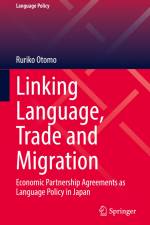
This book examines the effect of trade policy on language which represents an underrecognized area in the field of language policy and planning. It argues that trade policies like Japan¿s Economic Partnership Agreements (EPAs) have important consequences for national language (education) policies and for discourses about language and nation. Since 2008, Japan has signed the EPAs with Indonesia, the Philippines and Vietnam to recruit migrant nurses and eldercare workers and manage their mobility by means of pre-employment language training and the Japanese-medium licensure examinations. Through the analysis of these language management devices, this book demonstrates that the EPAs are a manifestation and representation of contemporary language issues intertwined particularly with pressing issues of Japan¿s social aging and demographic change. As the EPAs are intertwined with welfare, economy, social cohesion, and international political and economic relations and competitiveness, the book presents a far more complex picture of and a richer potential of language policy.
COVID19 pandemics has had profound consequences on public health and has represented a challenge for several medical specialties. Despite this was underestimated at the beginning of the outbreak, COVID19 is actually impacting on women and children health, as well. The consequences in this field are multifaceted and complex as they span from the occurrence of COVID19 in pregnant patients, to the possibility of SARS-CoV-2 mother-to-child transmission, the occurrence of neonatal COVID and pediatric sequelae. COVID19 and the related public health measures may also have important consequences on psychological well-being and organization of perinatal care as well as they raise relevant ethical issues. All these aspects were at risk to be forgotten within the many others highlighted by the pandemics but are important both for individual care and also from a political point of view and the organization of care. There is a large demand of high-quality education, information and training in thisfield and we answered that by organising the COVID19 in Pregnancy and Childhood Days: this book represents the hard legacy of this event with the contribution of key opinion leaders in all the aforementioned specialties. The book is answering a clear need and is directed to: 1) obstetricians, 2) neonatologists, 3) pediatricians, 3) public health specialists, 4) adult critical care physicians, 5) infectious disease specialists, 5) psychologists. Last but not least, the informations resumed in the book are going to be useful for healthcare authorities to program perinatal care and improve it. The book will also serve as textbook for post-graduate courses and academic review resuming the state-of-the art knowledge on this area. Thus, it will be cited and used by researchers in the field: this is not a secondary characteristics as it may be quite difficult to find relevant informations, in this infodemic era, using the usual channels and databases.
This book offers a radical alternative to the positive orientation of popular psychology. This positive orientation has been criticized numerous times. However, there has yet to be a coherent alternative proposed. We all know today that life hurts and that there is no ultimate remedy to this pain. The positive approach feels to us as dishonest and irrelevant. We require a new, more negative, perspective and practice, one that is honest and does not pretend to offer an escape from the agonies of the world. This book offers in three main chapters a ¿depressive realist¿ perspective that explores the structural role of negativity and tragedy in relation to the individual psyche, society, and nature. It explores the possibility of ¿negative psychoanalysis¿ which takes into account the tragedy of human existence instead of adopting escapist positions.
This book delves into how Japanese schools evaluate and enhance education quality through lesson study, curriculum management, and school self-evaluation. It explores the concept of ¿understanding by design¿ in the context of the historical background and the challenges of the present, providing practical methods of educational evaluation for the future.Through in-depth case studies of two primary schools, readers gain a comprehensive understanding of educational evaluation and improvement. The book proposes a new theoretical framework for a comprehensive quality care process that links lesson study, curriculum management, and school evaluation. Based on authentic assessment, the strategies and examples presented can be applied to any quality system. The conclusion offers core ideas for successful implementation of educational evaluation and improvement. This book is essential reading for teachers and school leaders seeking tobuild their schools¿ quality systems, and for researchers and graduate students interested in improving educational evaluation.
The Encyclopedia of Mathematical Geosciences is a complete and authoritative reference work. It provides concise explanation on each term that is related to Mathematical Geosciences. Over 300 international scientists, each expert in their specialties, have written around 350 separate articles on different topics of mathematical geosciences including contributions on Artificial Intelligence, Big Data, Compositional Data Analysis, Geomathematics, Geostatistics, Geographical Information Science, Mathematical Morphology, Mathematical Petrology, Multifractals, Multiple Point Statistics, Spatial Data Science, Spatial Statistics, and Stochastic Process Modeling. Each topic incorporates cross-referencing to related articles, and also has its own reference list to lead the reader to essential articles within the published literature. The entries are arranged alphabetically, for easy access, and the subject and author indices are comprehensive and extensive.
With an ever-growing body of evidence on the links between different oppressions, never have the debates in Critical Animal Studies surrounding intersectionality in relation to animal ethics been more important. In particular, the arguments related to anthropomorphic attributes of mentality to other than humans promise to provide fruitful new ground for re-assessing human-animal relations. This book maps the central debates surrounding anthropomorphism in relation to our descriptions of animals, their lives, animal mentality, and meaningful communication in the nonhuman world. Rebekah Humphreys synthesizes the work of critical animal theorists, philosophers, and cognitive ethologists, and provides a critical account of how the debates concerning anthropomorphism play a key role in a proper understanding of animal ethics.
This book draws on a four-year ethnographic study conducted in the prisons and on the streets of Greater Manchester, England, to examine gangs and organised crime in the North of England. It includes the personal testimonies of active prison gang members and major organised crime figures, many of whom are behind bars, and some active street gang members. It presents an holistic account by exploring the linkages that exist between prisons and the streets, including the lines of continuity between gangs on both sides of the prison walls and how gang affiliation straddles this divide. It offers data on the region¿s drug market (specifically Class A drugs) as this market is the lynchpin of the underworld, both within and without prison. It also includes the perspectives and insights of prison officers, police detectives, youth workers, active and former street gang members and the parents of deceased gang members. This is a ground-breaking, contemporary study, analysing English gang compositions and activities, with its findings and results based on qualitative interviews and ethnographic research.
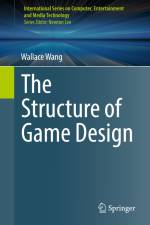
The Structure of Game Design is designed to help aspiring and existing game designers turn their ideas into working games. Creating a game involves understanding the core foundational elements of all types of games from paper-based games to the latest video games. By understanding how these core principles work in all types of games, you can apply these same principles to design your own game. Games are about goals, structure, play and fun. While everyone will always have their own idea of what might be ¿fun¿, any game designer can maximize player enjoyment through meaningful choices that offer various risks and rewards. Such challenges, combined with rules and limitations, force players to overcome obstacles and problems using a variety of skills including dexterity, puzzle solving, intelligence, and strategy. Essentially games allow players to venture forth into new worlds and overcome problems in a safe but exciting environment that allows them to triumph in the end.Just as playing games have proven popular around the world to all ages, genders, and cultures, so has game designing proven equally popular. Games can challenge players to make the best move, solve puzzles, engage in combat, manage resources, and tell stories. By understanding how randomness, psychology, and balance can change the way games play, readers can decide what game elements are best for their own game creation.Whether your goal is to make money, learn something new, make a social statement, improve on an existing game idea, or challenge your artistic, programming, or design skills, game design can be just as much fun as game playing. By knowing the parts of a game, how they work, how they interact, and why they¿re fun, you can use your knowledge to turn any idea into a game that others can play and enjoy.
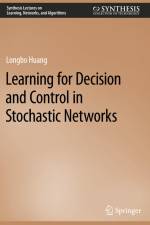
This book introduces the Learning-Augmented Network Optimization (LANO) paradigm, which interconnects network optimization with the emerging AI theory and algorithms and has been receiving a growing attention in network research. The authors present the topic based on a general stochastic network optimization model, and review several important theoretical tools that are widely adopted in network research, including convex optimization, the drift method, and mean-field analysis. The book then covers several popular learning-based methods, i.e., learning-augmented drift, multi-armed bandit and reinforcement learning, along with applications in networks where the techniques have been successfully applied. The authors also provide a discussion on potential future directions and challenges.
This book offers a comprehensive collection of research articles that utilize datäin particular large data sets¿in modern power systems operation and planning. As the power industry moves towards actively utilizing distributed resources with advanced technologies and incentives, it is becoming increasingly important to benefit from the available heterogeneous data sets for improved decision-making. The authors present a first-of-its-kind comprehensive review of big data opportunities and challenges in the smart grid industry. This book provides succinct and useful theory, practical algorithms, and case studies to improve power grid operations and planning utilizing big data, making it a useful graduate-level reference for students, faculty, and practitioners on the future grid.
Abonner på vårt nyhetsbrev og få rabatter og inspirasjon til din neste leseopplevelse.
Ved å abonnere godtar du vår personvernerklæring.