














Gjør som tusenvis av andre bokelskere
Abonner på vårt nyhetsbrev og få rabatter og inspirasjon til din neste leseopplevelse.
Ved å abonnere godtar du vår personvernerklæring.Du kan når som helst melde deg av våre nyhetsbrev.

This book explores the role of alchemy, Paracelsianism, and Hermetic philosophy in one of Shakespeare¿s last plays, The Winter¿s Tale. A perusal of the vast literary and iconographic repertory of Renaissance alchemy reveals that this late play is imbued with several topoi, myths, and emblematic symbols coming from coeval alchemical, Paracelsian, and Hermetic sources. It also discusses the alchemical significance of water and time in the play¿s circular and regenerative pattern and the healing role of women. All the major symbols of alchemy are present in Shakespeare¿s play: the intertwined serpents of the caduceus, the chemical wedding, the filius philosophorum, and the so-called rex chymicus. This book also provides an in-depth survey of late Renaissance alchemy, Paracelsian medicine, and Hermetic culture in the Elizabethan and Jacobean ages. Importantly, it contends that The Winter¿s Tale, in symbolically retracing the healing pattern of the rotaalchemica and in emphasising the Hermetic principles of unity and concord, glorifies King James¿s conciliatory attitude.
This book explores the form, dynamics, and main reasons for media capture and conspiracy between editors and executive politicians in Central and Eastern Europe (CEE) since 2000. Situated in the literatures on Europeanization, democratization, party studies, and media studies, the book aims to connect these fields by showing that internal party dynamics play an important role in motivating executive politicians to hijack or collaborate with media. Against this backdrop, the book tells the story of Croatian journalism in the context of media-mafia conglomerates, political corruption, and media hijacking, and examines how "traditional" democratic drivers that the literature frequently cites, such as Europeanization and party competition, failed to prevent systematic transgressions by politicians. Methodologically, the book takes a two-pronged approach. First, nearly 50 interviews were conducted with Croatian investigative journalists, from which the narratives about the relationshipsbetween government politicians and editors over 15 years were reconstructed. In a second step, a sample of 40,000 media articles was subjected to a computational sentiment analysis, covering the same 15-year period and showing high levels of cooperation between corrupt politicians and corrupt media outlets.
Palgrave Handbook of Critical Posthumanism is a major reference work on the paradigm emerging from the challenges to humanism, humanity, and the human posed by the erosion of the traditional demarcations between the human and nonhuman. This handbook surveys and speculates on the ways in which the posthumanist paradigm emerged, transformed, and might further develop across the humanities. With its focus on the posthuman as a figure, on posthumanism as a social discourse, and on posthumanisation as an on-going historical and ontological process, the volume highlights the relationship between the humanities and sciences. The essays engage with posthumanism in connection with subfields like the environmental humanities, health humanities, animal studies, and disability studies. The book also traces the historical representations and understanding of posthumanism across time. Additionally, the contributions address genre and forms such as autobiography, games, art, film, museums, andtopics such as climate change, speciesism, anthropocentrism, and biopolitics to name a few. This handbook considers posthumanism¿s impact across disciplines and areas of study.
This book explores Turkey¿s complicated relationship to modernity and its status within the new global order by tracing the ambivalent ways in which tära (the provinces) is constituted in contemporary Turkish cinema and literature. Connoting much more than its immediate spatial meaning as those places outside of the center(s), tära is a way of naming what modernity decries as spatial peripherality, temporal belatedness, and cultural backwardness. It has functioned historically as a psychosocial repository for what Turkish modernity degrades and disavows, enabling a mapping of the predicaments and contradictions of Turkish modernization and national identity-constitution. Organized around tära as its central analytic and informed by postcolonial, psychoanalytical, and critical theory, the book examines the extent to which dominant codings of tära are affirmed and/or complicated in cinematic and literary narratives by award-winning filmmakers Nuri BilgeCeylan and Fatih Ak¿n and Nobel laureate Orhan Pamuk.
In this book, each chapter explores significant Irish texts in their literary, cultural, and historical contexts. With an introduction that establishes the multiple critical contexts for Irish cinema, literature, and their adaptive textual worlds, the volume addresses some of the most popular and important late 20th-Century and 21st Century works that have had an impact on the Irish and global cinema and literary landscape. A remarkable series of acclaimed and profitable domestic productions during the past three decades has accompanied, while chronicling, Ireland¿s struggle with self-identity, national consciousness, and cultural expression, such that the story of contemporary Irish cinema is in many ways the story of the young nation¿s growth pains and travails. Whereas Irish literature had long stood as the nation¿s foremost artistic achievement, it is not too much to say that film now rivals literature as Ireland¿s key form of cultural expression. The proliferation ofsuccessful screen versionings of Irish fiction and drama shows how intimately the contemporary Irish cinema is tied to the project of both understanding and complicating (even denying) a national identity that has undergone radical change during the past three decades. This present volume is the first to present a collective accounting of that productive synergy, which has seen so much of contemporary Irish literature transferred to the screen.
This book aims at catalyzing our learning from the COVID-19 crisis. Numerous studies have emerged confirming that during the COVID-19 pandemic, crisis management has been far from holistic. Progress previously made towards sustainability has in many cases been reversed and global inequality has grown. This volume scrutinizes the crucial role of businesses in the lived experience of the COVID-19 pandemic and calls for a new goal system in business, establishing human dignity as the ultimate outcome of sound business. Part of the Humanism in Business Series, this book brings together a group of international experts to consolidate the lessons to be learnt from the pandemic and how it was handled. It explores the foundations of the crisis, before focusing on selected sectors and regions for analysis and, finally, drawing conclusions according to the principles of humanistic crisis management. It will be of great interest to scholars and students of business ethics, as well as policy-makers, professionals and all those who practice humanistic management.
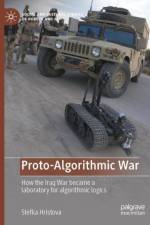
During the Iraq War, American soldiers were sent to both fight an enemy and to recover a ¿failed state¿ in pixelated camouflage uniforms, accompanied by robots, and armed with satellite maps and biometric hand-held scanners. The Iraq War, however, was no digital game: massive-scale physical death and destruction counter the vision of a clean replayable war. The military policy of the United States, and not the actual experience of war, has been rooted in the logic of digital, and nascent algorithmic technology. This logic attempted to reduce culture, society, as well as the physical body and environment into visual data that lacks cultural and historical context. This book details the emergence of a nascent algorithmic war culture in the context of the Iraq War (2003-2010) in relation to the data-driven early 20th century British Mandate for Iraq. Through a series of five inquiries into the ways in which the Iraq War attempted to and often failed tosee population and territory as digital and further proto-algorithmic entities, it offers an insight into the digitization and further unmanned automaton of war. It does so through a comparative historical framework reaching back to the quantification techniques harnessed during the British Mandate for Iraq (1918-1932) in order to explicate the parallels and complicated the diversions between the numerical logics that have driven both military state-building enterprises.
Abonner på vårt nyhetsbrev og få rabatter og inspirasjon til din neste leseopplevelse.
Ved å abonnere godtar du vår personvernerklæring.