

























Gjør som tusenvis av andre bokelskere
Abonner på vårt nyhetsbrev og få rabatter og inspirasjon til din neste leseopplevelse.
Ved å abonnere godtar du vår personvernerklæring.Du kan når som helst melde deg av våre nyhetsbrev.

This book assesses the management and performance of networks in light of the rising popularity of collaborative approaches in public service delivery. It does so by examining the case of smoking-prevention networks in Switzerland. The book considers how network managers can be distinguished based on work-context related factors, and analyses how the interaction of these factors leads to either active or non-active network management within collaborative policy delivery arrangements. It also empirically investigates the effects that network management and other network-level and project-level factors have on the policy output performance of these networks. Adopting a multi-method approach combining a qualitative comparative analysis, case studies as well as Bayesian regressions, the book will appeal to academics and students of public policy, public administration, and public management. It will also be of use to practitioners responsible for the design and themanagement of policy delivery networks.
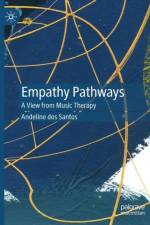
Many descriptions of empathy revolve around sharing in and understanding another person¿s emotions. One separate person gains access to the emotional world of another. An entire worldview holds up this idea. It is individualistic and affirms the possibility of access to other people¿s ¿inner world.¿ Can we really see inside another, though? And are we discrete, separate selves? How can we best grapple with these questions in the field of music therapy? In response, this book offers four empathy pathways. Two are situated in a constituent approach (that prioritises discrete individuals who then enter into relationships with one another) and two are located in relational approaches (that acknowledge the foundational reality of relationships themselves). By understanding empathy more fully, music therapists, teachers and researchers can engage in ways that are congruent with diverse worldviews and ways of being. Examples used in the book are from active and receptive music therapyapproaches as well as from community and clinical contexts, so as to provide clear links to practice.This book will be a valuable resource for academics and postgraduate students within music therapy and allied fields including art therapy, drama therapy, dance/movement therapy, psychology, counselling, occupational therapy and social development studies.
Samuel Beckett and Catastrophe is a groundbreaking collection of original essays that explore the relation between Samuel Beckett and catastrophe in terms of war, the Holocaust, nuclear disasters and ecological crisis. Responding to the post-catastrophic situations in the twentieth century, Beckett created characters who often seem to have been through an unknown catastrophe. Although the importance of catastrophe in Beckett has been noted sporadically, there has been no substantial attempt to discuss his aesthetics and work in relation to it. This collection will therefore serve as the first sustained study to explore the theme of catastrophe in Beckett and will be a highly significant contribution to Beckett studies.Chapter ¿Slow Violence and Slow Going: Encountering Beckett in the Time of Climate Catastrophe¿ is available open access under a Creative Commons Attribution 4.0 International License via link.springer.com.
This book focuses on health humanities in application. The field reflects many intellectual interests and practical applications, serving researchers, educators, students, health care practitioners, andcommunity members wherever health and wellness and the humanities intersect. How we implement health humanities forms the core approach, and perspectives are global, including North America, Africa, Europe, and India. Emphasizing key developments in health humanities, the book's chapters examine applications, including reproductive health policy and arts-based research methods, black feminist approaches to health humanities pedagogy, artistic expressions of lived experience ofthe coronavirus, narratives of repair and re-articulation and creativity, cultural competency in physician-patient communication through dance, embodied dance practice as knowing and healing,interdisciplinarity and transdisciplinarity, eye tracking, ableism and disability, rethinking expertise in disability justice, disability and the Global South, coronavirus and Indian politics, visual storytellingin graphic medicine, and medical progress and racism in graphic fiction.
Science, Technology and Society: An Introduction provides students with an accessible overview of the interdisciplinary field of Science and Technology Studies (STS). The discipline breaks down traditional conceptions of knowledge as universal, neutral and ahistorical, and takes a more critical approach to science and technology as social embedded phenomena. This comprehensive textbook makes use of unique examples and case studies to illustrate theoretical debates and concepts. In addition, the reader acquires a unique vision of contemporary issues (such as the power of algorithms, the mystification of fake news, the role of experts within the decision-making process, for example). Each chapter incorporates pedagogically rich features, including interactive discussion points to be used individually or in class as prompts for debate.
This book presents both a new theoretical framework for the criminalisation of hate, referred to as ¿law as social justice liberalism¿, and a comprehensive analysis of hate crime laws that have been enacted globally. The book begins by reflecting back on 30 years of theorisation on hate crime laws, arguing that there has been a failure to adequately capture the distinct harms of hate-based criminal conduct within legal frameworks. The book posits that liberal societies interested in advancing social equality ought to expand conventional paradigms of harm used in criminal law by comprehending hate-based conduct as a form of social injustice. Drawing on the work of Iris Young, the book sets out a comprehensive analysis of the harms of hate crime as a form of group-based oppression and uses this to set out criteria for the inclusion of protected characteristics under legislation.The second half of the book presents findings from a comparative study of hate crime lawsenacted in 190 different legal jurisdictions. This includes a new taxonomy of types, models and legal tests used by legislatures to capture the myriad forms of hate-based criminal conduct that occur globally. Further evaluation of case law and empirical research on the application of these diverging legislative approaches is used to provide recommendations on how legislators ought to construct hate crime laws. The book completes its analysis of law as social justice liberalism by synthesising law, punishment and restorative justice as a means of ensuring that liberal systems of ¿justice¿ are more firmly anchored to the advancement of ¿social justice¿.
Abonner på vårt nyhetsbrev og få rabatter og inspirasjon til din neste leseopplevelse.
Ved å abonnere godtar du vår personvernerklæring.