















Gjør som tusenvis av andre bokelskere
Abonner på vårt nyhetsbrev og få rabatter og inspirasjon til din neste leseopplevelse.
Ved å abonnere godtar du vår personvernerklæring.Du kan når som helst melde deg av våre nyhetsbrev.

This book is a comprehensive volume dedicated to dermal absorption and decontamination. Given risks including chemical warfare and accidents with toxic industrial chemicals, studies involving dermal absorption and decontamination are of the utmost importance. Each chapter consists of a systematic review on an important dermal absorption and/or decontamination topic. Chapters address key issues such as the general acceptance of water/ soap and water as the gold standard of dermal decontamination despite the fact that it commonly provides incomplete decontamination and may even result in a ¿wash-in effect¿ (an increased penetration of contaminant). Decontamination with other substances (e.g. RSDL) is explored, and factors that affect dermal penetration (e.g. anatomical variation) are summarized. All systematic reviews are comprehensive and up-to-date. Dermal Absorption and Decontamination will be useful for many fields and disciplines. Firstly,information on dermal decontamination may be used by governments for military and national defense purposes in the event of chemical warfare. Additionally, this information would be of use to many production companies, whose employees are at risk of an accident with toxic industrial chemicals. Topics covered in the book will also be of use to pharmaceutical companies, especially those exploring transdermal delivery of drugs and is of great relevance to those in the medical field, particularly dermatologists.
This book covers central issues in mitigating supply chain risks from various perspectives. Today¿s supply chains are vulnerable to disruptions that can have a significant impact on firms, business and performance. The aim of supply chain risk management is to identify the potential sources of risks and implement appropriate actions in order to mitigate supply chain disruptions. In this regard, the book presents a wealth of methods, strategies and analyses that are essential for mitigating supply chain risks.As a comprehensive collection of the latest research and cutting-edge developments in supply chain risk and its mitigation, the book is structured into four main parts, addressing supply chain risk strategies and developments; supply chain risk management review; supply chain sustainability and resilience; and supply chain analysis and risk management applications.The contributing authors are leading academic researchers and practitioners, who combine findingsand research results with a practical and contemporary view on how companies can best manage supply chain risks and disruptions, as well as how to create resilient and sustainable supply chains.This book can be used as an essential resource for students and scholars who are interested in pursuing research or teaching courses on the rapidly growing field of supply chain management. It also offers an interesting and informative read for managers and practitioners who need to deepen their understanding of effective supply chain risk management.
The entire world is in crisis with adverse childhood experiences (ACEs) and other lifetime trauma at an all-time high. This book is a valuable resource to promote optimal brain function for everyone, but especially for survivors of trauma who are particularly at risk throughout the life course. It is critical for healthcare providers, schoolteachers and administration, public safety professionals, foster and adoptive parents, employers and loved ones to understand the potential life-long consequences that ACEs can have in the lives of survivors. This book describes the complexities behind why behaviors occur if hurt people hurt themselves and others. The first half of this book addresses what can go wrong in the brain and body after trauma that potentially leads to life-long poor bio-behavioral health outcomes. The second half of this book addresses how the life-long poor bio-behavioral health outcomes can be prevented, mitigated or potentially reversed. This book is necessary for everyone who is interested in optimizing brain function, especially survivors of ACEs and other trauma throughout the life course who are at greater risk. The major focus of the book is on how to prevent long-term negative consequences of trauma and how to restore the brain, body, behavior and emotions.This book is the winner of four Book of the Year AJN Awards: Awarded 1st place in three categories: Community/Home Health, Creative Works, Psychiatric/ Mental Health; and 3rd place in Consumer Health.No book has ever won this many AJN awards since the American Journal of Nursing began acknowledging high-quality publications in 1969!
This book highlights the reasons for an urgently needed revision of the current global healthcare setup, discusses the needed mindset for a future of health, and provides a comprehensive development toolset for disruption (and for the needed incremental innovations towards disruption).Today¿s biomedical and health innovation related research in universities encourages activities that lead to incremental innovations with a relatively low risk of failure. The healthcare industry on the other hand provides tools and devices for established healthcare providers to improve the diagnosis and therapy/ treatment of the patients¿ health problems. The patient is not in the center of healthcare provision however, and prevention and prediction are not core goals. The current health setup needs to be challenged and disrupted.Disruptions are coming from technologies or processes that lead to a significant (>10x) reduction in cost or price/ performance and that also comewith new business models. The need for change, effects of exponential technologies, and the needed shift to prevention and to homecare for health democratization and patient empowerment will be discussed in detail in the first parts of the book. The subsequent sections address several innovation methods with a focus on a novel meta methodology named Purpose Launchpad Health. This is followed by a comprehensive discussion on health entrepreneurship activities and needs. The final section of the book addresses how to train students to become entrepreneurial health innovators, presenting successful curricula and examples of health incubation and accelerator setups. All of the innovation tools presented and used in this book are summarized in the final chapter to help the reader get started planning an entrepreneurial venture.Written by experts from academia and industry, the book covers important basics and best practices, as well as recent developments. Chapters are concise and enriched with key messages, learning objectives and real innovation examples to bridge theory and practice. This book aims to serve as a teaching base for health innovation design and to prepare for health-related entrepreneurial ventures.Readers with medical, biomedical, biotechnology, and health economics backgrounds - and anyone who wants to become a future oriented health innovator or who believes in disruptive approaches - will find this book a useful resource and teaching tool for developing validated products/ services and processes for the future of health.
Meyer¿s Handbook of Requirements and Business Analysis is a comprehensive treatise providing the reader with all the principles and techniques necessary to produce effective requirements.Even the best design, implementation and verification are worthless if they are the solution to the wrong problem. Defining the problem properly is the task of requirements, also known as business analysis. To be successful, a project must apply to requirements the same engineering standards as to other parts of system construction.The Handbook presents a holistic view of requirements including four elements or PEGS: Project, Environment, Goals and System. One of its principal contributions is the definition of a Standard Plan for requirements documents, consisting of the four corresponding books and replacing the structure of the obsolete IEEE 1998 standard.The text covers both classical requirements techniques and advanced topics. The successive chapters address:fundamental concepts and definitions; requirements principles; the Standard Plan for requirements; how to write good requirements; how to gather requirements; scenario techniques (use cases, user stories); object-oriented requirements; how to take advantage of formal methods; abstract data types; and the place of requirements in the software lifecycle. The Handbook is suitable both as a practical guide for industry and as a textbook, with over 50 exercises and supplementary material available from the book¿s site, including slides and links to video lectures (MOOCs).
This book responds to growing calls to conceptualise and analyse internal migration as a trajectory that unfolds over the life course of individuals rather than a series of discrete events. It combines macro and micro modes of analysis into a cohort framework to explore how individuals transition from one migration to the next. The book presents new methodological developments in longitudinal analysis and applies them to internal migration in 27 European countries. It demonstrates that the traditional dichotomy between migrants and non-migrants conceals a wide range of migration behaviour and heterogeneity among repeat migrants. It also reveals a continuity of migration behaviour: being exposed to the challenges and benefits of migration early in life predisposes individuals toward migration in adulthood. By adopting a cohort approach to migration coupled with state-of-the-art methods and novel concepts, this book provides new insights into internal migration for graduate students,academics and policymakers interested in understanding migration behaviour in Europe and beyond.
¿Can I choose to die?¿ As the number of requests for euthanasia and physician-assisted suicide continues to rise, human rights law faces a new conflict: the right to die vs. the right to life¿ The right to die or, in other words, ¿the right to choose the time and manner of one¿s own death¿ is a question of personal autonomy and its limits. This book provides a comprehensive understanding of the right to die and sheds light on its possible future under the European Convention on Human Rights. After setting a clear framework by defining the key terminology, the book takes a two-part approach to achieving its aim.The first part focuses on the right to die in practice by examining selected jurisdictions. Switzerland, which is famous for its assisted suicide organizations, and the Netherlands, which was the first country to legalize euthanasia, are examined in detail. Belgium, Germany, the United Kingdom, and -as an exception to the Convention perspective - Canadaare also included. While this examination offers a better understanding of what the right to die looks like in practice, it also provides insights on the slippery slope argument, which serves as a counterweight to personal autonomy, without making a definitive statement on its validity. This part also illustrates the different paths that led or did not lead to the right to die in practice. The second part is an analysis of the European Court of Human Rights case law on the right to die. The Court has made important statements in only very cases, while its caution when approaching such a delicate and controversial topic among its 47 members is understandably emphasized. This analysis of the Court¿s approach to the balancing of personal autonomy against other interests allows us to take a look back at the practice in more permissive jurisdictions through the lens of the Convention. Taken together, the book¿s two parts provide valuable lessons for countries that decideto practice assisted dying, which are outlined in the conclusion. In addition, given that a purely legal approach can only offer a partial picture, the book argues that an interdisciplinary approach would be much more favorable in terms of providing the necessary basis for the right to die debate.
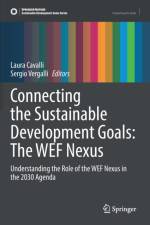
This contributed volume offers a state-of-the-art, holistic overview of the employment of a Water-Energy-Food (WEF) Nexus approach to implement the seventeen United Nations Sustainable Development Goals (SDGs), with a geographical focus on applications in different African regions. The book is divided into three sections, each composed of several chapters contributed by experts in their respective fields. Section I introduces the WEF Nexus and its role in the achievement of the 2030 Agenda and the SDGs. It highlights the attempt to connect different spheres of sustainability thanks to the Nexus, taking advantage of the existing interlinkages and interconnections among the Goals. Section II proposes a multi-scale and multi-stakeholder approach to various aspects of the Nexus and reviews existing quantitative tools. This section focuses on the issue of resource control and development aims and spotlights how Nexus dynamics influence the achievement of the SDGs as a whole. Section III applies the WEF Nexus to different African regions, which are balancing a rising population and an economic boom with severe vulnerability in the face of climate change.Chapter ¿Review of the Economic Impact of Water Availability on Food Security and the Related Ecosystems¿ is available open access under a Creative Commons Attribution 4.0 International License via link.springer.com.
This book is the first comprehensive compilation of deliberations on domestication, genetic and genomic resources, breeding, genetic diversity, molecular maps & mapping of important biotic stress as well as nutritional quality traits, genome sequencing, comparative genomics, functional genomics and genetic transformation. The economic, nutritional and health benefits especially antioxidants mediated antiaging effects of finger millet are also discussed. It also presents the input use efficiency, wide adaptation, post-harvest processing and value addition of the crop. Altogether, the book contains about 300 pages over 16 chapters authored by globally reputed experts on the relevant field in this crop. This book is useful to the students, teachers and scientists in the academia and relevant private companies interested in genetics, pathology, molecular genetics and breeding, genetic engineering, structural and functional genomics and nutritional quality aspects of the crop. This bookis also useful to seed and pharmaceutical industries.
Certain organ toxicities can be severe and life-threatening. Therefore, it is crucial to recognize these disease entities early on to provide prompt and effective treatments to improve the quality of patient care, and enable the continuation of cancer therapy long-term. A clinical handbook with a particular focus in this field is lacking. This handbook focuses on the comprehensive, systematic review of clinical aspects of immunotherapy-induced toxicities in 15 major organ systems. The organs covered include endocrine, eye, gut, heart, kidney, liver, lung, muscular-skeletal, neuro, pancreas and skin etc. A unique feature about this book is the inclusion of perspectives from Anesthesiology, Infectious Disease, and Pathology besides specific organ toxicity management. The contributors are a group of experts offering routine clinical care to patients with most complex and refractory toxicity conditions, conducting pioneering research, and providing the guidance for theclinical practice to the peers and trainees in the field. The topics of each chapter include incidence, clinical presentations, evaluation, management, and long term follow up of each disease entity. There is also a simplified management algorithm or table illustrated in each chapter as well as audio PowerPoint slide deck to provide straightforward general instruction on the evaluation and treatment.
Abonner på vårt nyhetsbrev og få rabatter og inspirasjon til din neste leseopplevelse.
Ved å abonnere godtar du vår personvernerklæring.