














Gjør som tusenvis av andre bokelskere
Abonner på vårt nyhetsbrev og få rabatter og inspirasjon til din neste leseopplevelse.
Ved å abonnere godtar du vår personvernerklæring.Du kan når som helst melde deg av våre nyhetsbrev.

This edited volume brings together the most recent research about various aspects of organized crime and the responses that have developed worldwide as a result to contain serious criminal acts. This book focuses particularly on the way criminal networking and illegal markets have developed during the first two decades of the 21st century. It examines how these developments have influenced the motivations and opportunities to commit organized crime. The volume not only focuses on illegal activities in illegal markets, such as drug and human trafficking, but also addresses organized crime and deviance in various legitimate industries. The contributions were presented at seminars of the Centre for Information and Research on Organized Crime (CIROC), and will be of particular interest to organized crime scholars and researchers, as well as advanced students of criminology across the world.
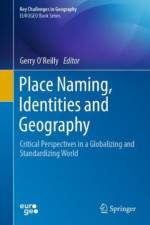
This book presents research on geographical naming on land and sea from a wide range of standpoints on: theory and concepts, case studies and education. Space and place naming or toponymy has a long tradition in the sciences and a renewed critical interest in geography and allied disciplines including the humanities. Place: location and cartographical aspects, etymology and geo-histories so salient in past studies, are now being enhanced from a range of radical perspectives, especially in a globalizing, standardizing world with Googlization and the consequent ¿normalization¿ of place names, perceptions and images worldwide including those for marketing purposes. Nonetheless, there are conflicting and contesting voices. The interdisciplinary research is enhanced with authors from regional, national and international toponymy-related institutions and organizations including the UNGEGN, IGU, ICA and so forth.
This book revisits the life and crimes of Ted Bundy. It seeks to reconcile the contradictions and controversies about his life that underscore the broader US unsolved murder problem, one that is estimated at between 250,000 to 350,000 open, unresolved, or cold cases. The incidence of crime is far greater than is captured by official statistics; most offenses are never detected, a concept known as the dark figure of crime which is explored here. Drawing on 25 years of practitioner, research, and consultant experiences with the most violent criminals, this book offers solutions toward clearing the current backlog of unsolved murders in the United States many of which were never reported and disproportionately perpetrated by offenders like Bundy. This compelling book speaks to students, academics and readers interested in true crime, serial murder, homicide and criminal justice.
This book was written by Kenneth M. Heilman, a neurologist with a long and productive clinical and academic career, including being a researcher and teacher. Based on his experiences and achievements, as well as his frustrations and failures, he examines the challenges of healthcare, including what problems exist and how these problems may be improved. Each chapter in this book focuses on integral areas of medicine, including research, creativity, career development, patient-physician relationship, wellness, medications, social considerations such as race, and medicine's future. Changes in Medicine offers a unique view to the rapidly evolving field of neurology and practicing medicine.
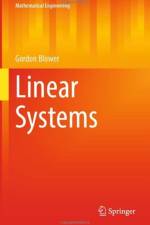
This textbook provides a mathematical introduction to linear systems, with a focus on the continuous-time models that arise in engineering applications such as electrical circuits and signal processing. The book introduces linear systems via block diagrams and the theory of the Laplace transform, using basic complex analysis.The book mainly covers linear systems with finite-dimensional state spaces. Graphical methods such as Nyquist plots and Bode plots are presented alongside computational tools such as MATLAB. Multiple-input multiple-output (MIMO) systems, which arise in modern telecommunication devices, are discussed in detail. The book also introduces orthogonal polynomials with important examples in signal processing and wireless communication, such as Telatar¿s model for multiple antenna transmission. One of the later chapters introduces infinite-dimensional Hilbert space as a state space, with the canonical model of a linear system. The final chapter covers modern applications to signal processing, Whittaker¿s sampling theorem for band-limited functions, and Shannon¿s wavelet.Based on courses given for many years to upper undergraduate mathematics students, the book provides a systematic, mathematical account of linear systems theory, and as such will also be useful for students and researchers in engineering. The prerequisites are basic linear algebra and complex analysis.
In 2016 the first edition of the SAGES Manual Operating through the Endoscope was published. At the time, this represented a review of cutting-edge new technologies that were being introduced within the field of flexible endoscopy. Largely based on applications and data up to 2013, this served as a unique resource for clinicians and researchers to learn about this expanding field. Since then, there has been a significant expansion of new technologies and procedures within this discipline that have meaningfully changed this entire sub-specialty. In addition, large numbers of high-quality data have emerged that support more heartily the safety and efficacy of these techniques. Major international societies now routinely include hands-on training and scientific content of this field in meetings and educational efforts, and many trainees and practitioners are looking for resources to improve their knowledge and technical skills sets. For these reasons, an update on this rapidly advancing field seems appropriate at this time, given the enormous amount of new content available. Endoscopic surgical procedures allow for less invasive access for performing increasingly complex procedures. This results in maximal benefit for patients with fewer complications, faster recovery, and less pain. Endoscopy allows access to the gastrointestinal tract without transgressing the abdominal or chest walls, by means of a truly less invasive route. These technologies and skills are being sought out by practitioners and asked for by patients.The proposed textbook is designed to present a comprehensive and state-of the-art approach to the diverse applications of surgical techniques and procedures through the endoscopic platform. Written by experts and emerging specialists in that field, each of these sections will address patient selection, pre-operative considerations, technical conduct of the most common operations, and avoiding complications. A review of the existing literature addressing the particular topic will follow in each section. Extensive endoscopic images and illustrations will make this an interactive text. In addition to updates on most topics in the previous manual, this edition will include exciting new fields of advanced imaging, artificial intelligence and augmented imaging, applications of robotics to endoscopy, and more robust exposure of endoscopic applications for treatment of obesity, a worldwide epidemic.The subject of surgical endoscopy has changed meaningfully since publication of the first edition; now a substantial focus of major journals, scientific meetings, and online platforms. A timely update can capture this broad subject in an accessible manual focused on technologies and data supporting these interventions.
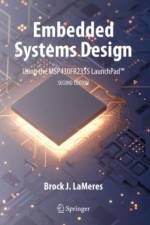
This textbook for courses in Embedded Systems introduces students to necessary concepts, through a hands-on approach.LEARN BY EXAMPLE ¿ This book is designed to teach the material the way it is learned, through example. Every concept is supported by numerous programming examples that provide the reader with a step-by-step explanation for how and why the computer is doing what it is doing.LEARN BY DOING ¿ This book targets the Texas Instruments MSP430 microcontroller. This platform is a widely popular, low-cost embedded system that is used to illustrate each concept in the book. The book is designed for a reader that is at their computer with an MSP430FR2355 LaunchPadTM Development Kit plugged in so that each example can be coded and run as they learn.LEARN BOTH ASSEMBLY AND C ¿ The book teaches the basic operation of an embedded computer using assembly language so that the computer operation can be explored at a low-level. Once more complicated systems are introduced (i.e., timers, analog-to-digital converters, and serial interfaces), the book moves into the C programming language. Moving to C allows the learner to abstract the operation of the lower-level hardware and focus on understanding how to ¿make things work¿.BASED ON SOUND PEDAGOGY - This book is designed with learning outcomes and assessment at its core. Each section addresses a specific learning outcome that the student should be able to ¿dö after its completion. The concept checks and exercise problems provide a rich set of assessment tools to measure student performance on each outcome.
This book presents the essential ideas of coherent states and provides researchers and graduate students with the necessary tools for various applications of generalized coherent state theory. These applications include areas such as quantum information, quantum phase transitions, quantum many-body systems, quantum chaos, and quantum open systems. The aim of the book is to show how coherent states can be applied to an extensive range of physical systems. The authors provide many exercises at the end of each chapter to enhance the mastery of the subject. Throughout the first seven chapters, only an understanding of elementary quantum mechanics is assumed, and for the last six chapters, some basic knowledge of group theory is requested to follow the arguments.
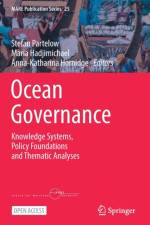
This Open Access book on Ocean Governance examines sustainability challenges facing our oceans today. The book is organized into three sections: knowledge systems, policy foundations and thematic analyses. The knowledge produced in the book was catalyzed by the scientific outcomes within the European-funded Cooperation in Science and Technology (COST) network ¿Ocean Governance for Sustainability ¿ Challenges, Options and the Role of Science¿. This network brings together scientists, policy-makers and civil society representatives from 28 nation states to cooperate on ocean governance research. This book offers a compilation of new research material including focused case studies, broad policy syntheses and reflective chapters on the history and current status of knowledge production systems on ocean governance. New research material is presented, although some chapters draw on secondary sources. The book starts with synthetic review chapters from the editors, outlining past and present knowledge systems, addressing how and why ocean governance for sustainability is where it currently stands with critical reflections on existing narratives, path dependencies and colonialist histories. This is followed by chapters addressing, synthesizing and analyzing different legal and policy frameworks for ocean governance both regionally and internationally. At the core of the book are the thematic analyses, which provide focused case studies with detailed contextual information in support of different ocean governance challenges and sustainability pathways around the world. The book concludes with a chapter explicitly targeting students, researchers and policy-makers with key take-away messages compiled by the editors.
This textbook is a pedagogic introduction to a number of phenomena employing fluid mechanics. Beginning with basic concepts and conservation laws for neutral and charged fluids, the authors apply and develop them to understand aerodynamics, locomotion of micro-organisms, waves in air and water, shock waves, hydrodynamic and hydromagnetic instabilities, stars and black holes, blood flow in humans, and superfluids. The approach is to consider various striking topics on fluid mechanics, without losing necessary mathematical rigor. The book balances the qualitative explanations with formal treatment, in a compact manner. A special focus is given to the important and difficult subject of turbulence and the book ends with a discussion on turbulence in quantum fluids. The textbook is dotted by a number of illustrative examples, mostly from real life, and exercises.The textbook is designed for a one semester course and addresses students at undergraduate and graduate level in physics or engineering, who want to research in the fields as diverse as aeronautics, meteorology, cosmology, biomechanics, and mathematical physics. It is requested knowledge of an undergraduate level course on mathematical methods to better understand the topics presented here.
This book offers the first comprehensive insight into hospital-based injury and violence prevention programs and describes a public health approach for the integration of population-based injury prevention into trauma centers. This book meets the need for a public health informed approach, as a majority of hospital-based injury and violence prevention programs are positioned within hospital systems driven by patient-centered, acute care models. Significant variability in administration, staffing and reimbursement structures across trauma centers has historically hindered standardization of injury prevention program structure and the role of the injury prevention professional.Topics in the book include the history and development of hospital-based programs, the need and process for developing data-driven and evidence-based injury prevention interventions, building trauma center capacity for outreach through partnerships, developing prevention efforts using trauma-informed care approach, community based research and program evaluation, and the role of advocacy in injury and violence prevention. The multidisciplinary team of authors offers a collaborative approach to the implementation and development of Hospital-based Injury and Violence Prevention Programs which will serve acute care nurses, trauma program managers, hospital administrators, trauma surgeons, hospital-based injury prevention professionals, and local public health professionals.
This open access book discusses the functionality of the use of the language of photography in teachers' initial and ongoing training. It analyzes the nature of photography as a representation system, facilitating inquiry and reflection on its practice for teachers and evocating on theories and beliefs that may guide their work in classrooms. Photography is used to represent symbolically and affectively possible contradictions in teaching activities or the inconsistencies between planned teaching tasks and the educational purposes pursued. Resolving these conflicts is one of the ways to promote professional development. This book also describes photo-elicitation and photographic storytelling as work procedures. By analyzing the contributions of these techniques, the development of teachers is improved.
This open access publication outlines the underlying framework for gathering data on civic knowledge, attitudes, and engagement as well as contextual information, and it describes the assessment design for the International Association for the Evaluation of Educational Achievement¿s (IEA) International Civic and Citizenship Education Study 2022.The IEA International Civic and Citizenship Study (ICCS) investigates how young people are prepared to undertake their roles as citizens in a range of countries in the second decade of the 21st century. ICCS 2022 is a continuation of two earlier IEA studies, ICCS 2009 and ICCS 2016, and, for the first time, this survey includes the option of a computer-based assessment. Responding to enduring and emerging challenges of educating young people in a world where contexts of democracy and civic participation continue to change, the study addresses issues related to young people¿s engagement through digital technologies, migration and diversity, perceptions of the political system, global citizenship, and education for sustainable development. Over the past 50 years, IEA has conducted comparative research studies in a range of domains focusing on educational policies, practices, and outcomes in many countries around the world. Prior to ICCS 2022, IEA conducted four international comparative studies of civic and citizenship education, with a first survey implemented in 1971, a second one in 1999, third in 2009 and fourth in 2016. ICCS 2022 data will allow education systems to evaluate the strengths of educational policies, both internationally, and in a regional context, and to measure progress in achieving critical components of their educational policy agendas.
This third edition expands on the original material. Large portions of the text have been reviewed and clarified. More emphasis is devoted to machine learning including more modern concepts and examples. This book provides the reader with the main concepts and tools needed to perform statistical analyses of experimental data, in particular in the field of high-energy physics (HEP).It starts with an introduction to probability theory and basic statistics, mainly intended as a refresher from readers¿ advanced undergraduate studies, but also to help them clearly distinguish between the Frequentist and Bayesian approaches and interpretations in subsequent applications. Following, the author discusses Monte Carlo methods with emphasis on techniques like Markov Chain Monte Carlo, and the combination of measurements, introducing the best linear unbiased estimator. More advanced concepts and applications are gradually presented, including unfolding and regularization procedures, culminating in the chapter devoted to discoveries and upper limits.The reader learns through many applications in HEP where the hypothesis testing plays a major role and calculations of look-elsewhere effect are also presented. Many worked-out examples help newcomers to the field and graduate students alike understand the pitfalls involved in applying theoretical concepts to actual data.
This book is a comprehensive resource on lightning and describes the unique roles which the state of Arizona has with regard to lightning. Not only is it spectacular, it is also admired, feared, and misunderstood, but its knowledge has come of age in the last two decades.This book describes why Arizona can be called the ¿Lightning Photography Capital of the U.S.¿, how the general public and Native Americans in Arizona have viewed lightning, and when and where lightning occurs and impacts people and resources in Arizona. It contains summaries of interviews with current and former University of Arizona staff who invented real-time lightning detection in the late 1970s and how subsequent lightning research in Arizona has been globally significant. The authors are very well acquainted with and up to date on these topics. The style of this book is active and somewhat scholarly but readable by the nonprofessional with a general interest in lightning.What is lightning? How does lightning affect Arizona? Why do photographers come to Arizona for lightning photographs? What is unique about Arizona lightning? How is lightning detected in Arizona and around the world? This book tells you answers to these questions.This book is intended for a broad audience comprised of visitors, interested lay public, a variety of scientific disciplines, media, medicine, lightning safety, and fire weather. It is suitable for readers desiring a general overview of lightning, especially in Arizona, but also for those who want to know specifically about the topic.
The book addresses the rigorous foundations of mathematical analysis. The first part presents a complete discussion of the fundamental topics: a review of naive set theory, the structure of real numbers, the topology of R, sequences, series, limits, differentiation and integration according to Riemann. The second part provides a more mature return to these topics: a possible axiomatization of set theory, an introduction to general topology with a particular attention to convergence in abstract spaces, a construction of the abstract Lebesgue integral in the spirit of Daniell, and the discussion of differentiation in normed linear spaces. The book can be used for graduate courses in real and abstract analysis and can also be useful as a self-study for students who begin a Ph.D. program in Analysis. The first part of the book may also be suggested as a second reading for undergraduate students with a strong interest in mathematical analysis.
This book develops the basic concepts in understanding Analog Communications. Beginning with coverage of amplitude modulation, including the time and frequency domain representations of double sideband, single sideband, and vestigial sideband modulation, and introduces the student to the fundamental ideas of quadrature amplitude modulation, frequency division multiplexing, and digital communications using on-off keying. The author continues with additional discussion and coverage of the time and frequency domain representations of frequency and phase modulation, including bandwidth calculations, and the use of frequency shift keying, phase shift keying, and differential phase shift keying for the transmission of digital information. Contents include applications and further analyses of the effects of channel noise on amplitude, phase, and frequency modulation performance based on input versus output signal to noise ratios and some system comparisons are discussed.
AI, Big Data and other 4th industrial revolution technologies are poised to wreak havoc in virtually every industry, unlocking huge productivity gains via automation of labor both manual and cognitive. Less discussed are the impacts on workers, who see the value of their skills erode, along with the menace of mass structural unemployment. How can workers assess their vulnerabilities? What can they do to improve their prospects, effective immediately? In this book, you will learn how to:- Survey new tech and decrypt their potential impacts on work - Assess your strengths and weaknesses in the face of AI, the shared economy, and other tech-propelled threats- Foment a battle plan to survive and thrive Ashley Recanati provides guidance for employees to rise above their peers and preserve their value, in a book that will interest managers and scholars, but foremost destined to ordinary workers.
This book serves as an insider's guide to careers in academic medicine. The author shares his 45 years of experience as a clinician, teacher, researcher, and administrator. His journey has often taken unpredictable turns and the book offers practical guidance to becoming a successful physician scientist in academic medicine, or to become a successful clinician affiliated with an academic medical center. Divided into four parts, the book begins by focusing on academic medicine as a complex system. This is followed by parts on academic duties, academic life, and concludes with words of wisdom. These sections and subsequent chapters are tied together by the scholarships of discovery, teaching, application, and integration. To pursue research, practice, teaching, and administration, scholarship should be the core value of every physician.
The book presents a succession of RISC-V processor implementations in increasing difficulty (non pipelined, pipelined, deeply pipelined, multithreaded, multicore).Each implementation is shown as an HLS (High Level Synthesis) code in C++ which can really be synthesized and tested on an FPGA based development board (such a board can be freely obtained from the Xilinx University Program targeting the university professors).The book can be useful for three reasons. First, it is a novel way to introduce computer architecture. The codes given can serve as labs for a processor architecture course. Second, the book content is based on the RISC-V Instruction Set Architecture, which is an open-source machine language promised to become the machine language to be taught, replacing DLX and MIPS. Third, all the designs are implemented through the High Level Synthesis, a tool which is able to translate a C program into an IP (Intellectual Property). Hence, the book can serve to engineers willing to implement processors on FPGA and to researchers willing to develop RISC-V based hardware simulators.
This textbook on geophysics is a translated and revised editon from its third German edition Einführung in die Geophysik - Globale physikalische Felder und Prozesse in der Erde. Explaining the technical terminology, it introduces students and the interested scientific public to the physics of the Earth at an intermediate level. In doing so, it goes far beyond a purely phenomenological description, but systematically explains the physical principles of the processes and fields which affect the entire Earth: Its position in space; its internal structure; its age and that of its rocks; earthquakes and how they are used in exploring Earth¿s structure; its shape, tides, and isostatic equilibrium; Earth's magnetic field, the geodynamo that generates it, and the interaction between the Earth's magnetosphere and the solar wind's plasma flow; the Earth's temperature field and heat transport processes in the core, mantle, and crust of the Earth and their role indriving the geodynamo and plate tectonics.All chapters begin with a brief historical outline describing the development of each branch of geophysics up to the recent past. Selected biographies illustrate the personal and social conditions under which groundbreaking results were achieved. Detailed mathematical derivations facilitate understanding. Exercises with worked-out results allow readers to test the gained understanding. A detailed appendix contains a wealth of useful additional information such as a geological time table, general reference data, conversion factors, the latest values of the natural constants, vector and tensor calculus, and two chapters on the basic equations of hydrodynamics and hydrothermics. The book addresses bachelor and master students of geophysics and general earth science, as well as students of physics, engineering, and environmental sciences with geophysics as a minor subject.
This book equips the intraoperative monitoring provider (both technologist and physician) with details of commonly monitored surgical procedures of the spine. This knowledge better allows the monitorist to identify critical phases of the surgery and correlate those with neuroanatomical and functional risk at each phase. Chapters are authored by a surgeon and neurophysiologist, with the surgeon contributing procedural content and the neurophysiologist contributing information on how the monitoring integrates within the context of the procedure. It is the first book that incorporates content about the surgical procedure directly with the intraoperative monitoring plan for the surgery.This text will have a wide audience throughout the medical specialty of intraoperative neurophysiological monitoring; it will be of interest to technologists, interpreting physicians or neurophysiologists, anesthesiologists, and surgeons; essentially anyone on the surgicalteam that lacks a detailed knowledge of both the surgical procedure and the neurophysiology.
This book presents reference architecture as a key blueprint to develop and evolve critical software-intensive systems, emphasizing both the state of the art in research and successful industrial cases.After outlining the theoretical foundations of reference architecture and presenting an overview of a number of reference architectures proposed over the recent years, this book dives into a set of critical application domains, including defense, health, automotive, avionics, and Industry 4.0, highlighting the respective most relevant reference architectures that have impacted these domains, the experience and lessons learned, insights gained, benefits and drawbacks, and factors that make these architectures sustainable. The book finishes with the most relevant directions for future advances in reference architectures.The content of this book is useful for researchers and advanced professionals in industry in the areas of computing and engineering, as well as in critical application domains that increasingly require interconnected, large, and complex software-intensive systems.
This book helps support developmentally sensitive nursing and allied health practice by integrating the therapeutic powers of play into child and adolescent health care service provision. It is designed to link play, child development, neuroscience, biopsychosocial and attachment theories with the biomedical model of health. Nurses and allied health professionals work with children aged between 0-18 years and with diverse childhood illnesses, injuries, diseases, disorders, and conditions, and are therefore in a prime position to understand and support children through potentially painful and traumatic health care experiences. Understanding of the role of play and the application of the therapeutic powers of play in communicating with children and families has the potential to significantly optimise paediatric care. The theory and play based strategies, tools and techniques presented in this book assist nurses and health care professionals to engage with children in anage-appropriate manner and ¿speak¿ with children through their natural language of play, to enhance comprehension, coping, resiliency, and healing. Play is recognised as a sequentially developing ability and can be aligned with the child¿s age and stage of life. Play based approaches can be placed on a continuum from fully child led or non-directive play to adult facilitated educative play. Medical information can be tailored according to the various points along this continuum to inform clinical reasoning and to help children prepare for procedures, recover from medical interventions and / or make sense of their diagnosis. Whilst this book is directed at nurses and allied health professionals who work with children and their families, it may also be a valuable resource for medical and other professionals in community or educational settings to work systemically as a team. The book takes the reader on a journey to illustrate various professional and therapeutic rolesin how to playfully engage children through a range of case vignettes.
This open access book provides an overview of the progress in landslide research and technology and is part of a book series of the International Consortium on Landslides (ICL). The book provides a common platform for the publication of recent progress in landslide research and technology for practical applications and the benefit for the society contributing to the Kyoto Landslide Commitment 2020, which is expected to continue up to 2030 and even beyond to globally promote the understanding and reduction of landslide disaster risk, as well as to address the 2030 Agenda Sustainable Development Goals.
This book builds on the current trends in informal caregivers¿ role in the supportive care of cancer patients (as well as other diseases) across the care continuum covering topics from the healthcare professionals and the users¿ perspectives. Informal caregivers are a critical resource to their care recipients and an essential component of the health care system. The book introduces a comprehensive view of the topic and acknowledges the importance and the complexity of caregiving. Here lays one of the uniqueness of this book, which highlights the areas and the ways that for example interventions in specific settings/groups of patients can actually facilitate the caregiving process. The increasing number of care-dependent people, the adoption of the principle ¿outpatient before inpatient¿, the shift of care from inpatient to outpatient and the preference for home care (i.e. majority) are only some of the reasons that contributed to Informal caregiving becoming a central feature of the health care landscape and will become even more prominent in the decades ahead. The book draws on the experts¿ high-end, current systematic research evidence and real-life examples on these topics to provide an insightful perspective on undertaking research within this context, and to demonstrate informal caregivers¿ impact on patients¿ outcomes. The structure of the book provides multiple perspectives to the topic and makes it appealing to a wide range of recipients including the nursing community, clinicians, social workers, researchers, policy makers, technology experts as well as postgraduate students especially to those practicing specifically in supportive care in cancer. The book fills a gap in this field of expertise not only by familiarizing the reader with a wide range of topics to be considered but it also emphasizes on what the developments in the field in the future would need to take into consideration. Finally, current and future studies can be informed from the practices of preceding studies that are incorporated in the book.
This book details recent developments in the emerging area of plug-and-play (PnP) visual subgraph query interfaces (VQI). These PnP interfaces are grounded in the principles of human-computer interaction (HCI) and cognitive psychology to address long-standing limitations to bottom-up search capabilities in graph databases using traditional graph query languages, which often require domain experts and specialist programmers. This book explains how PnP interfaces go against the traditional mantra of VQI construction by taking a data-driven approach and giving end users the freedom to easily and quickly construct and maintain a VQI for any data sources without resorting to coding. The book walks readers through the intuitive PnP interface that uses templates where the underlying graph repository represents the socket and user-specified requirements represent the plug. Hence, a PnP interface enables an end user to change the socket (i.e., graph repository) or the plug (i.e., requirements) as necessary to automatically and effortlessly generate VQIs. The book argues that such a data-driven paradigm creates several benefits, including superior support for visual subgraph query construction, significant reduction in the manual cost of constructing and maintaining a VQI for any graph data source, and portability of the interface across diverse sources and querying applications. This book provides a comprehensive introduction to the notion of PnP interfaces, compares it to its classical manual counterpart, and reviews techniques for automatic construction and maintenance of these new interfaces. In synthesizing current research on plug-and-play visual subgraph query interface management, this book gives readers a snapshot of the state of the art in this topic as well as future research directions.
Medical treatments designed to help people can also be harmful or fatal. Around 2.5 million people die this way each year. So if any kind of medicine makes someone unwell, they or their doctor should report it. Those reports, from nearly every country in the world, go to the Uppsala Monitoring Centre (UMC) in Sweden. As the Centre¿s first director, Professor Ivor Ralph Edwards transformed it from a tiny operation with limited horizons into an internationally acclaimed scientific organization at the heart of the World Health Organization¿s Programme for International Drug Monitoring. He was then succeeded by his wife, Dr Marie Lindquist.This is the story of how a new science developed and a passionate and dedicated pursuit of worldwide medicines safety, with an unerring focus on the welfare of patients. The pioneering work of Ralph, Marie and their collaborators on every continent protected the lives of millions of people. It may yet improve the lives of billions more.
Abonner på vårt nyhetsbrev og få rabatter og inspirasjon til din neste leseopplevelse.
Ved å abonnere godtar du vår personvernerklæring.