
















Gjør som tusenvis av andre bokelskere
Abonner på vårt nyhetsbrev og få rabatter og inspirasjon til din neste leseopplevelse.
Ved å abonnere godtar du vår personvernerklæring.Du kan når som helst melde deg av våre nyhetsbrev.

This is an open access book. This edited collection aims to document the effects of Covid-19 on film festivals and to theorize film festivals in the age of social distancing. To some extent, this crisis begs us to consider what happens when festivals can¿t happen; while films have found new (temporary) channels of distribution (most often in the forms of digital releases), the festival format appears particularly vulnerable in pandemic times. Imperfect measures, such as the move to a digital format, cannot recapture the communal experience at the very core of festivals. Given the global nature of the pandemic and the diversity of the festival phenomenon, this book features a wide range of case studies and analytical frameworks. With contributors including established scholars and frontline festival workers, the book is conceived as both a theoretical endeavour and a practical exploration of festival organizing in pandemic times.
This book finds that Al-Jazeeräs coverage of Bahrain and Syria has conformed with Qatar¿s foreign policy, throughout the last decade (2011-2021). Al-Jazeera Arabic adopted Qatar¿s ¿double standards¿ policy in both countries in the beginning of the Arab Spring, framing Bahrain¿s protests as a ¿sectarian movement,¿ while depicting the Syrian armed conflict as a legitimate ¿revolution¿ (2011-2013). The book observes that when ties between Qatar and Bahrain worsened during the 2017 Gulf crisis, Al-Jazeera Arabic has shifted its coverage from being ¿pro-Bahraini regime¿ to ¿pro-protesters,¿ focusing on violations and giving voice to activists (2014-2021). The book concludes that the lack of ¿Peace Journalism¿ framing in Al-Jazeeräs coverage of Bahrain¿s uprising and Syriäs chemical weapons attacks has represented ¿claims¿ as ¿facts,¿ and justified military action against Syria. It also reveals distinctive differences between Al-Jazeera Arabic and English, with theformer lacking ¿objective reporting standards,¿ and using more sectarian language than the latter.
The essays in this volume seek to expose the scandals of adaptation. Some of them focus on specific adaptations that have been considered scandalous because they portray characters acting in ways that give scandal, because they are thought to betray the values enshrined in the texts they adapt, because their composition or reception raises scandalous possibilities those adapted texts had repressed, or because they challenge their audiences in ways those texts had never thought to do. Others consider more general questions arising from the proposition that all adaptation is a scandalous practice that confronts audiences with provocative questions about bowdlerizing, ethics, censorship, contagion, screenwriting, and history. The collection offers a challenge to the continued marginalization of adaptations and adaptation studies and an invitation to change their position by embracing rather than downplaying their ability to scandalize the institutions they affront.
This textbook aims to support counsellors, psychotherapists, and counselling psychologists to develop a creative research-informed practice. Following from the authors¿ earlier title Enjoying Research, the book covers qualitative, quantitative, pluralistic, and mixed methods approaches with a special focus on diversity, researcher support and innovative methods. The book explores research during critical stages like question formulation, data gathering, ethics, analysis, and presentation of the findings. It mixes theory with illustrative real-life, 'how-to-do-it'-examples and reader activities. International experts contribute with examples ranging from arts-based ¿decolonising¿ research to creative use of outcome- and survey-based approaches ¿ with a shared interest in dialogues between ¿scientific¿ and ¿aesthetic¿ (or intuitive, embodied) means of knowing. This is essential reading for anyone looking for a book that combines self-awareness with analytical and practical skills in counselling and psychotherapy related research.
This book explores one of the most notorious aspects of the German system of oppression in wartime Poland: the only purpose-built camp for children under the age of 16 years in German-occupied Europe. The camp at Przemys¿owa street, or the Polen-Jugendverwahrlager der Sicherheitspolizei in Litzmannstadt as the Germans called it, was a concentration camp for children. The camp at Przemys¿owa existed for just over two years, from December 1942 until January 1945. During that time, an unknown number of children, mainly Polish nationals, were imprisoned there and subjected to extreme physical and emotional abuse. For almost all, the consequences of atrocities which they endured in the camp remained with them for the rest of their lives. This book focuses on the establishment of the camp, the experience of the child prisoners, and the post-war investigations and trials. It is based on contemporary German documents, post-war Polish trials and German investigations, as well as dozens of testimonies from camp survivors, guards, civilian camp staff and the camp leadership
This book offers a comparative study of the political debate on the Euro crisis in the press. In the tradition of Critical Discourse Analysis, it investigates the ways in which discourse produces and reproduces social domination, and demystifies the hegemony of specific discourses. Combining quantitative content-based and qualitative text-based analyses, the book examines the discursive constructions of the crisis in a selection of broadsheet newspapers in Germany, Poland, and the UK, and discloses their ideological foundations. The analysis of the representations of the crisis, social actors and their agency, and legitimating strategies, including the use of metaphors, demonstrates how neoliberalism determined the hegemonic discourse on the Euro crisis. It resulted in ideologically biased discursive constructions that created and legitimised an image of non-agentic social change. The book will appeal to an international audience of discourse and media studies. It will be of interest to university teachers, graduate and undergraduate students and researchers of international and comparative media studies, political communication, linguistics, and politics.
This Palgrave Handbook examines the ways in which researchers and practitioners theorise, analyse, produce and make use of testimony. It explores the full range of testimony in the public sphere, including perpetrator testimony, testimony presented through social media and virtual reality. A growing body of research shows how complex and multi-layered testimony can be, how much this complexity adds to our understanding of our past, and how creators and users of testimony have their own complex purposes. These advances indicate that many of our existing assumptions about testimony and models for working with it need to be revisited. The purpose of this Palgrave Handbook is to do just that by bringing together a wide range of disciplinary, theoretical, methodological, and practice-based perspectives.
This handbook offers a unique approach to the question: How do scholars write the future of global politics? Written in futur antérieur style, around the 200-year anniversary of the birth of International Relations (IR) as an academic discipline, the contributions engage in world-building and imagine different futures of IR. Set in a multiverse, 23 chapters draw on a range of possible themes and imaginaries, for instance post-pandemic conditions, the Anthropocene, and not least academic practices and the role of researchers. A concluding chapter anchors these explorations in contemporary discussions. The book mirrors the format and style of existing handbooks, combining outlines and discussions of theories, structures, processes, and core issues in IR with an academic science fiction account of how these might play out over the course of the next century. In doing so, the book challenges IR and provides alternative imaginaries, rather than predicting future conditions for all humanity. The book invites readers to reflect on how thinking about the future has become an increasingly radical, but more than ever necessary act.
This book provides contributions in international law, development, and international relations from a cross section of jurists and scholars including a justice of the Supreme Court of Nigeria and a former Judge of the International Court of Justice at The Hague. The project, conceived as a festschrift in honor of Professor Christian Okeke, aims to amplify the voices and perspectives that are not often accorded the limelight in international legal discourse. Additionally, the contributors discuss such relevant issues as frozen conflicts in Eastern Europe, counter-terrorism and cyber-security in Central Asia, and judicial contrivance in African countries. Bridging the gap between political science and legal scholarship, the book presents an interdisciplinary perspective on the emergence of an international rule of law and development. It also provides much needed empirical research on the implications of multi-level governance and global legal pluralism for the rule of law beyond the nation state. This book will be highly relevant to scholars, academics, researchers, and students in the fields of international relations, law, and development.
This contributed volume identifies how the information processes of public institutions and citizens have changed throughout the COVID-19 pandemic, within a new context that emerged: the infodemic disorder. Public debate is largely characterized today by a crisis of the legitimacy of institutions, accompanied by a crisis of authority in public communication, leading to the emergency of a state of information disorder due specifically to the need to find information related to the coping of the pandemic. This condition is characterized by growing attention to issues related to ¿fake news¿, ¿misinformation¿, and ¿media manipulation¿, that are intertwined in digital platform ecosystems, and the effects of which on democracy, public communication and research, and the sharing of information in the civic sphere are broad and far-reaching. This volume analyzes the links between communication strategies of public institutions, and the resulting citizen communication, in an attempt to tease out how communication processes have changed during the pandemic. It was decided to investigate this infodemic disorder as it appeared in three different geographical contexts: Europe, Canada and Mexico and, at the same time, to bring out the formal and informal coping strategies implemented by public institutions and citizens. Beginning with an introduction to the crisis of information created by the pandemic, the contributors build a theoretical framework, provide contagion data, and subsequently, for each of the geographical contexts analyzed, explore the public communication strategies and those activated by citizens seeking to share information.
This book is intended as a major interdisciplinary contribution to the study of Nietzsche¿s thought in particular, and the political right more generally. Historically the assessment of Nietzsche¿s politics has ranged from denouncing him as a forerunner to Nazism to claiming he effectively did not have articulated political convictions. During the latter half of the 20th century he surprisingly became a major theoretical influence on a variety of post-structuralist radical critics, who saw in his perspectivism and genealogy of power useful tools to critique existent structures of domination. This collection of essays reframes the debate by looking at Nietzsche¿s constructive political project defending aristocratic values from the levelling influence of the herd and its liberal, socialist, and democratic spokesmen. The essays will also explore how this defense of aristocratic values continues to have an influence on the political right, inspiring moderates like Jordan Peterson and far right authors and activists like Aleksandr Dugin and Steve Bannon.
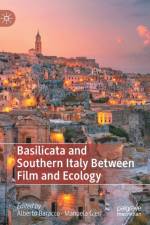
This volume offers an open, transdisciplinary living space (also green) through which to explore the different connections between Basilicata and Southern Italy, cinema, and ecology, and thus to reflect on the different forms through which the historical, cultural, and social contexts of Southern Italian regions have been variously identified and represented. In order to explore these connections, the volume embraces a wide range of perspectives that may all be grouped under the key term film ecocriticism, offering the reader a thorough analysis not only of the different ways of representing reality but also of the processes of signification through which reality itself can be understood, rethought, and transformed. This is the general framework within which the authors consider film as a proper, effective medium for ecocritical and ecophilosophical reflections concerning not only Basilicata (to which the greater part of the volume is dedicated) but also Southern Italy and, therefore, its history and its territories, communities, and identities. Furthermore, in an even more general sense, Basilicata and Southern Italy reconnects with the very idea of the South, and of all Souths, to which this volume is dedicated.
This open access book deconstructs the core features of online misinformation and disinformation. It finds that the optimisation of emotions for commercial and political gain is a primary cause of false information online. The chapters distil societal harms, evaluate solutions, and consider what must be done to strengthen societies as new biometric forms of emotion profiling emerge. Based on a rich, empirical, and interdisciplinary literature that examines multiple countries, the book will be of interest to scholars and students of Communications, Journalism, Politics, Sociology, Science and Technology Studies, and Information Science, as well as global and local policymakers and ordinary citizens interested in how to prevent the spread of false information worldwide, both now and in the future.
This book focuses on the politics, ethics and stereotypical pitfalls of representational practices surrounding Gender-Based Violence (GBV) from a global perspective. The originality of the volume is linked to its cross-disciplinary perspective as the topic of representing GBV is analyzed across the domains of philosophy/epistemology, fiction and the arts (including literature, film, television series and music) and non-fictional representations in the media (including broadcast media, online/print journalism, transmedia activism). The volume identifies contemporary representational practices and the theoretical and critical responses, examining various aspects of popular culture from around the world. In doing so, the editors put feminism in conversation with global trends to identify its cultural frontline. The volume will appeal to scholars working on gender and violence from diverse fields.
This book focuses on the example of surrogate motherhood to explore the interplay between new reproductive technologies and new ethnographic writing technologies. It seeks to interrogate the potential of fictional multimodality in ethnography and to illuminate the generative possibilities of digital artefacts in anthropological research. It also makes a case for the tailor-made character of ethnographic writing in the digital era, arguing that research quests and representational modalities can be paired together to develop unique narrative forms, corresponding to each particular topic¿s traits and analytical affordances. Focusing on the intersections of assisted reproduction technologies and digitally mediated writing, this study casts light upon the value of the affective, the fictional and the ¿real¿ in the anthropological research and writing of relatedness. Analyzing the situated knowledge of ethnographers and research interlocutors, it experiments with multimodal storytelling and revisits the century-long debate on the affinity between an object of study and the possibilities for its representation. As the first attempt to bring together digital anthropology, fiction writing and the ethnography of surrogacy, this book fuses the genealogy of feminist critique on the orthodox, phallocentric, and heteronormative aspects of academic discourse with the input of digital humanities vis-à-vis troubling the conventional formal properties of scholarly writing.
This book depicts the Early Modern book markets in Europe and colonial Latin America. The nature of book production and distribution in this period resulted in the development of a truly international market. The integration of the book market was facilitated by networks of printers and booksellers, who were responsible for the connection of distant places, as well as local producers and merchants. At the same time, due to the particular nature of books, political and religious institutions intervened in book markets. Printers and booksellers lived in a politically fragmented world where religious boundaries often shifted. This book explores both the development of commercial networks as well as how the changing institutional settings shaped relationships in the book market.
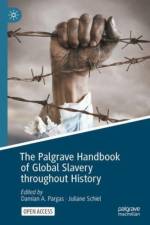
This open access handbook takes a comparative and global approach to analyse the practice of slavery throughout history. To understand slavery - why it developed, and how it functioned in various societies ¿ is to understand an important and widespread practice in world civilisations. With research traditionally being dominated by the Atlantic world, this collection aims to illuminate slavery that existed in not only the Americas but also ancient, medieval, North and sub-Saharan African, Near Eastern, and Asian societies. Connecting civilisations through migration, warfare, trade routes and economic expansion, the practice of slavery integrated countries and regions through power-based relationships, whilst simultaneously dividing societies by class, race, ethnicity and cultural group. Uncovering slavery as a globalising phenomenon, the authors highlight the slave-trading routes that crisscrossed Africa, helped integrate the Mediterranean world, connected Indian Ocean societies and fused the Atlantic world. Split into five parts, the handbook portrays the evolution of slavery from antiquity to the contemporary era and encourages readers to realise similarities and differences between various manifestations of slavery throughout history. Providing a truly global coverage of slavery, and including thematic injections within each chronological part, this handbook is a comprehensive and transnational resource for all researchers interested in slavery, the history of labour, and anthropology.
This Handbook addresses the role of women in communism as a global, social and political movement for the first time, exploring their lives, forms of activism, political strategies and transnational networks. Comprising twenty-five chapters, based on new and primary research, the book presents the lives of self-identified communist women from a truly international perspective and outlines their struggles against fascism and colonialism, and for women¿s emancipation and national liberation. By using the lens of transnational political biography, the chapters capture the broader picture of these women¿s lives, unpacking the links between the so-called public and private, the power structures and inequalities of their societies, the formal networks and politics in which they were involved, and the informal connections and friendships that supported their activism both at the national and international level. Challenging androcentric and Eurocentric narratives about communism, this Handbook reveals the active and significant roles of women in nineteenth- and twentieth-century communist movements and regimes, and highlights the importance of communist women in shaping the agenda for women¿s rights worldwide.
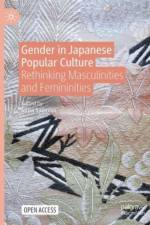
This open-access essay collection brings together a range of viewpoints on gender from a diverse group of international scholars based in Finland, Belgium, Japan, Singapore, and Australia. The focus is, in particular, on gender performativity and non-binary or non-normative gender. The essays examine the ways in which gender can be depicted, perceived, and understood in Japanese popular culture. The work will be of interest to scholars working in gender studies, Asian studies, and popular culture. It will also act as a source text for higher education courses in Asia, Europe, and the United States.
This open-access essay collection brings together a range of viewpoints on gender from a diverse group of international scholars based in Finland, Belgium, Japan, Singapore, and Australia. The focus is, in particular, on gender performativity and non-binary or non-normative gender. The essays examine the ways in which gender can be depicted, perceived, and understood in Japanese popular culture. The work will be of interest to scholars working in gender studies, Asian studies, and popular culture. It will also act as a source text for higher education courses in Asia, Europe, and the United States.
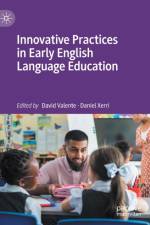
This book shines a light on novel and less familiar domains of early English language education for children aged 3 to 12, in mainstream and out-of-school settings. Enveloping the volume is the making of creative connections to wider educational philosophies which extend beyond the confines of a narrow linguistic lens. In reconciling the theory-practice divide in English language education, each chapter presents a synthesis of research issues leading to a practical showcase of ideas. Organised in two main parts, the first focuses on innovations within classroom practice, curriculum development, and child-centred assessment, exploring areas which have either received insufficient attention and/or have been reimagined through fresh perspectives. The second part explores innovations in pre- and in-service teacher education contexts and focuses on lesser-known and/or underexplored topics, including bridging general and language education, multilingualism, in-depth learning, metacognition, and pragmatics. This is a timely publication for teacher educators and practitioners alike.
In this edited volume, Kasi Lemmons, the first African-American woman auteur to solidly and steadily produce a full body of work in cinema-an oeuvre of quality, of note, of international recognition-will get the full film-studies treatment. This collection offers the first scholarly examination of Lemmons' films through various frameworks of film theory, illuminating her highly personal, unique, and rare vision. In Lemmons' worldview, the spiritual and the supernatural manifest in the natural, corporeal world. She subtly infuses her work with such images and narratives, owning her formalism, her modernist aesthetic, her cinematic preoccupations and her ontological leanings on race. Lemmons holds the varied experiences of African-American life before her lens-the ambitious bourgeoise, the spiritually lost, the ill and discarded, and the historically erased-and commits to capturing the nuances and differentiations, rather than perpetuating essentialized portrayals. This collection delves into Lemmons' iconoclastic drive and post-soul aesthetic as emanations of her attitudes toward personal agency, social agency, and social justice.
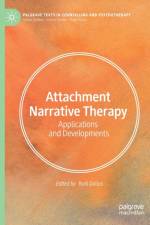
This textbook provides an up-to-date guide to the application of Attachment Narrative Therapy (ANT), a model that combines concepts and techniques from systemic family therapy, narrative therapy and theory and attachment theory. Edited and with contributions from leading practitioners of ANT, this book brings together illustrations of its applications in a variety of clinical settings. It offers practical guidance and the latest research from clinicians who are now advancing its application. Another important feature is illustration of how practitioners have developed ANT to incorporate the latest ideas and methods from trauma theory and neuro-biology. It will provide a valuable new resource for practitioners, teachers and students of systemic practice, family therapy, clinical psychology, counselling and psychotherapy.
This book channels the debate on the relevance, value, and future of business schools. Could the Business School be like the Titanic, thought to be unsinkable, but ultimately doomed? And if it sinks, what of it? Or is it a ship which can adapt to the changing waters it sails in? In this book, authors from around the world debate the current and future legitimacy of the Business School from different contexts and perspectives. While some see very little or no hope at all to the future of the Business School as a legitimate centre for research and education, others remain critical, but see a way forward to rectify today¿s concerns, such as around sustainability and inclusivity. This book highlights to readers thought-provoking complexities on the Business School playground and its legitimacy.
This volume explores how Christians around the world have made sense of the meaning of suffering in the context of and post-COVID-19. It interrogates the question of God, suffering, and structural injustice. Further, it discusses the Christian response to the compounded threats of racial injustice, climate injustice, wildlife injustice, gender injustice, economic injustice, political injustice, unjust in the distributions of the vaccine and future challenges in the post-COVID-19 era. The contributions are authored by scholars, students, activists and clergy from various fields of inquiry and church traditions. The volume seeks to deepen Christian understanding of the meaning of suffering in the context of COVID-19 pandemic. It explores the fresh ways the pandemic can contribute to reconceptualizing human relations and specifically, what it means to be human in the context of suffering, the place of or justifications of God in suffering, human place in creation, andthe role of the church in re-articulating the theological meanings and praxes of suffering for today.
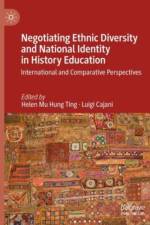
This edited book explores the problems and challenges of negotiating the representation of ethnic minorities within history education. It investigates how states balance the (non-)acknowledgement of the reality of cultural or religious diversity, and the promotion of a point of convergence in history education to foster national identity. Shifting our attention away from the intractable challenges posed by post-conflict countries for reconciliation, the contributors draw attention to the need to explore ways to prevent or pre-empt conflicts and exclusion through history education, which could contribute to developing a more sustainable culture of peace. Drawing on a wide range of contexts and sources, this book asks how history education could contribute to forming critical, historically informed, and committed young citizens. The book will be of interest to students and academics working on themes such as nationalism, citizenship, ethnicity, history education, multicultural education, peace studies and area studies, as well as practitioners in the fields of history, social studies, civic or citizenship.
Abonner på vårt nyhetsbrev og få rabatter og inspirasjon til din neste leseopplevelse.
Ved å abonnere godtar du vår personvernerklæring.