

















Gjør som tusenvis av andre bokelskere
Abonner på vårt nyhetsbrev og få rabatter og inspirasjon til din neste leseopplevelse.
Ved å abonnere godtar du vår personvernerklæring.Du kan når som helst melde deg av våre nyhetsbrev.

Workplace relationships are critical to how work gets done in organizations. While current research gives rigorous theoretical and empirical insights regarding workplace relationships, or what are often known as social networks, there is only limited details of the practical applications of workplace relations. This edited collection provides readers with cutting edge theoretical and practical insights from the latest research at the intersection between social networks and workplace relationships.This volume has a dual focus. First it examines the outcomes of workplace relationships, such as individual performance and how social network relationships affect attitudes and behaviours. Second, it examines how workplace relationships are formed and their implications with regard to friendship, trust and collegiality.Drawing on innovative research on social networks, the authors examine the importance of workplace relationships across a broad selection of institutional settings. Featuring practical applied examples, this collection brings together insights from leading scholars in a practical and accessible format for academics and students.
This book sheds a new light on the metafictional aspects of futuristic and science fiction novels, at the crossroads of information and media studies, possible worlds theories applied to cognitive narratology, questions related to the criticism of post-humanity, and, more broadly, contemporary French and Francophone literature. It examines the fictional minds of characters and their conceptions of resistance to the anticipated worlds they inhabit, particularly in novels by Pierre Bordage, Marie Darrieussecq, Michel Houellebecq, Amin Maalouf, Jean-Christophe Rufin, Antoine Volodine, and Élisabeth Vonarburg. It also explores how corporal postures serve as a matrix for philosophical quests in novels by Amélie Nothomb, Alain Damasio, and Romain Lucazeau. More specifically, from the fictional readers' points of view, it provides a critical approach to the mythologies of writing, in the wake of the French philosophical tales by authors including Cyrano de Bergerac and Voltaire, to question the traditionally expressed formulations of the mythologies of writing, that is, of the metaphors of the book (the book of life, nature, and the world), to rethink the idea of a humanity within its limits.
This book inaugurates a new phase in kitsch studies. Kitsch, an aesthetic slur of the 19th and the 20th century, is increasingly considered a positive term and at the heart of today¿s society. Eleven distinguished authors from philosophy, cultural studies and the arts discuss a wide range of topics including beauty, fashion, kitsch in the context of mourning, bio-art, visual arts, architecture and political kitsch. In addition, the editors provide a concise theoretical introduction to the volume and the subject. The role of kitsch in contemporary culture and society is innovatively explored and the volume aims not to condemn but to accept and understand why kitsch has become acceptable today.
This book examines community partnership schools in the USA. Authored by academics and practitioners, it provides an overview of how community schools work in practice, provides a historical context of the model, and demonstrates the importance of the university-community connection in their effective running. Above all, the book showcases how community partnership schools are educational equity solutions that provide support services to underserved students, families, and communities. It will appeal to students and scholars of public administration, public policy, public health, and education, as well as practitioners.
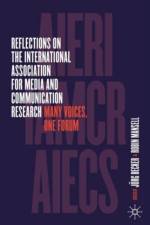
Throughout its 65-year history, the International Association for Media and Communication Research (IAMCR) has sought to facilitate international exchanges and research collaborations among academics and journalists in the field of media and communication. ¿ Created during a time of strong ideological tension following World War II in 1957 and with the support of UNESCO, the contributors to this edited collection highlight how the IAMCR and its members shaped the field of media and communications research. From its beginnings focusing on the mass media, including the press and journalism education, today the Association attracts researchers and practitioners who undertake critical analysis of contemporary media and communications, including online platforms and their governance. Consistent themes throughout the Association¿s history have been its concern with human rights, law, culture and the political economy of the media and communication industries. Not content simply to understand developments in the media and communications field around the world, the Association¿s membership has sought to ¿change the world¿ through its published research and its participation in global, regional, national and local policy debate and practice.This volume is organised in four parts following an introduction authored by editors who are active members of IAMCR. Part I highlights eight prominent scholarly traditions of research which have attracted the interest of scholars from around the world as well as the way the Association has sought to be inclusive of early career scholars. Part II offers seven chapters which bring to light the political struggles of a membership seeking to engage in scholarship across the East ¿ West divide and to contribute to global debates aimed at fostering an inclusive, fair and equitable international information and communication order through engagement with United Nations sponsored initiatives. Part III turns to accounts of the way members from selected countries and regions have contributed to the Association¿s scholarly work. The last part highlights the significant scholarly and institution-building contributions of James Halloran, IAMCR¿s President from 1972 to 1988 and other prominent contributors to the study of culture and the political economy of media and communications
This book explores the development of the gas industry within Latin Europe (France, Italy, Portugal, and Spain). Through charting the growth of this industry during the 19th and 20th centuries, the technology and public policies used are examined to highlight the long term impact of the industry. Utilising a comparative analysis, similarities and variation between the development of gas within the Latin European countries is compared and contrasted with the aid of specific case studies.This book aims to place the development of gas resources in Latin Europe within a global perspective that takes into account the development of energy resources in the rest of Europe and the world more generally. It will be of interest to students and researchers working within energy economics and economic history.The book forms part of the results of the research project ¿Gas in Latin Europe: a comparative and global perspective (1818-1945)¿, financed by theMinistry of Science and Innovation of the Spanish Government and ERDP Funds.
This volume explores the implications of student mobility on higher education across the Asia Pacific Region. Student Mobility has become a major feature of higher education throughout the world, and most particularly over the past two decades within the Asia Pacific Region. This system of mobility is entering a period of profound predicted change, created by the social and economic transformations being occasioned by the rapid increased uses of artificial intelligence (AI), a process that is being increasingly framed as the ¿Fourth Industrial Revolution¿ or Work 4.0, a process that is widely predicted to evoke fundamental changes in the ways that work is performed and who does it. This volume explores various dimensions of this process, examining various aspects of the process as they are affecting national and regional economies even as the phenomenon produces a wide variety of engagements with the global economy as a whole.
This book provides a comprehensive overview of how the course, content and outcome of policy making is affected by big data. It scrutinises the notion that big and open data makes policymaking a more rational process, in which policy makers are able to predict, assess and evaluate societal problems. It also examines how policy makers deal with big data, the problems and limitations they face, and how big data shapes policymaking on the ground. The book considers big data from various perspectives, not just the political, but also the technological, legal, institutional and ethical dimensions. The potential of big data use in the public sector is also assessed, as well as the risks and dangers this might pose. Through several extended case studies, it demonstrates the dynamics of big data and public policy. Offering a holistic approach to the study of big data, this book will appeal to students and scholars of public policy, public administration and data science, as well as those interested in governance and politics.
This book shows how in nineteenth-century Britain, confronted with the newly industrialized and urbanized modern world, writers, artists, journalists and impresarios tried to gain an overview of contemporary history. They drew on two successive but competing conceptual models of overview: the panorama and the compilation. Both models claimed to offer a holistic picture of the present moment, but took very different approaches. This book shows that panoramas (360° views previously associated with the Romantic period) and compilations (big data projects previously associated with the Victorian fin de siècle) are intertwined, relevant across the entire century, and often remediated, making them crucial lenses through which to view a broad range of genre and forms. It brings together interdisciplinary research materials belonging to different period silos to create new understandings of how nineteenth-century audiences dealt with information overload. It argues for a new politics of distance: one that recognizes the value of immersing oneself in a situation, event or phenomenon, but which also does not chastise us for trying to see the big picture. This book is essential reading for students and scholars of nineteenth-century literature, history, visual culture and information studies.
This edited volume explores the intersection of medicine and philosophy throughout history, calling attention to the role of quantification in understanding the medical body. Retracing current trends and debates to examine the quantification of the body throughout the early modern, modern and early contemporary age, the authors contextualise important issues of both medical and philosophical significance, with chapters focusing on the quantification of temperaments and fluids, complexions, functions of the living body, embryology, and the impact of quantified reasoning on the concepts of health and illness. With insights spanning from the sixteenth century to the nineteenth century, this book provides a wide-ranging overview of attempts to ¿quantify¿ the human body at various points. Arguing that medicine and philosophy have been constantly in dialogue with each other, the authors discuss how this provided a strategic opportunity both for medical thought and philosophy to refine and further develop. Given today¿s fascination with the quantification of the body, represented by the growing profusion of self-tracking devices logging one¿s sleep, diet or mood, this collection offers an important and timely contribution to an emerging and interdisciplinary field of study.
This open access book seeks to provide a survey of historical, geopolitical, economic, and environmental developments in the last 150 years and to highlight future challenges it faces as it pertains to the areas mentioned earlier. It argues that the centrality of the canal¿geo-strategically and otherwise¿requires a shift in scholarly focus to study the various aspects from an interdisciplinary perspective. This book addresses several gaps in the literature¿the first being a lack of a systematic examination of historical aspects in the development of the canal in 150 years. The second is a careful study of the canal¿s geostrategic importance. The third is a combination of several disciplines that examine the centrality of the Suez Canal.
This book explores the ¿battles¿ of words, songs, poetry, and performance in Africa and the African Diaspora. These are usually highly competitive, artistic contests in which rival parties duel for supremacy in poetry composition and/or its performance. This volume covers the history of this battle tradition, from its origins in Africa, especially the udje and halo of the Urhobo and Ewe respectively, to its transportation to the Americas and the Caribbean region during the Atlantic slave trade period, and its modern and contemporary manifestations as battle rap or other forms of popular music in Africa. Almost everywhere there are contemporary manifestations of the more traditional, older genres. The book is thus made up of studies of contests in which rivals duel for supremacy in verbal arts, song-poetry, and performance as they display their wit, sense of humor, and poetic expertise.
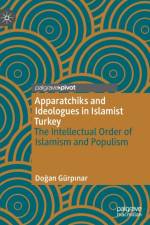
This book analyzes how AKP¿s embedded intellectuals operate as media spin doctors, exploring their transformation from passionately engaged intellectuals into apparatchiks. This project adapts a post-Soviet geography approach to the media, intelligentsia, and political discourse as derivative of authoritarian regimes to the Turkish context. It offers a fresh look at the Turkish political and intellectual scene and a comparative study of the populist-authoritarian politics of Turkey. Situated in the literature on the post-Soviet authoritarian regimes and their ways of governing, as well as their manipulation of public opinion, the book analyzes AKP-aligned intellectuals as apparatchiks. Gürp¿nar explores the different constellations of pro-AKP intellectuals vindicating the AKP regime from various angles, including: liberal/progressive intellectuals who initially supported the party for its liberal vistas but continued their support by twisting their progressiverhetoric; Islamist intellectuals blending their Islamism with populism; and national security intellectuals who joined after the AKP came to propagate a national security agenda. The book also provides an overview of the mechanisms of political technology, including the media landscape and its running by the AKP, intellectuals themselves as operators of political technology, and the problem of ¿cultural power.¿ The book will be of interest to those studying comparative authoritarian politics, populism, political communication, and scholars of Middle East and Eastern Europe.
This book provides an historical overview of the formation of sports media in Latin America and its role in the construction of the political history of Latin American sport. The sports press was a privileged observer of the development of modern sports, but it was also a key factor in the making of professional sports in Latin America. Most of the literature on sport in Latin America treats the sports press as an historical source, rarely taking it as an object of study in itself. However, the development of sports in the region is connected to national and state-building processes and the role of media narratives is crucial to understanding how sports participate in those processes. Spanning the globalization of football in the late nineteenth century to the shift promoted by television in the 1970s, the chapters survey the historical development of sports media in Latin America. Representing ten countries, the contributors follow a framework that presents the press not as a passive narrator of the sports phenomenon, but as a social agent of the sports field. This book is of use to those interested in the history of sports and the media, and it will be a good resource for undergraduates taking courses on Sports History, Latin American History, Sports Management, and Journalism and Communication.
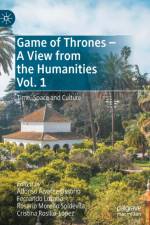
This book reflects on time, space and culture in the Game of Thrones universe. It analyses both the novels and the TV series from a multidisciplinary perspective ultimately aimed at highlighting the complexity, eclecticism and diversity that characterises Martin¿s world. The book is divided into three thematic sections. The first section focuses on space¿both the urban and natural environment¿and the interaction between human beings and their surroundings. The second section follows different yet complementary approaches to Game of Thrones from an aesthetic and cultural perspective. The final section addresses the linguistic and translation implications of the Game of Thrones universe, as well as its didactic uses. This book is paired with a second volume that focuses on the characters that populate Martin¿s universe, as well as on one of the ways in which they often interact¿violence and warfare¿from the same multidisciplinary perspective.
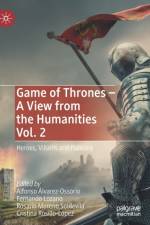
This book focuses on the characters that populate the Game of Thrones universe and on one of the most salient features of their interaction: violence and warfare. It analyses these questions from a multidisciplinary perspective that is chiefly based on Classical Studies. The book is divided into two sections. The first section explores Martin¿s characters as the mainstay of both the novels and the TV series, since the author has peopled his universe with three-dimensional intriguing characters that resonate with the reader/audience. The second section is devoted to violence and warfare, both pervasive in the Game of Thrones universe. In particular, the TV series¿ depiction of violence is explicit, going beyond the limits that have seldom been traversed in primetime television i.e. the execution of Ned Stark, the ¿Red Wedding¿ and ¿Battle of the Bastards¿. In the Game of Thrones universe, violence is not only restricted to warfare but is an everyday occurrence, a result of the social and gender inequalities characterising the world created by Martin.
This book assesses Italian budgetary policy over the last thirty years. Covering more than three decades of political change and national transformation, it considers the institutional and external factors that have shaped long-term budgetary changes. The book analyses the levels of expenditure allocation across varying budget categories, and compares the budget bill and budget law in order to shed new light on the specific dynamics that have influenced budgetary decision-making processes. Overall, the book provides important conclusions on the role of the budget as a governmental policy instrument, the consequences of multilevel governance over national budgetary policy, and the impact of national and international crises on budgetary changes. With Italy being one of the most important parliamentary democracies in Europe and a key actor within the European Union, these conclusions have important repercussions for other European parliamentary democracies. The book will appeal to scholars and students of European public policy, public administration and economic governance.
This book makes explicit the historical, technological, and discursive links between gossip as a mode of communication, news media, and contemporary politics. A Gossip Politic advances a new framework of gossip, applying the informal understanding of the term to news talk and political actors. Authored by esteemed scholars in the fields of Political Science, Media Studies, Linguistics, and Sociology, chapters consider the influence of gossip on the press, the American presidency, and the public. A Gossip Politic provides readers with a multi-faceted portrait of the ways in which gossip has influenced media history, shaped our understanding of democracy, and contributed to our current political landscape.
Interactive marketing, as one of the fastest growing academic fields in contemporary business world, is the multi-directional value creation and mutual-influence marketing process through active customer connection, engagement, participation and interaction. Contemporary interactive marketing has moved beyond the scope of direct marketing or digital marketing, as the market is becoming a forum for conversations and interactions among connected actors or participants in platform ecosystems. The advancement of mobile technology with interactive content and personalized experience makes interactive marketing the new normal in the business world.This handbook contains the most comprehensive and cutting-edge knowledge in the interactive marketing field. The 41 chapters that are divided into eight sections cover all aspects of contemporary interactive marketing realm, including social media and influencer marketing, big data and machine learning in predictive analytics, mobile marketing and proximity marketing, interactive digital marketing and Omnichannel marketing, AI, VR and AR in business applications. With a focal point on interactive marketing, this handbook takes a multidiscipline perspective, from new technology innovations, social media and platform application, economic and cultural impacts, social and psychological analysis, and management and information system.This book provides a timely and comprehensive textbook companion and/or course project resource for college educators and students used for variety of graduate and undergraduate marketing courses, such as Digital Marketing, Internet Marketing, Social Media Marketing, New Media Communication, Marketing Analytics and Marketing Management, etc. It offers valuable references for academic researchers who are interesting conducting and publishing in interactive marketing research. The state-of-art review and emerging new trends presented in the book are particularly useful for research idea generation and conceptual development. The book also putts forward insightful guidelines and practical tools for business management in the application of new interactive marketing strategies and applications in the real world practices.
This book is the first critical interdisciplinary examination in English of Italian women¿s contributions to intellectual, artistic, and cultural production in modern Italy. Examining commonalities and diversities from the country¿s Unification to today, the volume provides insight into the challenges that Italian women engaged in cultural production have faced, and the strategies they have deployed in order to achieve their objectives. The essays address a range of issues, from women¿s self-identification and public ownership of their professional roles as laborers in the intellectual and cultural realm, to questions about motherhood and financial remuneration, to the role of creative foreign women in Italy. Through critical analysis and direct testimony from new and typically marginalized voices, including an Arab-Italian writer, an Italian-Dominican filmmaker, and a transgender activist, new forms of ongoing struggle emerge that redefine the culturally diverse landscape of female intellectual and creative production in Italy today. The volume rethinks a solely national ¿Made in Italy¿ reading of the subject of female intellectual labor, demonstrating instead the wide network of influences and relationships that have existed for Italian women in their professional aspirations.
This contributed volume explores theories of media and communication and focuses on providing African perspectives on global conversations. Using broad cases relating to media and communication theories, this book explores socio-cultural issues affecting most modern African societies, providing a conceptual and empirical framework for explicating the potential place of media techniques and structures in Africa. As a good template for understanding and applying communication theories and approaches in the African context, the volume is a priceless asset for Media and Communication scholars.
This book provides a framework that encompasses both physics and cognitive science ¿ integrating them into a ¿theory of everything¿ to establish a basis for both our scientific and humanistic endeavours.It explores the implications of brain laterality for understanding the emergence of mind and its relation to the physical world ¿ arguing that the analytic vs. holistic cognitive differences of the left and right human cerebral hemispheres are key to understanding not only human self-consciousness and language, but also sociocultural phenomena ranging from the emergence of the scientific method and axes of political orientation to the direction of development of conceptions of God and the fundamental differences between polarizing philosophical traditions.In a further step, the book draws on the Darwinian principle that our cognitive apparatus is shaped by the environment in which it evolved to argue that human bilaterality mirrors the fundamental hylomorphic relation between formal organization and material components that constitutes physical nature itself. The logical division between holistic and analytic categories thereby offers a principled basis for a metaphilosophy.
This volume investigates energy as a shaping force in Russian and Soviet literature, visual culture, and social practice. Chronologically arranged chapters explain how nineteenth-century ideas about energy informed realist novels and paintings; how the poetics of energy defined pre-Revolutionary and Stalinist utopianism; and how fossil fuels, electricity, and nuclear fission generated distinct aesthetic features in Imperial Russian, Soviet, and post-Soviet literature, cinema, and landscape. The volume¿s concentration on Russia responds to a clear need to understand the role the country plays in social, political, and economic processes endangering life on Earth today. The cultural dimension of Russiäs efforts at energy dominance deserves increased scholarly attention not only in its own right, but also because it directly affects global energy policy. As the contributors to this volume argue, the nationally inflected cultural myths that underlie human engagements with energy have been highly consequential in the Anthropocene.
Abonner på vårt nyhetsbrev og få rabatter og inspirasjon til din neste leseopplevelse.
Ved å abonnere godtar du vår personvernerklæring.