






Gjør som tusenvis av andre bokelskere
Abonner på vårt nyhetsbrev og få rabatter og inspirasjon til din neste leseopplevelse.
Ved å abonnere godtar du vår personvernerklæring.Du kan når som helst melde deg av våre nyhetsbrev.

This book explores cases of decapitation found in sources on the reign of Alexander the Great. Despite the enormous literature on the career of Alexander the Great, this is the first study on the characterisation of violent deaths during his hectic reign. This historiographical omission has involved the tacit and blind acceptance of the details found in the ancient sources. Therefore, this book seeks to illustrate how cultural expectations, literary models, and ideological taboos shaped these accounts and argues for a close and critical reading of the sources. Given the different cultural considerations surrounding decapitation in Greek and Roman cultures, this book illustrates how those biases could have differently shaped certain episodes depending on the ultimate writer.This book, therefore, can be especially interesting for scholars focused on the career of Alexander the Great, but also valuable for other Classicists, philologists, and even for anthropologists because itrepresents a good case of study of cultural symbolism of violent death, semantics of power, imperial domination and the confrontation between opposite cultural appreciations of a practice.
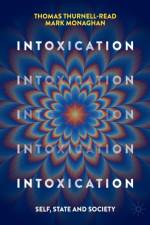
What images come to mind when you read the word ¿intoxication¿? What behaviour do you associate with the word ¿drunk¿? When you hear the word ¿drug¿, what images do you recall? This textbook provides an essential and thorough grounding in debates about the role of intoxication in contemporary society, from social and cultural perspectives. It examines intoxication in the broadest sense as including both legal and illegal substances and both culturally accepted and socially stigmatised practices. Given the pace of recent changes in policy and practice ¿ from the increasingly common legalisation of cannabis, to the recent trend of sobriety amongst adolescents and young adults ¿ this book stands out by offering both a through historical and theoretical overview and a topical and forward looking exploration of current debates. It adopts a multi-scale approach to examine wider patterns of change so it considers the subjective experiences of the role intoxication plays in the lives of individuals and groups, in the construction of diverse identities and how this differs by age, gender and ethnicity. The authors play particular attention to the way in which the state justifies interventions based on moral, health and criminal justice discourses and also consider the role played by other individuals and institutions, not least the mass media and the alcohol industry, in propagating and challenging common sense explanations of intoxication. It speaks to undergraduates, master's students and above, with a range of pedagogic features, and offers insights into policy and practice.
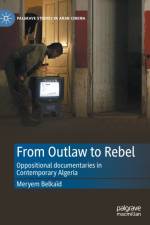
This book analyzes the rise of socially and politically engaged Algerian documentaries, created in the period immediately following the end of the Algerian civil war (1991-1999). It uses case studies to highlight the works of four Algerian filmmakers, and devotes a chapter to each: Malek Bensmaïl, Hassen Ferhani, Djamel Kerkar, and Karim Sayad. The book makes visible productions that have been overlooked not only in distribution circuits but also within academia, and examines the political significance and the esthetic power of some of the most influential Algerian documentaries produced since the 2000s.
T¿his book critically explores how and to what extent artificial intelligence (AI) can infringe human rights and/or lead to socially harmful consequences and how to avoid these. The European Union has outlined how it will use big data, machine learning, and AI to tackle a number of inherently social problems, including poverty, climate change, social inequality and criminality. The contributors of this book argue that the developments in AI must take place in an appropriate legal and ethical framework and they make recommendations to ensure that harm and human rights violations are avoided. The book is split into two parts: the first addresses human rights violations and harms that may occur in relation to AI in different domains (e.g. border control, surveillance, facial recognition) and the second part offers recommendations to address these issues. It draws on interdisciplinary research and speaks to policy-makers and criminologists, sociologists, scholars in STS studies, security studies scholars and legal scholars.
This book offers an analysis of how the Chemical and Biological Weapons (CBW) regime has responded in the immediate aftermath of the Covid-19 pandemic. Coronavirus has highlighted the need to better protect modern societies from natural, accidental and deliberate disease affecting humans, animals and plants. Within that context preventing the deliberate hostile use of biological and chemical agents will be of increasing importance. Dando asks to what extent there has been a significant strengthening to the CBW non-proliferation regime in the immediate aftermath of the COVID-19 pandemic using an analysis focused on two proposals to strengthen the Chemical Weapons Convention and the Biological and Toxin Weapons Convention which aim to constrain advances in science and technology developments that could be misused. On this basis he concludes that it would be hard to argue that to date there has been a significant strengthening of the CBW regime.
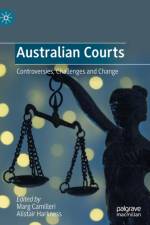
This edited collection brings together scholars and practitioners in every chapter to provide a comprehensive and unique exploration of courts in Australia. The primary focus is to identify controversies, challenges and change, in the form of potential reforms within the courts across Australian jurisdictions. Bringing forward original research and scholarship on a wide array of courts in Australia, combined with insightful practitioner perspectives, research will be effectively integrated with practice. This book is the first comprehensive collection of its kind to canvas the diversity of courts in Australia, providing comprehensive critical analysis of contemporary issues, debates and reforms. It considers the array of courts across state, territory and national jurisdictions in Australia, including coroners¿ courts, family courts, criminal, civil courts and problem solving courts. It also adopts an intersectional approach, providing insights into the perspectives of various court users such as people with disability, ethnic minorities, Indigenous Australians, and victims of crime. Each chapter provides opportunities for further debate among scholars, practitioners and students regarding potential future directions for reform to improve the efficacy, equity and accessibility of Australian courts.This collection serves as an international ready reference for students, scholars and practitioners alike.
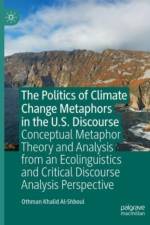
This book uses critical metaphor analysis to show from a cognitive perspective how climate change is conceptualized in the USA. The author enriches his linguistic analysis with cognitive aspects such as source-target domain mapping and metaphor opposition to explain how metaphor works in terms of framing this issue, drawing on a Critical Discourse Analysis-informed framework to demonstrate how politicians represent the climate crisis in their attempts to trigger social change. Using a data set of speeches given by US-based politicians, governors and mayors speaking in the context of the withdrawal of the United States from the Paris Agreement, the book categorizes metaphors on different conceptions such as war, construction, unfairness, journey, and cleanliness to bridge the gap between ecolinguistics and critical metaphor analysis. This book will be of interest to students and scholars in fields including applied linguistics, political communication, ecolinguistics, and cognitive linguistics and psychology.
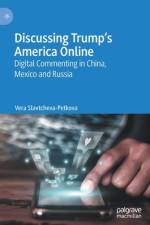
This book offers a novel, grounded-theory approach to the study of online comments about Donald Trump and the USA in countries with a turbulent relation with America: China, Mexico and Russia.Slavtcheva-Petkova advocates for a departure from Jürgen Habermas¿s public sphere and democratic deliberative framework, introducing instead the concept of post-deliberative public spheres. The book provides a qualitative thematic analysis via the constant comparison method, coupled with quantitate content analysis of more than 2200 social media comments posted from Trump¿s election in 2016 until July 2020. Three empirical chapters are devoted to the countries under study, showing how it is possible to map the comments onto a spectrum of authoritarianism/censored media to democracy/free media. Slavtcheva-Petkova argues that existence and strength of an underpinning ideology and the scope that ideology leaves for constructive political discussions online is of key importance, exploring themes such as identity, patriotism and populism; democracy; power and responsibility.Timely and innovative, ¿Trump¿s America Online¿ astutely displays how post-deliberative public spheres are valuable spaces for political talk despite the challenges they face across the globe.
This book explores how young Cuban filmmakers have expanded the range of sexual subjectivities on screen. It analyzes cine joven (films made by young directors) from the late 1980s to the early 2020s, film reviews, articles, and materials from the Cinematheque of Cuba's archive to illustrate the confluence of sexuality, cinema, and discourses of youth. While sexual and cinematic cultures have their own unique relation to the public sphere, state institutions, and transnational flows, this book explores tensions, debates, and expressions that unite them. In an investigation of how young filmmakers employ queer strategies of self-making to bring sexual diversity to the screen, Margaret G. Frohlich shows us how cine joven takes part in the socialization of power in Cuba.
This book explores the Australian press reporting of the persecution and genocide of European Jews, and the extent to which the news of the Holocaust was known and believed, revealed and hidden, and acknowledged and minimised. Spanning the coverage of Hitler¿s political ascent in the 1920s through to the Nazis¿ extermination campaign, it culminates in the accounts of the trials of Nazi war criminals and the post-war transnational migration to Australia of Holocaust survivors, to a country far from universally welcoming in its reception of them. The book also tells the story of the journalists who reported on these tragic events and the editors who published them, along with the political, social and cultural context in which they worked, in an environment influenced by exclusionary ideas about race and nationality that did not necessarily inspire sympathy for Jews and their trauma. This book sheds light on the ethics of reporting human suffering, violence and genocide and ¿ centrally ¿ on the role of the press in shaping Australiäs collective memory of the Holocaust. It encourages readers to think critically about media power, public apathy, advocacy, and the importance of truth. Disturbing evidence of increasing anti-Semitism in Australia as elsewhere, along with continuing Holocaust denial, provide an additional urgency to this study.
This book explores the issues and challenges of gender and development in Africa. The current needs of women in Africa are connected with the possible future emancipation of women from institutions and processes that perpetuate poverty to overcome gendered development processes and patriarchal economic policies at work. The role of legal, political, cultural, religious, and economic institutions in development are examined to highlight marginalisation within uneven development processes embedded with capitalism. Broader development issues, such as property rights, food security, accessibility of resources, and environmental change, are also discussed.This book aims to reimagine African development from an issue-based perspective that moves beyond gender stereotypes and narrow silo of patriarchal development. The volume is relevant to students and researchers interested in the political economy, development and feminist economics.
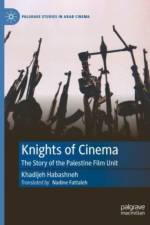
This book consists of an account of the creation of the Palestine Film Unit (PFU) and its founding members, from the photography department in the early years of the Palestinian revolution (1967-1968), to its evolution in the mid-1970¿s into the Palestinian Cinema Institution. Khadijeh Habashneh weaves her own memories into excerpts from letters and other communications of survivors, friends and PFU family members, with writings by scholars who analyzed the work and the contributions of this remarkable film movement (from the late 1960¿s to early 1980¿s). As such it offers a unique perspective on this aspect of Palestine film history that ended in the loss of its archive in the mid 1980¿s, providing details that have not been previously published in English.
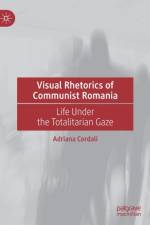
Visual Rhetorics of Communist Romania: Life under the Totalitarian Gaze offers personal accounts and theoretical insight into the Cold War era when little information about life beyond the Iron Curtain could transpire to the West. Adriana Cordali develops a unique visual rhetorical theory for analyzing communist totalitarian propaganda and the resistance to it, and reveals the deliberate, strategic in/visibilities the rhetoric of power engaged in. Building upon the local history, ideology, and politics of the regime imposed after WWII, she identifies propagandäs rhetorical features, visual tropes, and symbols and examines striking photographs and print materials from Ceau¿escu¿s regime (1966-1989) and the time of regime change (1989-1990), as well as an award-winning Romanian film that depicts women¿s life at the time. Converging visual rhetoric and culture with history and politics, Visual Rhetorics of Communist Romania is a first book of this kind and will interest readers of rhetoric and communication, visual rhetoric, and political discourse in the region.
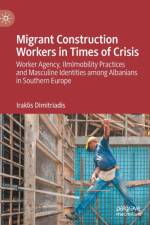
This book explores how migrant construction workers in Southern Europe faced unemployment and precarious work conditions during and after the Great Recession. By drawing on rich qualitative data, it investigates the experiences of Albanian men within and beyond the workplace, and sheds light on the capacity of migrant builders to deal with economic hardships and the role of their families and masculine identities in shaping their coping practices. This book suggests a new framework for the study of coping practices among migrant (construction) workers, and adds to the study of integration processes in Southern European countries by comparing the narratives of settled migrants in Italy and Greece. This book also looks at the effects of the COVID-19 pandemic on migrant builders¿ lives in Southern Europe. By adopting an interdisciplinary approach, this book is of interest both to students and researchers in the field of migration studies and those working in the fields of sociology, geography, anthropology, political science and economics.
This book compares the Victorian British poet Robert Browning and the twentieth-century Ghanaian poet and novelist Kojo Laing¿two writers whose texts frequently foreground multi-scalar transregional cartographies, points of connection and translation, and imaginative kinships between different linguistic and cultural communities. Starting from the numerous and surprising points of connection and resemblance between both authors¿ texts, this book puts pressure on critical practices that would keep writers like Laing and Browning separate, positing instead the importance of paying attention to the transnational, cross-cultural, and cross-temporal imaginative relationships texts themselves generate. By comparing two writers whose texts represent different points of view on a number of shared and congruent contexts, this book seeks an original way of understanding the relationship between texts and (post-) colonial contexts, texts and other texts. Browning¿s and Laing¿s shared tendencyto foreground trans- and post-national cartographies of relation and difference, and their similarly translational aesthetics, both demand a probing of the disciplinary separation between ¿English Literature¿ and ¿Comparative Literature¿, as well as ¿literature¿ and ¿comparison¿, and a fresh awareness of the ways in which literature itself makes comparisons and affiliations. It also involves a version of ¿world literature¿ intent on accentuating the relational worlds (linguistic, imaginative, ethical) that texts themselves generate; a criticism sensitive to the ways in which writers from different times and places can still be seen to overlap.
This book provides a nuanced account of cultural competence, knowledge and skills illustrated in distinctive taste in the middle and upper classes in Dublin, Ireland (Bourdieu, 1984, 1986). It highlights how the development of cultural taste at a young age is linked to cultural participation in later life. Inspired by work that captures the textured social cartography of distinctive cultural taste (Bennett, Emmison & Frow, 1999; Bennett, Savage, Silva, Warde, Gayo-Cal & Wright, 2009), this research charts the changing nature of cultural participation in Dublin, Ireland and shows how cultural consumption has broadened from the narrow range of traditional high art forms towards one which grazes across the general register of culture. As elsewhere, this omnivorous, broad and pluralistic cultural palette has not altered patterns of distinction in cultural participation, rather it belies an emerging cultural capital profile - one where art form boundaries have collapsed but social boundaries and cultural distinction remains intact. Through interviews with two age cohorts (18-24yrs) and (45-54yrs) in Dublin in 2019, this research shows how the dominant class, through histories of cultural exposure have developed cultural taste and competence that is remarkably enduring. Reviewing available data on arts attendance and cultural participation in Ireland today, this text highlights how years of cultural familiarity allow individuals to exert a cultural dominance that facilitates class to be performed obliquely. It also demonstrates how existing surveys reinforce traditional ways of seeing with 'art' considered highbrow, formal and valued while culture is domestic, informal and less valued in the eyes of polity. This view informs Irish arts strategy and policy, ultimately reinforcing that 'ways of seeing' and policy perspectives, do matter (Berger, 1972).
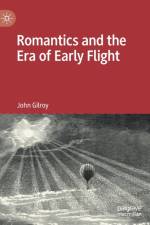
This book explores the significance of flight to Romantic literature. Although the Romantic movement and the age of ballooning coincided, there has been a curious and long-time tendency to forget that flight was not impossible during this period. This study details the importance of this new technology to Romantic authors, primarily English Romantic poets. It combines accounts of the exploits and experiences of early balloonists with references to Romantic texts, using ballooning lore to illuminate a range of Romantic writings. The balloonists are seen as not just supplying these writers with a new code of metaphors, but as colleagues engaged in similarly imaginative enterprises. The book uncovers an ¿aerial imagination¿ shared by a large number of writers in the Romantic period that has its origins in the balloon adventures of the 1780s and following two decades. It will appeal to scholars and students of Romantic cultural history, as well as those interested in Romantic poetry andthe history of early aeronautics.
This book examines the links between public policy and Fourth Industrial Revolution (4IR) technological developments in Africa. It broadly assesses three key areas ¿ policy entrepreneurship, policy tools and citizen participation ¿ in order to better understand the interfaces between public policy and technological transformations in African countries. The book presents incisive case studies on topics including AI policies, mobile money, e-budgeting, digital economy, digital agriculture and digital ethical dilemmas in order to illuminate technological proliferation in African policy systems. Its analysis considers the broader contexts of African state politics and governance. It will appeal to students, instructors, researchers and practitioners interested in governance and digital transformations in developing countries.
This book examines how educational equity is affected during crises ¿ specifically the COVID-19 pandemic. Three key concerns emerge for children¿s and young people¿s education: material needs, emotional wellbeing, and access to learning. The evidence highlights how pre-existing educational inequalities were exacerbated as well as altered during the global pandemic. Critical reviews of educational vulnerability and of significant crises over the past century provide the book¿s foundation. Then, drawing on empirical research from Australia and extensive analysis of international documentation, the book demonstrates significant detriments that pandemic responses caused to formal learning and the broader support role of schools and also addresses promising educational innovations. The book is important not only for scholars in education, but also for practitioners and governments to inform how to better support learning as well as material and emotional wellbeing during and after crises, especially for children and young people experiencing disadvantage.
This volume explores the importance of inter-generational oral culture and stories that transcend time, space, and boundaries transmitted historically from one generation to the next through proverbs, idioms, and folklore tales in different geographical and spatial contexts. These important stories and their embedded life lessons are introduced, explained, and supplemented with pre and post educational activities and lesson plans to be used as learning resources. The centering of orality as a tool and medium for educating the future generation is a reclamation and reaffirmation of Indigeneity, Indigenous knowledges. and non-hegemonic approaches to support students in a socio-culturally sustaining manner. Through this understanding, this book explores the interconnectedness between culture, traditions, language, and way of life through oral storytelling, sharing, and listening.
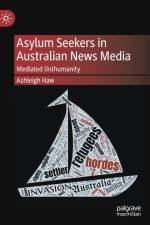
This book sheds light on how the public engage with, make sense of, and discursively evaluate news media constructions of people from asylum seeking backgrounds. As a case study, the author discusses her recent research combining Critical Discourse Analysis with a cultural studies Audience Reception framework to examine the perspectives of 24 Western Australians who took part in semi-structured interviews. During their interviews, participants were asked open-ended questions about: their general views on people seeking asylum, including Australiäs policy responses, their media engagement habits and preferences, and their views concerning how the Australian media represents people seeking asylum. The author compares and contrasts this research with broader interdisciplinary discussion, and the book will therefore appeal to students and scholars of migration, political communication, sociology, audience reception, critical media studies and sociolinguistics.
This book examines the social entrepreneurship strategies of nonprofit organizations (NPOs), with a focus on the Caribbean social sector. In addressing the conceptual ambiguities from an academic and experiential perspective, it aims to provide a much-needed reflection on social entrepreneurship (SE), including in developing contexts. Through a comparative analysis of the experiences of NPOs from the Caribbean, the authors demonstrate the applicability of SE for NPO sustainability and as an opportunity for social sector performance improvement. Blending both quantitative and qualitative methodologies, this work is a useful base for researchers wanting to advance the mission of theory and methodological development toward maturing the field of social entrepreneurship.
This book draws upon diverse approaches and understandings of sustainability transformations, social transitions and environmental accountabilities. It presents case studies that highlight real-world consequences of changing ideas about how best to achieve effective and durable sustainability transformations and examines how environmental accountabilities and social transitions influence sustainability transformations. Each chapter provides insights regarding how new knowledge and perspectives matter for whether, when, and how people, governments, corporations and international organisations seek and pursue solutions to social-ecological challenges and sustainability dilemmas. It pays sustained attention to whether and how understandings and applications of accountability can improve international sustainability transformations. The chapters presented in this book consider some pressing questions concerning social transitions and environmental accountabilities: how can they contribute to sustainability transformations, how do they influence the scalability of sustainability transformations, and, how can such sustainability transformations become durable?
This open access book responds to the urgent need to improve how we prevent and resolve conflict. It introduces Adaptive Peacebuilding through evidence-based research from eight case studies across Africa, Asia, the Middle East, and Latin America. It also considers how China and Japan view and practice peacebuilding. The book focuses on how peacebuilders design, implement and evaluate programs to sustain peace, how interactions between external and local actors have facilitated or hindered peacemaking, and how adaptation to complexity and uncertainty occurred in each case study.
This edited volume focuses on challenges facing science education across three areas: curriculum, teacher education, and pedagogy. Integrating a diverse range of perspectives from both emerging and established scholars in the field, chapters consider the need for measured responses to issues in society that have become pronounced in recent years, including lessons from the Covid-19 pandemic, the environment, and persisting challenges in STEM teaching and learning. In doing so, the editors and their authors chart a potential course for existing and future possibilities and probabilities for science education.
This collective book offers a panorama of the history of tax evasion, tax avoidance and tax havens from the nineteenth century to the present day, based on the latest research in contemporary history. It aims to show that this phenomenon is at the heart of global capitalism, partly as a response of the ruling classes to the rise of progressive taxation, but for other reasons too: notably the development of a powerful tax evasion and avoidance industry in different countries. The book argues that tax competition between states has stimulated the development of tax havens. It discusses the notion of the ¿tax haven¿ and proposes a more rigorous concept - that of the ¿tax predator¿. Finally, the book sheds light on the socio-political conflicts that have developed around tax evasion and the way in which states have fought against or tolerated the phenomenon.
This book explores Takamure Itsue¿s (1894¿1964) intellectual odyssey as Japan¿s most notable pioneer in the study of women¿s history. When she embarked on a series of scholarly projects that investigated marriage patterns and kinship systems in ancient Japan, it was a response to crisis-ridden modernity. Relentless in her quest to dismantle patriarchy, this ¿woman from the Land of Fire¿ (a nickname for her birthplace, Kumamoto Prefecture) locked herself away in 1931 and spent the rest of her life conducting research on female-friendly societies with matrilocal arrangements under kinship-based communal systems. While dissecting the patriarchal norms undergirding the capitalist nation-state, she embraced matricultural paradigms that embodied life-sustaining and life-enhancing values through communal childrearing and matrilineal inheritance. Takamure, a visionary thinker, asked big-picture questions and addressed multifarious issues of contemporary relevance, including beautystandards, human trafficking, gross disparities in wealth, war and imperialism, science and religion, and humanity¿s relationship with nature.
This book seeks offers accounts of the ways in which Chinese engagement with Latin America will shape the regional and global order with impacts for development, peace, and equity. It also pays close attention to the traditional role played by the USA in the region, how China differs, and the increasingly triangular relationship between the USA, China, and Latin American countries. The contributors analyze various economic dimensions, including trade, infrastructure, and finance, and the historical, sectoral, regional, and national stories seek to change the narrative on China-Latin American relations. In particular, the book argues that there are opportunities for international cooperation to secure gains in the region, but only if the US and China alter their behavior and Latin American countries work collectively and in more coordinated fashion. Together, the chapters offer coherent social science analysis, policy frameworks, and empirical detail to understand and navigate increasedChinese engagement with Latin America.
Abonner på vårt nyhetsbrev og få rabatter og inspirasjon til din neste leseopplevelse.
Ved å abonnere godtar du vår personvernerklæring.