









Gjør som tusenvis av andre bokelskere
Abonner på vårt nyhetsbrev og få rabatter og inspirasjon til din neste leseopplevelse.
Ved å abonnere godtar du vår personvernerklæring.Du kan når som helst melde deg av våre nyhetsbrev.

Anxiety is perhaps the defining psychological malady of our age, whereas creativity is seen as an almost unassailable good, its importance heralded and promoted in a range of disciplines and domains. A number of diverse thinkers and researchers have tried to unpick the relationship between anxiety and creativity, and this short book explores and connects some of their ideas and findings. Drawing on psychoanalysis and neuroscience, existential psychology and mindfulness, literary studies and philosophy, this book places a range of different disciplines in dialogue. It explores how creativity and anxiety might impact one another, and argues for the importance of establishing a diverse and inclusive cultural space which everyone can draw from and contribute to.
This book contains another set of essays dealing with the fundamental economic problems of our time: inequality, environment degradation, and social disorder, which are analyzed in light of the unified theory of capitalism. This theory is a scientific endeavor that seeks to explain the capitalist system taken by parts and then taken as a whole, as a unified theory. By parts, the theory analyzes the First World and the Third World and also the short run, long run, and very long run economic processes, showing why and how economic growth has led to a new epoch, with ecological equilibrium disruption, known as the Anthropocene Age. The empirical predictions of the theory are proven to be consistent with the available facts. Therefore, the theory can be accepted as a good representation of the real-world capitalism; moreover, its derived causality relations become inputs for the debate on the needed science-based policies for the new age. Indeed, this book proposes structural policies to change the way capitalism operates, through changes in its basic institutions, mainly the electoral democracy, which would certainly imply a re-foundation of the capitalist system.
The beautiful game is big business. Football leagues worldwide are being dominated by clubs which are becoming richer and more powerful. Since the first edition of this book was published in 2003, much has changed in the industry. However the central challenge remains how best football, its leagues and clubs can navigate a path between the logic of the market and the logic of community (social), while also remaining focused on a sporting logic.In this second edition, author Stephen Morrow offers a critique of football¿s economic structure, prevalent models of club ownership and governance, and new approaches to regulation that have emerged. The book also reflects on the Covid-19 pandemic and on ways in which it has illuminated many of the structural weaknesses inherent in football. It also offers an insight into the woman¿s game and its financial development in some countries, as well discussing issues such as football¿s response to environmental challenges.Drawing on theory and new literature from across relevant academic disciplines, this book seeks to make sense of the current challenges while also putting forward solutions as to how football can continue to harness and build on its social and community significance.
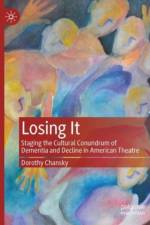
This monograph is a study of American (U.S.) stage representations of dementia mounted between 1913 and 2019. Its imbricated strands are playtexts; audiences as both the targets of the productions (artifacts in the marketplace) and as anticipated determinants of legibility; and medical science, both as has been (and is) known to researchers and, more importantly, as it has been (and is) known to educated general audiences. As the Baby Boom generation finds itself solidly in the category of ¿Senior,¿ interest in plays that address personal and social issues around cognitive decline as a potentially frightening and expensive experience, no two iterations of which are identical, have, understandably, burgeoned. This study shines a spotlight on eleven dementia plays that have been produced in the United States over the past century, and seeks, in the words of medical humanities scholar Anne Whitehead, to ¿open up, and to hold open, central ethical questions of responsiveness, interpretation, responsibility, complicity and care.¿
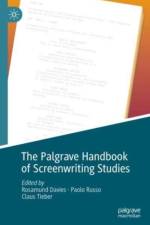
This book provides an overview of the growing field of screenwriting research and is essential reading for both those new to the field and established screenwriting scholars. It covers topics and concepts central to the study of screenwriting and the screenplay in relation to film, television, web series, animation, games and other interactive media, and includes a range of approaches, from theoretical perspectives to in-depth case studies. 44 scholars from around the globe demonstrate the range and depths of this new and expanding area of study. As the chapters of this Handbook demonstrate, shifting the focus from the finished film to the process of screenwriting and the text of the screenplay facilitates valuable new insights. This Handbook is the first of its kind, an indispensable compendium for both academics and practitioners.
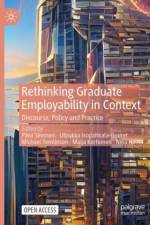
This open access book offers critical, multidisciplinary analyses on graduate employability. The book examines employability at the macro, meso and micro levels: higher education policy, the labour market, higher education institutions, organisations, individuals and social groups, in European, North American and Australian contexts. The contributors provide social and contextual analysis of graduate employability as a theoretical concept, a discourse and policy imperative and a social and discursive practice. The volume also introduces novel methodological perspectives to study the process of graduate employability. There is an urgent need for comprehensive and unified critical perspectives on graduate employability, as such analyses have so far been scarce and often isolated. Besides filling this gap in the literature, the book will also serve as essential reading on courses that focus on graduate careers and employability as well as higher education policy and practice.
This open access book offers critical, multidisciplinary analyses on graduate employability. The book examines employability at the macro, meso and micro levels: higher education policy, the labour market, higher education institutions, organisations, individuals and social groups, in European, North American and Australian contexts. The contributors provide social and contextual analysis of graduate employability as a theoretical concept, a discourse and policy imperative and a social and discursive practice. The volume also introduces novel methodological perspectives to study the process of graduate employability. There is an urgent need for comprehensive and unified critical perspectives on graduate employability, as such analyses have so far been scarce and often isolated. Besides filling this gap in the literature, the book will also serve as essential reading on courses that focus on graduate careers and employability as well as higher education policy and practice.
This book examines how since its arrival in 1867 with British immigrants, football has become the key cultural signifier of national identity in Argentina over the long twentieth century. With the international exploits of players such as Luis Monti, Alfredo Di Stéfano and Diego Maradona, the sport has projected Argentina onto the global consciousness not seen in any other way.In this book, Mark Orton challenges existing myths surrounding the nativisation of football in Argentina away from British influence, as he shows how the game provided a conduit for the assimilation of millions of European immigrants in the early decades of the century into a new Argentine ¿race¿. The book also examines how football gave some of the ¿voiceless others¿ such as women, Afro-Argentines, indigenous people and those in the interior an arena to project themselves in an Argentine society that was masculine, white and Buenos Aires-dominated.
This edited volume provides an anthropological study of family businesses and business families. In previous research on family firms and business families, the comparative cross-cultural approach of anthropology has so far received little attention. As a result, family firms and business families are too often analyzed without considering cultural and kinship differences adequately. Similarly, although the topics of kinship and the economy are central to anthropological analysis, research on family firms and business families has been a marginal topic only that lacks in-depth discussions within anthropology. This volume breaks the mold by offering new empirical and theoretical insights into discussion about business families and family firms from a comparative cross-cultural perspective. It first addresses how the business family can be defined in different cultures and how kinship becomes understandable as a process and through 'doing family'. In this, the book provides a systematic comparison of the connections between family, kinship and economic activity in different cultures, whereas many of the previous studies have concentrated on only one or a few regions or cultures. It also shows the complexities and challenges when grounding the analysis of economic activity and entrepreneurship in cultural context.
This book contains a series of autoethnographies written by participants of a program on qualitative methods. It offers the stories of students-turned-professors and what they learned via autoethnographic writing as part of the course. The chapters provide insight into the application of a range of qualitative research techniques and, unlike typical works on qualitative methods, in a nonprescriptive method that reflects a personal learning process. This book will be of interest to students and academics engaged in qualitative research, as well as scholars of transformative learning, teaching pedagogy and broader educational studies.
This book makes the case for Bertolt Brecht¿s continued importance at a time when events of the 21st century cry out for a studied means of producing theatre for social change. Here is a unique step-by-step process for realizing Brecht¿s ways of working onstage using the 2015 Texas Tech University production of Brecht¿s Mother Courage and Her Children as a model for exploration. Particular Brecht concepts¿the epic, Verfremdung, the Fabel, gestus, historicization, literarization, the ¿Not¿but,¿ Arrangement, and the Separation of the Elements¿are explained and applied to scenes and plays. Brecht¿s complicated relationship with Konstantin Stanislavsky is also explored in relation to their separate views on acting. For theatrical practitioners and educators, this volume is a record of pedagogical engagement, an empirical study of Brecht¿s work in performance at a higher institution of learning using graduate and undergraduate students.
This book investigates how decolonising the curriculum might work in English studies ¿ one of the fields that bears the most robust traces of its imperial and colonial roots ¿ from the perspective of the semi-periphery of the academic world- system. It takes the University of Lisbon as a point of departure to explore broader questions of how the field can be rethought from within, through Anglophone (post)coloniality and an institutional location in a department of English, while also considering forces from without, as the arguments in this book issue from a specific, liminal positionality outside the Anglosphere. The first half of the book examines the critical practice of and the political push for decolonising the university and the curriculum, advancing existing scholarship with this focus on semi-peripheral perspectives. The second half comprises two theoretically-informed and classroom-oriented case studies of adaptation of the literary canon, a part of model syllabi that are designed to raise awareness of and encourage an understanding of a global, pluriversal literary history.
This book explores Eastern European consumer cultures in the twentieth century, taking a comparative perspective and conceptualizing the peculiarities of consumption in the region. Contributions cover lifestyles and marketing strategies in imperial contexts in the late nineteenth and early twentieth centuries; urban consumer cultures in the Interwar Period; and consumer and advertising cultures in the Soviet Union and its satellite republics. It traces the development of marketing throughout the century, and the changes in society brought about by democratization and the 'Americanization' of consumption. Taken together, the essays gathered here make a valuable contribution to our understanding of consumption and advertising in the region.
The Palgrave Handbook of Theatre and Migration provides a wide survey of theatre and performance practices related to the experience of global movements, both in historical and contemporary contexts. Given the largest number of people ever (over one hundred million) suffering from forced displacement today, much of the book centres around the topic of refuge and exile and the role of theatre in addressing these issues. The book is structured in six sections, the first of which is dedicated to the major theoretical concepts related to the field of theatre and migration including exile, refuge, displacement, asylum seeking, colonialism, human rights, globalization, and nomadism. The subsequent sections are devoted to several dozen case studies across various geographies and time periods that highlight, describe and analyse different theatre practices related to migration. The volume serves as a prestigious reference work to help theatre practitioners, students, scholars, andeducators navigate the complex field of theatre and migration.
Superhero phenomena exploded into 20th- and 21st-century popular culture by way of the visual medium of comic books. In an increasingly secular (yet spiritual) culture that has largely renounced ¿the gods¿ (and even religion), what does the return of the superhero through our own pop cultural mythologies say to us¿or even about us? This collection of essays from leading and up-and-coming scholars in the fields of comparative mythology and depth psychology considers the return of the superhero as representative of our own unique emergent modern mythology: a wildly diverse pantheon that reflects back to us our most far-reaching hopes and (im)possible (super)human desires. In placing the interpretive tools of comparative mythology and depth psychology alongside the comic book phenomenon, a super-powered palette emerges that unveils the hidden potential of modern readers¿ own heightened imaginations. The essays in this anthology examine select comic book and superhero characters from the ¿Silver Age¿ 1960s through contemporary 21st-century adaptations and innovations, as readers are invited to discover and uncover what the (re)emergence of these perennial gods and goddesses have to say about our own secret super selves today.
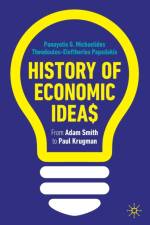
This book examines the history of economic thought and of political economy over the past 250 years. It presents an accessible introduction to the lives and ideas of some of economics' most prominent theoreticians, including at least one representative of each major school of economic thought. Additionally, learning objectives, summaries, key takeaways, and revision questions are included to facilitate learning and self-assessment.The concise nature of this book makes it an easy-to-use guide to the early pioneers of political economy (Smith, Ricardo, Marx, Walras), the 20th century innovators of economics (Keynes, Schumpeter, Hayek, Friedman, Solow), or the more recent research in the discipline (Nash, Sen, Stiglitz, Krugman). Those interested in the history of economic thought will find this book to be an invaluable resource.
This book is the second edition of Women Spacefarers and tells the fascinating stories of the valiant women who broke down barriers to join the space program. Beginning with the orbital flight of USSR cosmonaut Valentina Tereshkova in 1963 and continuing to the present day, it covers the many female players who have had a central role in the greatest adventure of our time. The book includes the biographies of, and in some cases interviews with, the brave women who have flown in space. For each entry, the author contextualizes the spacefarer's accomplishments in light of the political and cultural climate of the time. The second edition features fifteen additional profiles on figures such as Jessica Meir and Wally Funk; new interview material; a new thematic structure based on each woman's science specialty and role; an expanded glossary; and more.The result is a gallery of pioneering women who reached for the stars: women who, with exceptional skill, hard work, and dedication, reached impressive careers as accomplished pilots, researchers, engineers and managers, and left a legacy of strength for all aspiring spacefarers.
This book explores the potential of men¿s veganism to contest unsustainable anthropocentric masculinities. Examining what it means to be a vegan man and connections between men, masculinities and veganism addresses exploitative human-animal relations, climate change, and social inequalities as urgent and interconnected global issues. Using conceptual insights from critical studies on men and masculinities, ecofeminism, critical animal studies and vegan studies, this book examines the potential of men¿s veganism and vegan masculinities to foster more ethical, caring and sustainable ways of relating to nonhuman animals and to contribute towards more egalitarian gender relations. This book is grounded in a qualitative empirical study of the lived experiences of 61 vegan men in Northern Europe. The themes explored include men¿s transition to veganism, the emotional and embodied dimensions of men¿s veganism, negotiating social and intimate relationships as vegan men, and links between men¿s veganism, gender equality and social justice.
There is a significant discrepancy between the population of Egypt and the GDP of this country. This book offers pragmatic policy prescriptions for Egyptian decision-makers. It provides a path forward and toward a better future for the Egyptian people. The country faces challenges with household income, social welfare, productivity, and many other markers of twenty-first century economic success even vis-à-vis other developing country peers.This book focuses on framing the optimal macroeconomic policy agenda for Egypt in the face of the big global, regional and national forces that are being accelerated, intensified or changed by the COVID-19 crisis rather than on specific sectoral policy formulations. The authors present these big questions in the context of showing how Egypt can best navigate the risks and seize the opportunities of the current period of intense flux and transition, to put itself in the best possible position to create prosperity, stability, and hope for its citizens. The authors examine to what extent the Egyptian authorities can fulfill their ambitious development plans and in producing this work, to provide useful lessons that can be applied to other governments struggling to respond to the challenges of the age.
This book explores the convergence of urban radio with digital media technologies in Africa, focusing on how youth are riding on the rapid (though uneven) internet rollout on the continent to participate and drive the production and consumption of urban radio. With thirteen original chapters, the book sheds new light on the changing landscape of radio in a diverse set of African countries, illustrated with rich case studies from Zimbabwe, South Africa, Eswatini, Nigeria and Kenya. This book covers the following themes: youth agency and cultural power; civic engagement and political participation; youth, identity and belonging; youth cultural expressions as well as the impact of capitalist imperatives on commercial radio programing in Africa. Vibrant and innovative, Converged Radio, Youth and Urbanity in Africa reveals the creation of a new public sphere, through which African youth project their voices and identities, participating in and shaping national discourse. ¿
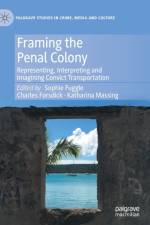
This book examines the representation of penal colonies both historically and in contemporary culture, across an array of media. Exploring a range of geographies and historical instances of the penal colony, it seeks to identify how the 'penal colony' as a widespread phenomenon is as much 'imagined' and creatively instrumentalized as it pertains to real sites and populations. It concentrates on the range of 'media' produced in and around penal colonies both during their operation and following their closures. This approach emphasizes the role of cross-disciplinary methods and approaches to examining the history and legacy of convict transportation, prison islands and other sites of exile. It develops a range of methodological tools for engaging with cultures and representations of incarceration, detention and transportation. The chapters draw on media discourse analysis, critical cartography, museum and heritage studies, ethnography, architectural history, visual culture including film and comics studies and gaming studies. It aims to disrupt the idea of adopting linear histories or isolated geographies in order to understand the impact and legacy of penal colonies. The overall claim made by the collection is that understanding the cultural production associated with this global phenomenon is a necessary part of a wider examination of carceral imaginaries or 'penal spectatorship' (Brown, 2009) past, present and future. It brings together historiography, criminology, media and cultural studies.
This book presents a unique, feminist approach to ¿sex¿ dolls and ¿sex¿ robots, taking a critical look at the academic and business narratives that serve to rationalise them. As new forms of pornography (porn robots), this edited volume provides an urgent women¿s centred critique.The emergence of ¿sex¿ robots is situated within the wider context of the attack on women¿s rights and the relentless rise of techno-pornography. As an outgrowth of the industries of prostitution, pornography and child sex abuse, these objects offer new ways to dehumanise women and girls. While support for ¿sex¿ robots is positioned as progressive and emancipatory, the contributors in this volume argue they reduce women to consumable parts. They explore how law, the arts, ethics, economy, politics and culture are interconnected with harmful technological developments.
This book explains Japan¿s unique Prosecution Review Commission (PRC) which is composed of eleven lay people selected randomly from voter registration lists. Each of the country¿s 165 PRCs reviews non-charge decisions made by professional prosecutors and determines which cases should be reinvestigated or charged. PRCs also provide prosecutors with general proposals and recommendations for improving their policies and practices. The book analyzes the history and operations of the PRC and uses statistics and case studies to examine its various impacts, from legitimation and shadow effects to kickbacks and mandatory prosecution.More broadly, this book explores a problem that is common in many criminal justice systems: how to hold prosecutors accountable for their non-charge decisions. It discusses the potential these panels have for improving the quality of criminal justice in Japan and other countries, and it will appeal to scholars and students studying prosecution and democracy, criminal justice, criminology, lay participation, justice reform, and Japanese studies.
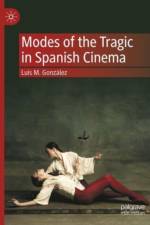
This book focuses on expressions of the tragic in Spanish cinema. Its main premise is that elements from the classical and modern tragic tradition persist and permeate many of the cultural works created in Spain, especially the films on which the book centers this study. The inscrutability and indolence of the gods, the mutability of fortune, the recurrent narratives of fall and redemption, the unavoidable clash between ethical forces, the tension between free will and fate, the violent resolution of both internal and external conflicts, and the overwhelming feelings of guilt that haunt the tragic heroine/hero are consistent aspects that traverse Spanish cinema as a response to universal queries about human suffering and death.
This book highlights how the practical skills of the police officer can be transferred into the realm of academic research and support them in becoming part of the evidence-based policing movement. It starts by exploring the professionalisation of the police service through higher education accreditation and the different methodologies of social research practice. Using operational comparisons and a little humour, it guides the reader through the swamp of concepts and processes, such as ethical approval, research paradigms and data gathering and analysis. It then takes them on a journey of reflection and reflexivity, challenging their own perspective on policing and working within the wider criminal justice sector and how they can make a valuable contribution to the development of policing practice.
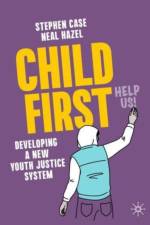
This book explores the development and implementation of Child First as an innovative guiding principle for improving youth justice systems. Applying contemporary research understandings of what leads to positive child outcomes and safer communities, Child First challenges traditional risk-led and stigmatising approaches to working with children in trouble. It has now been adopted as the four-point guiding principle for all policy and practice across the youth justice system in England and Wales, it is becoming a key reform principle for youth justice in Northern Ireland, and it is increasingly influential across several western jurisdictions. With contributions from academics, policymakers and practitioners, this book critically charts the progress and challenges in establishing a progressive evidence-led youth justice system. Its dynamic and accessible integration of theory, research, policy and practice, alongside discussion of critical themes, makes it a key read for students on youth crime/justice modules and for a wider market.Stephen Case is Professor of Youth Justice in the Criminology, Sociology and Social Policy division at Loughborough University, UK. Neal Hazel is Professor of Criminology and Criminal Justice in the School of Health and Society at the University of Salford, UK.
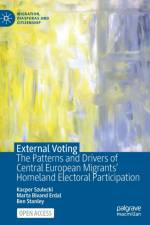
This open access book is the first monograph that brings together insights from comparative politics, political sociology, and migration studies to introduce the current state of knowledge on external voting and transnational politics. Drawing on new data gathered within the DIASPOlitic project, which created a comparative dataset of external voting results for 6 countries of origin and 17 countries of residence as well as an extensive qualitative dataset of 80 in-depth interviews with four groups of migrants, this book not only illustrates theoretical problems with empirical material, but also provides answers to previously unaddressed questions.The empirical material focuses on the European context. The Eastern Enlargement of the European Union (2004-2007) triggered a westward wave of migration from Central and Eastern European countries which faced the expansion of existing émigré communities and the emergence of new ones. As this process coincided with the expansion ofmigrant voting rights, the result is a large set of populous diaspora communities which can potentially have a significant impact on country electoral politics, making the study of external voting highly relevant.This book¿s introduction takes stock of current research on transnational politics and external voting, presenting core puzzles. The following chapter introduces the context of intra-European migration and the political situation in Central-Eastern European sending countries. The next two sections address the empirical puzzles, drawing on new quantitative and qualitative. The conclusion takes stock of the evidence gathered, discusses the normative problem of non-resident voters enfranchisement, connects external voting to the broader debate on political remittances and finally, maps the terrain ahead for future research.This concise, empirically grounded introduction to external voting is critical reading in structuring the debate around migration and shapingresearch agendas for the future.
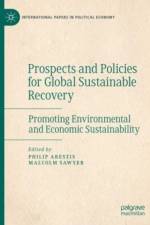
This book presents economic policies to combat the challenges posed by financial crisis, the COVID-19 pandemic, and the climate crisis. How the role of the markets, the state, and social cohesion have come into question is explored, alongside broader issues, such as inequality. Particular attention is given to policies relating to the funding and financing of investment to confront the climate emergency, enhancing productivity and technical innovation, the significance of the commons in the context of the state, and macroeconomic policies to underpin sustainability.This book aims to present a framework for a sustainable future, with policy suggestions that promote both environmental and economic sustainability. It will be relevant to students and researchers interested in the political economy and sustainable development.
This book takes an empirically grounded perspective on research in values, intimacy and sexuality, among other topics in psychology, to highlight the importance of searching for human subjectivity in its diversity, plurality and self-generativity. The author conducts an in-depth discussion on the methodological and epistemological issues enabling the study of subjectivity, and argues that in order to improve the contribution of psychology to human knowledge, a study of subjectivity must be at the forefront.This book presents a critical reflection of the author¿s decades-long research within psychology to argue for a significant paradigm shift in the conception and execution of psychological research: a shift to ¿second order psychology¿.
Abonner på vårt nyhetsbrev og få rabatter og inspirasjon til din neste leseopplevelse.
Ved å abonnere godtar du vår personvernerklæring.