






















Gjør som tusenvis av andre bokelskere
Abonner på vårt nyhetsbrev og få rabatter og inspirasjon til din neste leseopplevelse.
Ved å abonnere godtar du vår personvernerklæring.Du kan når som helst melde deg av våre nyhetsbrev.

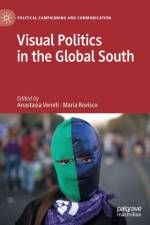
The role of the visual in politics is gaining momentum in scholarly work concerned with the current social media landscape. It is widely acknowledged that the production, dissemination and consumption of visual products in the Global South is powerfully shaped by geo-politics and a power dynamics in which the Global North dominates the South (the cultural imperialism argument). However, scant attention has been paid to theoretical, methodological, and empirically grounded approaches to visual politics produced by scholars working in the Global South. Little is known about the ways in which scholarship in the Global South might challenge and resist western approaches to the study of the visual. Against this background, this project aims to examine visual politics in the Global South through theoretically driven, and empirically grounded case studies, which focus on the role of the visual in formal politics (e.g., political campaigns, the relation between state and citizens) and public and everyday politics (e.g., social movements, activism, grassroots politics, civil society initiatives). This volume examines visual politics in the Global South through theoretically driven, and empirically grounded case studies, which focus on the role of the visual in formal politics (e.g., political campaigns, the relation between state and citizens) and public and everyday politics. It will be of interest to both researchers and students interested in the study of visual politics from various disciplinary lens (media and communication, anthropology, politics, and sociology).
This book provides a contemporary overview of Boko Haram's activities. Since Boko Haram emerged in 2002, media-driven narratives as well as social scientific methodologies have been increasingly applied to draw generalisable conclusions on what goals the groups have pursued, what strategies it has used for these purposes and the counter campaign strategies authorities have pursued. But from 2009 to 2018, Boko Haram has pursued high-intensity violence: assassinations, bombing, kidnappings, beheading or threats of violence, conscriptions and territorial occupation. This makes it imperative to deepen and broaden our understanding of the groups¿ activities toward a problem-solving and policy-relevant analysis.Previously published in Security Journal Volume 33, issue 3, September 2020
Raimo Tuomela, late Professor Emeritus at the Centre for Philosophy of Social Sciences (TINT), University of Helsinki, is widely regarded as one of the most important philosophers of our time. He published extensively on various topics within social philosophy; particularly, on social action, cooperation, group belief, group responsibility, group reasoning, social practices, and institutions. To celebrate his legacy, this volume engages with and delves deeply into his philosophy of sociality. By gathering original essays from a world-class line-up of social ontologists, social action theorists, and social philosophers, this collection provides the first comprehensive and critical treatment of Tuomela's outstanding contribution to social ontology and collective intentionality.
This book addresses the ¿crisis of critique¿ of Frankfurt School Critical Theory in International Relations and puts forward a proposal for how it can be overcome. It starts from the premise that the present conjuncture, marked by capitalist crisis and a fracturing international order, urgently calls for critical perspectives capable of clarifying the state of global affairs and the emancipatory struggles within it. Critical Theory in International Relations should be well placed to provide answers to this demand, yet it finds itself today in a state of decline. Its prevailing form ¿ that of a universalist cosmopolitan project ¿ reflects a narrow Eurocentric perspective and the concerns of a time now past, while the Frankfurt School tradition as a whole struggles to develop new modes of analysis and new political imaginaries that are appropriate to the current historical situation. The book diagnoses this situation of intellectual and political crisis and seeks to trace a way out. It does so by providing a comprehensive account of the development of Critical Theory in International Relations and the ways in which it has applied Frankfurt School thought to the study of international politics. It then makes a provocative case as to the exhaustion of the cosmopolitan and Habermasian paradigm of critique that has guided Frankfurt School research on international politics for the past thirty years. Finally, it puts forward a proposal for the revitalisation of Critical Theory in IR through a renewed emphasis on the critique of political economy and sketches a research agenda which can make the tradition relevant again to contemporary political questions.
The Story of the B-52s: Neon Side of Town is the first critical history of one of the most legendary and influential bands in American popular music. Locating The B-52s in the intellectual climate of their hometown of Athens, GA and following the band from New York¿s downtown scene in the early 1980s to their upcoming farewell tour, the book argues that The B-52s are much more significant political and musical influences on American society than their reputation as a silly party band suggests, and that their ongoing commitment to values including cooperation, mutual support, and using disruptive fun as a form of social change are an antidote to the neoliberalization sweeping both Athens and the rest of the Western world. For example, the book shows how the band synthesized influences from the modern artists displayed at the University of Georgia art museum, early queer activism on campus in the 1970s, and their experiences as queer people living through the AIDS crisis to create music that continues to be artistically and politically influential today. The authors are active members of the Athens, GA music scene, and the book includes original interviews with a range of number close to the band.
This comprehensively revised and updated edition offers an introduction to international organizations (IO) theory in the field of IR. It looks at the different ways in which IOs are studied and then applies these different modes to a variety of specific case studies.The book is written as a primer for students studying global governance and IR theory. It highlights analytic tools available to understand what IOs are designed to do, how they work, what effects they have, and how to design them better. It goes beyond simple questions of whether IOs matter, and looks at the ways in which the different analytical tools developed within the rubric of IO theory are useful for answering different questions about the role of IOs in international politics.
This handbook focuses on new threats to psychological security that are posed by the malicious use of AI and how it can be used to counteract such threats. Studies on the malicious use of AI through deepfakes, agenda setting, sentiment analysis and affective computing and so forth, provide a visual representation of the various forms and methods of malicious influence on the human psyche, and through this on the political, economic, cultural processes, the activities of state and non-state institutions. Separate chapters examine the malicious use of AI in geopolitical confrontation, political campaigns, strategic deception, damage to corporate reputation, and activities of extremist and terrorist organizations. This is a unique volume that brings together a multidisciplinary range of established scholars and upcoming new researchers from 11 countries. This handbook is an invaluable resource for students, researchers, and professionals interested in this new and developing field of social practice and knowledge.
This accessible textbook hinges on the central assumptions of Cognitive Linguistics and Cognitive Grammar, introducing students to the analytical tools they need to approach Stylistics, an essential area in language analysis. The author verifies the claim that alterations in style, triggered by different cognitive processes, reflect alterations in meaning, and shows how they are employed to achieve particular effects in context. The book links theory with practice, aiming both to acquaint students with the cognitive principles that account for stylistic expressions, and to provide them with the tools and techniques to conduct their own analyses. The textbook explores and explains how writers use the resources of language to create meaning, and how readers interpret texts. It will be of interest to advanced undergraduate and postgraduate students on courses in English Linguistics, as well as those working on other languages and in related areas such as Composition and Creative Writing.
This book provides practical guidance on establishing wellbeing services and interventions within policing for all of those working in law enforcement, particularly leaders and HR professionals. It also offers insight, provokes thought, and gives guidance on how to navigate and get the most from working life as a police officer or member of police support staff. With a focus on the modern working environment, the book covers the key concepts, history, and practical advice necessary for all those interested in this fascinating field of law enforcement. As workplaces become ever more complex and ambiguous, and the world of work ever more dynamic, understanding how organizations behave and how those in the workplace are likely to respond is key to bringing meaning and purpose to work, the cornerstone of effective policing. The book details how to effectively measure workplace wellbeing in policing and how to interpret and use findings to make improvements and craft interventions.It is a key text for exploring law enforcement, leadership, and wellbeing within policing for all those involved with law enforcement, as well as HR professionals, occupational health professionals, and critically, those with police line management responsibilities.
This volume brings together a diverse set of scholars to address the long theoretical, conceptual and political debate on the interpretation of ¿actually existing¿ socialism in the Soviet Union and Eastern Europe. While the major paradigms ¿ totalitarianism, neo-totalitarianism, revisionism, post-revisionism, modernization, and the world-system analysis ¿ are well known in the Western (English-language) literature, the concept of state socialism, which has strong theoretical roots in Hungary (going back to the works of György Lukács and István Mészáros) received less international attention. This book contributes to a productive discussion about viable alternatives to capitalism by introducing and theoretically elaborating on the concept and practice of state socialism, highlighting the historical significance of Hungary¿s experiment with the ¿new economic mechanism¿ of 1968. It generates a common point of reference for various generations of anti-systemic thinkers, scholars, and activists to move beyond Cold War simplifications and ideological divides, and contributes to the discussion about anti-capitalist alternatives, which are relevant today for the global left. The chapter ¿Dance Around a ¿Sacred Cow¿: Women¿s Night Work and the Gender Politics of the Mass Worker in State-Socialist Hungary and Internationally¿ is available open access under a Creative Commons Attribution-NonCommercial- NoDerivatives 4.0 International License via link.springer.com.
Against a backcloth of tumultuous events in Europe, the EU faces once again the fateful question of moving towards federal union or let flexible integration guide the Union. The sixth volume in Interdisciplinary European Studies explores the coexistence of deepening political integration and flexible patterns of integration in the EU. The book brings together scholars from economics, law, and political science to provide insights into issues with a bearing on the future of the EU: the crisis of rule of law and political values, the move towards a European defence union, the power of the new European public prosecutor¿s office, the prospects of financial stability through the Recovery and Resilience facility, and the state of European parliamentary democracy. The chapters are based on up-to-date research findings and succinct assessments of the current state of affairs and ongoing debates. They conclude with policy recommendations for decision-makers on European and national levels.
This book introduces Islam through a "humanistic" lens, by highlighting the affective traditions and expressions associated with Sufism and Shi'ism. While most introductory books emphasize the shari¿a, and especially the ¿Five Pillars,¿ as the primary defining characteristic of Islam, Vernon James Schubel provides an alternative introduction which instead underscores the importance of humanity and the human being within Islamic thought and practice. The book stresses the diversity of Islamic beliefs and practices, presenting them as varied responses to the shared multivalent concepts of tawhid (the unity of God), nubuwwa (prophecy) and qiyama (the Day of Judgment). Readers are introduced to essential aspects of Islam including the life of the Prophet Muhammad, the Qur¿an, the development of the shari¿a, and the emergence of the Sunni, Shi¿a and Sufi traditions. The book concludes with a call to redefine ¿mainstream¿ Islam, as a religious tradition focused on the centrality of love and rooted in the importance of humanity and universal human virtues.
This book advances the growing area of language policy and planning (LPP) by examining the epistemological and theoretical foundations that engendered and sustain the field, drawing on insights and approaches from anthropology, linguistics, economics, political science, and education to create an accessible and inter-disciplinary overview of LPP as a coherent discipline. Throughout the book, the authors address LPP from different perspectives, exploring the interface between planning in theory and its practical problems in implementation. This volume will be of interest to students and scholars with an interest in LPP in particular, and educational, social, and public policy more broadly.
This book discusses the importance of developing routininized behaviours in new venture development, specifically highlighting the unique challenges that academic spin-offs face in this vital step towards successful business creation. During the early development stage, new ventures are informally established and have few routines that inform organizational performance. However, the process of new venture development is characterized by high ambiguity, for example entrepreneurs have to deal with ill-defined technologies that are only vaguely understood or delineated. They also need to gradually make sense of the connections between technological functions, customer preferences and market structures. At the same time, during the early stage of new start-ups, experiences tend to be personal, embodied in specific individuals, such as the founder of founding team. Benefiting from these experiences and developing successful businesses that can exist independently of these individuals requires that these experiences become embedded in the form of routines. The author argues that developing these routines, or 'routinizing behaviours,' plays a critical role in the process of adaptation, learning, and ultimately, success.Focusing on these routinizing behaviours in particular, the book presents primary and empirical research on the specific challenges that academic spin-offs face and delivers a framework for the routinization of behaviours, demonstrating the challenges and opportunities that can intervene in this process. Finally, the author brings together implications that academics and practitioners can take and apply in their own ventures.
This book examines the effects of the Covid-19 pandemic on the degree of inequality in wellbeing (income and wealth, health, access to health care, employment, and education) in a number of different countries around the globe. The effect of socioeconomic inequality within a country on the outcome of the pandemic is also considered. This book studies the differential effects of Covid based on location, age, income, education, gender, race/ethnicity, and immigrant status. Special attention is devoted to indigenous populations and those who are institutionalized. The short- and long-term effects of public policy developed to deal with the pandemic¿s fallout are studied, as are the effects of the pandemic on innovations in health care systems and likely extensions of public policy instituted during the pandemic to alleviate unemployment, poverty, and income inequality.
This book gathers contributions negotiating feminism's place within medieval studies. It is about overlaps and twists, about the inseparability of multiple means of critique ¿ ecocriticism and disability studies, art history and race studies, legal history and modern activism ¿ from a feminist perspective. The feminist scholarship in this book moves in many different directions and examines the medieval past (and its role in the present) from many different angles. What remains consistent throughout is the dedication to reconfiguring medieval studies, a commitment not to be content simply with adding women on as an extra in conventional European patriarchal accounts, or with analyzing gender in history or literature without fundamentally re-envisioning the intellectual foundations upon which those fields of study have been built.Previously published in postmedieval Volume 10, issue 3, September 2019
In line with the multi-disciplinary nature of network research, this edited volume collects both empirical and conceptual contributions that nurture the debate on network research, specifically dealing with the topics of network performance and agency. The contributions draw on different literatures and epistemic approaches and address different levels of analysis, both from a static and a dynamic point of view.It will be of great interest to academics and students developing research in the field of network studies. It will also be of interest to scholars of operations management, organization studies, strategy, innovation, financial management and business history.
This book represents the first extended consideration of contemporary crime fiction as a European phenomenon. Understanding crime fiction in its broadest sense, as a transmedia practice, and offering unique insights into this practice in specific European countries and as a genuinely transcontinental endeavour, this book argues that the distinctiveness of the form can be found in its related historical and political inquiries. It asks how the genre¿s excavation of Europe¿s history of violence and protest in the twentieth century is informed by contemporary political questions. It also considers how the genre¿s progressive reimagining of new identities forged at the crossroads of ethnicity, gender, and sexuality is offset by its bleaker assessment of the corrosive effects of entrenched social inequalities, political corruption, and state violence. The result is a rich, vibrant collection that shows how crime fiction can help us better understand the complex relationship between Europe¿s past, present, and future. Seven chapters are available open access under a Creative Commons Attribution 4.0 International License via link.springer.com.
Drawing on theory and empirical research, this book provides an analysis of the intersections between LGBTQ+ identification and chronic illness. Chapters focus on the theoretical meaning of chronic illness as a queer notion, as well as the lived experiences of chronically ill LGBTQ+ people. The author analyzes chronic illness as an experience that interrogates the normative notions of time, (in)visibility, and disability. Interweaving notions of heteronormativity and able-bodiedness as interwoven and mutually dependent, this book argues that the experience of chronic illness through LGBTQ+ embodiment presents the potential to imagine bodies differently.This book will be useful for scholars and students in Disability Studies, Queer Studies, and Gender Studies.
This book brings together a range of hip hop scholars, artists and activists working on Hip Hop in the Global North and South with the goal of advancing Hiphopographic research as a critical methodology with critical fieldwork methods that can provide a critical perspective of our world. The authors¿ focus in this volume is to present an anthology of essays that expand the remit of Hiphopography as an approach to the study of Hip Hop that is not only sensitive to the social, economic, political and cultural lives of Hip Hop Culture participants as interpreters and theorists, but one that continues to humanize the ¿whole person¿ behind the decks, on the mic, rocking on the linoleum floor, painting in front of a wall, and seeking that Knowledge of Self. This book will be relevant to Hip Hop scholars in fields such as cultural studies and history, sociolinguistics, linguistic anthropology and ethnography, and race studies, while Hip Hop heads themselves will find parts of this book that represent their culture in ethical and informative ways.
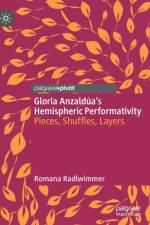
This Palgrave Pivot offers new insights into leading Chicana writer Gloria Anzaldúa, investigating the dynamic composition of her texts, and situating her work in a larger hemispheric tendency of performativity emerging at the turn of the millennium. Presenting Anzaldúa as a quintessential figure of feminist and decolonial theory-making in the Americas, this book argues that the Chicana writer articulated her notions on fluctuations through ¿performative concepts¿ which did not respect the borders of single texts or editions, but organically grew through them. The offered close readings of Anzaldúäs published works, drafts, and archive material demonstrate the constant changes and intertwined phases of her literary and conceptual production.
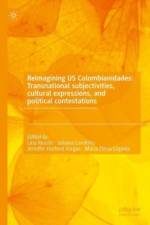
This book focuses our attention on yet another community that has been scantily represented in Latino/a/x studies scholarship. US Colombians are no longer content to be characterized as ¿the other Latinos,¿ and the editors of this special issue make the case that study of US Colombianidades enhances and productively troubles Latino/a/x studies. This engaging set of essays highlights the rich diversity of US Colombianidades as well as the group¿s similarities and differences with other Latino/a/x groups. With its innovative cultural studies and social sciences perspectives and interpretive theories, this volume offers a deep dive into issues such as how racial, gender, sexual, and socioeconomic realities shape US Colombian experience; the representation of US Colombians in popular culture; interethnic relations between Colombians and other Latina/o/xs; the political participation of Colombians in US electoral politics; Colombian transnational understandings of identity; and much more. I want to thank the editors of this special issue¿Lina Rincón, Johana Londoño, Jennifer Harford Vargas, and María Elena Cepedäfor curating a set of articles that will most certainly inspire Latino/a/x studies scholars to expand our notions of Latinidades and be attentive to the ways in which a focus on US Colombianidades complicates and enriches our field.Previously published in Latino Studies Volume 18, issue 3, September 2020
This book explores the causes of rising income inequality within industrialised, developing, and emerging economies. The development of finance capitalism over the last 40 years is charted to highlight how the neoliberal restructuring of national and global economies has driven income inequality. With case studies from the USA, South Korea, Argentina, and Sweden, a comparative analysis is presented to reveal how financialisation facilitates uneven capital accumulation and generates conditions that increase income inequality.This book aims to outline an analytical framework for a financialisation-induced income inequality nexus. It will be relevant to students and researchers interested in the political economy and financial economics.
This handbook explores the various ways in which disability sport is governed and organised across Europe, as well as examining the extent to which persons with a disability participate in sport at the grassroots level. Based upon a solid theoretical framework and up-to-date data, the 19 country-specific chapters in this handbook give a comparative overview of the structuring, steering and supporting elements of disability sport policy and sport participation levels amongst persons with a disability, as well as the extent to which countries adopt policies to promote inclusion in sport in this population. A multitude of authors also identify the various methods and challenges in collecting sport participation data with regard to persons with a disability. This handbook will be a valuable resource for academic study across a range of sport and disability related programs, as well as a point of reference for researchers and policymakers working in this area.
This book explores closely related aspects of the historical study of humour. It challenges much that has been taken for granted in a field of study for which history has been marginal. It disputes the conventional genealogical view that humour theory dates from antiquity and outlines an alternative conceptual history. It critically examines the nostrum that humour is universal. It then explores the methodological difficulties in treating both verbal and non-verbal humour historically, dealing with contextualisation, intentionality, translation and reception. It explores the variable relationships between satire and definition and concludes with a detailed case study from recent history: the iconic Yes Minister and Yes, Prime Minister television comedies. These are commonly seen as realistic, but better understood as presenting popularised theories for satiric and propagandistic effect. Only in their treatment of language can we assess a putative political realism. The satires are often highly perceptive but largely dependent on misleading and inadequate theories of political discourse.Conal Condren is an Emeritus Scientia Professor at UNSW, a member of two Cambridge Colleges and a fellow both of the Australian Academy of the Humanities and The Social Sciences in Australia. He has published widely and principally in early modern intellectual history. Among his books are The Status and Appraisal of Classic Texts; Argument and Authority in Early Modern England; Political Vocabularies: Word Change and the Nature of Politics.
This book seeks to provide a deeper understanding of Muslim migrant fathers¿ experiences of home-school cooperation in Danish schools by identifying and contradicting a phenomenon of ¿mistrusted masculinity.¿ This term refers to a negative stereotype of Muslim migrant men that figures in political and media rhetoric where they are portrayed as controlling and patriarchal. Throughout the ethnography, migrant fathers confront this stereotype and express how they must navigate around this negative image in their struggle to be acknowledged as good fathers by their children¿s schools. Jørgensen uses Geertzian ¿thick description¿ of micro-interaction between fathers and Danish teachers to explore the complex interplay of often-untested assumptions, misunderstandings, and untoward effects.
This book provides the first evaluation of the three Conservative administrations which have been affected, shaped and largely determined by the age of Brexit.It breaks new ground by collectively analysing the Cameron, May and Johnson administrations in an era of political and social shock and disruption, caused by the phenomenon of Brexit. As an edited collection, the project brings experts together who explain the complexities of ideas, leadership, votes, policy areas and territorial politics in an accessible and concise fashion. As a collection of essays, the project does not prosecute a single thesis, bar the fact that the phenomenon of Brexit has affected, shaped and largely determined the politics of these Conservative administrations and wider UK society. There is broad coverage of leadership, elections, public policy and territorial questions and contributors consider the continuities and discontinuities in Conservative Party ideas and political action in their respective policy areas.
This book explores an overlooked area in Hegel studies: his use of ¿individuality¿ (Individualität). Hegel joined a lively conversation, from Leibniz to Romanticism and beyond, about this novel concept/phenomenon. Successive chapters track Hegel¿s engagement, in such texts as the Phenomenology, Encyclopedia, and Aesthetics. Hegel¿s system tends to follow a syllogistic logic (universal, particular, singular), but ¿individuality¿ departs from the norm. The category enacts a certain pragmatics (as against semantics or syntactics) regarding tacit assumptions at work or implicit terms of address, which requires active participation by a thinking subject charged with discerning individuality (which bars resort to explicit rules). The category reflexively implicates the user even in presuming an objective context.¿Individuality¿ should not be confused with ¿individualism,¿ wholly distinct in origin. Moreover, Hegel¿s Aesthetics embraces a paradoxical anachronism. Like ¿art¿ itself, ¿individuality¿ emerged as an essentially modern category, though one transferred to the past and to distant cultures.
Abonner på vårt nyhetsbrev og få rabatter og inspirasjon til din neste leseopplevelse.
Ved å abonnere godtar du vår personvernerklæring.