























Gjør som tusenvis av andre bokelskere
Abonner på vårt nyhetsbrev og få rabatter og inspirasjon til din neste leseopplevelse.
Ved å abonnere godtar du vår personvernerklæring.Du kan når som helst melde deg av våre nyhetsbrev.

This book delivers philosophy¿s first sustained examination of handedness: being left-handed, right-handed, etc. It engages literature from phenomenology and continental philosophy, analytic philosophy, laterality studies, cognitive science and psychology, gender studies and feminist philosophy, sociology, political science, and more to provide a systematic accounting of the nature of handedness, its basis in lived experience, its effects on bodily performance, its role in varieties of inequality, and its part in oppression and liberation.As a radical asymmetry in the body, handedness plays a key role in human flourishing. It informs both personal bodily movement and social life, from handshakes and high fives to high tech tools made for one hand or the other. Moreover, with left-handers making up just 10% of the population, handedness presents a significant inequality in lived experience. To live and live well, we must understand handedness.
This Open Access book uses the concept of 'euphoria' to investigate when, why and how marginal gender, sex and sexuality groups have positive experiences of their diverse variations even within repressive and disordering contexts. Drawing on data from multiple online surveys including a study of 2,407 LGBTQ+ people and a study of 272 people with intersex variations, it names and offers a new ecological framework for understanding participants' influences on and barriers to euphorias, asserting the subversive possibilities of being euphorically queer, as opposed to euphoric and queer. The author argues that it is the particularities of negative internal, socio-cultural and institutional contexts for a marginal group or groups that contributes towards the possibilities that shape their potential euphoric feelings and experiences. Ultimately, she calls for a more expansive focus in gender and sexuality studies to show the complex effects of dysphoria and repression on the possibilities of pleasure and joy.This book will be of interest to scholars across Gender, Sexuality and Queer Studies.
This book explains that diffusion, osmosis, dissolution, evaporation, and heat loss all preferentially affect small bodies due to their high surface/volume ratios. Because surface area increases as the square of length, but volume (and mass) increase as the cube, large objects have low surface/volume ratios and small objects have high surface/volume ratios. This simple physical constraint governs much of the physical world. It accounts for why the Earth has active volcanoes, but the Moon does not, why the human brain has numerous folds, why deciduous trees lose their leaves every Fall, and why nanoparticles of gold melt at surprisingly low temperatures. It is a phenomenon well known to every scientist, but this book is the first comprehensive treatment of this effect.
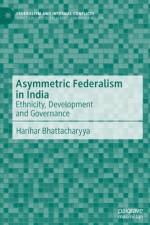
This book provides a critical account of federal asymmetry in India - its origins, context, forms and functioning - by taking into account the institutional effectiveness of asymmetric institutions in the regions for identity fulfillment, development and governance. It argues that while some asymmetry, de jure/ or de facto, is part of all federations for meeting some special circumstances, in India, which has followed a different path of federation building, asymmetric institutional solutions especially in the border areas have played a crucially important role in accommodating ethno-cultural diversity, ensuring law and order, a level of development and governance in a process that has turned the ¿rebels into stakeholders¿. Indiäs federal asymmetric designs and their working has been a key to holding the peripheries within the Union of India. The book utilizes both archival research and empirical survey data, as well as elite interviews.
This books presents a documentation and resulting perspectives regarding James Lovelock's multidisciplinary evolution theory. It looks at past and current climate changes and their consequences, including detailed accounts of the global warming. The connection between climate trajectories and extreme weather events, including tropical and arctic fronts, cyclones, fire storms, tropical storms, acidification, tsunami, floods, sea level rise, are referred to in connection with recent developments. The book updates earlier accounts regarding extreme weather events and mass extinctions.The book ¿The Trials of Gaiä is published in honour of the late Professor James Lovelock (26 July 1919 ¿ 26 July 2022), the father of the Gaia theory.
Amie L. Thomasson, the Daniel P. Stone Professor of Intellectual and Moral Philosophy at Dartmouth College, has gained international recognition as a leading figure within various areas of philosophy. She has recently been celebrated as one of the most influential living philosophers for her significant contributions to metaphysics, ontology, phenomenology, and aesthetics. By engaging critically with her approach to metaphysics, modality, conceptual analysis, and the methodological issues concerning ontological questions about ordinary objects, social entities, and fictional characters, as well as including a chapter from Thomasson herself where she makes explicit the internal connections which run through her body of work, this volume delivers the first thorough discussion of Thomasson¿s philosophy.
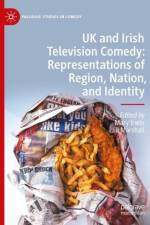
This book looks at television comedy, drawn from across the UK and Ireland, and ranging chronologically from the 1980s to the 2020s. It explores depictions of distinctive geographical, historical and cultural communities presented from the insiders¿ perspective, simultaneously interrogating the particularity of the lived experience of time, and place, embedded within the wide variety of depictions of contrasting lives, experiences and sensibilities, which the collected individual chapters offer. Comedies considered include Victoria Wood¿s work on ¿the north¿, Ireland¿s Father Ted and Derry Girls, Michaela Coel¿s east London set Chewing Gum, and Wales¿ Gavin and Stacey. There are chapters on Scottish sketch and animation comedy, and on series set in the Midlands, the North East, the South West and London¿s home counties. The book offers thoughtful reflection on funny and engaging representations of the diverse, fragmented complexity of UK and Irish identity explored through the intersections of class, ethnicity and gender.
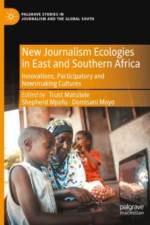
This volume presents case studies of news media employing and integrating social media into their news production practices. It links social media use to journalistic practices and news production processes in the digital age of the Global South. Critically, the chapters look at seminal cases of start-up news media whose content is informed by trends in social media, ethical considerations and participatory cultures spurred by the wide use of social media.There has been considerable research looking at the potential of new media technologies, traditional journalism and citizen reporting. The extent to which these new media technologies and ¿citizen journalism¿ have morphed or reconfigured traditional journalism practice remains debatable. Currently, there are questions around the limits of social media in journalism practice as the ethical lines continue to become blurred. It is this conundrum of the role of social media in the reconfiguration of the media, news making, production and participatory cultures that requires more investigation. Social media has also turned the logic of the political economy of media production on its head as citizens can now produce, package and distribute news and information with shoestring budgets and in authoritarian regimes with no license of practice. This new political economy means the power that special interest groups used to enjoy is increasingly slipping from their hands as citizens take back the power to appropriate social media journalism to counter hegemonic narratives. Citizens can also perform journalistic roles of investigating and whistleblowing but with a lack off, or limited, regulation. This volume seeks to explore and untangle these issues, and provides an invaluable resource for researchers across the field of journalism, mass media, and communication studies.
This book offers a trailblazing account of postfeminist sensibility as a digital feeling that shapes how we understand the world around us. It explores how we feel in a world where the digital has become intertwined with our intimate relationships to ourselves and to others. The book develops a novel approach that draws on feminist theories of affect, emotion, and structures of feeling, to analyse the entanglements of the digital and the non-digital, and the public and the private, and to show how good feeling shapes a contemporary moment that often leads us back to normativity and reproduces systemic inequality. This is achieved through several different digital media spheres, including: the Instagram account Barbie Savior, #fitspo content, TikTok influencers and their Get Ready With Me videos, the archive of hot men on TubeCrush, and the intimacies of the internet cat, suggesting that each offers a snapshot of our current emotional landscapes.
Great powers have often found that military adventurism to force their will in distant lands comes with the risk of spending excessive military, economic, and moral capital to the extent that war is no longer sustainable. Written by a former BBC Afghanistan correspondent who set up the corporation's bureau in Kabul in the early 1990s, this book draws both from scholarly knowledge as well as first-hand insights on how the Americans met that fate in Vietnam, and the Soviets and Americans in Afghanistan. America's 1975 retreat from Vietnam was a consequential event, prompting US commentators to explain it as reluctance to get involved in foreign wars, a mindset described as the Vietnam Syndrome. As Deepak Tripathi points out, the Vietnam experience made the Americans determined to give the Soviets their own Vietnam. The 1979 Soviet invasion of Afghanistan, and retreat after a decade of occupation, represented the revenge America sought. However, President George W. Bush's decision to invade Afghanistan after the 9/11 attacks was the beginning of a long military venture that ended in retreat in 2021. Addressing an academic as well as a general audience, Tripathi explores parallels between wars in Afghanistan and Vietnam, and shows how the United States and the Soviet Union met the same fate.
Despite massive investments in mitigation capabilities, financial crime remains a trillion-dollar global issue with impacts that extend well beyond the financial services industry. Worldwide, there are between $800 billion and $2 trillion laundered annually with the United States making up at least $300 billion of that figure. Although it is not possible to measure money laundering in the same way as legitimate economic activity, the scale of the problem is considered enormous. The cybersecurity landscape is always shifting, with threats becoming more sophisticated all the time. Managing risks in the banking and financial sectors requires a thorough understanding of the evolving risks as well as the tools and practical techniques available to address them. Cybercrime is a global problem, which requires a coordinated international response. This book outlines the regulatory requirements that come out of cyber laws and showcases the comparison in dealing with AML/CFT and cybersecurity among the G-20, which will be of interest to scholars, students and policymakers within these fields.
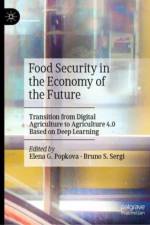
This book explores issues of agricultural development and the provision of food security, providing a core framework and recommendations for implementing sustainable development goals in these areas. Focused on the period up to 2030 to match the timeline of the SDGs, the book surveys the current landscape and the prospects for agricultural development, demonstrating how Agriculture 4.0 based on AI and deep learning must follow from digitalization as the next step to ensuring food security. It brings together research based on analytical and statistical data, including the IMD World Digital Competitiveness Report and the Food Security Report from the Economist Intelligence Unit, and reliable mathematical tools including correlation and regression analysis, forecasting with histogramming, probability estimates, and the simplex method, as well as Game Theory methodology and the hierarchical procedure method of Thomas Lorie Saaty to forecast international scenarios for food security in the future economy. Containing theoretical and practical insights, the book will be of interest to those studying agricultural economics, the digital economy, and concepts of Agriculture 4.0 and Industry 4.0.
Business to business (B2B) transactions account for 60-70% of all transactions globally. Considering this, many supplier firms aspire to create high levels of customer engagement, and this involves identifying various ways to improve customer experience. In fact, companies such as Google, Amazon, Microsoft, and others now employ professionals in customer engagement roles and dedicate entire corporate divisions to ensure seamless customer engagement. Creating high customer engagement is challenging without a cohesive, strategic approach ¿ particularly in B2B markets. This textbook introduces students to customer engagement strategy in B2B markets, the foundation of which is customer engagement capability. Companies must develop and implement four sub-capabilities ¿ customer journey management, customer relationship management, customer communications and data analytics and insight to succeed. With a myriad of case studies, discussion questions and prompts for further reading, the textbook translates theory into practice and serves as a useful foundation for executive courses as well as fundamental reading for masters-level specialist courses in customer engagement, marketing, sales, and strategy. In addition, practitioners in supplier firms will also be able to use to build their customer engagement capability.
This book explores the challenges of the governance and public policy in the midst and after conflicts, revolutions, and civil wars in the Middle East and Africa. As anywhere else, the task of rebuilding peace and institutionalizing stability in countries experiencing a conflict or just emerging from it is daunting, uncertain and context specific. Yet, focusing on the Middle East and Africa is of particular relevance, as these two regions feature the highest numbers of inter- and intra-state conflicts on the one hand, and the central states are more often contested than in the rest of world regions. The first half of the book proposes different cases addressing the fundamental challenge of inclusion and cohesion as well as the recurring issue of exclusion in conflict-affected situations, with four different cultural and institutional settings. The second half of the book offers more theoretical insights and proposed pathways to develop more inclusive and peaceful governance settings in Africa, the Middle East and beyond. This edited book has been designed to be a helpful contribution to the analysis of conflict and post-conflict governance and peacebuilding. To do so, it deploys different lenses of social sciences, especially public policy and international relations, but also benefits from social psychology, political anthropology, and other disciplines that enable a more comprehensive understanding of the multifaceted, complex and dynamic issues at play.
This open access book brings into dialogue emerging and seasoned migration and religion scholars with spiritual leaders and representatives of faith-based organizations assisting refugees. Violent conflicts, social unrest, and other humanitarian crises around the world have led to growing numbers of people seeking refuge both in the North and in the South. Migrating and seeking refuge have always been part and parcel of spiritual development. However, the current 'refugee crisis' in Europe and elsewhere in the world has brought to the fore fervent discussions regarding the role of religion in defining difference, linking the ¿refugee crisis¿ with Islam, and fear of the ¿Other.¿ Many religious institutions, spiritual leaders, and politicians invoke religious values and call for strict border controls to resolve the ¿refugee crisis.¿ However, equally many humanitarian organizations and refugee advocates use religious values to inform their call to action to welcome refugees and migrants, provide them with assistance, and facilitate integration processes. This book includes three distinct but inter-related parts focusing, respectively, on politics, values, and discourses mobilized by religious beliefs; lived experiences of religion, with a particular emphasis on identity and belonging among various refugee groups; and faith and faith actors and their responses to forced migration.
This open access book brings into dialogue emerging and seasoned migration and religion scholars with spiritual leaders and representatives of faith-based organizations assisting refugees. Violent conflicts, social unrest, and other humanitarian crises around the world have led to growing numbers of people seeking refuge both in the North and in the South. Migrating and seeking refuge have always been part and parcel of spiritual development. However, the current 'refugee crisis' in Europe and elsewhere in the world has brought to the fore fervent discussions regarding the role of religion in defining difference, linking the 'refugee crisis' with Islam, and fear of the 'Other.' Many religious institutions, spiritual leaders, and politicians invoke religious values and call for strict border controls to resolve the 'refugee crisis.' However, equally many humanitarian organizations and refugee advocates use religious values to inform their call to action to welcome refugees and migrants, provide them with assistance, and facilitate integration processes. This book includes three distinct but inter-related parts focusing, respectively, on politics, values, and discourses mobilized by religious beliefs; lived experiences of religion, with a particular emphasis on identity and belonging among various refugee groups; and faith and faith actors and their responses to forced migration.
This book examines the lives of children and young adults living in residential care systems in Zimbabwe and their unique conceptualization of family. While the importance of family for the development and wellbeing of children can't be overemphasized, the questions of what and who counts as family to orphans and vulnerable children (OVCs) are under-researched. Gwenzi brings a social constructionist approach to study OVCs in institutional care as well as living with their families in Zimbabwe, finding that they do not have a single definition of family and that they use diverse characteristics to describe what family means to them. With the data suggesting a need for belonging, continuity of relationships, protection, and trust, this study makes recommendations for policy and practice with youth in alternative care in sub-Saharan Africa.
Mobilizing an interdisciplinary group of scholars and practitioners, this book reviews the history and consequences of NATO's post-Cold War enlargement into Central and Eastern Europe. It offers a nuanced discussion of the merits and drawbacks of NATO enlargement across the different actors involved and compares the results of the policy against potential alternatives that were not chosen. Particular attention is given to NATO enlargement's influence on the course of U.S. foreign policy, democracy and security in Central and Eastern Europe, NATO's own development as a political and military institution, and relations with China and Russia (including the 2022 Russia-Ukraine War). Written for an engaged audience, the book is designed to appeal to students, researchers, and policymakers alike while offering both policy insights and avenues for future scholarship.
This book examines military families' well-being and health outcomes by providing a critical theoretical perspective on their position and the risks and challenges affecting them. Authors explore the tension between demands made by two greedy institutions¿the military and the family¿and how the well-being of families is negotiated between the two. Uniquely, the book employs an integrative approach to observing and analyzing military-specific risk and protective factors for health outcomes of military families on various social-ecological levels, including relationship satisfaction and dissatisfaction, intimate partnership violence, parent-child relationships, child well-being, psychoactive substance abuse, depression, and PTSD. Throughout the chapters, the authors analyze research findings that reveal new health outcomes and present an empirically-tested model of military-specific risk and protective factors.
This book unites and explores different approaches to understand and develop knowledge-based religious education. While the importance of methodological issues in RE is understood and acknowledged, the editors and contributors interrogate what kind of knowledge should be explored, how this knowledge is defined and what the consequences would be. Subsequently, the book focuses on the concept of powerful knowledge which transcends students' everyday experiences, and how it can be incorporated into the RE curriculum. Drawing together international research from RE teaching and learning, the book explores various paths to integrate a truly knowledge-based religious education. The book will appeal to students and scholars of religious education, sociology of education and the philosophy of religion.
This book offers a series of interviews with Canadian ranchers that highlight the innovative and effective ways that they manage vast swaths of grassland for two complementary goals: commercial viability and sustainable habitats. The book¿s author is an academic who grew up among ranchers in the grasslands of Canada, and the expertise and viewpoints she has distilled from these interviews complement the academic literature in accessible and surprising ways . As these productive landscapes face increasingly perilous threats such as development, economic pressures, and extreme weather events, it is the ranchers who live on and manage these native grasslands who are passionate about conserving them.This book is about them, their experiences and the realities of their lives, their view of the world, sharing their knowledge to assist younger ranchers, and their contributions to Canadäs species at risk conservation goals, food security and economy. The book offers practical advice for ranchers, but also reveals the depth of attachment and dedication these ranchers have for the grasslands. They are conservationists at heart, as they not only understand that their livelihood is dependent on the health of the ecosystem they manage, but they also have a deep connection to the land, nurtured oftentimes for many generations. Academics and ranchers have much to learn here, but the book ¿ most of which is the words of the ranchers themselves - is written to give the general public an understanding of this vocation and its role in the conservation of our last remaining grasslands.
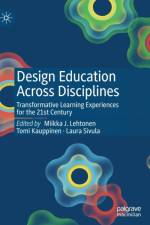
This book explores how design thinking can transform higher education, with solutions ranging from single course sessions to whole programs and universities. The authors demonstrate how designing across disciplines is done, with disruptive technologies, ambiguity and challenges as catalysts. Iteratively tested pedagogies, design-driven solutions and creative uses of both tactile and digital worlds are among the approaches discussed. Educators and leaders of higher education institutes as well as designers and managers of companies will benefit from engaging the design ideas in their own work.
This book, the second of two volumes, brings together the work of Domenico Mario Nuti to highlight his significant and varied contribution to economics. Bringing together works from across Nuti¿s career, his distinctive intellectual framework is exemplified in relation to discussions on the drivers of economic growth and development, the most efficient economic system, the organisation of firms, and how economies should be managed. This volume gives particular attention to Nuti¿s views about how economic systems evolve, about the possibilities for various forms of economic democracy; and his analysis of East-West integration and globalization. The volume also contains a bibliography of his works.
This textbook explores ethical issues for not-for-profit and non-governmental organizations, providing discussion-oriented cases for NFP and NGP practitioners. The book begins with an introduction to professional ethics as practiced in industry, not-for-profits and NGO's. Attention is paid both to classical ethical theories and contemporary variants. Then, combining that theory with an introduction to the morally unique facets of the NFP and NGO landscape, it offers a series of cases which pertain to the underlying theoretical substrate. The reader will find a blend of theory and application within the text as well as guided assignment prompts. Themes covered include board relationships, staff management, work with vulnerable populations, financial transparency, Human Resources ethics and ethical dilemmas unique to international operations.
This edited volume presents complex issues surrounding economic and cultural injustices in the global South and the social imaginaries articulated by vulnerable communities in these extractive zones. These organizations of struggle by disenfranchised members in the global South bring forth a collective of knowledge to decolonize organizational theory and think of organizing a more just world. The essays in this volume critique and connect meanings of ¿organizations¿ in relation to neoliberalism, coloniality, and social justice. More specifically, scholars engage with ideas of resistance such as invisible histories in management theory, hybrid collective action, self-determination and indigenous sovereignty, and decolonizing institutions. The chapters also cover a wide range of locations including feminist movements in Latin America, the struggles of Palestinians in self-exile to connect with their homeland, and reproductive labor in Sri Lanka to the decolonial potential of Black Lives Matter in the US and insights into organizing resistance in parts of Asia and Africa. For scholars and policymakers, this book presents emancipatory essays that interrogate the cultural, social, political, and historical issues pertaining to organizations in the context of the neoliberal economy.
This book is the first to explore memory, misremembering, forgetting, and anniversaries in the history of psychiatry and mental health. It challenges simplistic representations of the callous nature of mental health care in the past, while at the same time eschewing a celebratory and uncritical marking of anniversaries and individuals. Asking critical questions of the early Whiggish histories of mental health care, the book problematizes the idea of a shared professional and institutional history, and the abiding faith placed in the reform of medicine, administration, and even patients. It contends that much post-1800 legislation drafted to ensure reform, acted to preserve beliefs about the ¿bad old days¿ and a ¿brighter future¿ in the state memories of imperial powers, which in turn exported these notions around the world. Conversely, the collection demonstrates the variety of remembering and forgetting, building on recent interest in the ideological and cultural linkages between past and present in international psychiatric practice. In this way, it seeks to trace the pathways of memory, exploring the direction of travel, and the perpetuation, remodeling, and uprooting of recollection.Chapter ¿The New Socialist Citizen and ¿Forgetting¿ Authoritarianism: Psychiatry, Psychoanalysis, and Revolution in Socialist Yugoslaviä is available open access under a Creative Commons Attribution 4.0 International License via link.springer. com.
This book explores the history and politics of motor racing, one of the most popular and lucrative elements in the international sport industry. Written by a group of international scholars and motor racing specialists it discusses the sport¿s origins, the relationship of motor racing to nation building and modernity (noting its links to fascism and dictatorship), the links between motor racing and the automobile industry, motor racing and the politics both of gender and of race, motor racing, the media and postmodernity, and motor racing, the spatial and globalization. This book speaks to scholars in history, politics, sport studies, the sociology of sport, sport management and cultural studies, along with the many lay readers who are interested in the relationship between motor sport and society.
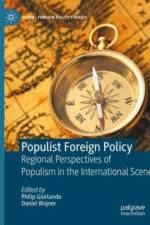
This book explores the global phenomenon of populism in relation to states' foreign policy, addressing two key questions: How do populists mold their foreign policies? What are the domestic and external factors that enable and constrain it? To this end, the book brings together a diverse group of scholars who have already researched on populist foreign policies (PFP) in specific countries to contribute shared chapters that examine their drivers, patterns, and effects according to distinctive regions: North America, Western Europe, Southern Europe, Central-Eastern Europe, Latin America, South-East Asia, the Middle East, Oceania, and Africa. The empirical analysis sheds new light on how populists¿ distinctive conception of a world divided antagonistically between ¿the people¿ and ¿the elites¿ influences behaviour towards multilateral organizations such as the United Nations and the European Union, and regional or global hegemonic powers like the United States, Germany, Russia, and China. The book also shows how ideas related to identity, ideology, status and emotions, impinge on populists¿ conduct vis-à-vis other international actors, and how national and international structures affect the implementation of populist foreign policies in the regional, interregional, and global arenas. The wide geographical diversity and regional representation are also valuable in identifying cultural similarities and differences. Hence, the findings contribute to lively debates on whether there is a unified and coherent foreign policy among populist leaderships, and whether populism leads to a gradual ¿corrective¿ of transnational trends in contemporary politics or, conversely, to a more radical, structural shift in the liberal international order.
Abonner på vårt nyhetsbrev og få rabatter og inspirasjon til din neste leseopplevelse.
Ved å abonnere godtar du vår personvernerklæring.