













Gjør som tusenvis av andre bokelskere
Abonner på vårt nyhetsbrev og få rabatter og inspirasjon til din neste leseopplevelse.
Ved å abonnere godtar du vår personvernerklæring.Du kan når som helst melde deg av våre nyhetsbrev.

The volume provides a thorough look into Marina Sbisà¿s distinctive, Austinian-inspired approach to speech acts. By gathering original essays from a world-class lineup of philosophers of language, linguists, social epistemologists, action theorists, and communication scholars, the collection provides the first comprehensive critical treatment of Sbisäs outstanding contribution to speech act theory.
This handbook is an up-to-date, evidence based quick, easy reference guide for expert regional anesthesia providers. It will also be an invaluable tool and a great entry point for amateurs' sonographers who wish to understand the basics of ultrasound, its uses for diagnosis and treatment, current guidelines and standards of care. It presents in details challenges, stratification of risks, techniques, and approaches to facilitate effective ultrasound use in perioperative pain control and emergency room pain management. This uses an outline, schematic approach for easy understanding and retention. The applications of ultrasound are vast and cover the full spectrum of ultrasound guided regional anesthesia. This book concentrates and encompasses the most clinically relevant information as a first aid use of perioperative ultrasound. The chapters are concise, focusing on clinical presentations, diagnosis, differential diagnosis which will help you to deliver patient care in a timely and skillful manner. This compact book is packed with relevant, remarkable information related to ultrasound guided techniques and evidence-based protocols and latest guidelines for regional anesthesia, nerve blocks, and opioid-reducing analgesia to promote early recovery after surgery. Concise, practical, and clinically applicable for various specialties, this book fills the unmet need for understanding the usefulness and techniques of ultrasound and its application in perioperative pain management, in particular regional anesthesia and nerve blocks. This handbook enables every physician, nurse, resident and all medical staff to understand the essentials of ultrasound and regional anesthesia, its evolving techniques, and the use of modern equipment to provide patient care safely.
This book analyzes the evolution of marketing and the ways in which marketing actions can be rendered more effective, before setting out a new approach to marketing, termed The Extra Step (TES) in recognition of the importance that it attributes to the final extra step in enhancing the effectiveness of marketing efforts. Readers will find clear description of the pathway from purchase to loyalty and the various means of developing customer loyalty. It is explained how the TES approach goes one step further by considering the consumer as a partner whose involvement during the production and fine tuning phase of products and services can help to increase the efficiency of customer loyalty actions implemented by companies. The theoretical analysis is supported by observations and empirical evidence relating to the concepts and benefits of the TES approach. These examples concern firms in Italy, Europe, and the United States, including insurance agencies, pharmaceutical companies and pharmacies, and food distribution companies. The TES approach is of wide relevance and especially valid for the service sector.
This ambitious book develops an integrative understanding of business transparency spanning business disciplines. It synthesizes the vast, siloed research on business transparency to develop and provide an integrative view for business researchers and scholars, pointing out research opportunities in the process. The first chapter introduces business transparency with a brief historical overview, followed by its key conceptualizations and challenges. Chapters 2 through 5 take up four conceptually distinct views of transparency in depth: transparency as strategic disclosure (Chapter 2), transparency as a business tactic (Chapter 3), transparency as organizational culture (Chapter 4) and transparency as a managerial virtue (Chapter 5). Chapter 6 explores transparency¿s infeasibility challenge through the chasm between disclosure and understanding and considers its implications. The final chapter provides an integrative framework of business transparency. This book will be useful to business academics who are interested in transparency and associated concepts.
This book compares the cross-border integration of infrastructures in Europe such as post, telecommunication and transportation in the 19th century and the period following the Second World War. In addition to providing a unique perspective on the development of cross-border infrastructures and the international regimes regulating them, it offers the first systematic comparison of a variety of infrastructure sectors, identifies general developmental trends and supplies theoretical explanations. In this regard, integration is defined as international standardization, network building and the establishment of international organizations to regulate cross-border infrastructures.
This book looks at the history of work and the meanings that are attached to it over time. Taking as its basis a number of international surveys and interviews conducted in Europe, the authors consider the significance of work for Europeans today.Over the years the meaning of work has changed. It has become more highly diversified, and it is today invested with high expectations that conflict with organisational developments and the changing nature of the labour market. The authors use a generational perspective to explore whether it is possible to reconcile the contemporary ΓÇ£ethosΓÇ¥ of work, especially with regards to women and young people, with organisations that are increasingly under pressure to be profitable and productive.Reinventing Work in Europe will be of interest to scholars and students in the areas of sociology of work, employment and organizations, labour studies, digital economy, and political economy.
This book attempts to delve into the connection between imagination and politics, and examines the many expectations and fears engendered by the Irish home rule debate. More specifically, it assesses the ways politicians, artists and writers in Ireland, Britain and its empire imagined how self-government would work in Ireland after the restitution of an Irish parliament. What did home rulers want? What were British supporters of Irish self-government willing to offer? What did home rule mean not only to those who advocated it but also to those who opposed it?
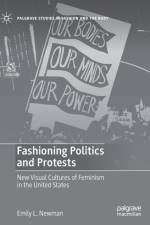
Through meticulous examinations, this book analyzes how women update their identities and articulate their feelings through clothing and art in protests, politics in the United States in the 20th century. Topics explored include the suffragists and their impact on contemporary art, the significance of the red dress in both The Handmaid¿s Tale and the Missing and Murdered Indigenous Women movement, the impact of the Miss America protests, the rising popularity of the pantsuit for women, the recent dominance of the pussyhat, and the way that feminist slogans are disseminated on t-shirts. Movements discussed include craftivism, hashtag culture, feminism, the CROWN act, Pantsuit Nation, socially-committed stores, and more. Interdisciplinary and intersectional at its core, addressing numerous areas, including fashion, sociology, visual culture, art history, feminism, and popular culture; Fashioning Politics and Protests uncovers how women continue to use visual means, explored via their clothing, to change the world.
This book is a quick-reference guide to osteoporosis that equips the reader with easy-to-follow guidelines for lifelong maintenance of skeletal structure and function, with an emphasis on the diagnosis, therapy and prevention of osteoporosis.Organized into 20 chapters it provides a concise, yet complete evidence-based overview of osteoporosis prevention and management ¿from paediatrics to geriatrics¿. This practical guide is aimed at raising awareness and educate physicians across disciplines about this preventable, treatable and now even curable disease and emphasizing how every doctor can contribute to stop the ¿osteoporosis treatment gap¿ recognized over the last ten years.Covering bone biology, pathophysiology, secondary and drug-induced osteoporosis, as well as risk factors, diagnostic measurements, treatment and monitoring strategies, new drugs, management of osteoporotic fractures, and much more, this book is a must-have for all those involved in the prevention and care of this global threat.
This book focuses on the resistance practices digitally enacted by a group of refugees in the context of the Australian detention policy. Drawing on critical-, multimodal- and ethnographic-discursive analytical research, the author brings to the fore the digitally mediated lived experiences of detained refugees as articulated from Australia-run offshore and onshore detention facilities. The book unveils how refugees¿ self-representation and counter-discursive practices on social media aim to dismantle the dehumanizing, exclusionary, and obliterating anti-refugee rhetoric that pervades political and media landscapes in contemporary Australia. It will be of interest to academics and students in fields including Digital Migration Studies, Refugee Studies, Digital Media Studies, Corpus Linguistics and Critical Discourse Studies, including Multimodal Critical Discourse Studies, and Discourse Ethnography.
This book reviews taxing choices to protect the local and global environment and preserve and sustain natural resources. Alternative economic instruments such as carbon taxes and tradable permits to combat global climate change are also examined. Strategies and practices for the managing and sharing of revenues from natural resources are highlighted. Also, roles of various orders of government in managing, taxing, and sharing natural resources in selected countries are documented to highlight the impact of such division of responsibilities in preserving natural resources and the environment. The susceptibility of resource revenue dependent economies to corruption and malfeasance, and the Dutch disease, is also highlighted. This book could serve as a supplementary reference book for graduate and undergraduate courses and as a sourcebook for journalists, researchers, policymakers, and government practitioners.
This book uses comparative case study methodology and extensive field work to examine and compare outcomes of four East African nations (Kenya, Tanzania, Uganda, and Rwanda) that implemented formal Information and Communications Technology policies in the 1990s. Based on extensive fieldwork, the book assesses the emergence of a new policy and technological arena from the turn of the millennium to the present. In addition to tracing the implementation and reception of these policies, Bowman considers to what extent the politics of infrastructure in four connected but distinct African nations have resulted in global participation and equitable distribution and access of infrastructure to all citizens, as well as the impact a recent history of war or peace have on the technological outcomes in these communities. The book provides us with invaluable new data on how policy and politics function in emerging democracies, and illuminates long-overlooked opportunities and conditions necessary for the distribution of new and potentially beneficial technologies in other developing countries.
This volume presents a collection of essays by leading experts which examine nineteenth century ideas about Christian theology, art, architecture, restoration, and curatorial practice. The volume unveils the importance of John Ruskin¿s writing for today¿s audience, and allies it with the dynamism of the Pre-Raphaelite religious imagination. Ruskin¿s drawings and daguerreotypes, as well as Pre-Raphaelite paintings, stained glass, and engravings, are shown to be alive with visual theology: artists such as Dante Gabriel Rossetti, John Everett Millais, Edward Burne-Jones, and Evelyn de Morgan illuminate aspects of faith and aesthetics.The interdisciplinary nature of this volume encourages reflection upon praise, truth, and beauty. The aesthetic conversations between Ruskin and the Pre-Raphaelites themselves become a form of ¿sacra conversazione¿.
The book takes a cursory look at the drivers and the directions of Africäs developmental drive as a largely developing continent within the frameworks of the ever-dynamic global space, putting into perspective inherent challenges and opportunities of the 21st Century, and thereafter. Being the continent with most youthful population, Africa appears to still lack in requisite innovative interventions to transmute such demographic dividend into economic opportunities for the benefits of the larger population. Instead, there has been increasing trend in South-North migrations among both skilled and unskilled Africans across all age groups. Besides, impacts of climate change on the continent have also implied unstructured migratory trend within and beyond the bounds of the continent. Africa has continued to play a feeble role in various United Nations (UN)-enabled ¿Conference of Parties¿ (COP) negotiations, such as the COP-26 in Glasgow, Scotland (2021). The management of recent Covid-19 epidemic across the world has presented a clear pointer to Africa that except development is internally-driven, no one is ready to exogenously drive sustainable good life for others. Ostensible ¿vaccine nationalism¿ that has dotted the production and availability of various Covid-19 vaccine brands, which has ultimately left Africa as the ¿begging continent¿ one more time calls for in-depth interrogation in contextualizing what the place of Africa has been, is and to be within the global interactive mode.
Climate Liberalism examines the potential and limitations of classical-liberal approaches to pollution control and climate change. Some successful environmental strategies, such as the use of catch-shares for fisheries, instream water rights, and tradable emission permits, draw heavily upon the classical liberal intellectual tradition and its emphasis on property rights and competitive markets. This intellectual tradition has been less helpful, to date, in the development or design of climate change policies. Climate Liberalism aims to help fill the gap in the academic literature examining the extent to which classical-liberal principles, including an emphasis on property rights, decentralized authority and dynamic markets, can inform the debate over climate-change policies. The contributors in this book approach the topic from a range of perspectives and represent multiple academic disciplines. Chapters consider the role of property rights and common-law legal systems in controlling pollution, the extent to which competitive markets backed by legal rules encourage risk minimization and adaptation, and how to identify the sorts of policy interventions that may help address climate change in ways that are consistent with liberal values.
This book provides a broad, interdisciplinary analysis of events impacting on North Macedonia since its independence, particularly during the last decade. In the past thirty years, the country has gone through deep political, social and economic transition, along with a name change from ¿Macedoniä to the ¿Republic of North Macedoniä following the Prespa Agreement signed with Greece. The contributors consider Macedoniäs challenges, its multi-ethnic make-up and its ambition to enter the European mainstream through the auspices of the European Union and NATO. The volume includes chapters on international politics and North Macedoniäs place in the region¿s security architecture as well as the difficulties of the privatisation of socially owned enterprises, political corruption, state capture and backsliding. The book also covers the controversial ¿Skopje 2014¿ project in addition to the impact of migration along the ¿Balkan Route¿ and the current wranglings with Bulgaria over identity politics.
This volume is the continuation of our research on economic and developmental policy-making in the global semi-periphery in the post-crisis cycle (see our two recently published volumes titled ¿Market-Liberalism and Economic Patriotism in Capitalist Systems¿ edited by Ger¿cs and Szanyi, 2019, Palgrave Macmillan and ¿The Post-Crisis Developmental State ¿ Perspectives from the Global Periphery¿ edited by Ger¿cs and Ricz, 2021). Our new volume aims to be a contribution to the analysis of emerging market economies¿ alternative development trajectories, as we explore the new perspectives on semi-peripheral dependent development since the Global Financial Crisis and especially amidst the new global pandemic, the COVID-19.The scope of comparative capitalism research has also been altered accordingly to include the analysis of emerging economies outside the core of the world system, and to make intertemporal comparisons possible (such as to define and characterise historical waves of state capitalism). Still, we are convinced that to better understand the current wave of state capitalism and to explore its national varieties there is a need to critically reconsider existing theoretical approaches and methodologies, and to search for new ones, if necessary.This book aims to be a contribution to the analysis of emerging market economies' alternative development trajectories and explores new perspectives on semi-peripheral dependent development, especially amidst COVID-19.
This book explores and addresses body search practices in prison environments from different angles (criminology, sociology, human rights and law) and discusses such practices in different national contexts within Europe. Body searches are widely used in prison systems across the globe: they are perceived as indispensable to prevent forbidden substances, weapons or communication devices from entering the prison. However, these are also invasive and potentially degrading control techniques. It should not come as a surprise, then, that body searches are deeply contested security measures and that they have been widely debated and regulated. What makes theses control measures problematic in a prison context? How do these practices come to be regulated in an international and European context? How are rules translated into national law? To what extent are laws and rules respected, bent, circumvented and denied? And what does the future hold for body searches?
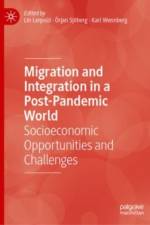
As the world emerges from the COVID-19 pandemic, this book explores current migration and integration challenges. Against the background of long-term migration trends, it asks whether the pandemic has changed the patterns observed, transformed the circumstances international migrants face at destination or whether the opportunities and challenges for integration have been altered. Twenty-four researchers have contributed to this volume with research attention on how COVID-19 has affected transnationalism and identity, labour market employment, and impacted the discrimination of migrants in a variety of ways. Loyalties and tensions created by the need to include also hesitant migrant groups in vaccination programmes are explored. The role of cosmopolitanism and welfare chauvinism in narratives on inward migrations flows, the stance of trade unions on migration, the complexities of implementing return policies, and the challenges faced by unaccompanied refugee youth from Afghanistan are also discussed.
As the world emerges from the COVID-19 pandemic, this book explores current migration and integration challenges. Against the background of long-term migration trends, it asks whether the pandemic has changed the patterns observed, transformed the circumstances international migrants face at destination or whether the opportunities and challenges for integration have been altered. Twenty-four researchers have contributed to this volume with research attention on how COVID-19 has affected transnationalism and identity, labour market employment, and impacted the discrimination of migrants in a variety of ways. Loyalties and tensions created by the need to include also hesitant migrant groups in vaccination programmes are explored. The role of cosmopolitanism and welfare chauvinism in narratives on inward migrations flows, the stance of trade unions on migration, the complexities of implementing return policies, and the challenges faced by unaccompanied refugee youth from Afghanistan are also discussed.
Fashion and Feeling: The Affective Politics of Dress explores the complex nexus of fashion and the feeling body from a variety of critical perspectives across fashion studies, anthropology, sociology, design practice, and media studies. It asks such questions as: What does fashion look and feel like in an age dominated by amplified anxiety, isolation, depression, and precariousness? How are feelings woven into clothing and mobilized through fashion practices in ways that might sustain living with a sense of ongoing crisis? Does fashion have the potential to help us reimagine new lifeworlds which might be reinvigorating? In other words, how is fashion engaging with the ¿bad,¿ the ¿good,¿ and the ambivalent feelings associated with our personal and collective histories, with our troubled political present, and with our imagined future? Despite such diverse and scattered contributions, the potentialities of ¿feeling¿ for the study of fashion are still largely neglected. This edited volume seeks to tease out possible avenues of investigation of the clothed body and its representations through the lens of feeling.
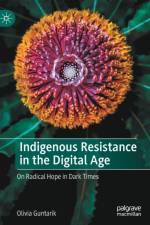
From climate catastrophes to sudden wars, the world faces conflicts of unprecedented scale. Yet around the globe, Indigenous leaders continue to move forward with determination and hope. Leaders demand change, resisting the destruction of the environment and suggesting solutions to today¿s global crisis. Age-old practices are experiencing a cultural revival and the lessons call for all of us to walk alongside Indigenous peoples. In the face of crisis and the progress of technology, this book shows how to stand with Indigenous peoples through uncertainty and chaos. How to stand with Indigenous peoples is about how to listen, how to walk together and how to act.
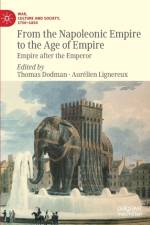
This book explores imperial entanglements to reassess the Napoleonic Empire as a missing link¿or at least an important chain¿in the global and longue durée history of Empires. In recent years Napoleonic studies have, belatedly but resolutely, embraced the transnational historiographical turn, vastly expanding the field¿s geographical scope. Its canonical chronological boundaries, on the other hand, appear increasingly narrow against this wider backdrop, giving the impression of a parenthetical, almost anachronistic aside from 1799 to 1815. What connects, and what doesn¿t connect, the Napoleonic Empire to the Age of Empire, remains by and large an open question. Put another way, this book attempts to locate the Napoleonic empire in World History.
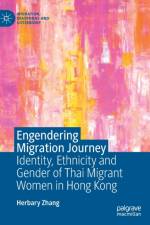
Drawing on ethnographic research conducted with the Thai migrant community in Hong Kong between 2016 and 2020, this book provides original insights into the complexity and diversity of identity negotiation, ethnicity navigation, and womanhood reinvention of Thai migrant women in Hong Kong. Allowing research to move beyond standard stories of victimized migrants and domestic workers by focusing on the increasing number of Southeast Asians moving into the middle-class, this ethnographic study of the everyday lived experience of Thai migrant women in Hong Kong will advance a new understanding of transnational migration and mobility at the intersections of gender, ethnicity, class, generation, and religion. This book illustrates the influence of transnationalism and multiculturalism on migrant women's meaning-making and accentuates the importance of diversity within a migrant population ¿ in particular, the importance of maintaining an intersectional perspective to understand the broader phenomenon of contemporary middle-class and professional migration within Southeast Asia.
¿This book assesses the nature and extent of the project of deracialisation required to counter the contemporary dynamics of racialisation across four varieties of modernity: Sweden, South Africa, Brazil and the UK, based on original research on each of the four country contexts. Since racism began to be recognised or identified as a problem, an assemblage of supra-national initiatives have been devised in the name of combatting, dismantling or reducing it. There has been a recent shift whereby such supra-national bodies move toward embedding strategies against racism within the framework of human rights and devolving such responsibility to other bodies at a national level.The authors bring together a team of international experts in this field, in order to compare the priorities and effectiveness of current strategic approaches in each national context, examining their relationalities and connecting these cases within a joint theoretical and methodological framework. Thus, this book contributes to theoretical knowledge on racialisation and deracialisation, produce a new data set on contemporary interventions and institutions and establish new principles and practice for national projects of deracialisation and anti-racism, building on cross-national learning.
Abonner på vårt nyhetsbrev og få rabatter og inspirasjon til din neste leseopplevelse.
Ved å abonnere godtar du vår personvernerklæring.