


















Gjør som tusenvis av andre bokelskere
Abonner på vårt nyhetsbrev og få rabatter og inspirasjon til din neste leseopplevelse.
Ved å abonnere godtar du vår personvernerklæring.Du kan når som helst melde deg av våre nyhetsbrev.

This textbook provides and introduction to numerical computing and its applications in science and engineering. The essential role of the mathematical theory underlying the methods is also considered, both for understanding how the method works, as well as how the error in the computation depends on the method being used.
This open access book will provide an introduction to forest entomology, the principles and techniques of forest insect pest management, the different forest insect guilds/feeding groups, and relevant forest insect pest management case studies. In addition to covering 30% of the earth, forest ecosystems provide numerous timber and non-timber products that affect our daily lives and recreational opportunities, habitat for diverse animal communities, watershed protection, play critical roles in the water cycle, and mitigate soil erosion and global warming. In addition to being the most abundant organisms in forest ecosystems, insects perform numerous functions in forests, many of which are beneficial and critical to forest health. Conversely, some insects damage and/or kill trees and reduce the capacity of forests to provide desired ecosystem services. The target audience of this book is upper-level undergraduate and graduate students and professionals interested in forest health andentomology.
In the COVID 19 post-pandemic era, sustainable financial systems are increasingly getting the attention they deserve, and policymakers are now moving toward investment and financing decisions based on sustainable development. Green finance plays an important role in mobilizing financial resources and hedging against environmental risk to achieve financially sustainable systems. Moreover, green financial instruments offer viable alternatives for investors and regulators with regard to portfolio management and risk minimization. Over the last few years, financial technology (FinTech) has grown to become one of the most topical areas in the global financial services industry. The development of distributed ledger technology, big data, smart contracts, peer-to-peer lending platforms, biometrics, and new digital has sparked innovation in the financial services industry and the development of new financing and investment strategies. The combination of sustainability and FinTech can help policymakers to achieve ESG targets when making investment and financing decisions.This book showcases a collection of recent advances in green finance and FinTech and explores their impact in achieving sustainable finance, investment strategy-making, and portfolio management. Presenting theoretical frameworks and the latest empirical studies in the field of green finance and FinTech, it offers a valuable asset for academics, professionals, policymakers, regulators, and investors who want to understand in-depth the impact of green finance and FinTech on future investment and financing strategies in the post-pandemic era.
In this book, part of the European Society of Intensive Care Medicine (ESICM) textbook series, experts in the field of clinical ethics describe basic principles of clinical ethics and ethical reasoning, the fundamental pillars of intensive care medicine as well as the decision-making processes necessary to arrive at appropriate decisions for each individual patient. Specifically, the complex decision-making process, with regard to limiting life-sustaining therapies and integrating palliative care into intensive care, are expounded. Furthermore, the still controversial topics of ethical climate, proportionate care, and prioritization are elaborated upon. The so-called ¿soft skills¿ of inter-professional communication and co-operation are given the attention they deserve in order to overcome the gap between technological progress and interpersonal standstill. Finally, widely accepted ethical values and principles were challenged by the Covid-19 pandemic, forcing clinicians to elaborate recommendations regarding the prioritization of scarce resources.The book will be an invaluable tool for clinicians to understand ethical principles and reasoning to contend ethical challenges in intensive care medicine across the boundaries of disciplines and professions, in order to provide an appropriate individual plan of treatment for their patients.
More Explorations in Complex Functions is something of a sequel to GTM 287, Explorations in Complex Functions. Both texts introduce a variety of topics, from core material in the mainstream of complex analysis to tools that are widely used in other areas of mathematics and applications, but there is minimal overlap between the two books. The intended readership is the same, namely graduate students and researchers in complex analysis, independent readers, seminar attendees, or instructors for a second course in complex analysis. Instructors will appreciate the many options for constructing a second course that builds on a standard first course in complex analysis. Exercises complement the results throughout. There is more material in this present text than one could expect to cover in a year¿s course in complex analysis. A mapping of dependence relations among chapters enables instructors and independent readers a choice of pathway to reading the text. Chapters 2, 4, 5, 7, and 8 contain the function theory background for some stochastic equations of current interest, such as SLE.The text begins with two introductory chapters to be used as a resource. Chapters 3 and 4 are stand-alone introductions to complex dynamics and to univalent function theory, including deBrange¿s theorem, respectively. Chapters 5¿7 may be treated as a unit that leads from harmonic functions to covering surfaces to the uniformization theorem and Fuchsian groups. Chapter 8 is a stand-alone treatment of quasiconformal mapping that paves the way for Chapter 9, an introduction to Teichmüller theory. The final chapters, 10¿14, are largely stand-alone introductions to topics of both theoretical and applied interest: the Bergman kernel, theta functions and Jacobi inversion, Padé approximants and continued fractions, the Riemann¿Hilbert problem and integral equations, and Darboux¿s method for computing asymptotics.
This quick-reference guide is the first book written specifically for the many third- and fourth-year medical students rotating on the ophthalmology service. The book focuses on the diagnosis and management of the most common pathologic entities. Each chapter covers history, physical examination, imaging, and common diagnoses. For each diagnosis, the book sets out the typical presentation, options for non-operative and operative management, and expected outcomes. Chapters include key illustrations, quick-reference charts, tables, diagrams, and bulleted lists. Students can read the text from cover to cover to gain a general foundation of knowledge that can be built upon when they begin their rotation, then use specific chapters to review a sub-specialty before starting a new rotation or seeing a patient with a sub-specialty attending. Topics covered include glaucoma, cataracts, retinal tears, macular degeneration, ptosis, strabismus, thyroid eye disease, and much more.Practical and user-friendly, Ophthalmology Clerkship is the ideal, on-the-spot resource for medical students and practitioners seeking fast facts on diagnosis and management. Its bullet-pointed outline format makes it a perfect quick reference, and its content breadth covers the most commonly encountered problems in clinical practice.
This book has two main objectives: ¿ to provide a concise introduction to nonlinear optimization methods, which can be used as a textbook at a graduate or upper undergraduate level; ¿ to collect and organize selected important topics on optimization algorithms, not easily found in textbooks, which can provide material for advanced courses or can serve as a reference text for self-study and research. The basic material on unconstrained and constrained optimization is organized into two blocks of chapters: ¿ basic theory and optimality conditions ¿ unconstrained and constrained algorithms. These topics are treated in short chapters that contain the most important results in theory and algorithms, in a way that, in the authors¿ experience, is suitable for introductory courses. A third block of chapters addresses methods that are of increasing interest for solving difficult optimization problems. Difficulty can be typically due to the high nonlinearity of the objective function, ill-conditioning of the Hessian matrix, lack of information on first-order derivatives, the need to solve large-scale problems. In the book various key subjects are addressed, including: exact penalty functions and exact augmented Lagrangian functions, non monotone methods, decomposition algorithms, derivative free methods for nonlinear equations and optimization problems. The appendices at the end of the book offer a review of the essential mathematical background, including an introduction to convex analysis that can make part of an introductory course.
The Second Edition of The Milan System for Reporting Salivary Gland Cytopathology, like the First Edition, represents a collaborative effort by a multidisciplinary group of cytopathologists, surgical pathologists, molecular pathologists, radiologists, and head and neck surgeons. This international group shares the goal of creating a practical and uniform reporting system for salivary gland fine needle aspiration (FNA). This book is organized into six general diagnostic categories: ¿Non-Diagnostic,¿ ¿Non-Neoplastic,¿ ¿Atypia of Undetermined Significance (AUS),¿ ¿Neoplasm: Benign,¿ ¿Neoplasm: Salivary Gland Neoplasm of Uncertain Malignant Potential (SUMP),¿ ¿Suspicious for Malignancy,¿ and ¿Malignant.¿ It includes definitions, morphologic criteria, and explanations for each of the diagnostic categories. Specific chapters are dedicated to the application of the latest available ancillary studies, radiologic features of salivary gland lesions, clinical management, and histological considerations including updates from the most recent 5th Edition WHO blue book. The Milan System for Reporting Salivary Gland Cytopathology 2nd Edition represents an essential step towards increasing the overall effectiveness of salivary gland FNA and fostering better communication between clinicians and between institutions to improve overall patient care.
This exciting, first-of-its-kind title describes the blossoming new science of medicine and management¿the concepts, methodologies, techniques, and tools that create value for patients, populations, caregivers, staff, and healthcare organizations. Developed out of the innovative and powerful physician executive MBA program at the Heller School of Social Policy and Management at Brandeis University, The New Science of Medicine & Management describes what physician leaders need to know and do to fix problems that can erode value in complex healthcare environments in which they practice medicine. The book is motivated by a singular proposition¿Every Physician a Leader; Every Leader a Collaborative Team Player and a new definition of high-value health care. Composed of the best 18 of approximately 200 outstanding physician-led business school projects, the book is based on the collective efforts and experiences of 33 authors and coauthors, 28 of whom are physicians and 19 of whom have an MD and an MBA degree. The work is grounded in three important assertions: First, the clinical side of complex professional medical organizations such as hospitals has traditionally been led by highly skilled, highly experienced medical practitioners trained in the underlying biomedical disciplines and applied medical sciences. Second, there is research evidence that managers with clinical backgrounds can run better healthcare organizations, and a growing number of physician-led multispecialty groups are outperforming organizations run by lay managers. Third, physicians and other caregivers should have some training in the new science of medicine and management; moreover, and very importantly, the transition from clinician to clinical manager and leader is challenging and requires training in the new science of medicine and management. State of the art, developed by expert physician leaders in the field, and replete with a wide range of management insights and lessons, this book asks important questions and offers an exciting and comprehensive resource for all physicians, health administrators, and clinicians interested in not only the science of medicine and management and in developing physician-led teams but, crucially, in ensuring value in healthcare by improving patient outcomes, safety, affordability, and employee well-being.
This new edition is a high-yield review that is an ideal study guide for the ENT in-service and board exams. While other review guides are low yield, this is quick, concise, and easy-to-use, providing everything you need to know in a easy to digest format. ENT Board Prep offers review on sections such as cancer, ear, sinus, plastics, sleep, and laryngology, as well as case studies useful for studying for the oral board exams. Written and edited by leaders in the field, this book aims to serve future residents and fellows in those crucial weeks leading up to the ENT board exam. The new edition includes fully updated sections, illustrations, and board review material. Specific updates include head and neck cancer staging and therapies, sleep apnea therapy advances, and virtual reality planning for skull base surgery. This is an ideal guide for ENT specialists, and specifically those studying for board exams.
This introduction to astronomy and astrophysics provides an accessible and clear treatment of the fundamentals. Starting with experimental astronomy, observation techniques and structure and properties of the components of the solar system, this textbook enables the reader to understand the basics in astrophysics. The text is written from the experimental physics point of view, giving numerous real life examples and detailed instrumentation and experimental methods. This highly motivating presentation deepens the knowledge in a very accessible way. The second part of the text gives a concise introduction to stars and extra-solar planets. The stellar evolution and categorization is explained. The last part features cosmological models, galaxy evolution and large scale objects in the universe. Numerous problems with solutions are perfect for self-study.
In recent years, large amounts of data became available in all areas of science, industry and society. This provides unprecedented opportunities for enhancing our knowledge, and to solve scientific and societal problems. In order to emphasize the importance of this, data have been called the "oil of the 21st Century". Unfortunately, data do usually not reveal information easily, but analysis methods are required to extract it. This is the main task of data science.The textbook provides students with tools they need to analyze complex data using methods from machine learning, artificial intelligence and statistics. These are the main fields comprised by data science. The authors include both the presentation of methods along with applications using the programming language R, which is the gold standard for analyzing data. This allows the immediate practical application of the learning concepts side-by-side.The book advocates an integration of statistical thinking, computational thinking and mathematical thinking because data science is an interdisciplinary field requiring an understanding of statistics, computer science and mathematics. Furthermore, the book highlights the understanding of the domain knowledge about experiments or processes that generate or produce the data. The goal of the authors is to provide students with a systematic approach to data science that allows a continuation of the learning process beyond the presented topics. Hence, the book enables learning to learn.Main features of the book:- emphasizing the understanding of methods and underlying concepts- integrating statistical thinking, computational thinking and mathematical thinking- highlighting the understanding of the data- exploring the power of visualizations- balancing theoretical and practical presentations - demonstrating the application of methods using R- providing detailed examples and discussions- presenting data science as a complex networkElements of Data Science, Machine Learning and Artificial Intelligence using R presents basic, intermediate and advanced methods for learning from data, culminating into a practical toolbox for a modern data scientist. The comprehensive coverage allows a wide range of usages of the textbook from (advanced) undergraduate to graduate courses.
This book provides comprehensive information about various types of gender-based violence (GBV) and abuse. GBV is a major public health and social problem that affects people, mostly women and girls, in every community, culture, and country. GBV refers to the violence or a pattern of abusive behaviours including physical aggression, sexual coercion, psychological abuse and controlling behaviours resulting in physical, sexual or psychological harm. It is associated with severe physical and psychological consequences, and can result in death. . GBV can take many forms including female foeticide, infanticide, female genital mutilation, child marriage, grooming, trafficking, forced marriage, dowry- related abuse, honour-based violence, rape, sexual assault, stalking, harassment, street violence, abuse against older people, domestic violence, and intimate partner violence. It can take place in public, private and virtual settings, and within the context of intimate, familial, community and institutional relationships. While all these forms affect girls and women more, boys and men can also be exposed of various forms of violence including child abuse, sexual abuse, wartime violence, corporal punishment to name a few.This book takes a unique approach and presents an overview of ¿gender-based violence and related practices throughout the world. The book is written in a user friendly manner in order to be accessible as an introductory text to a wide range of readers including students, practitioners and researchers. Edited by a public health academic and a social worker, with contributions representing a wide range of disciplines, the book will appeal to many professions including nurses, midwives, social care and social work practitioners, police, teachers, psychologists, and sociologists.
Is death inevitable? Until now, the history of mankind has been marked by this fatal fact. Religions, borders and progress are born from an ancient fear of death, comfort from this fear man often found only in religious paradigms. But according to José Luis Cordeiro and David Wood, the incontrovertible fact of death is no longer an absolute certainty - science and technology are preparing to tear down the final frontier: that of immortality.This accessible book provides insight into recent exponential advances in artificial intelligence, tissue regeneration, stem cell treatment, organ printing, cryopreservation, and genetic therapies that, for the first time in human history, offer a realistic chance to solve the problem of the aging of the human body. In this book, Cordeiro and Wood not only present all the major developments, initiatives, and ideas for eternal life, they also show why there are a number of good arguments for seeing death for what it is: the last undefeated disease.Enter any drugstore or bookstore, and we confronted with a mountain of nonsense concerning the aging process. Society seems obsessed with aging. That is why The Death of Death is such a refreshing delight, able to cut through the hype and reveal a balanced, authoritative, and lucid discussion of this controversial topic. It summarizes the astonishing breakthroughs made recently in revealing how science may one day conquer the aging process.Michio Kaku, theoretical physicist and author of The God Equation: The Quest for a Theory of Everything We are entering a Fantastic Voyage into life extension, crossing different bridges that will take us to indefinite life spans. The Death of Death explains clearly how we might soon reach longevity escape velocity and live long enough to live forever. Ray Kurzweil, co-author of Fantastic Voyage: Live Long Enough to Live Forever and co-founder of Singularity UniversityThe Death of Death is a truly revolutionary book. This is a visionary book that confronts us with the terrible reality of aging, and its authors are friends and connoisseurs of the subject. I believe that the authoritative and exhaustive description of this crusade that José and David make in this excellent book will accelerate this process. Forward! Aubrey de Grey, founder of LEV (Longevity Escape Velocity) Foundation and co-author of Ending Aging
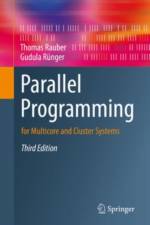
This textbook covers the new development in processor architecture and parallel hardware. It provides detailed descriptions of parallel programming techniques that are necessary for developing efficient programs for multicore processors as well as for parallel cluster systems and supercomputers. The book is structured in three main parts, covering all areas of parallel computing: the architecture of parallel systems, parallel programming models and environments, and the implementation of efficient application algorithms. The emphasis lies on parallel programming techniques needed for different architectures. In particular, this third edition includes an extended update of the chapter on computer architecture and performance analysis taking new developments such as the aspect of energy consumption into consideration. The description of OpenMP has been extended and now also captures the task concept of OpenMP. The chapter on message-passing programming has been extended and updated to include new features of MPI such as extended reduction operations and non-blocking collective communication operations. The chapter on GPU programming also has been updated. All other chapters also have been revised carefully.The main goal of this book is to present parallel programming techniques that can be used in many situations for many application areas and to enable the reader to develop correct and efficient parallel programs. Many example programs and exercises are provided to support this goal and to show how the techniques can be applied to further applications. The book can be used as a textbook for students as well as a reference book for professionals. The material of the book has been used for courses in parallel programming at different universities for many years.
This book covers methodology of the study for all aspects of human geography. As a comprehensive geography textbook, it consists of detailed research methodology for research in human geography including a few selected case studies in Asia. It explores different approaches, methodological possibilities, and challenges in conducting geographical research in human geography. New digital geographic data sources and GIS applications can help researchers to receive clearer concepts and obtain better measurements of the relevant attributes changes. Furthermore, the book provides an opportunity to critically examine the conceptualization and identification of the field in geographical research and how digital media has not only expanded the scope of what constitutes the field but has redefined the field in itself as well as the practices of observing, knowing, and analyzing the real world. The uniqueness of this book is due to the contribution of several professors and subject experts from South East and East Asia with special particular reference to cases studies from this region of the world.
The book is conceived as a guide to solve exercises in Mathematical Finance and a complement to theoretical lectures. The potential audience consists of students in Applied Mathematics, Engineering and Economics, attending courses in Mathematical Finance. The most important subjects covered by this textbook are Pricing and Hedging of different classes of financial derivatives (European, American Exotic options, Fixed Income derivatives) in the most popular modeling frameworks, both in discrete and continuous time setting, like the Binomial and the Black-Scholes models. A Chapter on static portfolio optimization, one on pricing for more advanced models and one on Risk Measures complete the overview on the main issues presented in classical courses on Mathematical Finance. About one hundred exercises are proposed, and a large amount of them provides a detailed solution, while a few are left as an exercise to the reader. Every chapter includes a brief resume of the main theoretical results to apply. This textbook is the result of several years of teaching experience of both the authors.
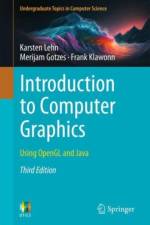
A basic understanding of the key techniques in computer graphics can open the door to this exciting field and its many applications, including for video games and for augmented and virtual reality.This easy-to-follow textbook and reference introduces the fundamental concepts of computer graphics, integrating both technical background and theory with practical examples and applications throughout. Thoroughly revised and updated, this new edition continues to present a user-friendly approach to creating images and animations, complementing the expanded coverage of topics with usage of example programs and exercises.Topics and features:Contains pedagogical tools, including easy-to-understand example programs and end-of-chapter exercisesPresents a practical guide to basic computer graphics programming using the Open Graphics Library (OpenGL) and the widely used Java programming languageIncludes new and expanded content on the OpenGL graphics pipelines, shader programming, drawing basic objects using the OpenGL, three-dimensional modelling, quaternions, rasterisation, antialiasing and moreSupplies complete Java project examples as supplementary materialThis reader-friendly textbook is an essential tool for second-year undergraduate students and above, providing clear and concise explanations of the basic concepts of computer graphics. It will enable readers to immediately implement these concepts using the OpenGL and Java (with only elementary knowledge of the programming language).Prof. Dr.-Ing. Karsten Lehn works at the Faculty of Information Technology at Fachhochschule Dortmund, University of Applied Sciences and Arts. Prof. Dr. Merijam Gotzes is teaching at Hamm-Lippstadt University of Applied Sciences. Prof. Dr. Frank Klawonn is head of the Data Analysis and Pattern Recognition Laboratory at the Ostfalia University of Applied Sciences and heads the Biostatistics Research Group at the Helmholtz Centre for Infection Research.
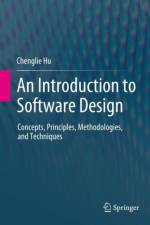
This textbook provides a balanced coverage on software design, including design principles, methodologies, and techniques in contexts of designing modules of small and larger sizes with a multi-paradigm viewpoint emphasizing design trade-off. Commonly used design diagrams and patterns are also covered in terms of the design ideas behind and their effective use. The book also explores what (software) design thinking is, the role it plays in a design process, and ways to promote it. Despite object orientation being still the center of attention, there is a strong promotion throughout the book that software design should consider all appropriate design paradigms and methodologies.The book is organized in 10 chapters. Chapter 1 is dedicated to an exploration of what software design may be and entail. Next, chapters 2 and 3 are designed to help readers better understand object orientation, and the essentials of object-oriented design. Chapter 4 is then dedicated to the design of methods, while chapters 5, 6, and 8 respectively include topics about the design of objects, modeling with the Unified Modeling Language, and the use of design patterns. Larger software elements are often directly responsible for the formation of software architecture, thus chapter 7 covers four kinds of larger software elements: libraries, components, frameworks, and microservices, and their architectural implications. Chapter 9 finally brings the presentation of software design to an end with a coverage on software architecture focusing on software architectural views. Case studies are important in learning how to design software, hence chapter 10 then gathers some small design case studies that can be used in earlier chapters as appropriate. These case studies can be extended in different ways to provide additional design opportunities.This textbook book is intended for a junior level undergraduate course on software design, yet the depth of the book makes it also appropriate for a design course at beginning graduate level. Professionals may also find the book useful in their professional development.
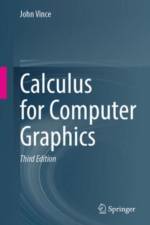
Students studying different branches of computer graphics need to be familiar with geometry, matrices, vectors, rotation transforms, quaternions, curves and surfaces. And as computer graphics software becomes increasingly sophisticated, calculus is also being used to resolve its associated problems.In this 3rd edition, the author extends the scope of the original book to include vector differential operators and differential equations and draws upon his experience in teaching mathematics to undergraduates to make calculus appear no more challenging than any other branch of mathematics. He introduces the subject by examining how functions depend upon their independent variables, and then derives the appropriate mathematical underpinning and definitions. This gives rise to a function¿s derivative and its antiderivative, or integral. Using the idea of limits, the reader is introduced to derivatives and integrals of many common functions. Other chapters address higher-order derivatives, partial derivatives, Jacobians, vector-based functions, single, double and triple integrals, with numerous worked examples and almost two hundred colour illustrations. This book complements the author¿s other books on mathematics for computer graphics and assumes that the reader is familiar with everyday algebra, trigonometry, vectors and determinants. After studying this book, the reader should understand calculus and its application within the world of computer graphics, games and animation.
Models of Time and Space from Astrophysics and World Cultures explores how our conceptions of time, space, and the physical universe have evolved across cultures throughout the centuries. Developed with a humanistic approach, this book blends historical sources, biographical profiles of exceptional scientists, and the latest discoveries in both astrophysics and particle physics. This rich read describes the incredible insights and ultimate limits of our knowledge, the physical universe, and how ideas old and new have converged, across the world, to build our current understanding of reality. From the Large Hadron Collider to the James Webb Space Telescope, we have mapped the universe from the smallest to largest scales; allowing us to gain fundamental knowledge that has transformed our understanding of the universe. The chapters herein will teach you about dark matter and dark energy, gravitational waves and other complex parts of the cosmos. Along the way, you will learn a thing or two about quantum mechanics, parallel universes, and the ultimate boundaries of the observable universe. This book cultivates insight from a variety of cultural traditions, including perspectives from both modern and ancient cultures, in order to show how our modern conceptions of space and time have arisen from the ongoing explorations within ancient world civilizations.It is a valuable, intriguing and insightful volume for those interested in the fields of historical astronomy and cultural astronomy, as well as for anyone interested in learning about the latest finds from the field of physics and astrophysics.
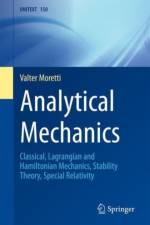
This textbook aims at introducing readers, primarily students enrolled in undergraduate Mathematics or Physics courses, to the topics and methods of classical Mathematical Physics, including Classical Mechanics, its Lagrangian and Hamiltonian formulations, Lyapunov stability, plus the Liouville theorem and the Poincaré recurrence theorem among others. The material also rigorously covers the theory of Special Relativity. The logical-mathematical structure of the physical theories of concern is introduced in an axiomatic way, starting from a limited number of physical assumptions. Special attention is paid to themes with a major impact on Theoretical and Mathematical Physics beyond Analytical Mechanics, such as the Galilean symmetry of classical Dynamics and the Poincaré symmetry of relativistic Dynamics, the far-fetching relationship between symmetries and constants of motion, the coordinate-free nature of the underpinning mathematical objects, or the possibility of describing Dynamics in a global way while still working in local coordinates. Based on the author¿s established teaching experience, the text was conceived to be flexible and thus adapt to different curricula and to the needs of a wide range of students and instructors.
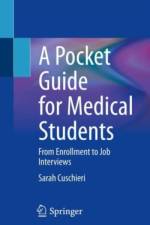
This book is addressed to future and enrolled medical students, as well as new graduated doctors, with the main aim to help them getting the grips of what the medical degree is all about and what are the different phases encountered as well as how to survive them.There are various aspects that medical students should be aware of, some ¿hidden issues¿ that no one will tell you unless they have passed from the experience themselves. This book will also feature the author¿s personal experiences both as a student and a lecturer. This is a unique feature that will enable readers to understand that they are not alone, others have experienced their fears and desires.Readers will be provided with tips on how to survive the course, how to deal with arising issues, and how to balance studying and living a life.This book intends to also highlight the importance of researching during medical school and how to go about it as well as how to prepare CVs and job interviews.An insight into life beyond medical school is also provided.Thanks to the practical and easy-to-use outline ¿ in accordance with various stages from enrolling to preclinical and clinical stages expectations, from targeting work-life balance to conducting research, preparing for a medical job interview and life beyond-, this book will benefit and guide all future medical doctors through their medical school years.
Genius is a fascinating topic. Everyone has an opinion on it, but not a lot of clarity. Much has been written on the subject - biographies, autobiographies, technical books, popular science books, and practical manuals - but genius in all of its dimensions has yet to be addressed. This book seeks to remedy that. What follows is a work of significant breadth that hopes to facilitate a nuanced popular understanding of the definition of genius, examining all of the main theories and approaches regarding the nature and origin of brilliance, the cognitive path that geniuses follow, and the difference that exists between "geniuses" on one side and "normal people" on the other. Pragmatic indications surrounding this issue are also examined, regarding such questions as: is it possible to become a genius or is genius innate? If it is possible, what is the path - no doubt long and difficult - that one must take? Is there a method for becoming a genius that can be taught and learned? This book will appeal to anyone who has ever contemplated great ideas and works and wondered how they came into being.
This textbook introduces to the fundamentals and applications of insect biotechnology in a concise manner. Global economically important insects such as silkworm, lac or honey bee are in the focus of this text. The book attempts to address all of the latest developments in this growing field such as application of metagenomics and proteomics in mining for genes and enzymes that could be beneficial in diverse industrial and biomedical applications. Further, insects have been established as suitable tool for the production of transgenic products which is discussed in one dedicated chapter. The book targets students and researchers in molecular biology, biotechnology or entomology who want to get familiar with the emerging field of insect biotechnology.
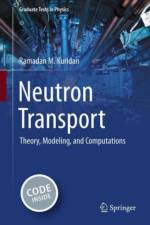
This textbook provides a thorough explanation of the physical concepts and presents the general theory of different forms through approximations of the neutron transport processes in nuclear reactors and emphasize the numerical computing methods that lead to the prediction of neutron behavior.Detailed derivations and thorough discussions are the prominent features of this book unlike the brevity and conciseness which are the characteristic of most available textbooks on the subject where students find them difficult to follow. This conclusion has been reached from the experience gained through decades of teaching.The topics covered in this book are suitable for senior undergraduate and graduate students in the fields of nuclear engineering and physics. Other engineering and science students may find the construction and methodology of tackling problems as presented in this book appealing from which they can benefit in solving other problems numerically. The book provides access to a one dimensional, two energy group neutron diffusion program including a user manual, examples, and test problems for student practice. An option of a Matlab user interface is also available.
Rereading Marx, Weber, Gramsci and, more recently, Foucault, Béatrice Hibou tackles one of the core questions of political and social theory: state domination. Combining comparative analyses of everyday life and economics, she highlights the arrangements, understandings and practices that make domination conceivable, bearable, even acceptable or reassuring. To carry out this demonstration, Hibou examines authoritarian situations—especially comparing the paradigmatic European cases of fascism, Nazism and Soviet socialism and those of contemporary China or North and Sub-Saharan Africa.
Abonner på vårt nyhetsbrev og få rabatter og inspirasjon til din neste leseopplevelse.
Ved å abonnere godtar du vår personvernerklæring.