












Gjør som tusenvis av andre bokelskere
Abonner på vårt nyhetsbrev og få rabatter og inspirasjon til din neste leseopplevelse.
Ved å abonnere godtar du vår personvernerklæring.Du kan når som helst melde deg av våre nyhetsbrev.

This textbook will delve into the philosophical foundation of contemporary IS research design with particular emphasis on the methodological tools that can be applied to conduct effective research in the multidisciplinary area of contemporary IS. What sets the book apart is that it will cover the current social paradigm shift, global changes and the need for new methodological tools, which have revolutionised the way we use IS to support our daily practices. It considers the entire methodological procedures applied to research projects that investigate or explore multifaceted areas of contemporary IS, such as information management, digital business, ICT and information science.Featuring learning objectives, case studies, assessment questions and exercises, this textbook offers a practical outline for IS research methodology that will be of use to students and researchers. It aims to satisfy researchers who are seeking literature on applying methodological procedures to their research projects that delve into the world of contemporary IS that other titles have only considered in a much broader sense.
This textbook explores the use of simulation within the context of education and internationalization. Simulation is broken down into its phases and these elements are discussed by experts, most of whom have long tradition in the application of simulation. Simulation is treated with references to the specific needs of practitioners, educators and researchers in initiating and developing simulation in different fields of study, with specific reference to teacher education.This volume focuses on presenting simulation as a means to facilitating students¿ openness to complexity and development of intercultural skills through virtual exchange. Thus, it provides educators and researchers with a conceptual and practical resource that tackles the critical role of cognitive and metacognitive complexity in the education of future global professionals through intercultural pedagogy. By tracing the roots of simulation and outlining a framework to support professional learning through experiential-based research, this textbook will prove invaluable for teacher trainers, practitioners and researchers interested in simulation.
This easy-to-read book is designed to prepare medical, biomedical and other health professionals in training to provide healthcare services to patients by utilizing the scholarship in the published chapters to better understand the evolving symbiotic relationship between attention to the needs of patient communities and achieving effective access, treatment, and quality of care. While studies have been done on health inequity and disparities, moving to solution-based strategies not only requires more knowledge but a pathway to praxis. The editors and chapter authors of this unique title are established practitioners in the areas they write about and provide refreshing ways to advance our work in healthcare.The market for this title is all medical, dental, nursing, physician assistant and other academic programs; they can use this book for active learning in classes as a supplemental text. Since this material can also be used as a reference for board exam questions of various healthcare disciplines, the organizations below are good contacts for marketing. National Board of Osteopathic Medical ExaminersAssociation for American Medical CollegesNational Medical AssociationAmerican Medical AssociationAssociation for Medical EthicsThe American Association of Colleges of Nursing American Dental Education ServiceAmerican Public Health AssociationNational Association of Medical Minority EducatorsAmerican Sociological AssociationAmerican College of Healthcare Executives
This textbook explores the complex nature of soil biological communities and their environments, and covers deserts, rainforests, seasonal tropical forests, dry deciduous forests, and island environments in the tropical zone. It provides essential information on soil biology concepts, ecological processes, plant-soil feedback, trophic structure, and land use effects on soil¿s biological properties. The book also offers an updated approach to soil biota and microbiota and their interactions with plants that regulate the structures and functions of tropical ecosystems. Uniquely, it addresses island environments and natural disasters, shedding new light on soil organisms recovering tropical ecosystem functions. Further topics include ecological processes, plant-soil interactions, trophic communities, molecular approaches, and land use, making the book a valuable asset for students, educators and researchers engaged in the Environmental Sciences, Biodiversity and Conservation, Soil Ecology, Soil Biology, Ecology, Zoology, and Soil Biota Classification using classical and molecular tools.
This book provides clinical medicine readers with a detailed explanation of statistical concepts using non-technical terms. This allows clinicians and others without specialist statistical knowledge to understand the medical literature where such concepts are used. Many examples from the medical literature are used to exemplify how these concepts are used in practice. Current books written for clinicians fall into two broad categories. Simple texts that are not designed to cover many important statistical concepts used in the medical literature. Comprehensive texts which cover many statistical principles in detail, including statistical theory, but which are more challenging to read and do not always cover many important statistical techniques used in the medical literature. This book assists in the understanding of these techniques.Statistics for Clinicians covers such topics in a robust non-technical manner accessible to clinicians and is intended for hospital consultants, junior doctors and general practitioners. Undergraduates in biomedical sciences and medicine may also find some sections valuable.
This book constitutes the refereed proceedings of the 15th IFIP WG 11.8 World Conference on Information Security Education, WISE 2022, held in Copenhagen, Denmark, in June 2021. The 8 papers presented were carefully reviewed and selected from 17 submissions. The papers are categorized into the following topical sub-headings: Securing the Fourth Industrial Revolution through Programming; Cybersecurity in the Fourth Industrial Revolution: Charting the Way Forward in Education; and Real-World Cybersecurity-Inspired Capacity Building.
This book constitutes the refereed proceedings of the 13th IFIP WG 5.5/SOCOLNET Advanced Doctoral Conference on Computing, Electrical and Industrial Systems, DoCEIS 2022, held in Caparica, Portugal, during June-July 2022.The 22 full papers presented were carefully reviewed and selected from 48 submissions. The papers present selected results produced in engineering doctoral programs and focus on technological innovation for industry and service systems. The papers are organized into the following topical sub-headings: Smart Systems Thinking; Cyber-physical Systems; health-related Digitalization; Electric Systems and Machines; Smart Devices; and Control and Digital Platforms.
This book explains and focuses on analysis of electric circuits using an up-to-date software package. The book is filled with examples that students will see throughout a standard electric circuit course. This book is a good source to accompany and complete theoretical work of professors. The author provides a single-source for anyone who needs to analyse an electric circuit.
This graduate-level textbook is ideally suited for lecturing the most relevant topics of Edge Computing and its ties to Artificial Intelligence (AI) and Machine Learning (ML) approaches. It starts from basics and gradually advances, step-by-step, to ways AI/ML concepts can help or benefit from Edge Computing platforms. The book is structured into seven chapters; each comes with its own dedicated set of teaching materials (practical skills, demonstration videos, questions, lab assignments, etc.). Chapter 1 opens the book and comprehensively introduces the concept of distributed computing continuum systems that led to the creation of Edge Computing. Chapter 2 motivates the use of container technologies and how they are used to implement programmable edge computing platforms. Chapter 3 introduces ways to employ AI/ML approaches to optimize service lifecycles at the edge. Chapter 4 goes deeper in the use of AI/ML and introduces ways to optimize spreading computational tasks along edge computing platforms. Chapter 5 introduces AI/ML pipelines to efficiently process generated data on the edge. Chapter 6 introduces ways to implement AI/ML systems on the edge and ways to deal with their training and inferencing procedures considering the limited resources available at the edge-nodes. Chapter 7 motivates the creation of a new orchestrator independent object model to descriptive objects (nodes, applications, etc.) and requirements (SLAs) for underlying edge platforms. To provide hands-on experience to students and step-by-step improve their technical capabilities, seven sets of Tutorials-and-Labs (TaLs) are also designed. Codes and Instructions for each TaL is provided on the book website, and accompanied by videos to facilitate their learning process.
Ecological restoration, although a relatively new endeavour compared to other disciplines, has gained significant momentum during the last decade as accelerating global change becomes more apparent. It is now widely accepted by the scientific community that to avoid further devastating effects of climate change and biodiversity loss, humanity must determinedly move more to protect and restore natural ecosystems. Many restoration efforts of the past have been ad hoc, site and situation-specific and have often failed to achieve desired outcomes, but over the last decade, many countries are allocating increasingly significant amounts of financial investment towards restoration with the goal of achieving more systematic and predictable outcomes. Today, activities related to restoring ecosystems, natural assets and biodiversity are a global focus. This book covers a wide range of topics related to ecological restoration including for grasslands, wetlands, temperate and tropical forests and arid zones. Importantly, it also focuses on ecological restoration in human-disturbed landscapes such as for urban areas, farmlands, mine sites and transport corridors. It highlights the necessity for evidence-based approaches that are both nuanced and complementary with prescriptions for people-based restoration, that is socially inclusive and cognisant of historic and current community sentiment. Ambitious landscape and continental scale targets for ecological restoration have been set across the globe. However, without practical guidelines developed from restoration evaluations from the recent past to follow, future efforts are unlikely to be successful, nor -expected targets met. To that end, this book reviews and highlights a large number and variety of restoration stories from around the world. Most are presented as reader-friendly case studies, that feature innovative and systematic techniques for undertaking species-rich ecological restoration. Together they provide inspiration for current and future professionals and offer unique glimpses into state-of-the-art practice for this critically important discipline
This book aims to gather the current knowledge regarding different aspects of brain and spinal cord tumors in order to more efficiently help the patients. Brain tumors comprise about 5¿9% of all human neoplasms; and the central nervous system (CNS) neoplasms are ranked among the most prevalent neoplasms of childhood as well. The more we know about the nature and characteristic of brain and spinal cord tumors, the more precise decision could be made for each patient, in order to reach the best outcome. While surgical resection, chemotherapy, and radiotherapy have been considered as the standards of care for benign and/or malignant CNS tumors since a long time ago, new therapeutic approaches such as immunotherapy have been recently proposed to be considered for treatment of CNS tumors, especially as in some cases, the tumors might be inoperable or the patient may not benefit from other treatment modalities after several recurrences.The second volume of the book focuses on clinical aspects of these tumors. Accordingly, the most important brain and spinal cord tumors are specifically discussed in each chapter based on a rational outlining for all chapter in this volume: Background and epidemiology, genetics, immunology and molecular biology, histopathology and morphology, imaging and radiologic features, clinical manifestations, therapeutic approaches, surgical intervention, chemotherapy and radiotherapy, new therapeutic modalities, follow-up, and prognosis. The chapters of this volume discuss the following pathologies of brain and spinal cord tumors: malignant glioma, benign glioma, meningiomas and other meningeal tumors, ependymomas, medulloblastomas, pineal tumors, choroid plexus and ventricular tumors, neuroectodermal tumors of CNS, neuroepithelial tumors of CNS, pituitary gland tumors, craniopharyngioma, schwannomas and nerve-sheet tumors, hemangioblastomas and other vascular originating tumors, brain and spinal tumors of embryonic origin, germ line cell tumors, malignant bone or cartilage-originating tumors of brain and spine, benign bone or cartilage-originating tumors of brain and spine, brain tumors affecting the orbit globe and orbit tumors affecting the brain, CNS lymphomas, metastatic lesions of the brain and spine, malignant spinal tumors, benign spinal tumors, brain and/or spinal cord tumors accompanied with other diseases or syndromes, psychological and psychiatric aspects of brain and spinal cord tumors, a brief explanation on surgical approaches for treatment of different brain tumors. This volume of book is useful for physicians of different specialties, mainly neurosurgeons, neurologists, neuropathologists, and neuroradiologists.
This third edition offers comprehensive, up-to-date coverage of all areas of interventional pulmonology, a minimally invasive endoscopic method for diagnosing and treating lung disorders. The text is divided into nine sections on the major areas of interventional pulmonology, including basic bronchoscopy, lung cancer staging, tracheobronchial obstructions, endobronchial treatments for asthma and emphysema, as well as a new section on interventional procedures during the COVID-19 pandemic. Chapters explore specific procedures and techniques, including medical thoracoscopy, flexible and rigid bronchoscopy, endobronchial ultrasound, and electromagnetical navigation with coverage of history, indications and contraindications, up-to-date, evidence-based reviews, and recommendations. The COVID-19 pandemic has also changed medicine in many permanent ways, and that will be considered closely for every intervention. Additionally, there are new chapters on interventions in pediatric patients and artificial intelligence bronchoscopy, two topics that are not frequently covered. This inclusive volume concludes with a look towards both the past and future of interventional pulmonology with experimental techniques currently being tested. This volume is a must have for pulmonologists, interventional radiologists, thoracic surgeons, pulmonary oncologists, ENT physicians, anesthesiologists, intensive care specialists, and their teams.
Analysis and Design of Control Laws for Advanced Driver-Assistance Systems (ADAS) teaches students how to solve classical problems in automotive control in a step-by-step fashion. It begins by motivating the use of ADAS and then explains different ADAS models and the goals of their control systems. Systems analysis and control architectures are presented, followed by a treatment of the use of optimal control and the Kalman filter. The author then presents more advanced control techniques and gives an overview of control problems involved in fully autonomous, hybrid and electric vehicles. Each chapter contains a specific discussion of its subject in terms of various ADAS functionalities, such as active suspension, power steering, lane control and automated parking. The text is developed by extensive use of worked examples, related to the applications discussed. Appendices, including necessary aspects of linear algebra and the use of MATLAB render the text self-contained. MATLAB files are provided to help both student and instructor model and analyse the systems being discussed. An electronic solutions manual is freely available for download by instructors adopting the book for their classroom teaching. This textbook will help final-year undergraduate and graduate students to understand the practical issues they will face when working on automotive systems in the real world and the theoretical underpinnings they will need to get to grips with the control systems of present and future generations of cars and other automotive transport. A basic grounding in mathematics and physics is all that is required to get the most from this text.
This volume is an original collection of articles by 44 leading mathematicians on the theme of the future of the discipline. The contributions range from musings on the future of specific fields, to analyses of the history of the discipline, to discussions of open problems and conjectures, including first solutions of unresolved problems. Interestingly, the topics do not cover all of mathematics, but only those deemed most worthy to reflect on for future generations. These topics encompass the most active parts of pure and applied mathematics, including algebraic geometry, probability, logic, optimization, finance, topology, partial differential equations, category theory, number theory, differential geometry, dynamical systems, artificial intelligence, theory of groups, mathematical physics and statistics.
Revised and updated for the 2nd edition, this textbook provides an analysis and investigation of the most essential areas of environmental economic theory and policy, including international environmental problems. The approach is based on standard theoretical tools, in particular equilibrium analysis, and aims to demonstrate how economic principles can help to understand environmental issues and guide policymakers. Current topics including climate change, overfishing and integrated approaches to environmental policies are carefully analyzed in this framework, and a multitude of practical examples from various parts of the world is presented. Addressing undergraduate and graduate students, this book is a must read for everybody interested in a better understanding of environmental economics.
This open access book on infodemic management reviews the current discussions about this evolving area of public health from a variety of perspectives. Infodemic management is an evidence-based practice underpinned by the science of infodemiology that offers guidance to better manage pandemic and epidemic risks and more quickly tackle new and resurgent health threats. Infodemic management has added much visibility and recognition for the importance of social-behavioural sciences, health communication, participatory and human-centered approaches, and digital health as complementary scientific and practical approaches that also must be strengthened in public health practice through a whole-of-society and whole information ecosystem approach. This volume makes a case that health of the information ecosystem in the digital age has emerged as the fourth ecosystem that public health is challenged by, along with the triad of environment-human-animal health. The book brings together scientists and practitioners across disciplines to offer insights on infodemic management. The tools, methods, analytics, and interventions that they discuss in the context of acute health events also can be applied to other public health areas. Topics covered include:People's Experience of Information Overload and Its Impact on Infodemic HarmsSmart Health! Expanding the Need for New LiteraciesTo Debunk or Not to Debunk? Correcting (Mis)informationPartnering with Communities for Effective Management of Health EmergenciesManaging Infodemics in the 21st Century is required reading for public health practitioners in need of an overview of this evolving field of practice that has made major scientific and practical leaps forward since early 2020. Global, regional, and local health authorities are increasingly recognizing the need to expand their capacities for infodemic management in their efforts to better prepare for future health emergencies. This book is the resource they need to build toward a mature infodemic management process. The text also can be used as supplemental reading for graduate programs and courses in public health.
These books bring together a panel of expert arbovirologists who recall the history of arbovirology from very personal perspectives. In these timely volumes, the authors describe seminal moments in their experiences in the field and how they integrated these findings with lab studies to further clarify the ecology and epidemiology of diverse arboviruses. Authors identify the most pressing questions that remain to be answered, providing a basis for current research and a stimulus to engage those entering the field. Over the last 20 years a generational gap has developed between the giants of arbovirus research and discovery and the new generation. This gap developed due to an ebbing of training and investment in passing the scepter to the next generation, leading to a lack of continuity among the generations that threatens to derail the rich history of virus discovery, field epidemiology and understanding of the richness of diversity that surrounds us. This lack of continuity may have immediate and disastrous consequences for public health when yet to be discovered arboviruses emerge. The purpose of these books is to bridge this gap by providing a historical context for the work being done today and provide continuity between the generations. To this end, the books provide a narrative of the thrill of scientific discovery and excitement of field adventures and lab studies of that generation -- essential reading for every arbovirologist, and highly recommended for all virologists and public health officials, as well as those students considering future research options. Volume I consists of the personal reflections of arbovirologists who played a significant role in the advancement of arbovirology across the globe. Volume II transitions to descriptions of region-specific and virus family-specific perspectives of arbovirology, as well as recollections of the early events of molecular advances and pathogenesis studies.Volume II addresses region- and virus family-specific perspectives, as well as molecular biology and pathogenesisOffers a comprehensive historical analysis of arbovirology by crucial contributors to this fieldFirst-hand narratives of seminal studies and experiments, illuminating how these have contributed to current knowledge
This book provides a general introduction to the topic of turbulent flows. Apart from classical topics in turbulence, attention is also paid to modern topics. After studying this work, the reader will have the basic knowledge to follow current topics on turbulence in scientific literature. The theory is illustrated with a number of examples of applications, such as closure models, numerical simulations and turbulent diffusion, and experimental findings. The work also contains a number of illustrative exercisesReview from the Textbook & Academic Authors Association that awarded the book with the 2017 Most Promising New Textbook Award:"Compared to other books in this subject, we find this one to be very up-to-date and effective at explaining this complicated subject. We certainly would highly recommend it as a text for students and practicing professionals who wish to expand their understanding of modern fluid mechanics."
For millennia humans have used visible marks to communicate information. Modern examples of conventional graphical symbols include written language, and non-linguistic symbol systems such as mathematical symbology or traffic signs. The latter kinds of symbols convey information without reference to language. This book presents the first systematic study of graphical symbol systems, including a history of graphical symbols from the Paleolithic onwards, a taxonomy of non-linguistic systems ¿ systems that are not tied to spoken language ¿ and a survey of more than 25 such systems. One important feature of many non-linguistic systems is that, as in written language, symbols may be combined into complex ¿messages¿ if the information the system represents is itself complex. To illustrate, the author presents an in-depth comparison of two systems that had very similar functions, but very different structure: European heraldry and Japanese kamon. Writing first appeared in Mesopotamia about 5,000 years ago and is believed to have evolved from a previous non-linguistic accounting system. The exact mechanism is unknown, but crucial was the discovery that symbols can represent the sounds of words, not just the meanings. The book presents a novel neurologically-inspired hypothesis that writing evolved in an institutional context in which symbols were ¿dictated¿, thus driving an association between symbol and sound, and provides a computational simulation to support this hypothesis. The author further discusses some common fallacies about writing and non-linguistic systems, and how these relate to widely cited claims about statistical ¿evidence¿ for one or another system being writing. The book ends with some thoughts about the future of graphical symbol systems. The intended audience includes students, researchers, lecturers, professionals and scientists from fields like Natural Language Processing, Machine Learning, Archaeology and Semiotics, as well as general readers interested in language and/or writing systems and symbol systems.
Rabies is one of the oldest known pathogens, is incurable, and has the highest fatality rate of all infectious diseases. The Americas is the only region with bat rabies virus, including vampire bat rabies. The region is rich in cultural references and notable for many discoveries in the field, including the current vaccine potency test, diagnostic assay, conception of oral vaccines for wildlife, the first human survivor and the first successful canine rabies program executed at a broad level. Rabies remains the most important viral zoonosis, with tens of thousands of human fatalities and tens of millions of exposures annually, which can be used to model for other pathogens, such as COVID-19. There is an international effort to eliminate human rabies caused by dogs over the next decade, and the Americas represent the primary region with the greatest proof-of-concept evidence to accomplish this goal. This two-volume set addresses the medical history and modern results of rabies in countries throughout the Americas, including the implications of and on cultural, economic, sociological, and research developments in the region. Volume I presents an overview of concepts critical to the study of rabies in the region, including evolutionary aspects, reservoir ecology and control, elimination efforts, vaccine development, and disease hallmarks and progression. It also analyzes the long-term cultural, social, and economic impacts of the disease in the Americas.
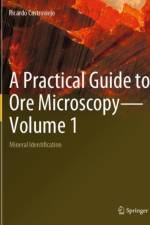
This book offers a guide to the microscopic study of metallic ores with reflected light. It combines a rigorous approach with an attractive and easy-to-follow format, using high-quality calibrated photomicrographs to illustrate the use of color for ore identification. The ore identification methodology is updated with systematic color analysis and the application of new multispectral reflectance datasets, which offer an efficient tool for automated ore characterization. In addition, the first volume of this two-part work discusses the essential gangue minerals.Readers will gain familiarity with the method as they follow its application to over 200 selected minerals, comprising the most important ore (¿150) and gangue (¿50) minerals, which are described in the text. Each entry includes an explanatory text with corresponding color photomicrographs for each of the most common microscope settings, preceded by a table summarizing the ore¿s main properties, and followed by spectral information in the visible and near-infrared ranges (specular reflectance values from 370 to 1000 nm). Some uncommon, strategic ores, e.g. columbotantalite (¿coltan¿) and monazite, receive particular attention or are described for the first time with reflected light.Lastly, the book presents a learning strategy for beginners and students. The approach is essentially practical, focusing on the development of observation skills, including self-checking through proposed practical tasks. In addition, the traditional use of determinative tables is critically reviewed and updated.This book is part of a two-volume work. The second volume focuses on intergrowths/textural analysis and interpretation, as well as computer-vision-based automation and applications to ore processing/geometallurgy.The intended audience includes professionals and engineers dealing with mineral resources, as well as postgraduate students. The book also provides lifelong learning support for freelancers and a valuable reference resource for practical university teaching.
Abonner på vårt nyhetsbrev og få rabatter og inspirasjon til din neste leseopplevelse.
Ved å abonnere godtar du vår personvernerklæring.