























Gjør som tusenvis av andre bokelskere
Abonner på vårt nyhetsbrev og få rabatter og inspirasjon til din neste leseopplevelse.
Ved å abonnere godtar du vår personvernerklæring.Du kan når som helst melde deg av våre nyhetsbrev.

This book contains entirely numerical problems and fully worked solutions in the topic of basic electronic circuits and it is designed for entry-level undergraduate courses as a supplement to standard textbooks and references. Each chapter contains interesting numerical problems with fully worked solutions to illustrate the approach of problem solving techniques for electronic circuits. The book is written in a lucid manner so that students are able to understand the realization behind the mathematical concepts which are the backbone of this subject. The book will benefit students who are taking introductory courses in electronic circuits and devices.
During his lifetime, Kurt Gödel was not well known outside the professional world of mathematicians, philosophers and theoretical physicists. Early in his career, for his doctoral thesis and then for his Habilitation (Dr.Sci.), he wrote earthshaking articles on the completeness and provability of mathematical-logical systems, upsetting the hypotheses of the most famous mathematicians/philosophers of the time. He later delved into theoretical physics, finding a unique solution to Einstein¿s equations for gravity, the ¿Gödel Universe¿, and made contributions to philosophy, the guiding theme of his life. This book includes more details about the context of Gödel¿s life than are found in earlier biographies, while avoiding an elaborate treatment of his mathematical/scientific/philosophical works, which have been described in great detail in other books. In this way, it makes him and his times more accessible to general readers, and will allow them to appreciate the lasting effects of Gödel¿s contributions (the latter in a more up-to-date context than in previous biographies, many of which were written 15¿25 years ago). His work spans or is relevant to a wide spectrum of intellectual endeavor, and this is emphasized in the book, with recent examples. This biography also examines possible sources of his unusual personality, which combined mathematical genius with an almost childlike naiveté concerning everyday life, and striking scientific innovations with timidity and hesitancy in practical matters. How he nevertheless had a long and successful career, inspiring many younger scholars along the way, with the help of his loyal wife Adele and some of his friends, is a fascinating story in human nature.
Investor Relations and ESG Reporting in a Regulatory Perspective is a comprehensive and detailed practical guide for financial market participants, focusing on the stock market, written for practitioners by practitioners. The main themes of the book include the challenging integration of investor relations (IR) and the non-financial reporting of environmental, social and governance (ESG). Further, the book provides a comprehensive overview of the complex regulatory framework of the European Union (EU) related to the financial markets, including the expected global trends in this area. This includes financial legislation such as MiFID II, MiFIR and MAR along with non-financial legislation like the EU's taxonomy, CSRD and SFDR. In addition, this book explores the non-financial reporting standards of GRI, TCFD, CDSB, IBC, SASB, IRRC and the upcoming ISSB, and discusses the UN's Sustainable Development Goals (SDGs). In addition, the book provides a practical guide regarding IR in special situations, e.g. in connection with takeover response manuals, M&A, investor activism, initial public offerings (IPOs), as well companies' collaboration with e.g. investment banks and corporate finance advisers, financial PR and IR advisers in such situations. The suggested audience of the book includes board members and senior management of in particular listed companies, and companies considering an IPO; professionals working in the fields of IR, ESG and communications; institutional and retail investors; private equity executives; venture capitalists; investment bankers; legal practitioners; accountants and auditors; financial journalists; and politicians. Finally, university and business students may benefit from an insight into the dynamics of the financial markets and the direction they are moving, a possible inspiration for choosing a future career.
Computation theory is a discipline that uses mathematical concepts and tools to expose the nature of "e;computation"e; and to explain a broad range of computational phenomena: Why is it harder to perform some computations than others? Are the differences in difficulty that we observe inherent, or are they artifacts of the way we try to perform the computations? How does one reason about such questions?This unique textbook strives to endow students with conceptual and manipulative tools necessary to make computation theory part of their professional lives. The work achieves this goal by means of three stratagems that set its approach apart from most other texts on the subject.For starters, it develops the necessary mathematical concepts and tools from the concepts' simplest instances, thereby helping students gain operational control over the required mathematics. Secondly, it organizes development of theory around four "e;pillars,"e; enabling students to see computational topics that have the same intellectual origins in physical proximity to one another. Finally, the text illustrates the "e;big ideas"e; that computation theory is built upon with applications of these ideas within "e;practical"e; domains in mathematics, computer science, computer engineering, and even further afield.Suitable for advanced undergraduate students and beginning graduates, this textbook augments the "e;classical"e; models that traditionally support courses on computation theory with novel models inspired by "e;real, modern"e; computational topics,such as crowd-sourced computing, mobile computing, robotic path planning, and volunteer computing.Arnold L. Rosenberg is Distinguished Univ. Professor Emeritus at University of Massachusetts, Amherst, USA. Lenwood S. Heath is Professor at Virgina Tech, Blacksburg, USA.
This timely book offers a comprehensive examination of the current state of nuclear stability postures worldwide, effectively highlighting their inherent limitations. Through their analysis, the authors illustrate how the seemingly contradictory perspectives of deterrence optimists, disarmament idealists, and warfighting pessimists can be reconfigured into a unified approach towards achieving regional and global peace. They suggest that these strategies can be reconciled as complementary, rather than substitute approaches, to achieve the common goal of nuclear stability.To achieve this objective, the book employs a game-theoretical framework to analytically define the conditions for nuclear war. Drawing from extensive observations of significant crises, the model incorporates identifiable systemic regularities that influence the strategic decision-making process during severe crises and establish the prerequisites for different levels of nuclear confrontation. Additionally, by tracing the strategic-technological trajectories of nuclear powers, the authors present a novel analysis that explores the potential for stable coexistence to replace unstable confrontation between global powers, ultimately fostering nuclear peace.The author's theoretical explorations lead to the policy conclusion that establishing a nuclear oligopolistic hierarchy, under the leadership of preponderant global powers committed to a no-first-use pledge, presents the most effective international system for enhancing both regional and global nuclear stability. This book aims to surpass the Cold War origins of current nuclear strategy and develop a comprehensive policy framework that guarantees enduring nuclear stability in the contemporary world.
It is no secret that women are increasingly controlling wealth. Estimates suggest that women control more than 50% of all wealth and growing. Importantly, 95% of women will be their family¿s primary financial decision maker at some point in their lives. Yet recent studies show that Millennial women are deferring financial and investing decisions at a greater pace than Baby Boomer women. Targeted to all women ¿with a clear recognition that though the objectives and needs of this vast segment may not necessarily be homogeneous, women share common challenges when it comes to investing, this book provides clear instruction and a series of Intelligent Investing Rules for women to live by, especially in these times with sticky and persistent inflation and rising interest rates. The Women¿s Guide to Successful Investing demonstrates how women can develop the knowledge and skills required to accumulate wealth and build an investment portfolio for the long term. Providing proven wealth accumulation strategies, tailored advice, and a comprehensive market analysis, this second edition is a must-read for female investors who want to master volatile markets with long-term success. Written by a female CEO, CIO, and investment manager whose career has spanned 38 years, the book offers a much-needed blueprint for investments for women.
This engaging textbook provides a broad and unique coverage of the key historical events that shaped ideas in criminology, criminal justice and policing from the late seventeenth century to the early twenty-first century. It vividly illustrates the multi-disciplinary nature of criminology and penology by providing important insights into the social and political issues that shaped the development and operations of the criminal justice system and its responses to both crime and disorder.Using key text boxes, this book highlights key people, theorists, foundational principles and events throughout. Part One discusses the nature of crime and forms of punishment between 1689 and 1750 and the penological concerns regarding the aims of punishment. Part Two focuses on crime and disorder between 1750 and 1850, examining the impact of urbanization on criminal activity and it considers the background and state responses to key episodes of public disorder. Part Three covers the development of policing 1689-1856 and the contribution to policing made by reformers and the implementation of police reform. Part Four deals with a number of issues affecting crime and punishment between 1850 and 1920 including episodes such as Irish Home Rule within the context of ¿high policing¿. It evaluates changes to the nature and role of prisons that occurred in this period. This student-friendly book contains end of chapter questions which summarise and enable further discussion.
This is the first academic history of the FA England women¿s national football team. Based on unprecedented access to FA data, it details the careers of the 227 women who debuted for England from 1972 to 2022. England won the UEFA Women¿s Euros in 2022, and Jean worked with Sarina Wiegman and the squad, on the Legendary Lionesses from 1972.
While it is clear that workforce involvement is fundamental for the success of digital transformation, it is also evident that insufficient attention has been paid to emerging strategies to convince employees to become involved. To do so, this book considers Relational Goods, the intersubjective and reflexive relationships existing between employees, within the DOI framework to evaluate how they influence digital transformation success alongside innovation traits, time and communication channels.The focus for this book is SMEs, as these businesses experience greater difficulties than their larger counterparts in keeping up with the digital revolution. The authors develop the Relational Goods model to a refined DOI framework including the role of relationship and managerial support in the adoption of technologies that may transform the business. It will be of great interest to scholars and students of management, digital transformation and SMEs, as well as HRM professionals.
The first quarter of the 21st century introduced the world to rapid uncertainty, be it the social-political and financial crises, or pandemics, or the shaking up of well-established democracies with an increasing rise in populism. At the same time, the technological promise has taken off with automation, artificial intelligence, and nanotechnologies increasingly becoming an economic reality. This open-access book brings together experts of specific domains, through the windows of their experience, and in a crowdsourced fashion, to analyze these world developments to develop an overall view, a compelling case of what we should be prepared for, as we march towards 2050. Topics covered include the future of leadership, the future of solving global challenges, and designing a way of life in harmony with nature. Other topics include disruptive entrepreneurship, the relevance of geographical borders, game-changing future innovations, education, and networked learning, interplanetary travel, and communication. The book also places an importance on the role of empathy, mindfulness, presence, and sharing becoming the anchors for future decision-making by 2050. Of general interest to anyone eager to understand the future of the world, this book is particularly useful for planners, policymakers, strategists and entrepreneurs.
This book looks more closely at how natural disasters impact bank activity and how banks can support economic recovery after a natural disaster. The importance of banks in this context is underscored by increasing regulatory attention on their role in fostering a sustainable future, but also on the risks that climate change poses to bank stability.Humanity has tried to cope with the short- and long-term economic consequences of natural disasters for centuries. However, the severity of these events is constantly increasing in magnitude, due to the alteration of the earth¿s climate and the environment. They pose a serious threat to the lives of millions of people especially in less developed countries. At the same time, the international community has acknowledged that weather hazards¿ impact and countries¿ resilience to them are affected by various socio-economic factors, such as the well-functioning of financial institutions, especially commercial banks.Banks will inevitably adapt their strategies to address concerns arising from climate change. In doing this, the book discusses partnerships with international cooperation institutions, other financial intermediaries, and local governments, so that the green transition ensures an inclusive growth for all, especially the most vulnerable parts of our societies. This book is of interest to researchers, academics, and students of sustainable finance and climate finance.
This Palgrave Pivot examines why racialism is so persistent and the challenges it poses to the functioning of democracy and the attainment of national integration. It introduces an evolutionary psychology framework, which explains human innate potential to identify with and defend one¿s group, but argues that racial dislike and conflicts are provoked by racial ideologies and the politics of ethnicity. By comparing the politics of race in a number of countries, including Malaysia and the United States, this book argues that attachment to one¿s ethnic and religious identities does not hinder ethnic harmony. It is necessary to manage the issues of race and religion as well as promoting conviviality and cosmopolitanism for pursuing the ideal of common humanity and for maintaining a stable and meaningful democracy. This book concludes that democracy, as practiced, has some major weaknesses; as an ideal, it is still the best form of government to pursue.
"A must-read for every innovator and transformator!"- - Franziska Tschudi Sauber, President of the Board, Weidmann Group"Collaborative Advantage is packed with great examples and useful insights into innovating for the future. It is an essential guide for anyone interested in Open Innovation."- - Henry Chesbrough, author of Open Innovation, Professor UC Berkeley"In today's dynamic markets, companies need to collaborate to have access to all assets and capabilities necessary to out-innovate competitors. However, to collaborate effectively is an organizational capability that needs to be build and nurtured. This book shows how."- - Claudio Feser, Co-Founder Leadership Practice McKinsey & Company"Transformation is a necessity in the new business environment. Collaborative Advantage outlines how to do it in a sustainable way."- - Marianne Janik, CEO Microsoft Germany The world is changing faster than ever before. Technological disruptions, AI, digital value chains, new ecosystems, and hyper competition are challenging companies. How can managers keep up with the speed of change? Dominant thinking has centered around the concept of 'competitive advantage,' - taught to generations of MBA students. But this is no longer enough. Instead, leaders have to think much more in terms of which networks and partnerships they can leverage in order to create and secure the future of their company. Collaborative advantage is the new imperative for the next decades.In this book, the authors analyze how exceptional leaders have not only survived but thrived in volatility by skillfully orchestrating agile collaborative networks with customers, partners and start-ups. In-depth case studies and personal reflections of these leaders provide you with actionable inspirations for your own practice. Underpinned with cutting edge research, it illustrates how these collaborations can be managed in a data-driven way. Raphael Boemelburg combines a PhD in Management with a degree in Psychology and international work experience in the technology sector to explore emerging business opportunities at the intersection of Psychology and Technology.Oliver Gassmann is Full Professor of Technology Management at the University of St. Gallen, Switzerland, and is recognized as one of the leading innovation scholars worldwide. He serves on the board member of several multinational companies.
Executives are under escalating pressure to deliver increasing profits every quarter, while technology advances at an increasing rate. In such a pressure-cooker environment, leaders must hard-wire their organizations to be mindful of costs while simultaneously becoming more flexible and faster at planning and executing the change programs required by innovation and the shifting demands of the customer. The companies that successfully innovate and stay at the top of their industries have one thing in common ¿ they learn fast and manage change well.Charting Change provides a set of visual tools that will help you build a coherent approach to change, identifying both the things that will help make the effort successful, and those people and barriers that will try to block the way. Leaders that read and absorb this book will be able to make productive use of the tools to drive buy-in, alignment, and successful change outcomes across the organization, its systems, and its culture.This second edition features new topics such as architecting for change, overcoming resistance to change, and systems thinking, as well as new visual tools such as the Organizational Agility Framework. This book will help leaders and managers visualize, plan, and execute change and transformation in a more accessible, visual, and collaborative way. Once you are done reading Charting Change you will approach any big change with confidence.
The book sketches out how the criminological lens could be used in the climate change debate around possible human extinction. It explores the extent to which the human species can be considered deviant in relation to other species of the contemporary biosphere, as humans seem to be the only species on Earth that does not live in natural balance with their environment (anymore). It discusses several unsettling topics in the public debate on climate change, specifically the taboo of how humans may not survive the ongoing climate change. It includes chapters on the Earth¿s history of mass-extinctions, the global state of denial including toward the possibility that the human species could go extinct, and it considers humans' future as a deviant, fatal species outside of Earth, in outer-space, possibly on other planets. It puts forward and enriches the critical criminological tradition by conceptualizing and setting an unsettling tone within criminology and criminological research on the human species and our extinction, by daring criminologists (and victimologists) to ponder and seek empirical answers to controversial imaginations and questions about our possible extinction.
This textbook is aimed at readers who have little or no knowledge of computer programming but want to learn to program in Python. It starts from the very basics including how to install your Python environment, how to write a very simple program and run it, what a variable is, what an if statement is, how iteration works using for and while loops as well as important key concepts such as functions, classes and modules. Each subject area is prefaced with an introductory chapter, before continuing with how these ideas work in Python.The second edition has been completely updated for the latest versions of Python including Python 3.11 and Python 3.12. New chapters have been added such as those that consider where and how Python is used, the use of Frozensets, how data can be sorted, enumerated types in Python, structural pattern matching and how (and why) Python Virtual Environments are configured. A new chapter ¿The Python Bites back¿ is introduced to present the fourteen most common / biggest gotchas for someone new to Python. Other sections have been updated with new features such as Exception Groups, string operations and dictionary operations.A Beginners Guide to Python 3 Programming second Edition provides all you need to know about Python, with numerous examples provided throughout including several larger worked case studies illustrating the ideas presented in the previous chapters.
This second in the series of three volumes builds upon the basic theory of linear PDE given in volume 1, and pursues more advanced topics. Analytical tools introduced here include pseudodifferential operators, the functional analysis of self-adjoint operators, and Wiener measure. The book also develops basic differential geometrical concepts, centered about curvature. Topics covered include spectral theory of elliptic differential operators, the theory of scattering of waves by obstacles, index theory for Dirac operators, and Brownian motion and diffusion. The book is targeted at graduate students in mathematics and at professional mathematicians with an interest in partial differential equations, mathematical physics, differential geometry, harmonic analysis, and complex analysis.The third edition further expands the material by incorporating new theorems and applications throughout the book, and by deepening connections and relating concepts across chapters. It includes new sections on rigid body motion, on probabilistic results related to random walks, on aspects of operator theory related to quantum mechanics, on overdetermined systems, and on the Euler equation for incompressible fluids. The appendices have also been updated with additional results, ranging from weak convergence of measures to the curvature of Kahler manifolds.Michael E. Taylor is a Professor of Mathematics at the University of North Carolina, Chapel Hill, NC.Review of first edition: ¿These volumes will be read by several generations of readers eager to learn the modern theory of partial differential equations of mathematical physics and the analysis in which this theory is rooted.¿(Peter Lax, SIAM review, June 1998)
This open access book deals with the role of written texts in an increasingly diverse and dynamic society, bringing together a series of studies anchored in the Scandinavian research tradition of sakprosa, which roughly translates as ¿subject-oriented prose¿ or ¿professional communication¿. The authors examine the written text¿s capacity to transcend contextual boundaries, as a crucial factor in the importance of capturing and maintaining content as a manageable entity. The chapters each deal with a text type that manages complex content in a specialized way, including genre shifting in CSR reports, discourse networks in modern digital culture, digital and social media crisis communication, and epistemic positions in non-fiction. This book is relevant to fields such as text research, professional/digital communication, discourse analysis and literacy studies, and may also be of interest to disciplines such as history, rhetoric, organization studies, media studies/journalism, and linguistics.
Despite committed effort to integrate postcolonial theory and decolonizing practices in human rights education in social work, there is scant literature offering a more balanced global perspective. This book addresses that need. Included here are discursive voices contributed by social work colleagues whose work is impacted by postcolonial realities. The task of decolonizing social work as a human rights profession calls for the inclusion of contesting perspectives from social work activists, human rights advocates and educators whose critical standpoints are drawn from the historical context of Global North-South relations. This book is essential given the many manifestations of global injustice, wars and climate catastrophes. The critical involvement of social workers in decolonized human rights advocacy is at no period in history, more urgent than now. The book: Engages readers in reflective discourse over the contentious manner human rights principles are referenced by social work practitioners within the context of contemporary North-South geopolitics Explores dilemmas, conflicts, challenges and limitations experienced by social workers worldwide while upholding human rights principles Uses critical case studies that expose how the vestiges of colonialism continue to impact communities Identifies areas of human rights advocacy where social work succeeds, and where it is confronted by limiting challenges Emphasizes the importance of human rights education and practice in the context of global inequalities Decolonized Approaches to Human Rights and Social Work provides models of good practice the world over in human rights advocacy. It is timely and essential reading for faculty who teach courses in social work, social development, community organization, human rights and social justice, as well as for students in social work, law, sociology, global studies and human rights. The book should draw readers who work in non-governmental organizations, international development agencies, advocacy groups, and community-based and grassroots organizations. International research centers, law clinics and organizations serving migrants and refugees would find it a useful resource.
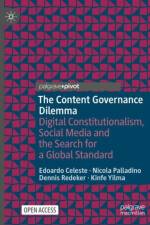
This open access book is one of the first academic works to comprehensively analyse the dilemma concerning global content governance on social media. To date, no single human rights standard exists across all social media platforms, allowing private companies to set their own rules, values and parameters. On the one hand, this normative autonomy raises serious concerns, primarily around whether companies should be permitted to establish the rules governing free speech online. On the other hand, if social media platforms simply adopted international law standards, they would be compelled to operate a choice on which model to follow, and put in place mechanisms to uphold these general standards. This book examines this topic from a multidisciplinary perspective, drawing from the expertise of the authors in law, political science and communication studies. It provides a carefully reconstructed theory of the content governance dilemma, as well as pragmatic solutions for companies and policymakers. In this way, the book not only benefits academics by advancing the debate on content moderation issues, but also informs new policies and regulatory strategies by offering an up-to-date overview of rules and tools for content moderation, as well as an evaluation of their current level of compliance with standards emerged in international human rights law and digital constitutionalism initiatives.
Intercultural couples (ICs) often face unique challenges that go unnoticed. This book delves into the experiences of 20 ICs living in Singapore and explores the complexity of their experiences through the lens of translanguaging. It shows how ICs mix language and culture in a borderless manner, not only between spouses but also with their wider families. Additionally, the authors examine the significance of technological advancements, which have transformed ICs' experiences over the past decade. In particular, parents-in-law pose a significant challenge for Asian-Western couples, as the relationship with them in Asia differs from that in the West. Each couple's unique shared culture and language transcends the borders of nation-states, requiring exchange, sharing, negotiation, and adaptation. This book provides an easy-to-read, holistic exploration of the issues faced by ICs, offering insight into overlooked aspects such as location, in-laws, and technology.
This book challenges the notion that bigger local government is always better. Whilst the central government in Britain has often supported increases in local government size, the book argues that this has been detrimental, and has caused the erosion of distinctive community identities that were previously represented by local authorities empowered to make significant local choices about services and future strategy. Drawing from national and international evidence, it offers an alternative narrative about the size, role, function and purpose of local government to that currently dominating policy discussion. It aims to provide readers who oppose size increases in local government with the evidence and arguments to influence change in their areas. The book will appeal to policymakers working in central and local government, as well as academics interested in public policy, public administration and local government.
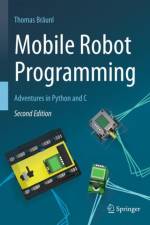
This book emphasizes software design as the most important topic in modern robotics and demonstrates practical code examples in Python and C. The book introduces the free simulation system EyeSim in combination with EyeBot robots, which can be built from inexpensive embedded processors, sensors and motors ¿ or by adapting the control inputs of model cars. EyeSim is a free software for MacOS, Windows and Linux, which uses a realistic physics simulation engine and is source-code compatible to the EyeBot mobile robots. So, each robot program can first be tested on the simulator before running it on a real robot. EyeSim includes modules for driving, walking, swimming and diving robots, as well as for robot manipulators. EyeSim also runs on the Meta/Oculus Quest, providing a fully immersive robotics experience in virtual reality. Beginning with simple driving algorithms and sensor data processing for distance sensors, Lidar and camera, the book progresses to more complex localization and navigation tasks, as well as vision-based navigation and genetic algorithms. It concludes with artificial intelligence applications for mobile robots in traffic scenarios and full-size autonomous vehicles. This book is suitable as a text for undergraduate and graduate courses in Robotics, Automation and Artificial Intelligence, as well as a self-study guide for practitioners and hobbyists. All robot application programs in this book are available as free downloads for MacOS, Windows, Linux, and Raspberry Pi OS.
Abonner på vårt nyhetsbrev og få rabatter og inspirasjon til din neste leseopplevelse.
Ved å abonnere godtar du vår personvernerklæring.