
















Gjør som tusenvis av andre bokelskere
Abonner på vårt nyhetsbrev og få rabatter og inspirasjon til din neste leseopplevelse.
Ved å abonnere godtar du vår personvernerklæring.Du kan når som helst melde deg av våre nyhetsbrev.

Successful public order management is critical to upholding democracy and maintaining the rule of law. Negative police-public interactions during assemblies can impact the safety and well-being of citizens and officers, as well as local and international perceptions of police legitimacy. As observed during events across the world, including assemblies in the U.S., Myanmar, Belarus, Russia, and elsewhere, police mismanagement of mass demonstrations often instigates crowd violence and other harmful behaviors. The causes of violence at assemblies are complex and multi-faceted. Failure to understand crowd dynamics that lead to violence limits police effectiveness and contributes to poor officer decision-making. This book offers an international review of public order management experiences and effective practices. Practical examples, grounded in multi-disciplinary theory and science, offer a roadmap to improve police response and increase safety at assemblies in democratic countries. The diverse content, perspectives, and lessons learned presented in this volume will serve as a useful guide for all people working in the field of public order management, including police officials, policymakers, and researchers. This edited volume was written by and for practitioners, pracademics, and academics to review the complex and demanding task of policing public order.
Patients are increasingly accessing their own electronic health record, ushering medical chart notes out of the cloistered purview of clinicians and into the age of transparency. With the recognition that patients are reading what is written about them, there is a need for a comprehensive reference on best practices for writing medical notes in this new era. The Patient-Centered Approach to Medical Note-Writing covers important topics including stigmatizing language, the electronic health record, the different parts of a typical medical note, mental health, substance use, difficult encounters, and how to address electronic communication such as test results and patient messages. This book serves as a vital reference for students, residents, fellows and practicing clinicians.
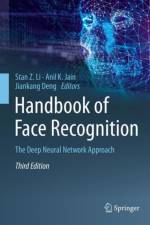
The history of computer-aided face recognition dates to the 1960s, yet the problem of automatic face recognition ¿ a task that humans perform routinely and effortlessly in our daily lives ¿ still poses great challenges, especially in unconstrained conditions.This highly anticipated new edition provides a comprehensive account of face recognition research and technology, spanning the full range of topics needed for designing operational recognition systems. After a thorough introduction, each subsequent chapter focuses on a specific topic, reviewing background information, up-to-date techniques, and recent results, as well as offering challenges and future directions.Topics and features:Fully updated, revised, and expanded, covering the entire spectrum of concepts, methods, and algorithms for automated detection and recognition systemsProvides comprehensive coverage of face detection, alignment, feature extraction, and recognition technologies, and issues in evaluation, systems, security, and applicationsContains numerous step-by-step algorithmsDescribes a broad range of applications from person verification, surveillance, and security, to entertainmentPresents contributions from an international selection of preeminent expertsIntegrates numerous supporting graphs, tables, charts, and performance dataThis practical and authoritative reference is an essential resource for researchers, professionals and students involved in image processing, computer vision, biometrics, security, Internet, mobile devices, human-computer interface, E-services, computer graphics and animation, and the computer game industry.
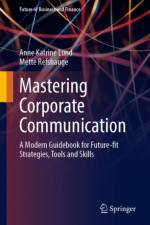
"Mastering Corporate Communication" is a comprehensive guide designed to assist communication professionals in navigating the new world of stakeholder capitalism. With the rise of new media, corporate responsibility demands and the constant battle for attention, professionals are faced with an array of challenges. The book offers an overview of relevant theories and techniques to help professionals master the new reality of corporate communication. It provides a rare glimpse into the corporate machine room of a global company, offering valuable insights and inspiration to communication professionals. Leading professors from all around the world share their insights and advice, giving readers an opportunity to develop excellent corporate communication skills. The competitive environment requires a new mindset and a necessary agility, and this guide is the perfect resource to help communication professionals thrive in this ever-evolving landscape. With "Mastering Corporate Communication" students and professionals can find inspiration in effective approaches to communication challenges and ways to develop essential tools and competencies to succeed in their careers.
Conflicts within the owner circle - or rather, within the "family of the family business" - are often the main cause of existential crises for family businesses. The damaging effects of unchecked family conflicts affect two social systems: the family business and the business family itself. The impairment of the survival capability of the family business goes hand in hand with the reduced chance of constructive follow-up communication between family members. Once caught up in conflict communication, it is extremely difficult for business families to get out of it without the help of external knowledge. It is therefore surprising that the topic of conflict prevention in business families has so far been given relatively little attention. Against this background, this book takes a closer look at the topic of "Conflicts in the Business Family" and deals with a number of topics that are essential to understanding the subject: the specific challenges and conflicts that business families typically face, as well as practically proven methods of conflict resolution at different levels. The content is based on the experiences that the two authors have gained in a variety of research projects, conflict moderation, and family strategic consulting projects over the past 18 years. The key findings from this wealth of experience are now made available to the general public.
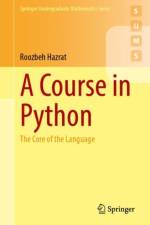
This textbook introduces Python and its programming through a multitude of clearly presented examples and worked-out exercises.Based on a course taught to undergraduate students of mathematics, science, engineering and finance, the book includes chapters on handling data, calculus, solving equations, and graphics, thus covering all of the basic topics in Python. Each section starts with a description of a new topic and some basic examples. The author then demonstrates the new concepts through worked out exercises. The intention is to enable the reader to learn from the codes, thus avoiding lengthy, exhausting explanations. With its strong focus on programming and problem solving, and an emphasis on numerical problems that do not require advanced mathematics, this textbook is also ideal for self-study, for instance for researchers who wish to use Python as a computational tool.
This book offers an easily understood introduction to the core concepts of Virtual Reality, Virtual Environments and related topics of Augmented Reality and Extended Reality. These complex technological concepts are demystified and broken down in 10 lectures, written in an approachable and easy to understand way. If you find yourself enticed and mystified by this new technology, this book can help you make sense of its core concepts and internal workings.
This concise text introduces the reader to the use of perturbation methods, able to investigate nonlinear phenomena in continuous (not only discrete) mechanical systems. Distinct from the classic books on perturbation methods, the algorithms are directly illustrated for continuous systems, referring to a very simple case-study as well as to a metamodel, for which Statics, Buckling, Dynamics and Bifurcation behavior are quickly analyzed. Moreover, fundamental mechanical aspects are discussed in dealing with applications. Concepts herein are reinforced with worked examples at the end the book, relevant to several continuous systems.
This book empowers college students and young professionals to develop a critical capacity of climate action in the energy transformation, which is necessary to address unprecedented climate crises. It illuminates the monumental challenges and pioneering solutions in accelerating renewable energy technologies, including solar energy, wind power, bioenergy, hydropower, and geothermal energy, as well as energy storage, along with their practical applications. The book offers the most current insights into innovations in renewable energy and energy storage, which are pivotal in forging a reliable and sustainable future powered exclusively by renewables. Its chapters equip the younger generation with the knowledge and critical skills needed to become well-informed and discerning professionals, ready to meet the demands of future sustainable job markets. Readers are encouraged to actively engage in and contribute to the ongoing revolution in renewable energy and energy storage.
This book offers a comprehensive overview of smartphone security, focusing on various operating systems and their associated challenges. It covers the smartphone industry's evolution, emphasizing security and privacy concerns. It explores Android, iOS, and Windows OS security vulnerabilities and mitigation measures. Additionally, it discusses alternative OSs like Symbian, Tizen, Sailfish, Ubuntu Touch, KaiOS, Sirin, and HarmonyOS.The book also addresses mobile application security, best practices for users and developers, Mobile Device Management (MDM) in enterprise settings, mobile network security, and the significance of mobile cloud security and emerging technologies such as IoT, AI, ML, and blockchain. It discusses the importance of balancing innovation with solid security practices in the ever-evolving mobile technology landscape.
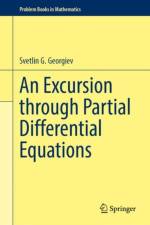
Presenting a rich collection of exercises on partial differential equations, this textbook equips readers with 96 examples, 222 exercises, and 289 problems complete with detailed solutions or hints. It explores a broad spectrum of partial differential equations, fundamental to mathematically oriented scientific fields, from physics and engineering to differential geometry and variational calculus.Organized thoughtfully into seven chapters, the journey begins with fundamental problems in the realm of PDEs. Readers progress through first and second-order equations, wave and heat equations, and finally, the Laplace equation. The text adopts a highly readable and mathematically solid format, ensuring concepts are introduced with clarity and organization.Designed to cater to upper undergraduate and graduate students, this book offers a comprehensive understanding of partial differential equations. Researchers and practitioners seeking to strengthen their problem-solving skills will also find this exercise collection both challenging and beneficial.
This book enables analysts in government and the private sector as well as policy advisors and decision makers to assess global risks and opportunities systematically, make well-founded and informed decisions, and anticipate the unanticipated. The authors illuminate the basics of intuitive and analytical thinking and how structured techniques can mitigate the impact of cognitive biases, misapplied heuristics, and intuitive traps. Three case studies illustrate how to apply over 30 Structured Analytic Techniques (SATs) with step-by-step instructions. The final chapter focuses on how to optimize the impact of your analytic product, be it a paper, briefing, or digital display.
This textbook provides an opportunity for undergraduate students studying the environment to work on addressing real-world environmental problems and practice the disciplinary and professional skills necessary to tackle complex issues. Each of the 12 units that comprise the heart of this workbook-style text focus on a specific environmental challenge directly or indirectly tied to climate change. Students are guided through activities that require them to review relevant environmental content knowledge, practice an array of learning outcome-based skills, evaluate potential solutions, and advocate for action. An important feature of the book is its problem-based approach, using climate change as a common lens through which to view an array of current environmental challenges. Showing students how they might apply their core knowledge and disciplinary skills to identify possible solutions demonstrates the utility of science to inform decision making and builds student competency in learning outcomes common across environmental academic programs. Designed to provide problem-area options to match student interests (from sea turtle conservation to climate migrants to urban heat islands), instructors can choose among units to best engage students, or work through units sequentially to scaffold instruction while building student capacity. Each unit contains activities that focus on: (1) Discovery, where students are guided through exploration to build their knowledge of the issue and prepare a formal Problem Statement;(2) Analysis, where students dig into relevant data and begin to evaluate potential solutions; and(3) Solutions, where students practice their problem solving, decision making and environmental communication skills. Environmental Problem Solving in an Age of Climate Change underscores the pervasive nature of climate change as a common factor in all environmental issues. The book demonstrates how sustainable solutions require the efforts of many people working on smaller, more tangible issues to tackle the grand challenge that climate change presents.
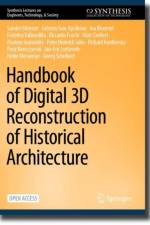
This open access book is a handbook for students, experts and interested parties who want to learn more about digital 3D reconstruction of historical architecture. The book provides answers to the core questions of the subject: What is a digital 3D model or a digital 3D reconstruction? How are they created and what are they used for? Practical instructions, condensed knowledge, explanations of technical terms and references to example projects, literature and further references provide information of varying density and thus enable an individual introduction to the subject.The book combines extensive knowledge on the topic of "digital 3D reconstruction of historical architecture" and provides practical instructions for independent implementation. Up to now, there has been no cross-disciplinary vocabulary for technical terms in this field, so this publication makes a start.The book is aimed at students, experts in the field and the interested public and offers various possibilities for the different target groups to delve deeply into the subject.The book was created within the research network "Digital 3D Reconstruction as Tools for Research in Architectural History," which was funded by the German Research Foundation (DFG) from 2018 to 2023. The authors combined their expertise in the fields of art and architectural history, architecture, university teaching and media informatics.
This unique book provides a self-contained exposition of the theory of cellular automata on groups and explores its deep connections with recent developments in geometric and combinatorial group theory, amenability, symbolic dynamics, the algebraic theory of group rings, and other branches of mathematics and theoretical computer science. The topics treated include the Garden of Eden theorem for amenable groups, the Gromov¿Weiss surjunctivity theorem, and the solution of the Kaplansky conjecture on the stable finiteness of group rings for sofic groups. Entirely self-contained and now in its second edition, the volume includes 10 appendices and more than 600 exercises, the solutions of which are presented in the companion book Exercises in Cellular Automata and Groups (2023) by the same authors. It will appeal to a large audience, including specialists and newcomers to the field.
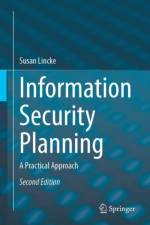
This book demonstrates how information security requires a deep understanding of an organization's assets, threats and processes, combined with the technology that can best protect organizational security. It provides step-by-step guidance on how to analyze business processes from a security perspective, while also introducing security concepts and techniques to develop the requirements and design for security technologies. This interdisciplinary book is intended for business and technology audiences, at student or experienced levels.Organizations must first understand the particular threats that an organization may be prone to, including different types of security attacks, social engineering, and fraud incidents, as well as addressing applicable regulation and security standards. This international edition covers Payment Card Industry Data Security Standard (PCI DSS), American security regulation, and European GDPR. Developing a risk profile helps to estimate the potential costs that an organization may be prone to, including how much should be spent on security controls.Security planning then includes designing information security, as well as network and physical security, incident response and metrics. Business continuity considers how a business may respond to the loss of IT service. Optional areas that may be applicable include data privacy, cloud security, zero trust, secure software requirements and lifecycle, governance, introductory forensics, and ethics.This book targets professionals in business, IT, security, software development or risk. This text enables computer science, information technology, or business students to implement a case study for an industry of their choosing..
This interdisciplinary textbook provides an easy-to-understand and highly topical introduction to all the specialist areas of modern enzyme technology.In the first part of this three-part textbook, the reader is introduced to the fundamentals of enzyme structure, reaction mechanisms, enzyme kinetics, enzyme modeling, and process control. In the second part, methods for finding, expressing, optimizing, purifying, immobilizing, and using enzymes in unusual reaction media are presented. In the third part, leading experts use examples to describe current applications of enzymes in the chemical and pharmaceutical industries, for biomass degradation, food production and processing, as additives in detergents and cleaning agents, for constructing biosensors, and as therapeutics.Students of bachelor and master programs in biology, chemistry, biochemistry, and bioprocess engineering will gain up-to-date access to practical applications and developing industries. However, the fluent writing style makes the work suitable for all readers, who want to gain an easy-to-understand insight into the production and application of enzymes.This book is a translation of an original German edition. The translation was done with the help of artificial intelligence (machine translation by the service DeepL.com). A subsequent human revision was done primarily in terms of content, so that the book will read stylistically differently from a conventional translation.
Aggregates are among the most common natural resource used in everyday's life, having enhanced life quality. They are essential for construction, being utilized in nearly all residential, commercial, and industrial building construction and most public work projects such as roads, highways and bridges, railroad beds, dams, airports, tunnels, and many others. In the future, the rebuilding of deteriorated roads, highways, bridges, airports, seaports, and private and public buildings will require vast amounts of aggregate. Although it is almost impracticable to know the total amount of aggregates extracted every year globally, it is roughly estimated that annual aggregate production totals about 25 billion tons. Both developed and developing nations require extensive use of aggregates.The book "The Basics of Aggregates" covers all topics related to utilizing this type of material, including the properties of aggregates, types of deposits, geological occurrence, exploration methodologies and extraction methods, and processing techniques as well as their main applications and the importance of recycled aggregates. It serves as a basic text on aggregates for natural sciences and provides information about the main aggregate materials comprehensively with extensive number of illustrations and equips students to handle the mining cycle of aggregates. It enhances the understanding of the different aggregate types, being interdisciplinary and practice-oriented. This textbook addresses bachelor and master students of geology and general earth science as well as students of engineering and environmental sciences. It is written for undergraduate and graduate students, researches and professionals alike.
The concept behind this book is to take a holistic view of food texture, starting with the determination of food texture, its perception in the mouth, and its measurement by both sensory and instrumental methods, and to examine the relation between them. The book has been divided into four sections: Fundamentals, Sensory and Human Interactions, Instrumental Analysis, and Food Products. Essentially we cover the techniques used for measuring food texture, and then apply them to the different product groups. Readers of the first edition will notice the title has changed, with the adoption of the term texturology. In the long history of food texture research, texturology has been occasionally used in literature. The term texturology has not been widely accepted by texture researchers (texturologists) because of their concern over whether the theories and techniques are broad and strong enough to support texture research as a scientific discipline. During the 24 years since the publication of the first edition, the editors have observed vast developments in theories as well as the assessment methodology of food texture (both sensory and instrumental) and these have shaped our understanding. This second edition brings the science up to date by introducing topics not previously covered (e.g. psychophysics, tribology, oral processing, texture maps and special foods for dysphagia patients). It includes an exposé of the instruments to measure food texture, and also considers techniques for measuring consumer perception of food texture (in addition to the sensory properties). Additionally, it amends omissions from the first edition such as dairy products; fish; bakery products; and, sugar confectionery, asproduct groups. All in all it is expanded and updated in its coverage of food texturology, as a coherent scientific discipline.
The convergence of 1) the intensification of space exploration and 2) the increasing understanding of the world at the atomic and molecular level, nanotechnology, has resulted in a synergy of discoveries and innovations. The result of this synergy may result in leaps in the exploration beyond the surface of the earth but also improve life on our home planet.The content describes the challenge of escaping the earth¿s surface, remaining in orbits around our planet, and landing and surviving on worlds away. The associated space environments and variables are covered in general terms and not in an encyclopedic manner. Discoveries in the nanotechnology arena as they can be applied to space exploration are also covered in an understandable manner.This book is a must for people who are working in the ¿space¿ industry who need to know not only more about the many aspects of their industry but also must understand nano-scale implications for the future. Likewise, participants in the nanotechnology arena who want to understand the challenges of space exploration will find critical information in this text.
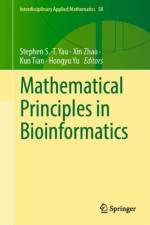
This textbook introduces bioinformatics to students in mathematics with no biology background assumed and it provides solid mathematical tools for biology students along with an understanding of how to implement them in bioinformatics problems. In addition to the basics, the text offers new approaches to understanding biological sequences. The concise presentation distinguishes itself from others on the subject, discussing and providing principles that relate to current open problems in bioinformatics as well as considering a variety of models. The convex hull principle is highlighted, opening a new interdisciplinary research area at the intersection of biology, mathematics, and computer science. Prerequisites include first courses in linear algebra, probability and statistics, and mathematical analysis. Researchers in mathematics, biology, and math-biology, will also find aspects of this text useful. This textbook is written based on the authors' research works that have been published in various journals along with the lecture notes used when teaching bioinformatics courses at the University of Illinois at Chicago and at Tsinghua University. The content may be divided into two parts. The first part includes three chapters, introducing some basic concepts. Chapter 1 provides biological background in molecular biology for mathematicians. Chapter 2 describes biological databases that are commonly used. Chapter 3 is concerned with alignment methods including global/local alignment, heuristic alignment, and multiple alignment. The second part consisting of five chapters, describes several bioinformatics principles using a rigorous mathematical formulation. Chapter 4 introduces the time-frequency spectral principle and its applications in bioinformatics. In Chapters 5 and 6, two strategies are used, the graphical representation and the natural vector method, to represent biological sequences, and conduct sequence comparison and phylogenetic analysis without alignment. Chapter 7 presents the convex hull principle and shows how it can be used to mathematically determine whether a certain amino acid sequence can be a protein. The last chapter summarizes additional mathematical ideas relating to sequence comparisons, such as new feature vectors and metrics. This part focuses on the governing principle in biology and provides plenty of alignment-free methods, which cannot be found in any other book.
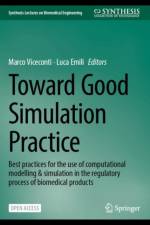
This open access book, the Community of Practice led by the VPH Institute, the Avicenna Alliance, and the In Silico World consortium has brought together 138 experts in In Silico Trials working in academia, the medical industry, regulatory bodies, hospitals, and consulting firms. Through a consensus process, these experts produced the first attempt to define some Good Simulation Practices on how to develop, evaluate, and use In Silico Trials. Good Simulation Practice constitutes an indispensable guide for anyone who is planning to engage at any title with In Silico Trials.
This book discusses acoustic waves in five chapters. Chapter 1 reviews the general properties of waves. Chapter 2 presents the acoustic waves in fluid and solids, including the wave equations in the respective media. Chapter 3 discusses the propagation of audible acoustic waves in the air. The discussion includes analyses of speech and music we hear in the time and frequency domains. Chapter 4 discusses the propagation of acoustic waves in solids. Unlike in the air, sound waves take complicated forms in solids; they can be both in longitudinal and transverse modes, and mode conversions can occur upon reflection. Although these behaviors make the analysis difficult, we can apply them to engineering problems. Chapter 5 describes the transduction of acoustic signals. It presents acoustic transmitters and sensors along with their operation principles. Finally, Chapter 6 presents several techniques used in engineering. It is also useful to consider applying acoustic and optical techniques to engineering problems.
Professional investment portfolio management is increasingly utilizing sophisticated statistical and computer techniques to better control risks and improve performance. This book provides new quantitative tools and technology for securities professionals to help boost the performance of their investment portfolios offered to clients. Unlike other books in this area, the authors utilize revolutionary asset pricing methods and models to analyze data for U.S. stocks and show how to apply them to the problem of creating highly diversified portfolios that are efficient in terms of returns per unit risk.
A common question posed to PhD students from friends and family is, "What will you do after?" But many students are too focused on the PhD itself and have not yet had a chance to sufficiently think about post-PhD life. This book is a collection of 31 interviews with those who have completed a PhD and are now in a non-academic role. Interviewees provide background into their PhD topic and discuss how they transitioned to their current position, including what additional training was necessary and how their PhD training has helped them succeed. In these interviews, two broad non-academic career paths are explored: academic-adjacent careers use research expertise through industry, policy, and publishing; and skill-transfer careers, applying transferable abilities like critical thinking. Recognising a PhD need not lead to a faculty career opens possibilities to leverage doctoral skills in impactful new contexts.
This textbook provides an exhaustive exploration of Opportunistic Networks (OppNets). Divided into three parts, it starts with the foundational principles and metrics of OppNets, detailing their mobility and data dissemination. Significant focus is given to the security challenges faced by OppNets, including strategies to counter various attacks. The second part evaluates OppNets, introducing methods and metrics for assessment, theoretical and simulation models, and tools such as OMNeT++, The ONE and ns-3.This textbook also offers comparative analyses and discussions on benchmarking. The third part delves into the implementation of OppNets, discussing technologies from Mobile Ad Hoc Networks to satellite communication and their integration with cellular technologies like 4G, 5G and 6G. Detailed insight into device characterization reveals the potential and limitations of devices within OppNets. Practical applications of OppNets in scenarios such as disaster management, remotecommunication, IoT challenges, smart cities and satellite networks are presented as well. Through detailed discussions and case studies, readers gain a comprehensive understanding of the structure, operation and practical implications of OppNets. It equips readers with knowledge to appreciate the vast potential of OppNets in various applications and settings.This textbook targets advanced-level students and postdocs in computer science and electrical engineering as well as researchers, who are starting new in the area and need a comprehensive view of opportunistic networks. Practitioners who are interested in applying the concepts of opportunistic networks in their products and services, and would like to have a jump start into the development and applications of opportunistic networks will also want to purchase this book as a reference.
Research data sharing has traditionally been addressed to other peer researchers. Nowadays there is general awareness that putting research at the disposal of society is beneficial and necessary. However, the popularization of science is a hard endeavor. It must deal with transmission of transcendental knowledge with the appealing adornment of a good story, but avoiding the risk of falling into banality. This book consists in a series of individual stories delving into the world of biology and medicine. Some topics included in this volume consist in the explanation of basic biological concepts like the origin of modern eukaryotic cells, the importance of mutations as the driving force behind evolution, the molecular ins and outs of the nervous system, or the relevance of microorganisms to humans and science including food and energy industries. Others rather lean to a more biomedical perspective and constitute popular cases that have been, to some extent, trending in global media outlets: the divulgation of some current under-reckoned non-infectious pandemics like obesity and chronic pain, the presence of longer-living populations around the world named blue zones, the American (and African) opioid crisis, or the discovery and development of CRISPR-Cas as a promising genetic editing tool. All chapters are depicted with accompanying illustrations thoroughly elaborated by professionals of Fine Arts to make it easier to understand for the non-experts¿ but may perhaps also proof that the scientific method and multidisciplinary work are not unique to natural sciences, but also shared by other apparently distant disciplines like arts.
This fully revised and updated new edition of the definitive text/reference on computer network and information security presents a comprehensive guide to the repertoire of security tools, algorithms and best practices mandated by the technology we depend on.
Sensory marketing is a way to differentiate businesses from their competition while influencing customers and their behaviour. At its best, sensory marketing guides or helps customers to make certain choices in a way that they are unaware of what actually influenced their choices. Although it sounds like an attractive way to ¿nudge¿ customers, it is a highly demanding practice that also involves risks and ethical concerns. This textbook delves into the world of sensory marketing in a physical retail setting and offers a comprehensive and coherent view of various sensory cues and their capacity to drive our behaviour through stimulating our senses and creating sensory experiences. It particularly highlights the meaning of the multisensory nature of retail stores and emphasises how cues tend to affect us in combination rather than separately as single cues. After reading this book, you will be able to: · Identify various cues in a retailing setting · Categorise cues into different groups · Explain how cues affect consumers when they make their daily choices· Understand the multisensory nature of retail stores and the meaning of cue (in)congruence· Describe how consumers are likely to respond differently to cue combinations than single cues· Apply cues in practice and assess their outcomes. Ideal reading for students taking classes in consumer behaviour, shopper marketing, retail marketing and store design among others, it contains more than 30 global examples from various retail companies, self-reflective questions and decisions-based questions to aid learning.
This book delves into the long-standing human aspiration to combine art and science. In six chapters, The Art-Science Symbiosis outlines new approaches to understand current scientific practice in general and art-science in particular, showcasing how contemporary art can provide a unique perspective on the meaning and potential of collaboration. With more than a hundred full colour images, The Art-Science Symbiosis serves as a resource for researchers interested in the art-science integration, as well as a general reference for interdisciplinary and transdisciplinary work.In the book, twenty-two works have been selected based on their inherent merits and for the emergent knowledge that their art-science integration produces. These works have sparked novel questions, ideas and curiosity amongst scientists and artists alike which, we hope, will promote further dialogue not only amongst them but with the general public, inspiring a process that may leadto diverse, complex, and promising results with real-world consequences we have as yet to uncover.The Key messages of the book are:¿ Contemporary art is a powerful space of dialogue between science and the public¿ Interdisciplinary work based on symmetrical collaboration promotes groundbreaking results¿ Artistic inquiry can lead to new understanding of scientific exploration¿ Art-science practice could be started using a simple methodology
Abonner på vårt nyhetsbrev og få rabatter og inspirasjon til din neste leseopplevelse.
Ved å abonnere godtar du vår personvernerklæring.