
















Gjør som tusenvis av andre bokelskere
Abonner på vårt nyhetsbrev og få rabatter og inspirasjon til din neste leseopplevelse.
Ved å abonnere godtar du vår personvernerklæring.Du kan når som helst melde deg av våre nyhetsbrev.

This textbook introduces the theoretical foundations of technologies essential for knowledge graphs. It also covers practical examples, applications and tools. Knowledge graphs are the most recent answer to the challenge of providing explicit knowledge about entities and their relationships by potentially integrating billions of facts from heterogeneous sources.The book is structured in four parts. For a start, Part I lays down the overall context of knowledge graph technology. Part II ¿Knowledge Representation¿ then provides a deep understanding of semantics as the technical core of knowledge graph technology. Semantics is covered from different perspectives, such as conceptual, epistemological and logical. Next, Part III ¿Knowledge Modelling¿ focuses on the building process of knowledge graphs. The book focuses on the phases of knowledge generation, knowledge hosting, knowledge assessment, knowledge cleaning, knowledge enrichment, and knowledge deployment to cover a complete life cycle for this process. Finally, Part IV (simply called ¿Applications¿) presents various application areas in detail with concrete application examples as well as an outlook on additional trends that will emphasize the need for knowledge graphs even stronger.This textbook is intended for graduate courses covering knowledge graphs. Besides students in knowledge graph, Semantic Web, database, or information retrieval classes, also advanced software developers for Web applications or tools for Web data management will learn about the foundations and appropriate methods.
Providing a comprehensive overview of volunteer involvement in UK universities, this book addresses a distinct and substantive policy and management issue. Offering examples of volunteer involvement with students, staff, alumni and communities from 148 UK Higher Education Institutions, it provides important background to understanding volunteer involvement. It also introduces key concepts for critically assessing ways in which those who seek to involve volunteers can respond to rapidly changing environments. Drawing on a combination of theoretical perspectives and practical experiences the book systematically explores approaches based on the current structures of volunteer involvement in UK universities, which provides accessible insights for Higher Education Institutions into how they can effectively organise volunteer involvement and maximise its societal impact. Developing 10 indicators with measures to evidence universities¿ strategic approaches and achievements in community-university relations, the book offers practical ways to plan, enable, monitor, and assess the impact of volunteer involvement in universities.
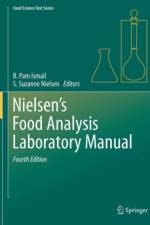
This fourth edition laboratory manual was written to accompany Nielsen¿s Food Analysis, Sixth Edition, by the same authors. New to this fourth edition of the laboratory manual are three new chapters that complement both the textbook chapters and the laboratory exercises. The book again contains four introductory chapters that help prepare students for doing food analysis laboratory exercises. The 26 laboratory exercises in the manual cover 24 of the 35 chapters in the textbook. Many of the laboratory exercises have multiple sections to cover several methods of analysis for a particular food component or characteristic. Most of the laboratory exercises include the following: background, reading assignment, objective, principle of method, chemicals, reagents, precautions and waste disposal, supplies, equipment, procedure, data and calculations, questions, and references. This laboratory manual is ideal for the laboratory portion of undergraduate courses in food analysis.
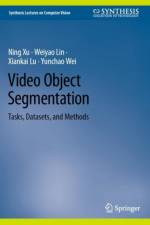
This book provides a thorough overview of recent progress in video object segmentation, providing researchers and industrial practitioners with thorough information on the most important problems and developed technologies in the area. Video segmentation is a fundamental topic for video understanding in computer vision. Segmenting unique objects in a given video is useful for a variety of applications, including video conference, video editing, surveillance, and autonomous driving. Given the revolution of deep learning in computer vision problems, numerous new tasks, datasets, and methods have been recently proposed in the domain of segmentation. The book includes these recent results and findings in large-scale video object segmentation as well as benchmarks in large-scale human-centric video analysis in complex events. The authors provide readers with a comprehensive understanding of the challenges involved in video object segmentation, as well as the most effective methods for resolving them.
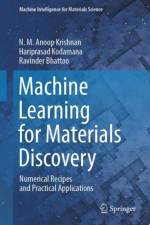
Focusing on the fundamentals of machine learning, this book covers broad areas of data-driven modeling, ranging from simple regression to advanced machine learning and optimization methods for applications in materials modeling and discovery. The book explains complex mathematical concepts in a lucid manner to ensure that readers from different materials domains are able to use these techniques successfully. A unique feature of this book is its hands-on aspect¿each method presented herein is accompanied by a code that implements the method in open-source platforms such as Python. This book is thus aimed at graduate students, researchers, and engineers to enable the use of data-driven methods for understanding and accelerating the discovery of novel materials.
Now in a revised and expanded second edition, this unique book provides a comprehensive review of the unique aspects of adaptive sports medicine and adaptive athletes who are increasingly active and prominent, not only individually and in local leagues and organizations but also in larger settings like the Paralympics and Warrior Games.This book is divided into four thematic sections. Section one covers the history and natural course of the care, policies, and laws for persons with disabilities, as well as the biomechanics and technology of wheelchair sports and adaptive sports prostheses. The medical considerations of the adaptive athlete comprise section two, including epidemiology, emergent care, and surgical and rehabilitative considerations. Section three is the largest section, discussing considerations for specific adaptive sports, including adaptive running, cycling, water sports, throwing sports, wheelchair basketball, softball and rugby, as well as combative and extreme sports. Selected topics, including event planning, advocacy and controversies such as doping, are covered in section four. Chapters new to this edition include approaches to concussions and sports-related considerations for specific populations like children and adolescents, active duty military and veterans. A comprehensive yet practical text, Adaptive Sports Medicine 2nd Edition remains the go-to resource for this active population and is an invaluable reference for any sports medicine or primary medicine practitioner.
This well-accessible textbook constitutes a practical guide to metabolomics approaches and applications in an integrative manner. Illustrated by numerous real-life examples and case studies the book teaches how to set up and carry out metabolomics experiments, from sample collection to storage techniques, and guides the reader through the potentials and challenges of metabolite analysis. In addition, this textbook shows how to obtain insights into molecular mechanisms deployed in different physiological contexts (e.g., exercise, healthy ageing) as well as in different (metabolic) diseases, be it Diabetes, Cancer, Alzheimer¿s Disease, Asthma or others. The book brings together knowledge from biochemical, biological, and medical aspects, and further equips the reader with know-how from sample collection and handling to data processing, analysis and interpretation. This textbook is a must-have for advanced undergraduates and graduate students interested in applied biochemistry and metabolomics, as well as for instructors who teach courses in biomedicine, physiology or biochemistry.
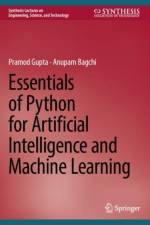
This book introduces the essentials of Python for the emerging fields of Machine Learning (ML) and Artificial Intelligence (AI). The authors explore the use of Python¿s advanced module features and apply them in probability, statistical testing, signal processing, financial forecasting, and various other applications. This includes mathematical operations with array data structures, Data Manipulation, Data Cleaning, machine learning, Data pipeline, probability density functions, interpolation, visualization, and other high-performance benefits using the core scientific packages NumPy, Pandas, SciPy, Sklearn/Scikit learn and Matplotlib. Readers will gain a deep understanding with problem-solving experience on these powerful platforms when dealing with engineering and scientific problems related to Machine Learning and Artificial Intelligence. Several examples of real problems using these techniques are provided along with examples. The authors also focus on the best practices in the industry on using Python for AI and ML. Deployment on a cloud infrastructure is described in detail (with code) to emphasize real scenarios.
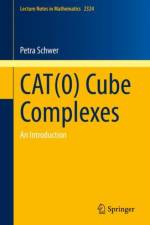
In recent years cube complexes have become a cornerstone topic of geometric group theory and have proven to be a powerful tool in other areas, such as low dimensional topology, phylogenetic trees or in the context of optimization problems.This book covers a wide variety of algebraic and geometric properties of cube complexes and the groups acting on them. The content ranges from basic properties of metric spaces, notions of non-positive curvature, Gromov's link condition and the ¿varc¿Milnor theorem to advanced material such as the cubulation of half-space systems and the Roller boundary, the construction of cube complexes associated with Coxeter groups, and the Tits alternative for cubical groups.Being the first self-contained, comprehensive introduction to cube complexes this book serves as an entry point for researchers interested in the subject. The material is accessible to advanced undergraduate and graduate students. The text is illustrated with many figures and examples and comes with a large collection of exercises.
This book examines the memories of the Partition of India in 1947 with a focus on the generation of postmemory (those who came after it) and how partition experiences have been shared (or not) and understood. It explores the formal and narrative properties of different memory practices that have been built around the partition, and the methods of oral historians involved in collecting testimonies as part of the 1947 Berkeley partition archive.
This thesis describes key contributions to the fundamental understanding of materials structure and dynamics from a microscopic perspective. In particular, the thesis reports several advancements in time-domain methodologies using ultrafast pulses from X-ray free-electron lasers (FEL) to probe the interactions between electrons and phonons in photoexcited materials. Using femtosecond time-resolved X-ray diffraction, the author quantifies the coherent atomic motion trajectory upon sudden excitation of carriers in SnSe. This allows the reconstruction of the nonequilibrium lattice structure and identification of a novel lattice instability towards a higher-symmetry structure not found in equilibrium. This is followed by an investigation of the excited-state phonon dispersion in SnSe using time-resolved X-ray diffuse scattering which enables important insight into how photoexcitation alters the strength of specific bonds leading to the novel lattice instability observed in X-ray diffraction. Finally, by combining ultrafast X-ray diffraction and ARPES, the author performs quantitative measurements of electron-phonon coupling in Bi2Te3 and Bi2Se3. The findings highlight the importance of time-resolved X-ray scattering techniques based on FELs, which reveals the details of interplay between electron orbitals, atomic bonds, and structural instabilities. The microscopic information of electron phonon interaction obtained from these methods can rationalize ways to control materials and to design their functional properties.
The world is warming up rapidly and this change is most noticeable in mountains with already observable consequences on flora and fauna. This book presents concepts, methodologies and major achievements of recent research in climate change ecology in mountains by placing this research in a historical perspective, that of travelers and naturalists of the Romantic era, and first of all Alexander von Humboldt.There is now a renewed interest, both in academia and beyond, in Humboldt, his writings and his view of nature. But how can we actually make use of his writings? How can we put his philosophy into practice? How can we still learn from past scientific figures and do a better science today? In this book, the author presents how it is possible to succeed in modern science by returning to sources, by renewing the tradition of past polymaths such as Humboldt, and by having a fully humanistic approach in science. He illustrates his point based on his 15-year experience in the study of the ecological effects of climate change in the tropical Andes, showing how he has incorporated approaches from other disciplines, from different branches of science, from history and the arts to achieve a more comprehensive view of his scientific field. Alongside hard data, discoveries by past naturalists build our understanding of the world but appealing to our emotions makes us want to understand it. In the author¿s view this is a productive and enjoyable way of doing science that speaks to our humanity and also increases our knowledge about nature. This academic cross-over book appeals to a broad audience of students, scientists or, supported by attractive illustrations, to anyone interested in the adventure or making of science, but not necessarily with a scientific background.
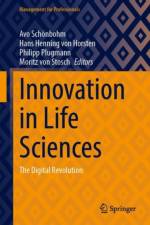
The Life Science industry has been subject to a digital revolution upending all facets of the value chain with data-driven approaches like Gene Therapy, Personalized Medicine, Advanced Cell and Tissue Engineering, Industry 4.0, Artificial Intelligence, Blockchain, Digital Twins, Internet-of-Medical-Things (IoMT) and Software-as-a-Medical-Device (SaMD). Our edited volume offers comprehensive coverage of the digital disruption sweeping through the industry. From drug discovery to manufacturing and life-cycle management, we explore the profound impact of digitalization. Our authors delve into open innovation, sci-fi prototyping, and the digital transformation of medical imaging and healthcare. This volume goes beyond theory to provide practical insights. We present business-oriented case studies, examine M&A topics, venture capital, and other investor perspectives, all with a strong focus on digitalization's role. Furthermore, we explore the cultural and ethical challenges that arise andthe necessary management changes demanded by this digital revolution.
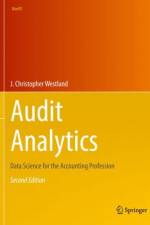
This book, using R and RStudio, demonstrates how to render an audit opinion that is legally and statistically defensible; analyze, extract, and manipulate accounting data; build a risk assessment matrix to inform the conduct of a cost-effective audit program; and more. Today, information technology plays a pivotal role in financial control and audit: most financial data is now digitally recorded and dispersed among servers, clouds and networks over which the audited firm has no control. Additionally, a firm¿s datäparticularly in the case of finance, software, insurance and biotech firms¿comprises most of the audited value of the firm. Financial audits are critical mechanisms for ensuring the integrity of information systems and the reporting of organizational finances. They help avoid the abuses that led to passage of legislation such as the Foreign Corrupt Practices Act (1977), and the Sarbanes-Oxley Act (2002).Audit effectiveness has declined over the past two decades, as auditor skillsets have failed to keep up with advances in information technology. Information and communication technology lie at the core of commerce today and are integrated in business processes around the world. This book is designed to meet the increasing need of audit professionals to understand information technology and the controls required to manage it. This 2nd edition includes updated code and test. Machine learning, AI, and SEC¿s EDGAR data are also, improved and updated. The material included focuses on the requirements for annual Securities and Exchange Commission audits (10-K) for listed corporations. These represent the benchmark auditing procedures for specialized audits, such as internal, governmental, and attestation audits. Many examples reflect the focus of the 2024 CPA exam, and the data analytics-machine learning approach will be central to the AICPA¿s programs, in the near future.
Death rituals are a universal feature of every human culture across the world. Every human must eventually face the stark reality of death, and many cultures and religions have sought to make sense of death and bring solace to the people through bereavement rituals. Infant death has been commonplace in most of human history. Despite the high prevalence of pregnancy loss (25% of all pregnancies) and infant death (0.6% of liveborn infants), these deaths are rarely discussed openly. The parents¿ grief often is underestimated or ignored by their social network who may never have met the baby and/or feel uncomfortable discussing the loss of a child. On the other hand, the families enduring perinatal loss experience profound grief, loss of the actual and imagined future for that child, and the baby is never forgotten. Thus, parents seek to have their baby remembered through the creation of keepsakes, memories, and rituals. Having a supportive environment that honors their loss and their child¿s memory and helps to facilitate meaningful rituals can have a profound effect on their long-term bereavement.There is a large amount of literature on death rituals across cultures but most books include infants only briefly and miscarried or stillborn babies are not mentioned at all. This text seeks to fill this substantial gap through review of existing literature paired with dozens of interviews with clinicians and caregivers across many disciplines in the hospital and community as well as bereaved family members who have gone through perinatal loss.The authors recruited in Bereavement Rituals after Pregnancy Loss or Infant Death across U.S. Cultures are a broad group of experts that include clinicians in palliative care and perinatal bereavement, nurses and clergy from different religious groups. The book is broken up into three main sections. The first provides a history and theoretical basis for perinatal death rituals. The second includes an overview of common beliefs and practices in major US religious and cultural groups. The third focuses on the roles of the health care team members and offers a practical how-to guide for health care providers to support families through rituals that fit their personal values and needs.
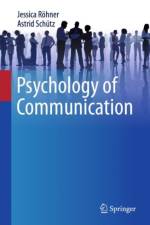
This successful textbook on the psychology of communication explains - here in English for the first time - how human communication works in a very understandable way. It begins with the explanation of central terms and the explanation of known communication models (e.g. the models according to Schulz von Thun, Watzlawick, Hargie and colleagues), then describes means of non-verbal and verbal communication and ends with a clear and structured summary of communication forms. Concrete fields of application, stumbling blocks (e.g. intercultural differences in communication), practical examples and digressions in the book round off what has been read and consolidate what has been learned. In addition, free learning materials are available on the Internet with which readers can test their knowledge acquisition.
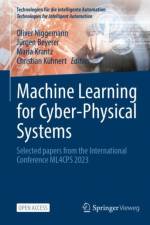
This open access proceedings presents new approaches to Machine Learning for Cyber-Physical Systems, experiences and visions. It contains some selected papers from the international Conference ML4CPS ¿ Machine Learning for Cyber-Physical Systems, which was held in Hamburg (Germany), March 29th to 31st, 2023. Cyber-physical systems are characterized by their ability to adapt and to learn: They analyze their environment and, based on observations, they learn patterns, correlations and predictive models. Typical applications are condition monitoring, predictive maintenance, image processing and diagnosis. Machine Learning is the key technology for these developments.This is an open access book.
This book introduces the new paradigm of lifelong and continual learning dialogue systems to endow dialogue systems with the ability to learn continually by themselves through their own self-initiated interactions with their users and the working environments. The authors present the latest developments and techniques for building such continual learning dialogue systems. The book explains how these developments allow systems to continuously learn new language expressions, lexical and factual knowledge, and conversational skills through interactions and dialogues. Additionally, the book covers techniques to acquire new training examples for learning new tasks during the conversation. The book also reviews existing work on lifelong learning and discusses areas for future research.
A career in emergency medicine can be truly rewarding, despite the long hours and adverse conditions. The decision to embark on this journey typically starts during medical school, usually with the allure of resuscitations and life-saving procedures performed in the fast-paced environment of the emergency department. During an emergency medicine residency, the young physician is faced with career decisions that may involve working in a community or academic emergency department setting, or pursuing specialization through fellowship. Following residency and fellowship training, the emergency physician may decide to purely work clinically in an emergency department, or combine clinical responsibilities with administrative, education or research pursuits. This unique text provides medical students, residents, fellows and attending physicians with a comprehensive guide to be successful in a career in emergency medicine. Sections include the history of emergency medicine, choosing a career in emergency medicine from a medical student¿s point of view, pursuing fellowship and additional training, community and academic careers in emergency medicine, career options in emergency medicine, critical skills in emergency medicine, research/scholarship, being a teacher, and carving a path in emergency medicine. All chapters are written by experts in the field, representing emergency departments throughout North America.
This book presents the concept of cryptcoding which arises from the need to obtain secure and accurate transmission. Therefore, it is necessary to improve constantly existing and develop new algorithms that will ensure accurate and secure data transfer. This leads to the intensive development of coding theory and cryptography as scientific fields which solve these problems. To ensure efficient and secure data transmission at the same time, the concept of cryptcoding is developed such that the coding and encryption processes are merged into one process. Cryptcodes provide correction of a certain number of errors in the transmitted message and data confidentiality, using only one algorithm. The main research in this field is to define new algorithms for coding that detects and corrects errors, random codes, stream ciphers, block ciphers, pseudo-random generators, hash functions, etc. This monograph examines an application of quasigroups for designing error-correcting cryptcodes, called Random Codes Based on Quasigroups (RCBQ ). These codes are a combination of cryptographic algorithms and error-correcting codes and depend on several parameters. Some modifications (new coding/decoding algorithms) of RCBQ for improving their performances for transmission ordinary messages, images, and audio files trough a binary-symmetric channel, Gaussian channel, and burst channels are considered. Also, authors propose and analyze filter for visually enhance of the decoded images and improving the quality of decoded audio files.
Companies focus on both organic and inorganic mechanisms in its pursuit for growth. The growth strategies of companies are determined by the industry sector and target market influence. Successful companies utilize multiple growth strategies like market development, disruption, product and channel expansion, strategic alliances, Mergers and Acquisitions and organic growth stimulus. In the modern world, a firm's success depends on innovation. Fast paced growth for a firm is a function of the extent to which company must learn how to scale up and extend its business, lengthen its expansion phase, accumulate and apply new knowledge to new products and markets faster than competitors. Therefore, there is no 'best strategy'.¿This book discusses and analyses the strategies of growth of the fastest 100 companies as ranked by the Fortune Survey. Each case study focuses on market overview, business segments, SWOT analysis, growth strategy, ESG initiatives, risk factors and mitigation strategy, financial strategy, performance and valuation.
¿This edited volume investigates the Czech response to the European migration crisis of 2015. Focusing on the discourses and practices the book analyses the foreign policy ideas which were guiding the Czech foreign policy in the period from 2014 to 2019. The chapters offer a variety of methodologies (discourse analysis, content analysis, and case study) and perspectives (decision-makers, NGOs, emotions, foreign policy practice, and European partners). All the chapters rely on a common conceptual framework that operationalises foreign policy ideas as ideologies (Atlanticism, Europeanism, Internationalism, and Sovereignism) and roles (Democracy Supporter, Protectee, Faithful Ally, Regional Collaborator, Reformer, and Prosperity Builder). The main benefit of the book consists in using a unique conceptual framework to produce new empirical insights into the Czech foreign policy making. The book will be of particular interest to the students of the Czech politics and it can be also used as a case study in foreign policy-making. It also offers a nuanced perspective on the Central and Eastern Europe decision-making during the EU migration crisis which goes beyond the usual ideological classifications of those countries in the West European public discourse. Petr Drulák is a Professor at the Department of Politics and International Relations at the Faculty of Arts of the University of West Bohemia in Pilsen, a senior researcher at the Institute of International Relations in Prague, and a guest professor at the Paris School of International Affairs (PSIA). He served as Ambassador of the Czech Republic to France and Deputy Minister of Foreign Affairs. He published extensively on Central Europe, national interest, and theory of international relations (e.g., in European Journal of International Relations, Journal of European Public Policy,Geopolitics, Journal of International Relations and Development, and Osteuropa).
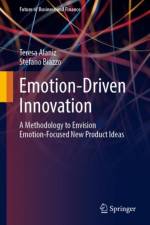
It is now widely recognized that the emotional dimension of products and services is a critical success factor in many sectors. Generating products with significant emotional features is a complex challenge, as professionals responsible for designing and developing new products should be able to focus the design effort on eliciting specific emotions. But how do designers prepare themselves to convey emotions through the products they design? How do they know how to provoke certain emotions? To obtain the benefits that the knowledge of emotions can bring when it is integrated into the design process, professionals need to be assisted with approaches to apply the knowledge of emotions systematically and strategically. This book presents the development of a process to support product design teams to envision emotion-focused new product ideas - Emotion-Driven Innovation (E-DI). The E-DI process supports designers in identifying the occurrence of emotions in a certain category of products present in the market and applying this information to make strategic decisions when defining the emotional intentions for the new product. It also helps to focus their creative thinking to develop strong and meaningful emotion-centric new product ideas. This book targets a professional audience wanting to learn more about this process and provides useful tools and frameworks that can be applied in real-life cases.
This book informs students and practitioners of the health professions about workplace bullying and how to recognise it. The health professions have among the highest rates of bullying of any occupational group. This book shines a light on bullying and its very real human consequences for health professionals. Statistics about bullying in health present a disturbing picture. However, they don't convey the human impact on people who only want to do good for others. The author begins by telling how her experiences spurred her to write this book and then introduces the champions, twelve health professionals who contributed their stories. The book starts with the champions' decision to become a health professional, and then describes their bullying experiences, the impact on almost every aspect of their lives and careers, and how they tried to resolve or deal with the bullying. Some were still dealing with bullying, and all felt they had been forever changed by their experiences. The stories show that bullying is much more than the actions of a few, it is deeply embedded in the culture of institutions responsible for providing quality health care. Better preparation for leadership positions and independent processes for reporting unacceptable behaviours and actions are two suggestions for tackling bullying and its consequences. This book shows the necessity to expose these appalling behaviours and their human costs in order to address workplace bullying and create a healthy and safe environment for everyone in healthcare. This volume is aimed at undergraduate and postgraduate students, and practitioners of nursing and other health professions, the general public and other stakeholders of health services. It will enhance their understanding of, ability to recognise, and strategies to cope with, workplace bullying.
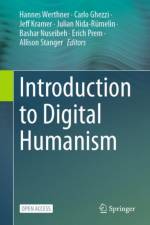
This open access textbook introduces and defines digital humanism from a diverse range of disciplines. Following the 2019 Vienna Manifesto, the book calls for a digital humanism that describes, analyzes, and, most importantly, influences the complex interplay of technology and humankind, for a better society and life, fully respecting universal human rights.The book is organized in three parts: Part I ¿Background¿ provides the multidisciplinary background needed to understand digital humanism in its philosophical, cultural, technological, historical, social, and economic dimensions. The goal is to present the necessary knowledge upon which an effective interdisciplinary discourse on digital humanism can be founded. Part II ¿Digital Humanism ¿ a System¿s View¿ focuses on an in-depth presentation and discussion of the main digital humanism concerns arising in current digital systems. The goal of this part is to make readers aware and sensitive to these issues, including e.g. the control and autonomy of AI systems, privacy and security, and the role of governance. Part III ¿Critical and Societal Issues of Digital Systems¿ delves into critical societal issues raised by advances of digital technologies. While the public debate in the past has often focused on them separately, especially when they became visible through sensational events the aim here is to shed light on the entire landscape and show their interconnected relationships. This includes issues such as AI and ethics, fairness and bias, privacy and surveillance, platform power and democracy.This textbook is intended for students, teachers, and policy makers interested in digital humanism. It is designed for stand-alone and for complementary courses in computer science, or curricula in science, engineering, humanities and social sciences. Each chapter includes questions for students and an annotated reading list to dive deeper into the associated chapter material. The book aims to provide readers with as wide an exposure as possible to digital advances and their consequences for humanity. It includes constructive ideas and approaches that seek to ensure that our collective digital future is determined through human agency.
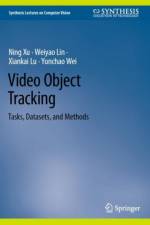
This book provides a thorough overview of recent progress in video object tracking, allowing researchers and industrial practitioners to gain a better understanding of the most important problems and developed technologies in the area. Video tracking is a key research area in computer vision and aims to track unique objects in a given video, which are useful for various applications such as video conference, video editing, surveillance, and autonomous driving. This book begins with an introduction to the task of video object tracking, including the most common problem settings. Given the revolution of deep learning in computer vision problems, numerous new tasks, datasets, and methods have been recently proposed in the domain of video tracking. The book includes these recent results as well as benchmarks in large-scale human-centric video analysis in complex events.
This textbook offers an introduction to abelian varieties, a rich topic of central importance to algebraic geometry. The emphasis is on geometric constructions over the complex numbers, notably the construction of important classes of abelian varieties and their algebraic cycles.The book begins with complex tori and their line bundles (theta functions), naturally leading to the definition of abelian varieties. After establishing basic properties, the moduli space of abelian varieties is introduced and studied. The next chapters are devoted to the study of the main examples of abelian varieties: Jacobian varieties, abelian surfaces, Albanese and Picard varieties, Prym varieties, and intermediate Jacobians. Subsequently, the Fourier-Mukai transform is introduced and applied to the study of sheaves, and results on Chow groups and the Hodge conjecture are obtained.This book is suitable for use as the main text for a first course on abelian varieties, for instance as a second graduate course in algebraic geometry. The variety of topics and abundant exercises also make it well suited to reading courses. The book provides an accessible reference, not only for students specializing in algebraic geometry but also in related subjects such as number theory, cryptography, mathematical physics, and integrable systems.
From a perspective of precision instrumentation, this book provides a guided tour to readers on exploring the inner workings of atomic force microscopy (AFM). Centered around AFM, a broad range of mechatronic system topics are covered including mechanics, sensors, actuators, transmission design, system identification, signal processing, dynamic system modeling, controller. With a solid theoretical foundation, practical examples are provided for AFM subsystem level design on nano-positioning system, cantilever probe, control system and system integration. This book emphasizes novel development of active cantilever probes with embedded transducers, which enables new AFM capabilities for advanced applications. Full design details of a low-cost educational AFM and a Scale Model Interactive Learning Extended Reality (SMILER) toolkit are provided, which helps instructors to make use of this book for curriculum development. This book aims to empower AFM users with deeper understanding of the instrument to extend AFM functionalities for advanced state-of-the-art research studies. Going beyond AFM, materials presented in this book are widely applicable to precision mechatronic system design covered in many upper-level graduate courses in mechanical and electrical engineering to cultivate next generation instrumentalists.
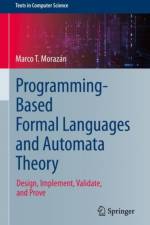
This textbook introduces formal languages and automata theory for upper-level undergraduate or beginning graduate students. While it contains the traditional mathematical development usually employed in computational theory courses, it is also quite different from many of them. Machines, grammars, and algorithms developed as part of a constructive proof are intended to be rendered as programs. The book is divided into four parts that build on each other. Part I reviews fundamental concepts. It introduces programming in FSM and reviews program design. In addition, it reviews essential mathematical background on sets, relations, and reasoning about infinite sets. Part II starts the study of formal languages and automata theory in earnest with regular languages. It first introduces regular expressions and shows how they are used to write programs that generate words in a regular language. Given that regular expressions generate words, it is only natural to ask how a machine can recognize words in a regular language. This leads to the study of deterministic and nondeterministic finite-state machines. Part III starts the exploration of languages that are not regular with context-free languages. It begins with context-free grammars and pushdown automata to generate and recognize context-free languages, and it ends with a discussion of deterministic pushdown automata and illustrates why these automatons are fundamentally different from nondeterministic pushdown automata. Part IV eventually explores languages that are not context-free, known as context-sensitive languages. It starts by discussing the most powerful automaton known to mankind: the Turing machine. It then moves to grammars for context-sensitive languages, and their equivalence with Turing machines is explored. The book ends with a brief chapter introducing complexity theory and explores the question of determining if a solution to a problem is practical.
Abonner på vårt nyhetsbrev og få rabatter og inspirasjon til din neste leseopplevelse.
Ved å abonnere godtar du vår personvernerklæring.